School of Mechanical Engineering and Automation

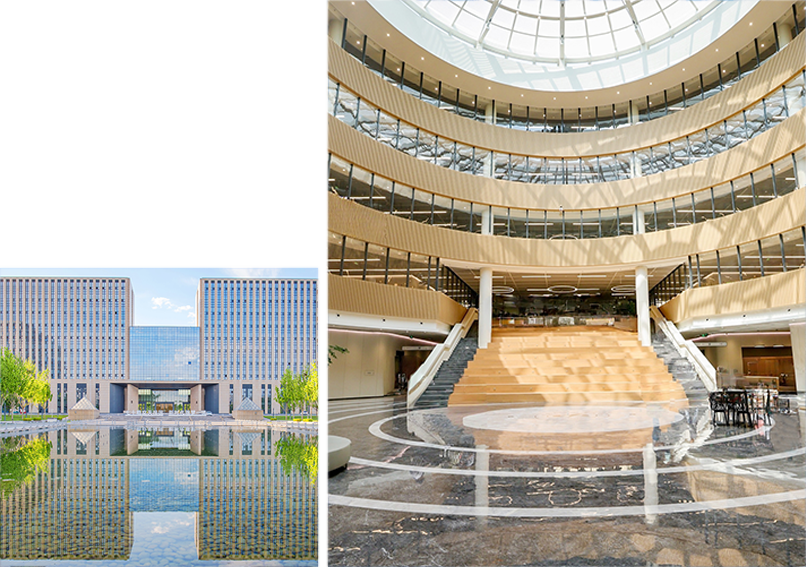
The School of Mechanical Engineering and Automation (SMEA) of Beihang University traces its origins back to 1952, when the Aircraft Technology and Engine Technology Department of the Beijing Institute of Aeronautics was established. In 1978, the Department of Manufacturing Engineering and the Department of Mechatronics Engineering were founded and later merged to form the present-day SMEA.

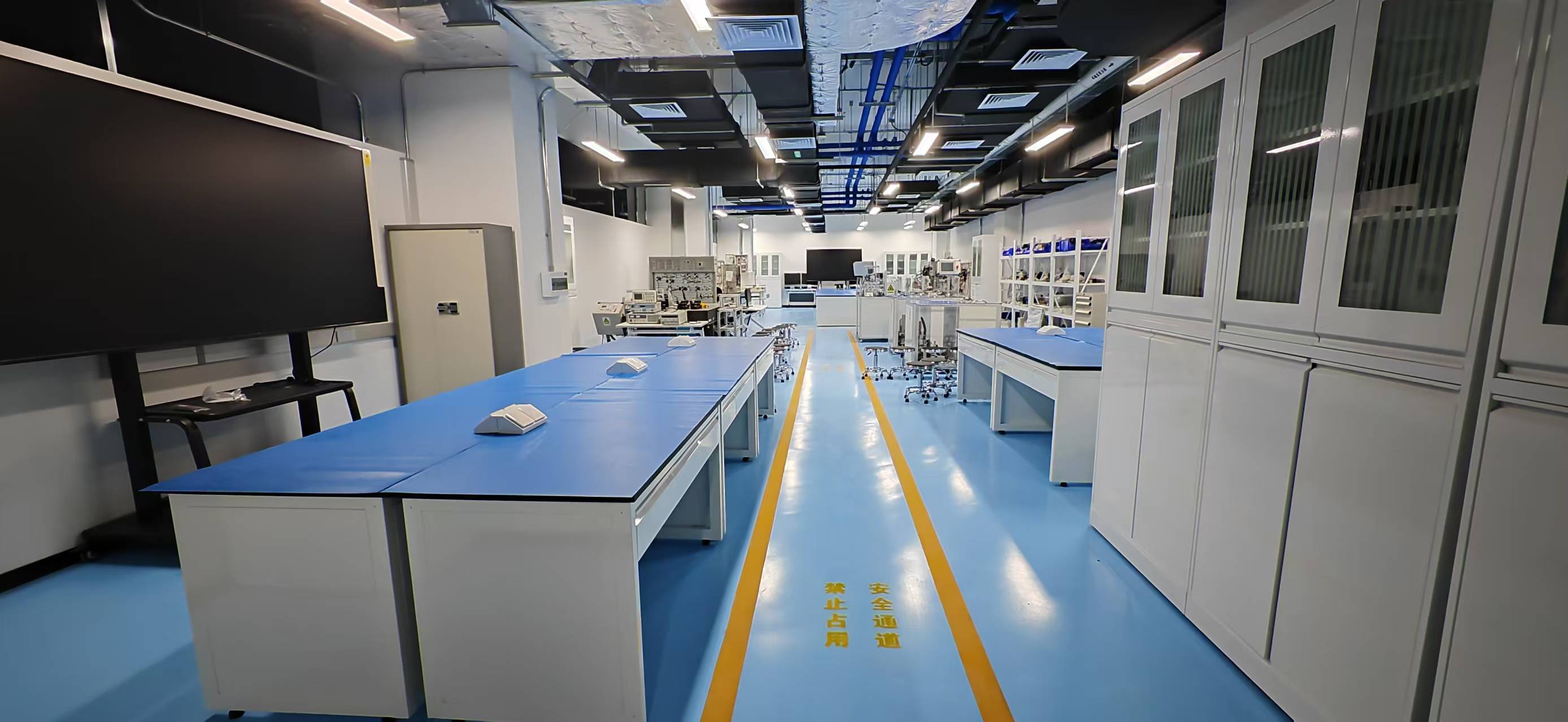
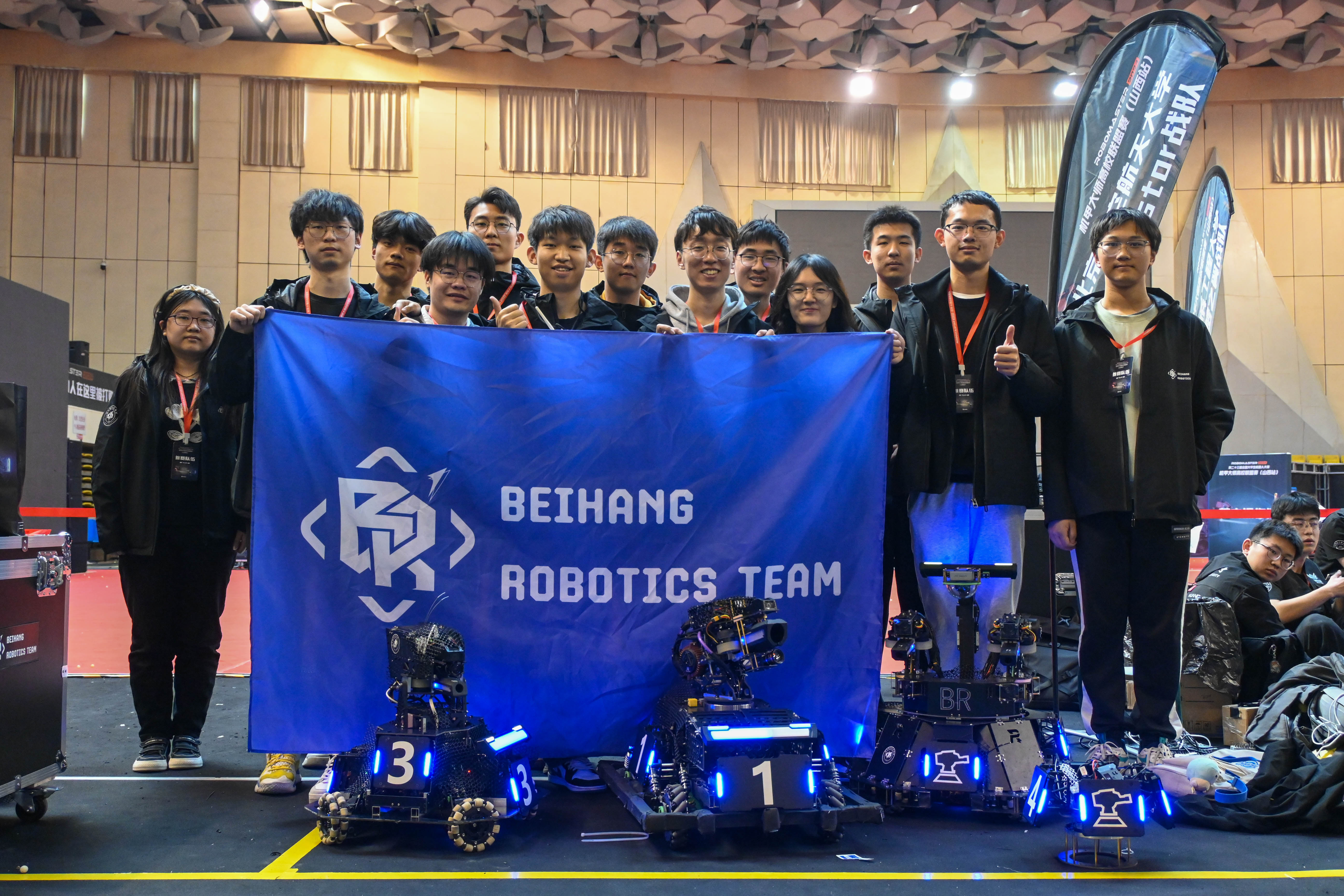
The School now comprises nine departments and institutes: the Department of Mechanical Design and Automation, the Department of Material Processing and Control, the Department of Aircraft Manufacturing Engineering, the Department of Mechanical Manufacturing and Automation, the Department of Mechatronic Engineering and Automation, Institute of Bionic and Micro-Nano Systems, the Department of Industrial Design, the Institute of Robotics, and the Department of Industrial and Manufacturing System Engineering. It also includes the Mechanical Engineering Teaching Experimentation Center.


Study

The School offers programs across four primary disciplines — Mechanical Engineering, Aeronautical and Astronautical Science and Technology, Materials Science and Engineering, and Design Science, covering seven subdisciplines, including space mechanisms and bionic machinery, intelligent machining and CNC systems, micro-nano bionic manufacturing and MEMS, and intelligent robotic systems and human-machine interaction. The School offers four Ph.D. programs in Mechanical Engineering, Aeronautical and Astronautical Science and Technology, Materials Science and Engineering, and Design Science, as well as five undergraduate programs in Mechanical Engineering, Robotics Engineering, Intelligent Manufacturing Engineering, MEMS Engineering, and Industrial Design. The School currently enrolls nearly 2,000 students (including international students), comprising over 600 undergraduates, over 700 postgraduate students, and over 500 doctoral candidates. Its faculty consists of over 150 full-time members, including more than 60 professors, 70 associate professors, and 100 Ph.D. advisors.

The School strives to build first-class disciplines and optimizes its academic development based on national strategy and disciplinary frontiers. The School now focuses on seven subdisciplines, pooling high-quality resources to create leading and benchmark disciplines. It endeavors to improve the reputation and competitiveness of its programs. In the fifth national discipline ranking, the "Mechanical Engineering" discipline achieved a record-high ranking. The School leverages the growth of Beihang University to further its academic development, systematically promoting the integration of "discipline-platform-team." It has established an interdisciplinary innovation platform, an emerging engineering education practice platform, and an innovation and entrepreneurship practice platform for students. At the same time, it has refined collaborative innovation platforms for seven different disciplines and foundational teaching and practice platforms for mechanical engineering. This has created the condition for the collaboration between scientific research and education.

Curriculum construction has yielded fruitful results, with seven courses recognized as national first-class courses, one course selected as a high-quality postgraduate course, and one included as a specialized high-quality course for engineering postgraduate and Ph.D. programs by the Ministry of Industry and Information Technology (MIIT). The School has achieved significant outcomes in publishing textbooks, with one faculty member receiving the inaugural National Textbook Construction Award for Outstanding Individuals, five projects included in MIIT's "14th Five-Year Plan" for textbook development, two high-quality textbooks for engineering postgraduate and Ph.D. programs, and one award for high-quality undergraduate teaching materials among universities in Beijing. The School has also won a second prize in National Teaching Achievements, marking a comprehensive progress in SMEA's teaching quality.


Faculty

The School has stepped up its efforts to attract and cultivate talent, with the aim of building a world-class faculty team. The School remains deliberate in selecting leading professors for key disciplines, builds core teams, and implements targeted talent recruitment and development strategies. To deepen personnel system reform, the School has developed a national-level talent development plan and established a "Talent Seed Bank" for nurturing future national-level talents. The School provides one-on-one guidance on applying for talent projects. Currently, there are 30 national-level talents, with annual approvals for overseas talent projects ranking among the highest across the university. It has also secured one National Natural Science Fund of China Innovation Research Group and built three national-level innovation teams. The School has significantly enhanced its support for pioneering research in cutting-edge interdisciplinary fields and plans to build an interdisciplinary shared innovation platform that covers around 1,000 square meters.

The School has adopted a "Four-Pronged Approach" to enhance quality of talent cultivation. It strives to advance the construction of first-class academic programs and promote the "Three Excellences and One Major" initiative. It has continuously optimized its disciplinary structure, with Mechanical Engineering, Robotics Engineering, and Industrial Design newly recognized as national first-class undergraduate programs. The School has seen the emergence of distinguished teachers and high-level teaching teams, including one recipient of the National Distinguished Teacher Award, three recipients of Beijing Distinguished Teacher's Award, and one Outstanding Undergraduate Education Team for Universities in Beijing.


Research

Based on its seven disciplines, the School aligns its research with national strategic priorities and societal needs to safeguard people's lives and health. The School's per capita research funding ranks among the top nationwide. Each year, it secures over 20 National Natural Science Foundation of China (NSFC) grants, leads nearly 10 national key research initiatives, and undertakes more than 60 projects with individual funding exceeding one million RMB. The School consistently receives multiple first-place awards at the provincial and ministerial level each year. It has published several monographs under the "14th Five-Year Plan" for key national publications, and faculty members have published over 10 research papers in top journals such as Nature and Science. These achievements contribute significantly to the university's "Double First-Class" initiative.

With the National Defense Technology Industry Research and Application Center for High-Efficiency CNC Machining Technology as the technical support unit, the School is home to a robust array of research centers and laboratories. These include eight provincial and ministerial-level key laboratories and research centers such as:

· Beijing Key Laboratory of Digital Design and Manufacturing,

· Frontier Laboratory of Intelligent Interactive Robots at the Beijing-Tianjin-Hebei National Comprehensive Innovation Center,

· Ministry of Industry and Information Technology Key Laboratory of Intelligent Manufacturing Technology for Aerospace High-End Equipment,

· Beijing Key Laboratory of Robotic Equipment for Aircraft Assembly,

· Beijing Engineering Research Center for High-Efficiency Green CNC Machining Technology and Equipment,

· Key Laboratory of Machinery Service Robot Technology,

· Machinery Engineering Laboratory of CNC Machining Technology and Equipment,

· Beijing International Science and Technology Cooperation Base for Robotic Technology in High-End Equipment Manufacturing (demonstration class).

The School has played a vital role in building two national-level teaching and research bases, namely the National Virtual Simulation Demonstration Center for Mechanical and Control Engineering and the National Key Laboratory of VR Technology and VR Systems. In addition, the School has participated in building two provincial and ministerial-level teaching and research key laboratories (centers/bases): the Ministry of Education's Engineering Research Center for Advanced Manufacturing Systems of Complex Products and the Key Sci-Tech Laboratory of Bionic Intelligent Interface.

International Cooperation

The School has intensified its efforts to foster international exchange and cooperation. It has initiated a series of international conferences, including those on the history and design of machinery between China and Japan, and on digitalized intelligent manufacturing between China and France. Over the past five years, the School has hosted more than 20 international conferences, making a notable impact on the global academic community. Each year, hundreds of faculty members and students travel abroad to participate in academic conferences and exchanges.


  • Tel: +86-10--61715703

  • Email:smeaguoji@buaa.edu.cn

  • Address:School of Mechanical Engineering and Automation, Beihang University, Changping District, Beijing 102206, P.R. China

Giving

Beihang University Education Foundation works to support the construction and development of the university, promoting and facilitating Beihang's mission to become a world-class university with Chinese characteristics.

Contact Us

International Affairs

The International Relations Department is the administrative department of  Beihang University officially responsible for implementing the university's international policies and coordinating its international exchanges and cooperation.

Contact Us

Copyright © 2025 Beihang University. All rights reserved.