A research team led by Professor Wang Fan and Associate Professor Shan Xuchen from the School of Physics at Beihang University, in collaboration with international partners, has published a detailed methodological paper in the renowned journal Nature Protocols. The paper, titled "Upconversion particle-based optical tweezers for sensing applications," presents a standardized system for using optical tweezers to achieve quantitative sensing of parameters such as force, temperature, and viscosity.
Optical tweezers use focused laser beams to manipulate small particles, primarily for force sensing. Recent advances in nanoscale-trapping approaches have enabled the development of multiplexed sensing applications, such as temperature and viscosity detection. Upconversion particles (UCPs) and, in particular, lanthanide-doped nano-/micro-crystals (~6 nm to 6μm) exhibit particular anti-Stokes emission properties, which facilitate their visualization when trapped and the detection of changes to their properties based on temperature and orientation. Their ion resonance enhances the trapping force, enabling the manipulation of smaller particles and their use for force sensing.
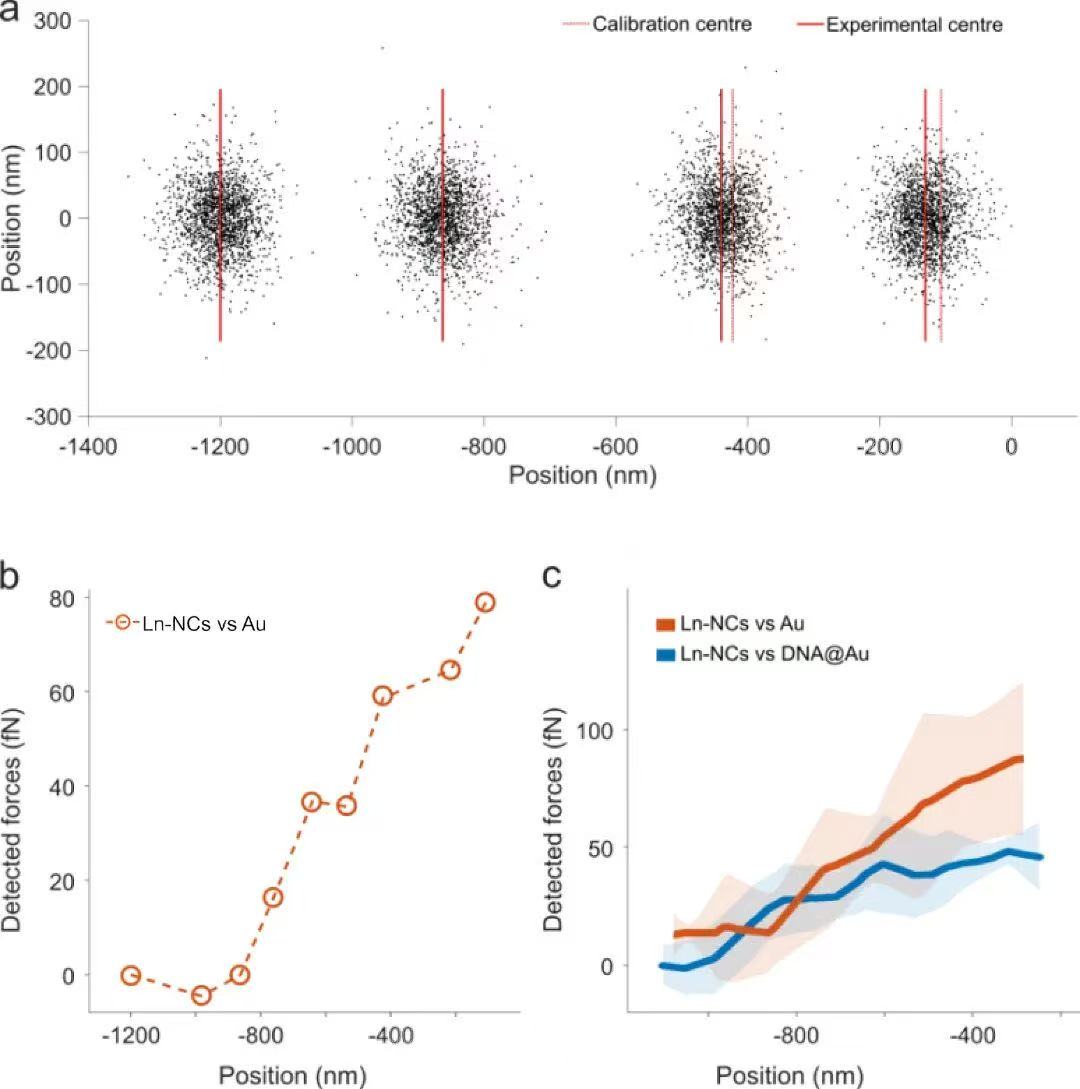
Nanoscale interaction force detection between rare-earth-doped nanoparticles and a gold surface
Based on these principles, the paper systematically elaborates on the construction scheme and procedure for upconversion particle-based optical tweezers. The procedure describes the use of lanthanide ion-doped upconversion particles, trapped and excited using a 980 nm laser and detected using a high-speed scientific complementary metal-oxide-semiconductor camera, a spectrometer, an optical astigmatism component and a machine-learning-aided three-dimensional localization algorithm to construct the super-resolved fluorescence optical tweezers.
The protocol enables subfemtonewton-level force sensing, intracellular viscosity measurements and local temperature sensing, supporting research including subcellular environment measuring and biomolecular long-distance interaction.
This research represents a significant achievement from Professor Wang Fan's team at the School of Physics in the interdisciplinary field of biophotonics. The team has long been dedicated to research in biophotonics, nanophotonics, super-resolution microscopy imaging, and optical tweezers. This work advances the deep integration of upconversion particles with optical manipulation, offering a systematic framework and experimental guide for cross-disciplinary research.
Link to the article: https://doi.org/10.1038/s41596-025-01264-3
Editor: Lyu Xingyun


 Beihang News2026 Symposium on Excellent Engineer Training held in BeijingMore
 Beihang NewsProfessor Liu Mingjie's team publishes article in Science, revealing high-modulus toughening mechanism in nacreMore
 Beihang NewsWang Yunpeng appointed Secretary of the CPC Beihang University CommitteeMore
 Beihang NewsElsevier Senior Vice President Said Taha visits Beihang UniversityMore
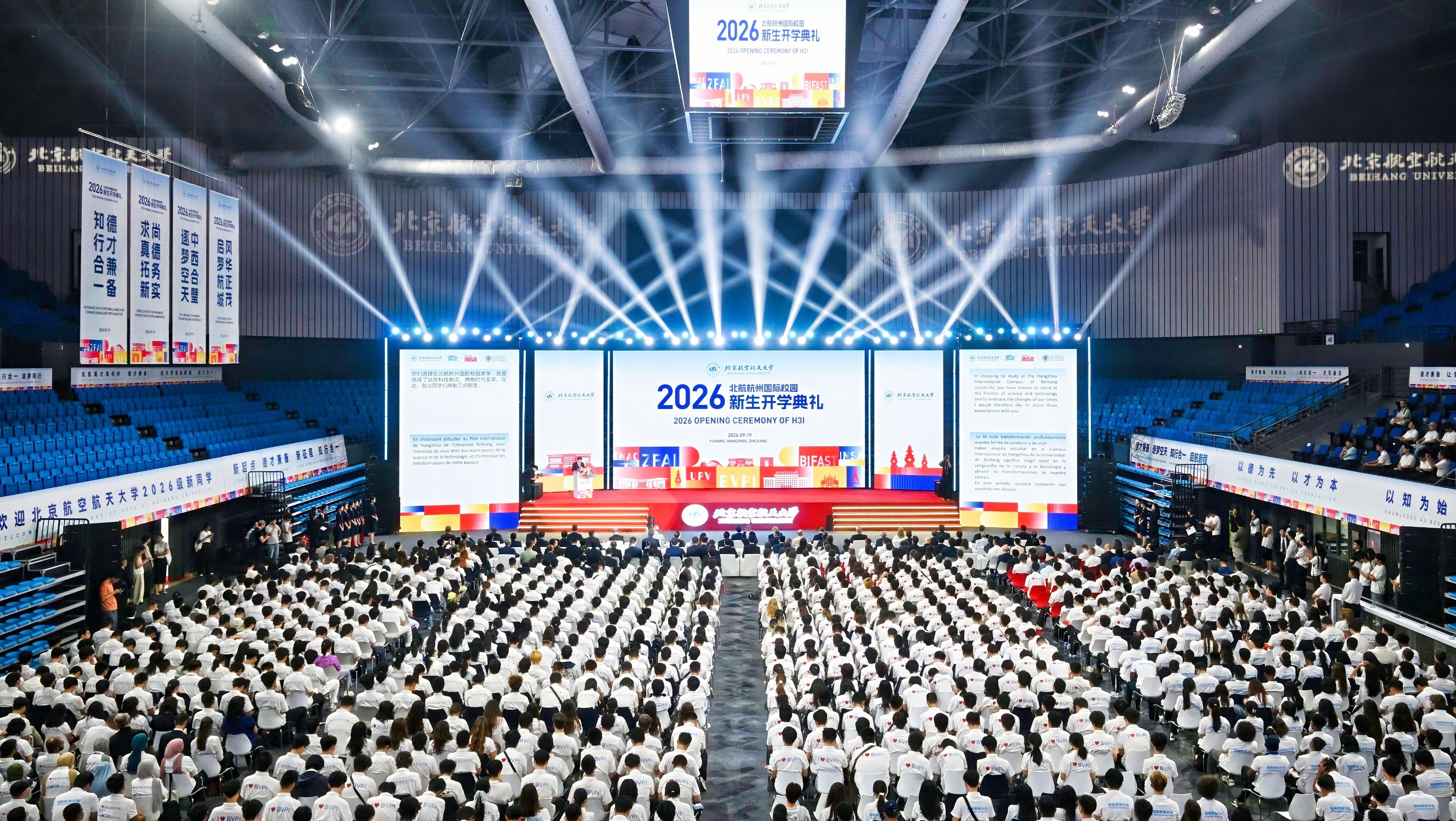 Beihang NewsPresident Wang Yunpeng visits Hangzhou to advance university-city integration and attends opening ceremony of H3IMore
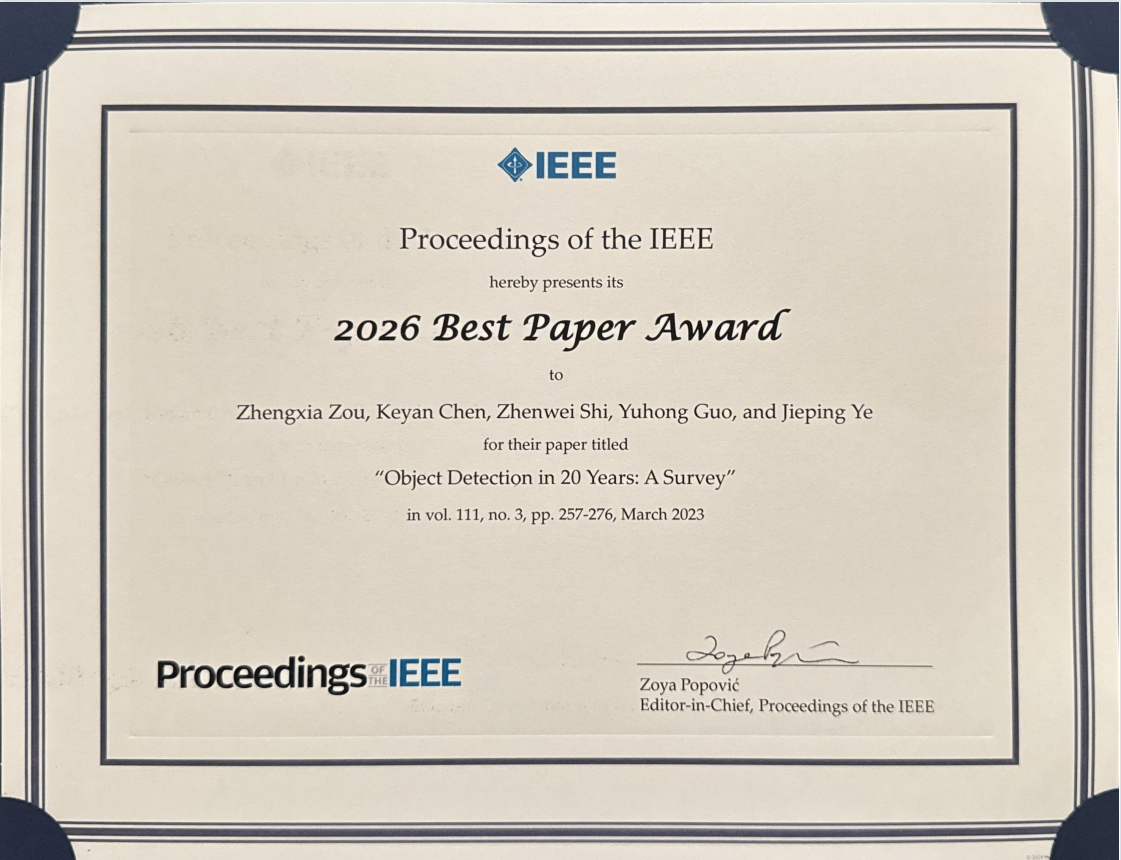 Beihang NewsBeihang team wins 2026 Best Paper Award from Proceedings of the IEEEMore