Recently, the first human-powered aircraft developed by Beihang Aeromodelling Team after four years of consecutive research successfully completed its maiden test flight at the Bailingmiao Airport in Darhan-Muminggan Joint Banner, Baotou, Inner Mongolia.
The aircraft achieved a successful takeoff roll and stable airborne flight, fully validating the feasibility of its overall design as well as the reliability and safety of its structural and transmission systems, thereby laying a solid engineering foundation for future performance upgrades and iterations. This is the first human-powered aircraft in China independently designed and fabricated entirely by university students, marking a breakthrough achievement in Beihang's student innovation and practice initiatives.
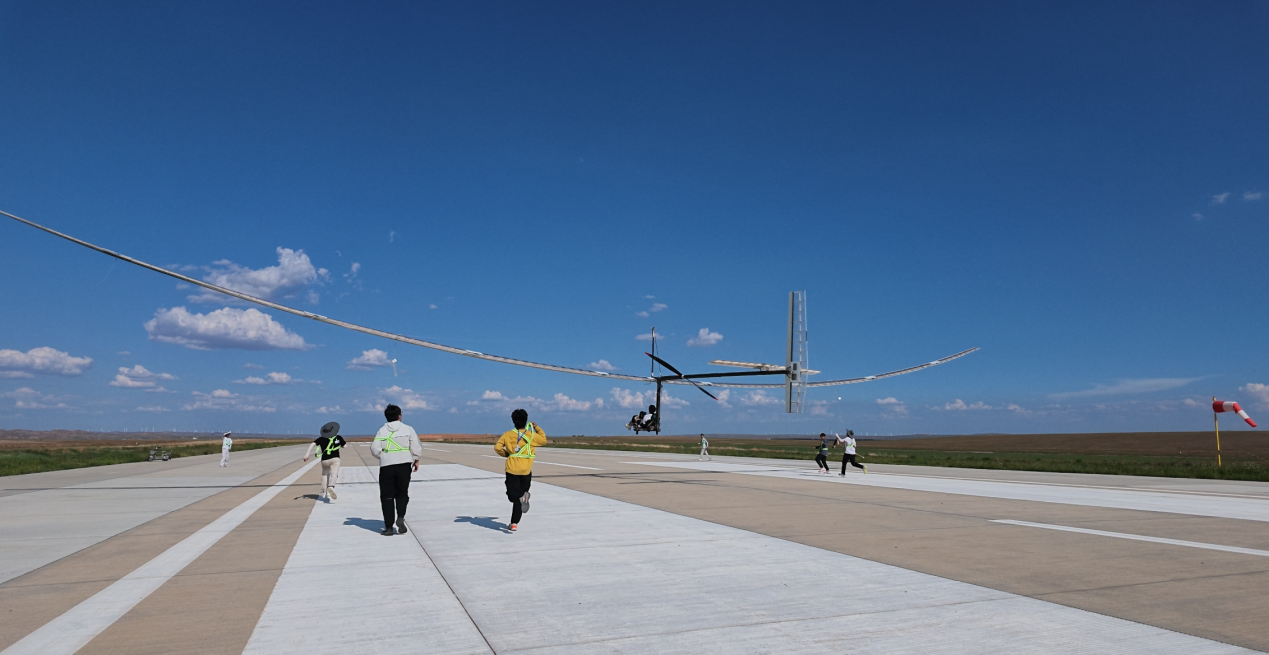
The aircraft features a wingspan of 34 meters—comparable in scale to a Boeing 737 passenger jet—while its structural weight is only 34 kilograms, with a total takeoff weight of 95 kilograms. The entire aircraft relies purely on human power: the pilot pedals to drive the transmission mechanism, which rotates the propeller to generate thrust for takeoff and sustained flight. Given the very limited mechanical power output of the human body, human-powered aircraft demands near-ultimate design optimization on aerodynamic efficiency, structural lightness, and transmission system energy efficiency, making this a challenging and explorative direction for student-led engineering innovation.
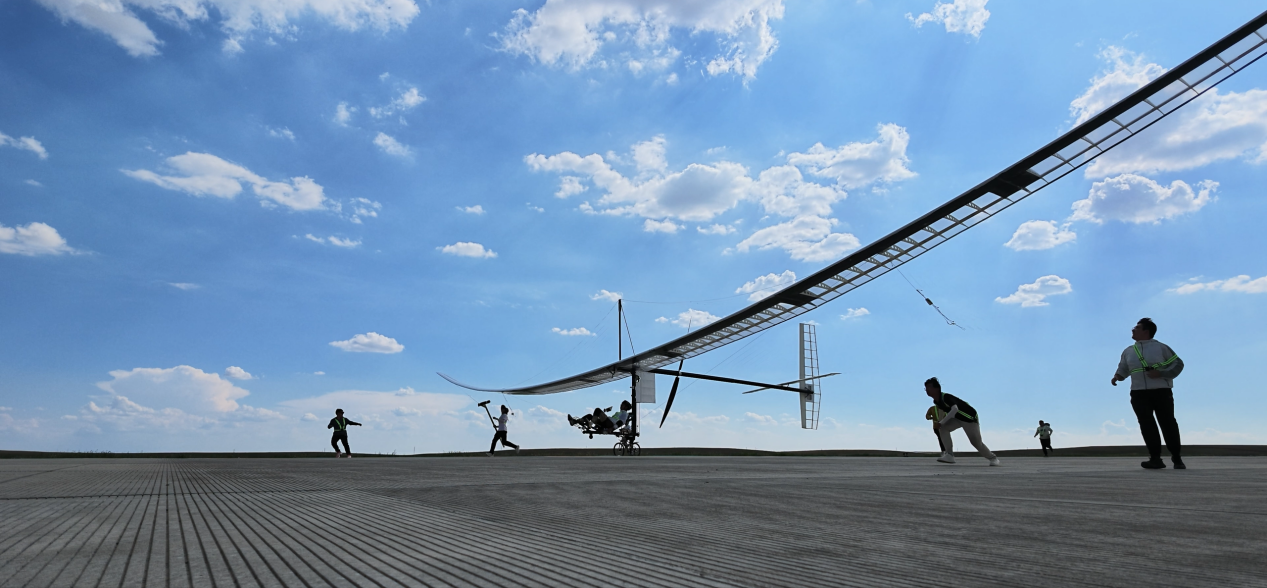
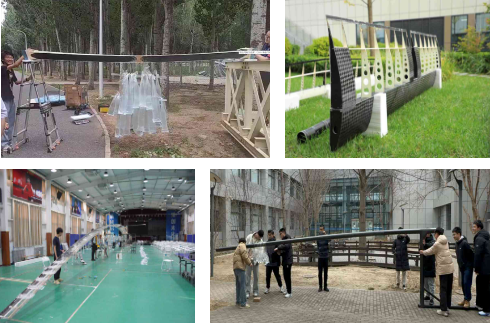
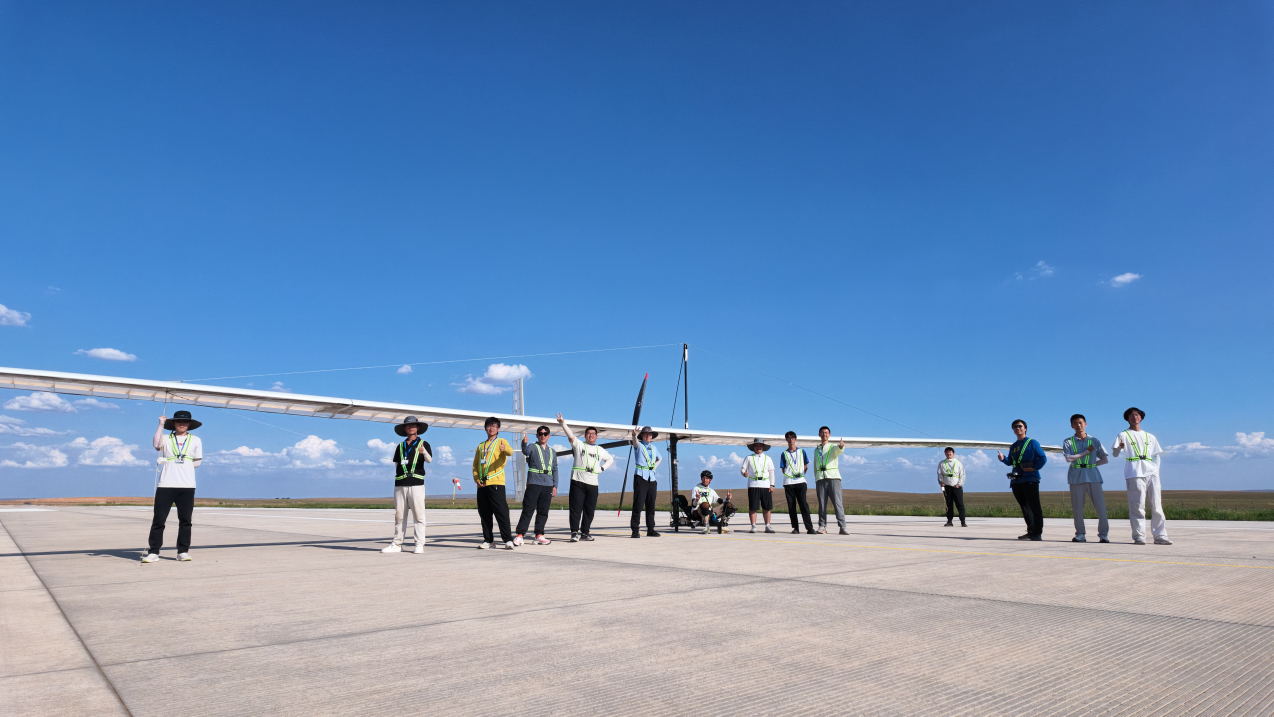
The project was carried out successively over four years by dozens of undergraduate and graduate students from the Beihang Aeromodelling Team, across multiple grades and disciplines, with project-based students deeply involved in the development of core systems. The team completed the entire research and development cycle, including scheme demonstration, aerodynamic design, structural development, manufacturing, ground testing, and flight verification.
Throughout the development process, the team tackled key technical challenges, including high-lift-to-drag ratio aerodynamic design, ultra-lightweight composite structures, high-efficiency human-powered transmission systems, and highly reliable control systems. In particular, project-based students took the lead in critical tasks such as the design and fabrication of the aircraft's control system, electrical system design, flight control development, and parameter tuning, which were critical to the success of the maiden flight. The project has yielded three national invention patent applications, and related research outcomes earned a second-place award in the Guangwei Cup College Student Composite Materials Science and Technology Innovation Competition, organized by the Chinese Society for Composite Materials.
Following the successful maiden flight, the project team will continue to optimize the design under the guidance of the faculty team from the School of Aeronautic Science and Engineering, aiming to break the world record for human-powered aircraft flight endurance.
The human-powered aircraft project serves as a quintessential example of Beihang students translating classroom knowledge into hands-on engineering practice, fully demonstrating the innovative spirit of Beihang students who are committed to aviation pursuits, courageous in tackling challenges and dedicated to perfection. It also stands as a major achievement of the School of Aeronautic Science and Engineering in cultivating innovative aerospace talent. The School will continue to support student innovation teams in conducting cutting-edge exploration and engineering practice, encouraging students to hone their skills and grow through real-world engineering projects.
Editor: Liu Tingting


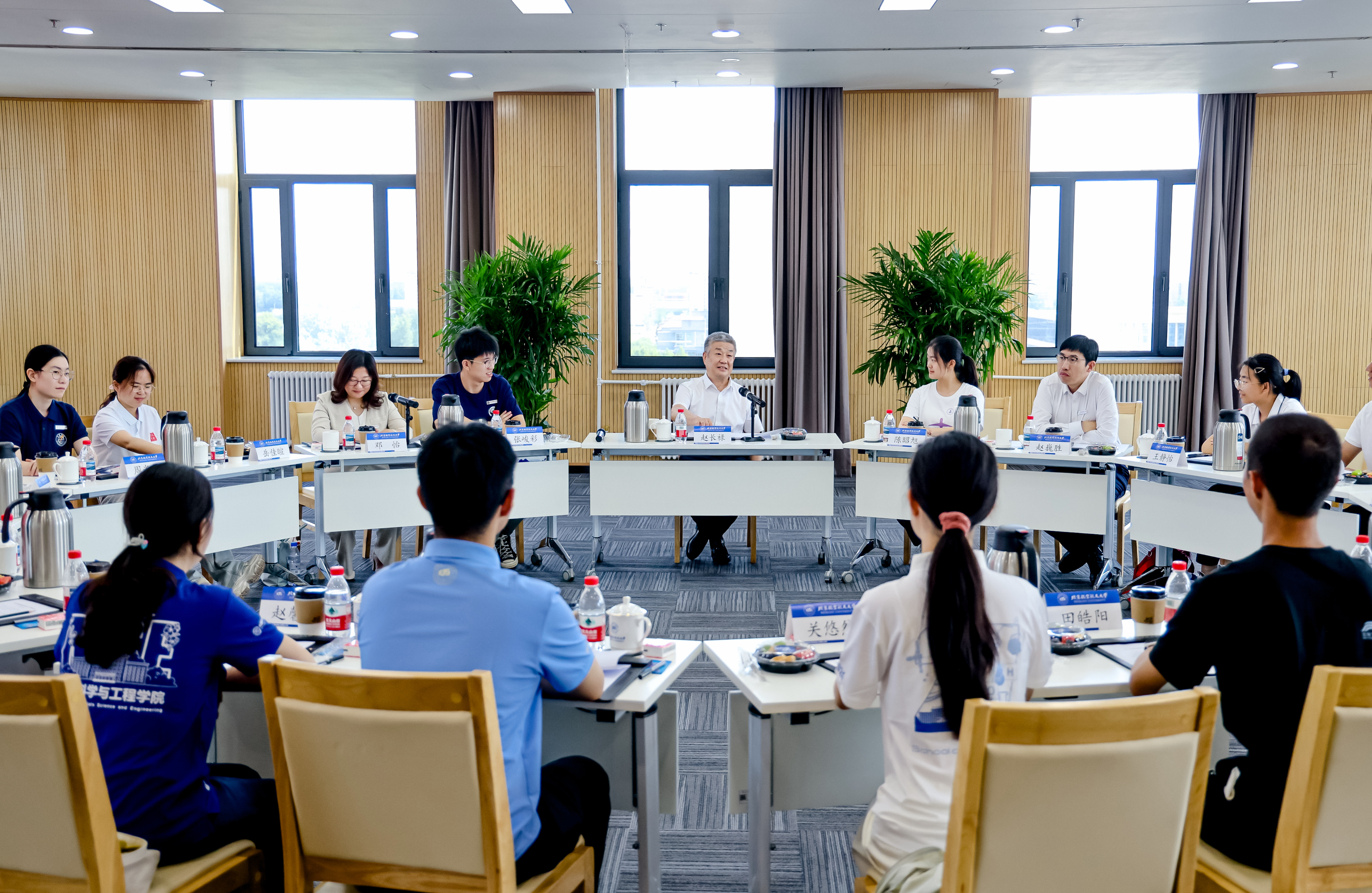 Beihang NewsBeihang leaders engage in dialogue with new undergraduate and graduate student representativesMore
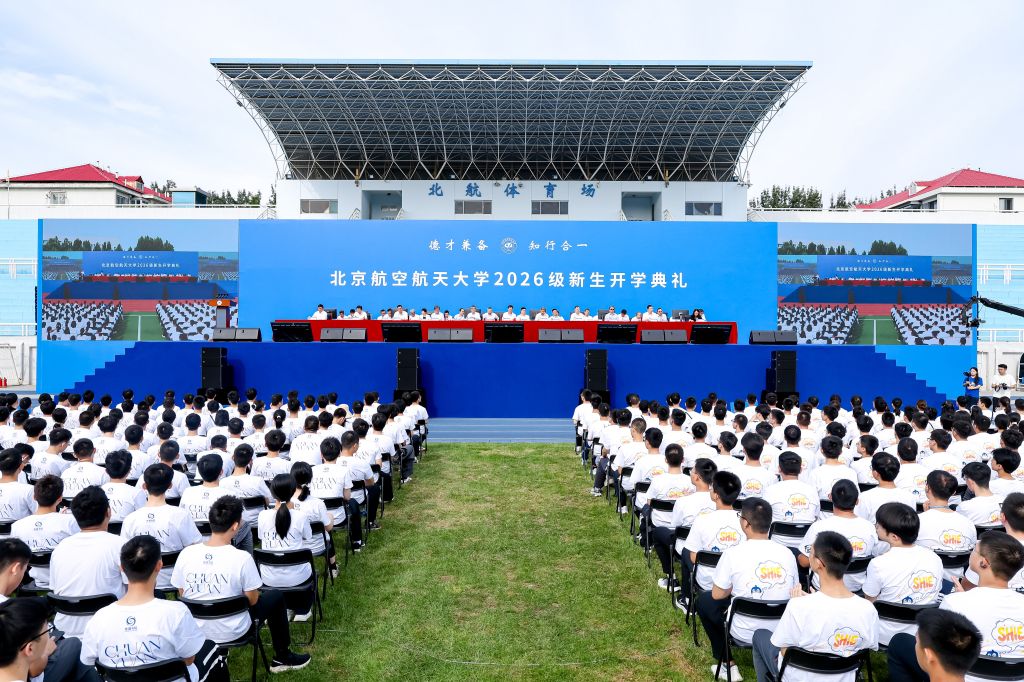 Beihang NewsBeihang University holds 2026 opening convocation to welcome new studentsMore
 Beihang NewsBeihang University welcomes 9,022 new graduate studentsMore
 Beihang NewsProfessor Yu Shui wins Best Screenplay Award at 21st Changchun Film FestivalMore
 Beihang NewsBeihang University welcomes new undergraduatesMore