Recently, the team led by Professor Luo Sida from the Institute of Bionic and Micro-Nano Systems, School of Mechanical Engineering and Automation, published a paper in Chemical Engineering Journal, entitled "Electromagnetic-dual-gradient laser-induced graphene/Fe3O4 composites with synergistic gradient-patterning for advanced electromagnetic interference shielding."
By innovatively constructing a laser-induced graphene/Fe3O4 (LIG/Fe3O4) composite that integrates frequency selective surface (FSS) patterns with a multilayer electromagnetic dual-gradient structure, the research team has enhanced the total electromagnetic interference shielding effectiveness of lightweight carbon-based materials while maintaining extremely low secondary reflection loss. This demonstrates the significant application value of novel shielding materials that combine high shielding effectiveness, low reflection, and excellent environmental adaptability.
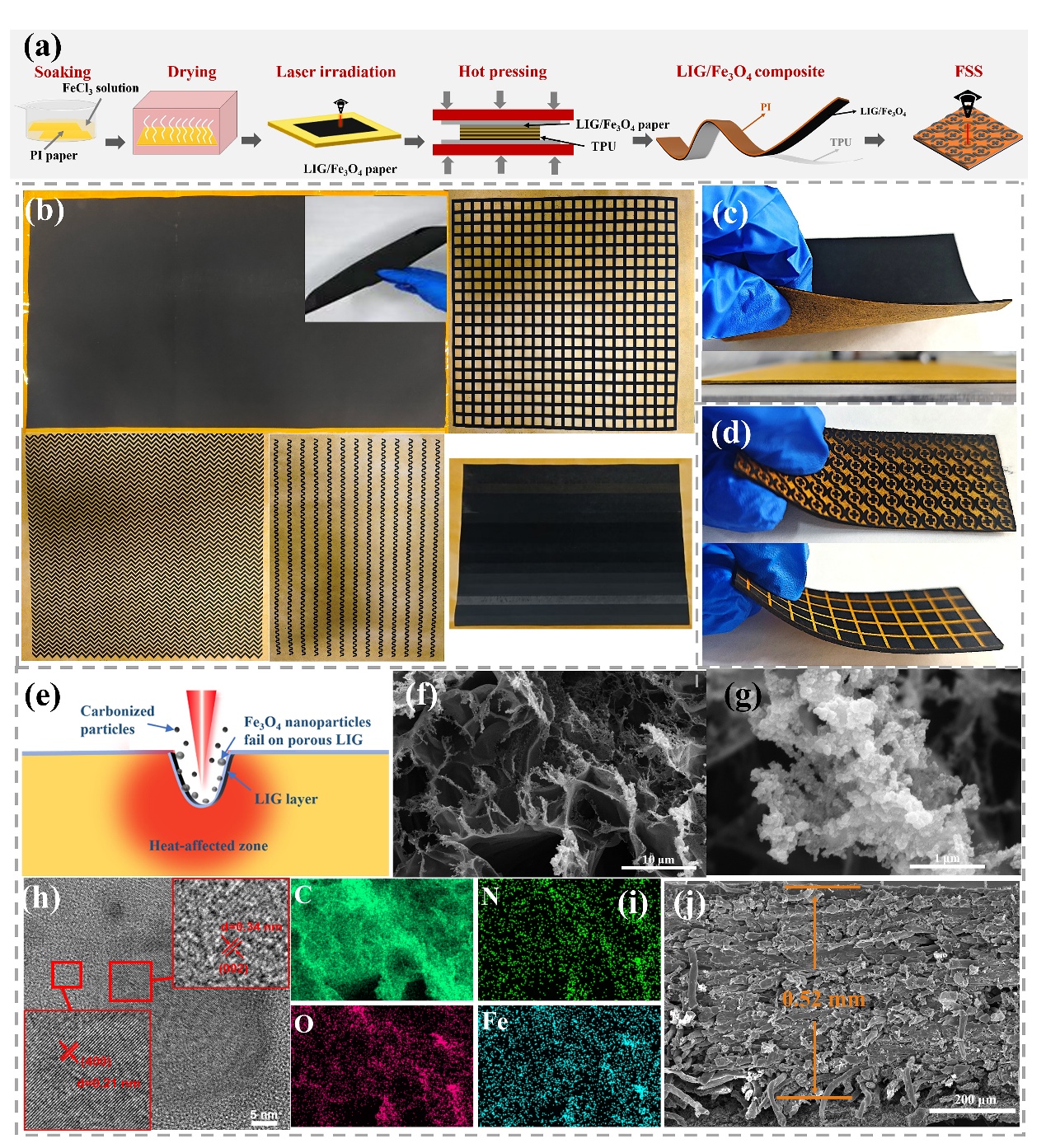
Fig.1 Preparation process, macroscopic customized design demonstration, and microscopic multi-scale morphology and structural characterization of the LIG/Fe3O4 composites
The research team combined in-situ laser processing with hot-pressing techniques to realize the decoupled and independent control over the electrical conductivity (by tuning laser parameters) and magnetic permeability (by adjusting Fe3O4 precursor loading) of the composites. On this basis, they meticulously designed and constructed a multilayer architecture that continuously transitions from a "low-conductivity/high-permeability surface layer (impedance matching zone)" to a "high-conductivity/low-permeability inner layer (absorption and attenuation zone)."
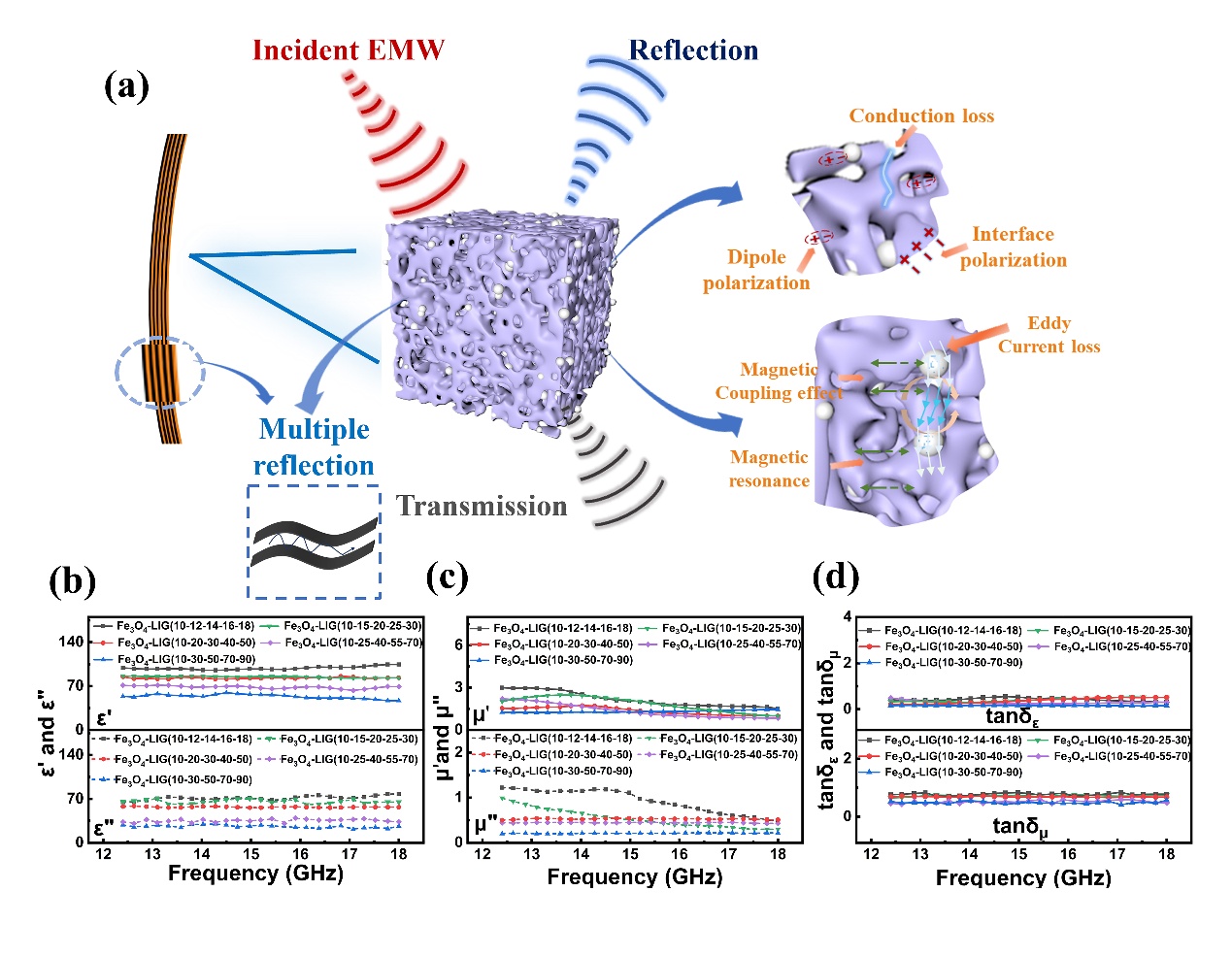
Fig.2 Electromagnetic interference shielding mechanism of the laser-induced graphene/Fe3O4 (LIG/Fe3O4) composites
This dual-gradient architecture enables electromagnetic waves to penetrate into the material interior more smoothly and be efficiently dissipated through progressive impedance matching and synergistic conductive-magnetic loss. To further enhance absorption-dominated shielding performance, the research team introduced customized frequency selective surface (FSS) patterns on the material surface. Both experimental results and full-wave electromagnetic simulations (HFSS) confirmed that the integration of FSS patterns effectively enhances local electromagnetic field interactions, triggering resonant coupling and field confinement effects. This perfectly synergizes with the gradient internal structure to achieve an efficient "absorption-reflection-reabsorption" electromagnetic wave dissipation mechanism.
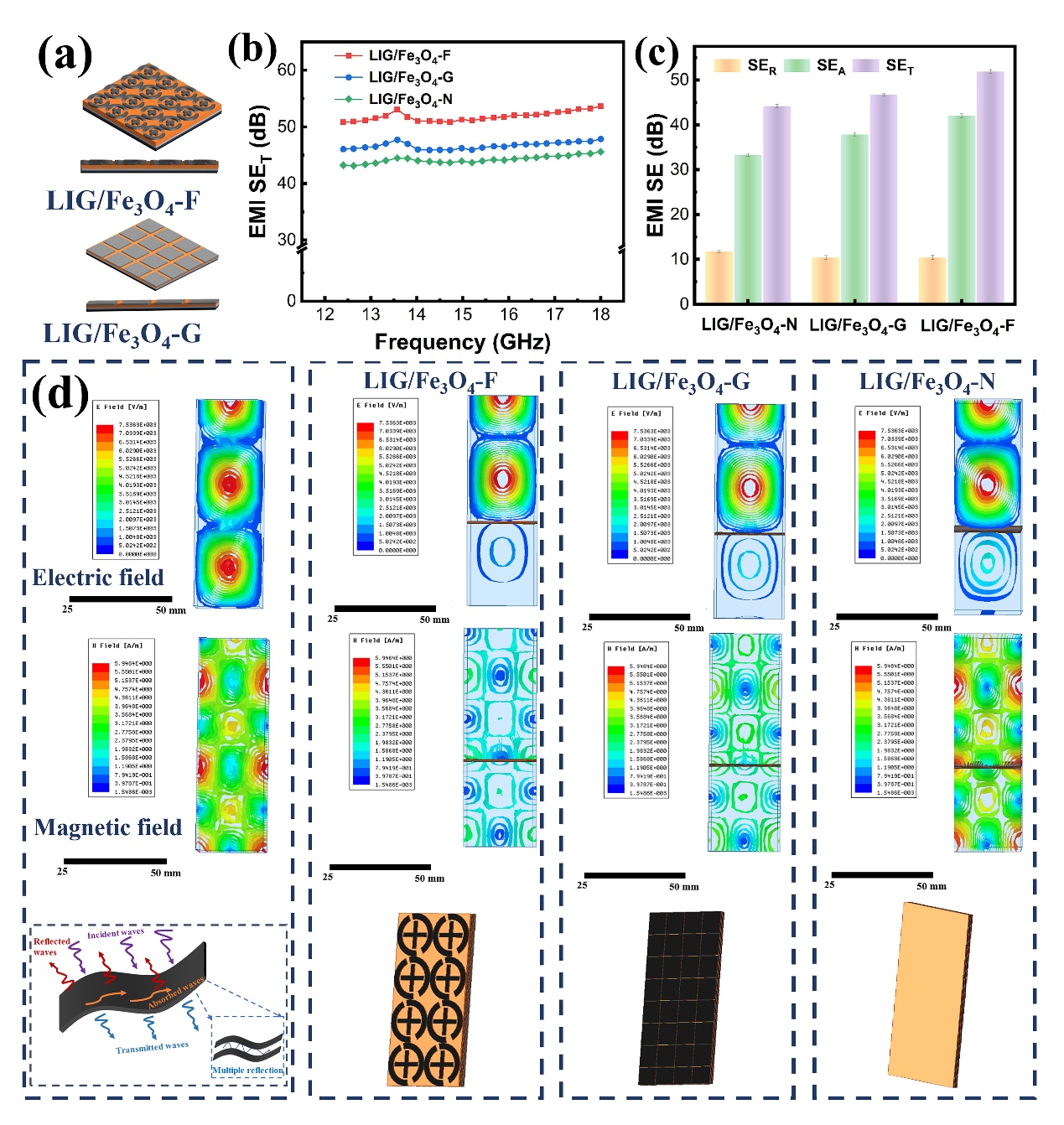
Fig.3 HFSS simulations of electromagnetic field distributions in composites with different patterns: electric field magnitude contour plots and magnetic field magnitude contour plots
This work not only reveals the physical mechanism of the interaction between multi-scale microstructures and electromagnetic waves, but also provides a brand-new universal paradigm for designing lightweight, high-efficiency EMI shielding materials for next-generation flexible electronic devices and advanced communication systems. The research was supported by the General Program of the National Natural Science Foundation of China (No. 62371025), the Science Fund for Creative Research Groups (No. T2121003), and the Postdoctoral Innovative Talent Program (Type A, No. BX20240460).
Article link: https://doi.org/10.1016/j.cej.2026.175422
Editor: Liu Tingting


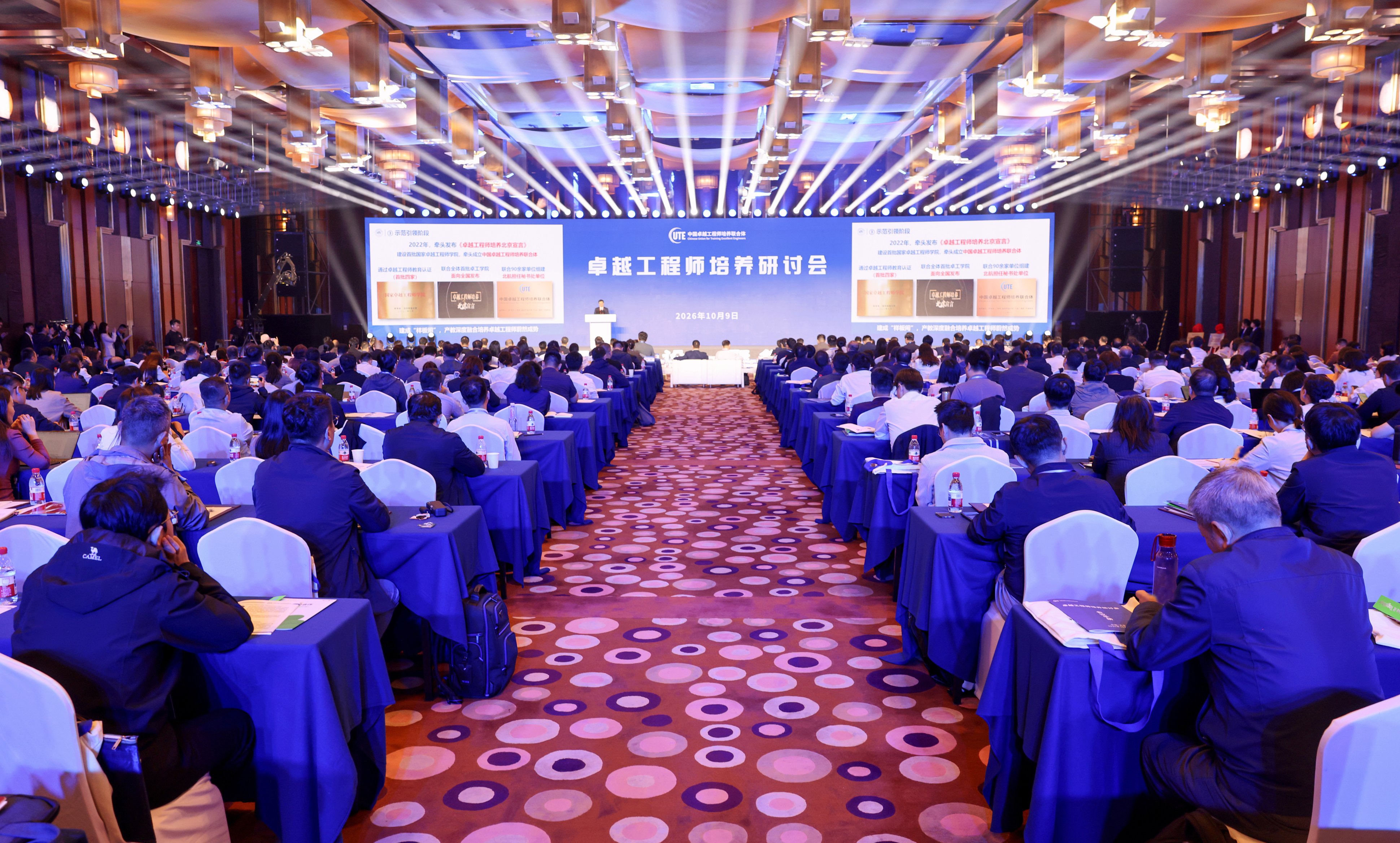 Beihang News2026 Symposium on Excellent Engineer Training held in BeijingMore
 Beihang NewsProfessor Liu Mingjie's team publishes article in Science, revealing high-modulus toughening mechanism in nacreMore
 Beihang NewsWang Yunpeng appointed Secretary of the CPC Beihang University CommitteeMore
 Beihang NewsElsevier Senior Vice President Said Taha visits Beihang UniversityMore
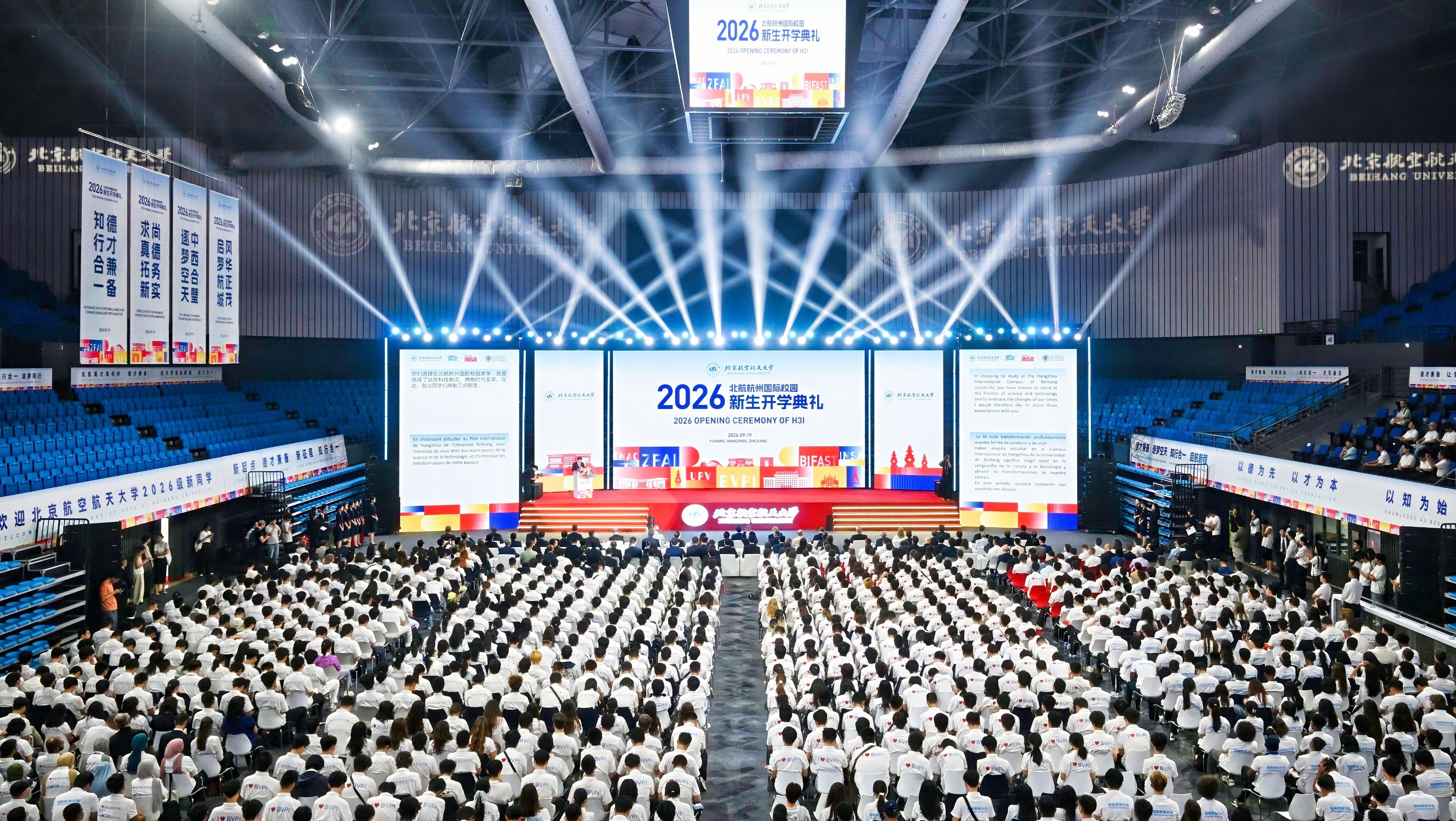 Beihang NewsPresident Wang Yunpeng visits Hangzhou to advance university-city integration and attends opening ceremony of H3IMore
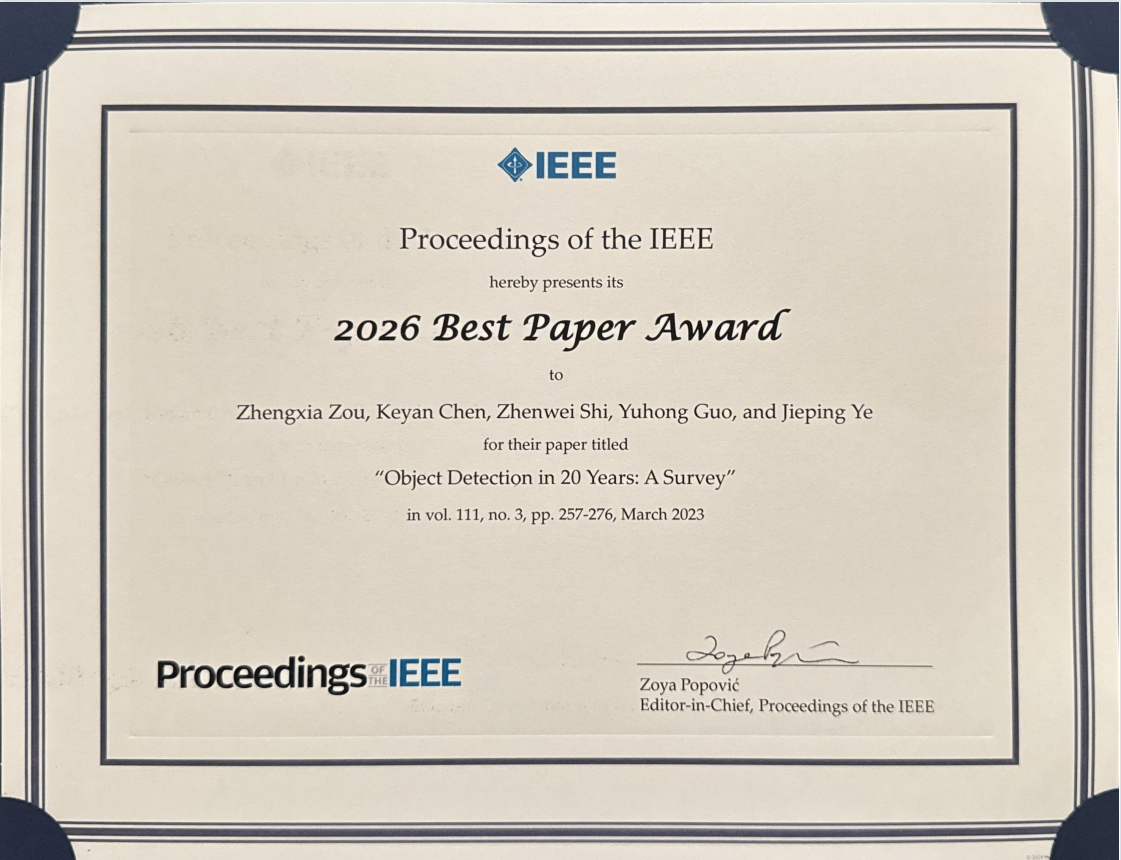 Beihang NewsBeihang team wins 2026 Best Paper Award from Proceedings of the IEEEMore