A collaborative research team led by Associate Professor Zhang Bei from the School of Automation Science and Electrical Engineering at Beihang University and Associate Professor Wang Le from the Department of Physics at Renmin University of China, has systematically reviewed the technological evolution of solar polarization navigation, with particular emphasis on recent advances in vortex polarization sensing technology.
The paper, titled "Review of Solar Polarization Navigation: Technical Evolution, Sensor-Algorithm Integration, and Prototypes for Ground & UAV Scenarios," was published as a comprehensive review article in IEEE Transactions on Instrumentation & Measurement.
The technical survey and synthesis were carried out by Beihang graduate students Shan Chenning and Wang Junjie, with undergraduate students Liu Yufei and Zhong Beining providing research assistance.
Sensor-Algorithm Matching Across 2D and 3D Platforms
Based on a novel classification framework, the team systematically evaluates the applicability of polarization navigation sensing technologies across 2D and 3D operational scenarios. The review categorizes 2D algorithms suitable for ground-level platforms such as robots and autonomous vehicles, alongside 3D algorithms typically integrated with Inertial Navigation Systems for unmanned aerial vehicles. Critically, the work provides sensor-algorithm matching recommendations for different application scenarios, offering valuable references for engineering design.
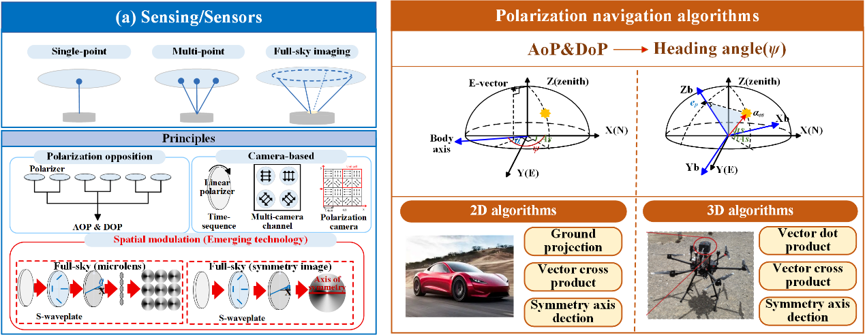
Figure 1. Sensing/Sensors and polarization navigation algorithms
Prototype Survey and Experimental Validation
The review consolidates experimental data from research groups worldwide spanning nearly three decades (1997–2026). It details three categories of polarization sensors (opposition, camera-based, and spatial modulation), alongside 2D (ground platforms) and 3D (UAVs and integrated with INS) navigation algorithms. It also summarizes over 15 prototypes and their multi-scenario validations: indoor calibration, outdoor ground tests (sunny/cloudy/occluded), and UAV aerial experiments, providing a comprehensive performance reference.
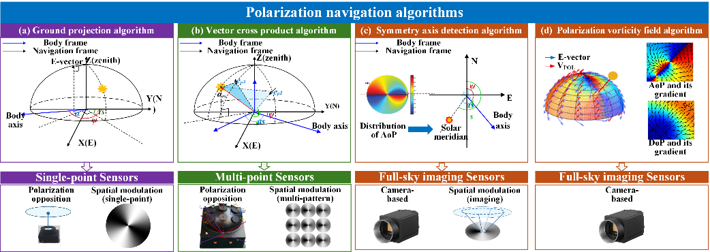
Figure 2. Navigation algorithms versus sensing technology
Prototype Recommendations for Application Scenarios
Addressing a critical challenge for practical deployment, the team analyzes sensor performance under various atmospheric interferences including occlusion, strong reflection, and multiple scattering. The review offers evidence-based recommendations for sensor selection across different weather conditions. The study also explores emerging applications including nighttime and underwater polarization navigation, as well as multi-source fusion frameworks integrating polarization with inertial and geomagnetic sensors.
Interdisciplinary Frontiers
The review emphasizes that bio-inspired polarization navigation is only one of many application domains for polarization detection technology. The team draws connections to applications in material characterization, tumor diagnosis, blood glucose monitoring, autonomous driving imaging, remote sensing, and electric field detection. From an interdisciplinary perspective, the researchers systematically explore the common technical foundations and convergent applications between polarization detection used in biomimetic navigation and that employed in other fields.
Editor: Lyu Xingyun


 Beihang NewsBeihang celebrates 42nd Teachers' DayMore
 Beihang NewsBeihang's first student-designed human-powered aircraft completes test flightMore
 Beihang NewsBeihang leaders engage in dialogue with new undergraduate and graduate student representativesMore
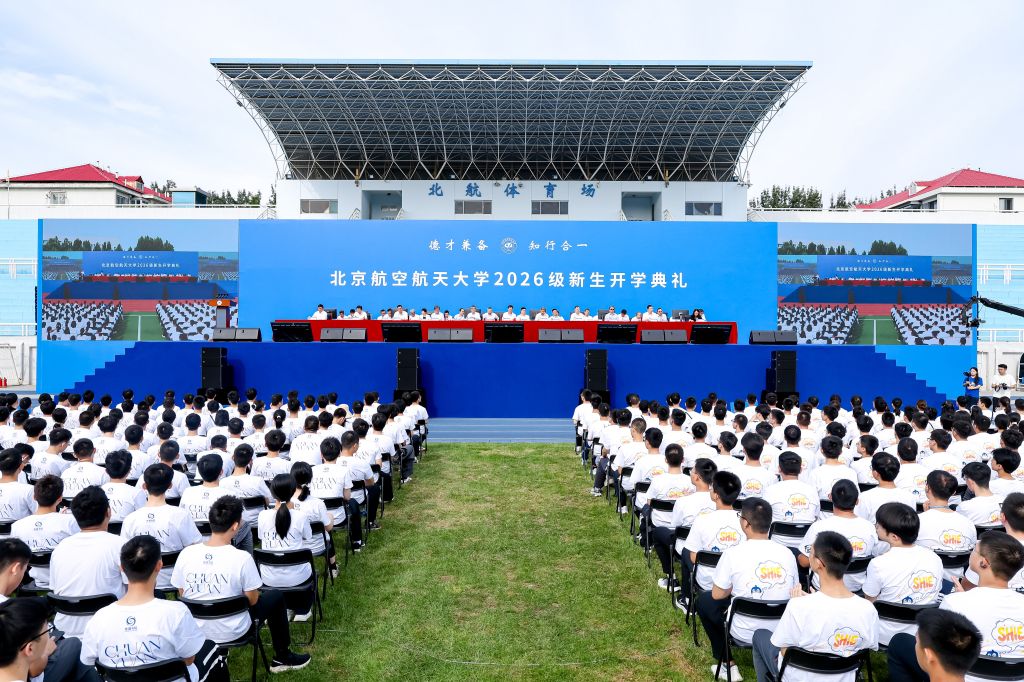 Beihang NewsBeihang University holds 2026 opening convocation to welcome new studentsMore
 Beihang NewsBeihang University welcomes 9,022 new graduate studentsMore
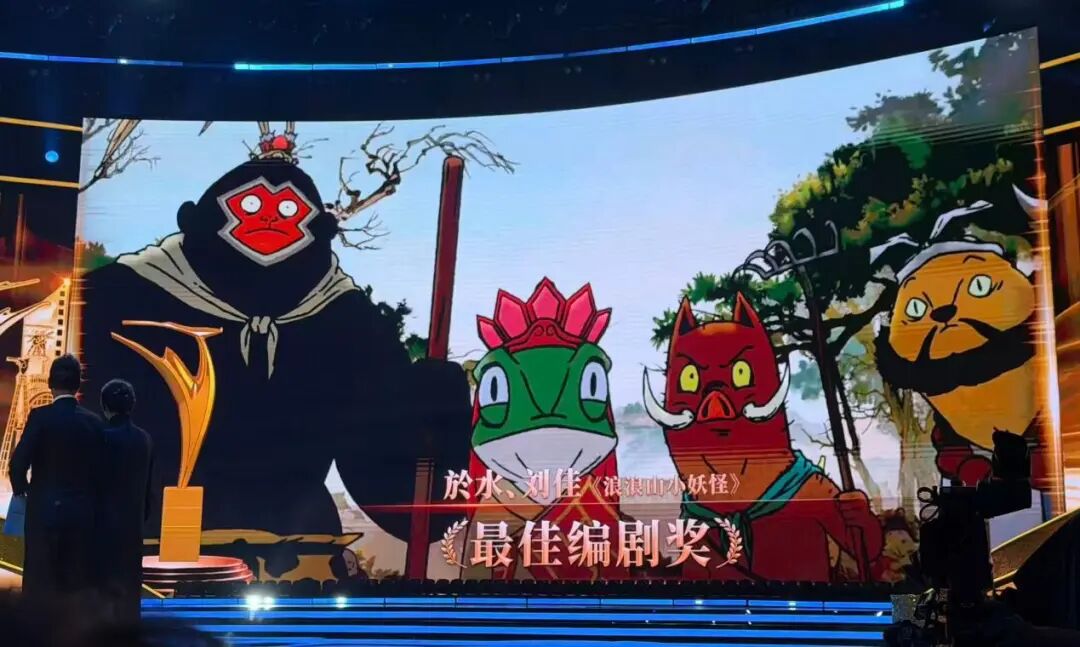 Beihang NewsProfessor Yu Shui wins Best Screenplay Award at 21st Changchun Film FestivalMore