A significant advancement by an international and cross-institutional research team led by Associate Professor Yao Tang from the School of Economics and Management was published online in the international journal Tourism Management, titled "How to move you? The persuasive effects of influencer narrative styles in recommending tourism activities." The team includes Associate Professor Qiu Wei from Nankai University, Associate Professor Fu Xiaoxiao from the University of Central Florida, and Ph.D. candidate Zhang Yuhang from Beihang University, with Associate Professor Yao Tang serving as the sole corresponding author.
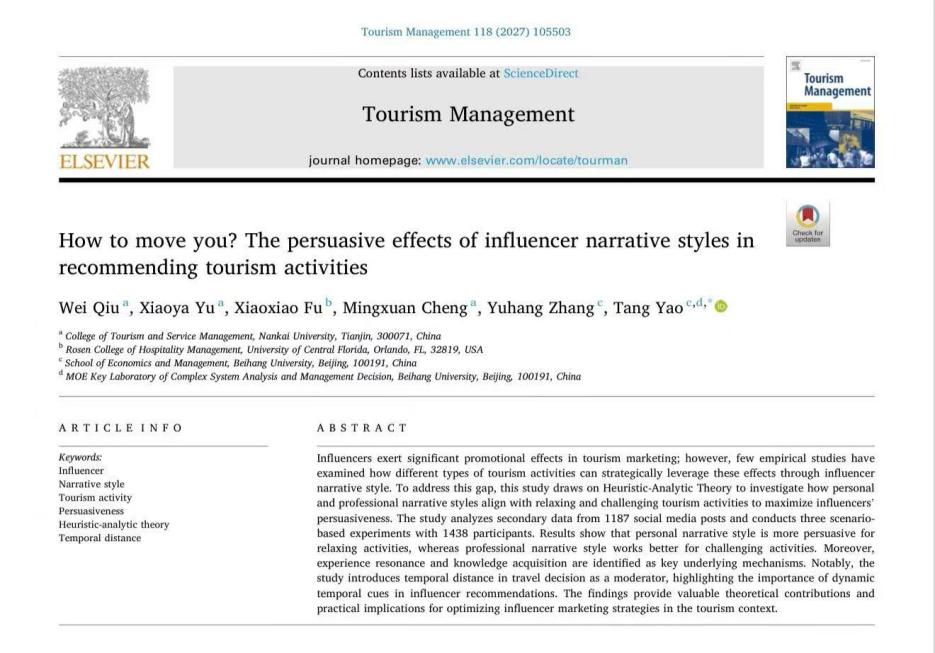
Against the backdrop of national policies promoting the digital and high-quality development of culture and tourism, social media influencers (travel bloggers) have become key communication vehicles for destination promotion and stimulating mass tourism consumption. However, current practices face significant challenges: a prevalent mismatch between bloggers' content expression and the attributes of tourism products leads to uneven communication effectiveness. There remains a lack of solid empirical evidence on how different narrative styles should be matched with diverse tourism products. This research directly addresses the high-quality development goals of the tourism industry, focusing on the practical issue of social media tourism communication. It provides theoretical support and actionable strategies for leveraging new media tools, enabling precision marketing for tourism destinations and higher-quality cultural tourism communication content.
This study draws on Heuristic-Analytic Theory to investigate how personal and professional narrative styles align with relaxing and challenging tourism activities to maximize influencers' persuasiveness. Results show that personal narrative style is more persuasive for relaxing activities, whereas professional narrative style works better for challenging activities. Moreover, experience resonance and knowledge acquisition are identified as key underlying mechanisms. Notably, the study introduces temporal distance in travel decision as a moderator, highlighting the importance of dynamic temporal cues in influencer recommendations. The findings provide valuable theoretical contributions and practical implications for optimizing influencer marketing strategies in the tourism context.
The research overturns the conventional belief that "greater influencer power equates to stronger persuasive impact," demonstrating that the core of communication persuasion lies in the precise matching of narrative style with tourism activity attributes. These insights not only enrich theoretical research on influencer marketing and tourist information processing, but also offer actionable guidance for destination marketers in strategically aligning influencer narrative styles with promoted activities and provide influencers with direction to refine their stylistic choices and recommendation timing.
The paper was previously awarded the Outstanding Paper Award at the 10th Symposium on Tourism Behavior and the 1st Hexi Corridor Culture and Tourism High-Quality Development Forum in 2025.
The publication of this paper further highlights the international academic strength of Associate Professor Yao Tang's team in the fields of digital tourism and new media marketing in tourism. With a series of previously published research in top-tier international journals such as Tourism Management and Annals of Tourism Research, the team continues to produce high-quality empirical research grounded in practical issues facing the tourism industry, providing crucial academic support and practical insights for boosting China's tourism development.
Tourism Management is globally recognized as one of the three leading authoritative academic journals in the field of tourism management, holding significant academic influence and industry recognition. The journal holds multiple prestigious accreditations: it is an AJG 4-star journal rated by the Association of Business Schools (ABS), an FMS Class-A journal under the Federation of China Management Science Society, and its latest 2025 impact factor stands at 14.5.
Link to the article: https://www.sciencedirect.com/science/article/pii/S0261517726001135
Editor: Liu Tingting


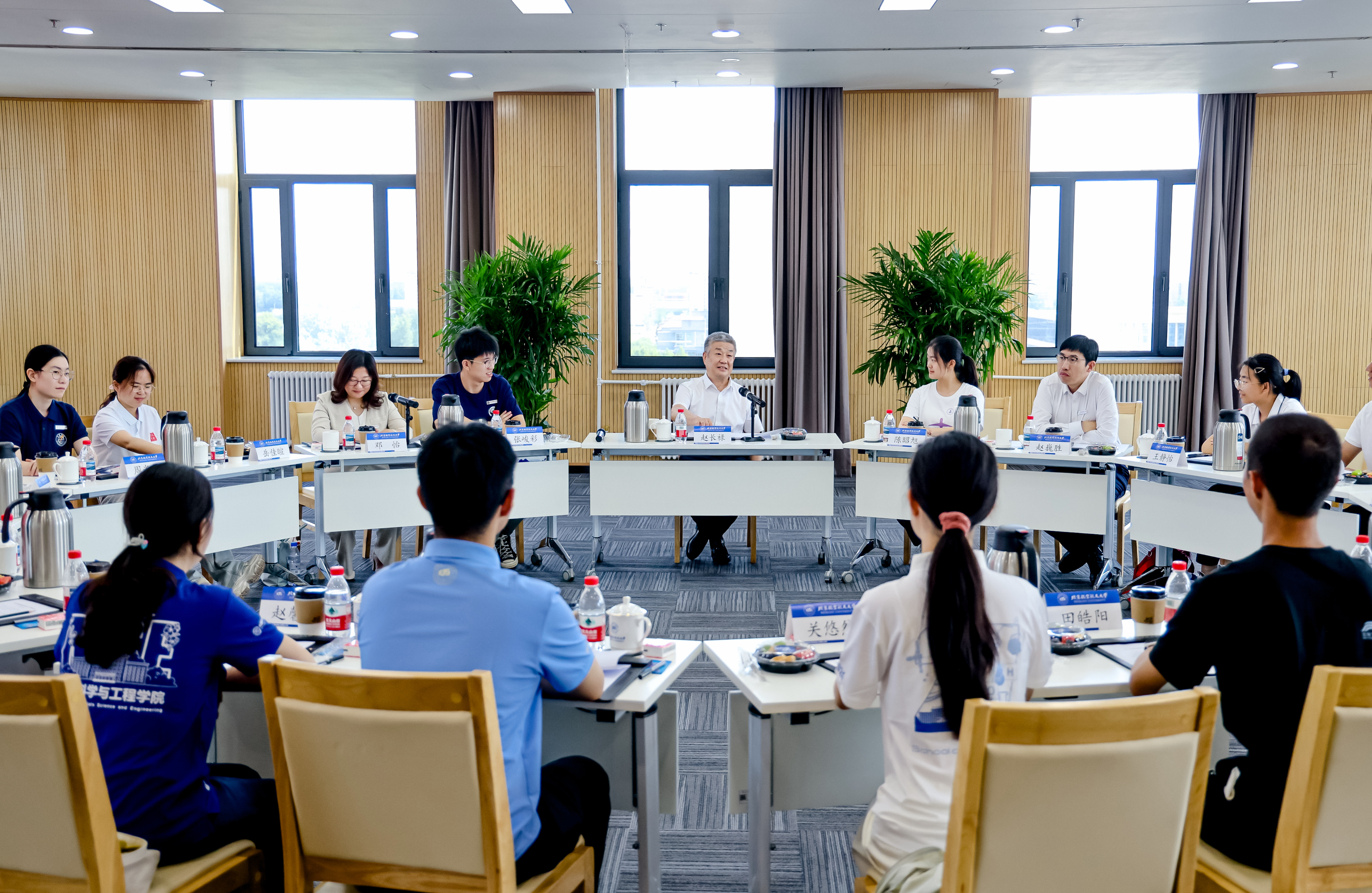 Beihang NewsBeihang leaders engage in dialogue with new undergraduate and graduate student representativesMore
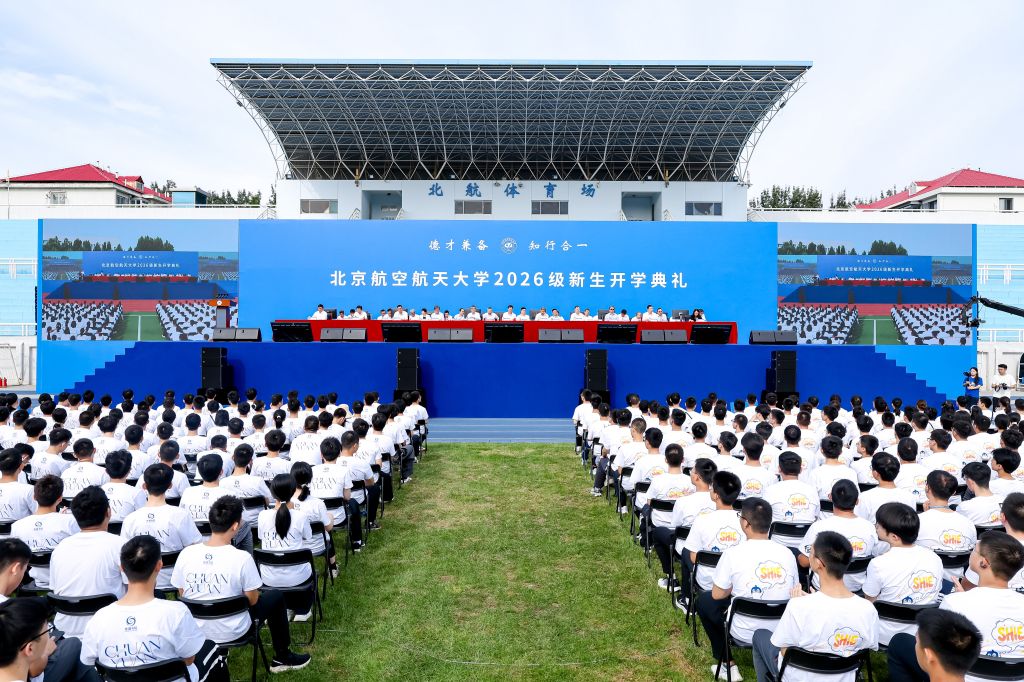 Beihang NewsBeihang University holds 2026 opening convocation to welcome new studentsMore
 Beihang NewsBeihang University welcomes 9,022 new graduate studentsMore
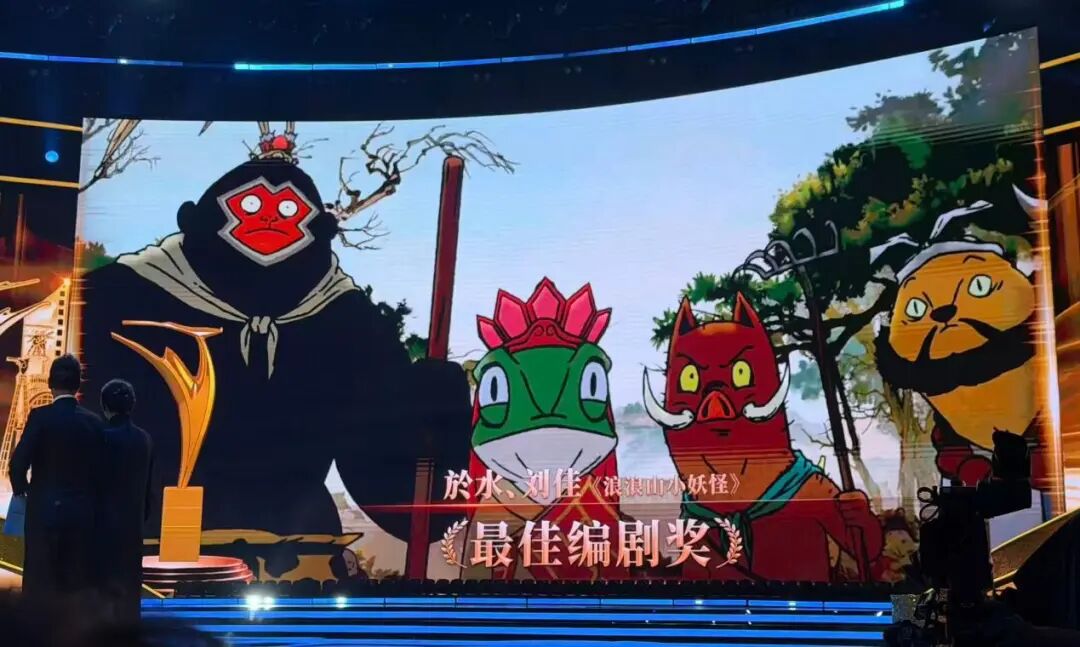 Beihang NewsProfessor Yu Shui wins Best Screenplay Award at 21st Changchun Film FestivalMore
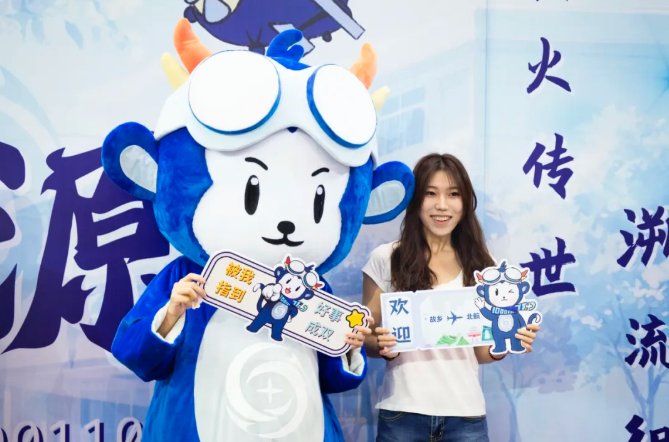 Beihang NewsBeihang University welcomes new undergraduatesMore
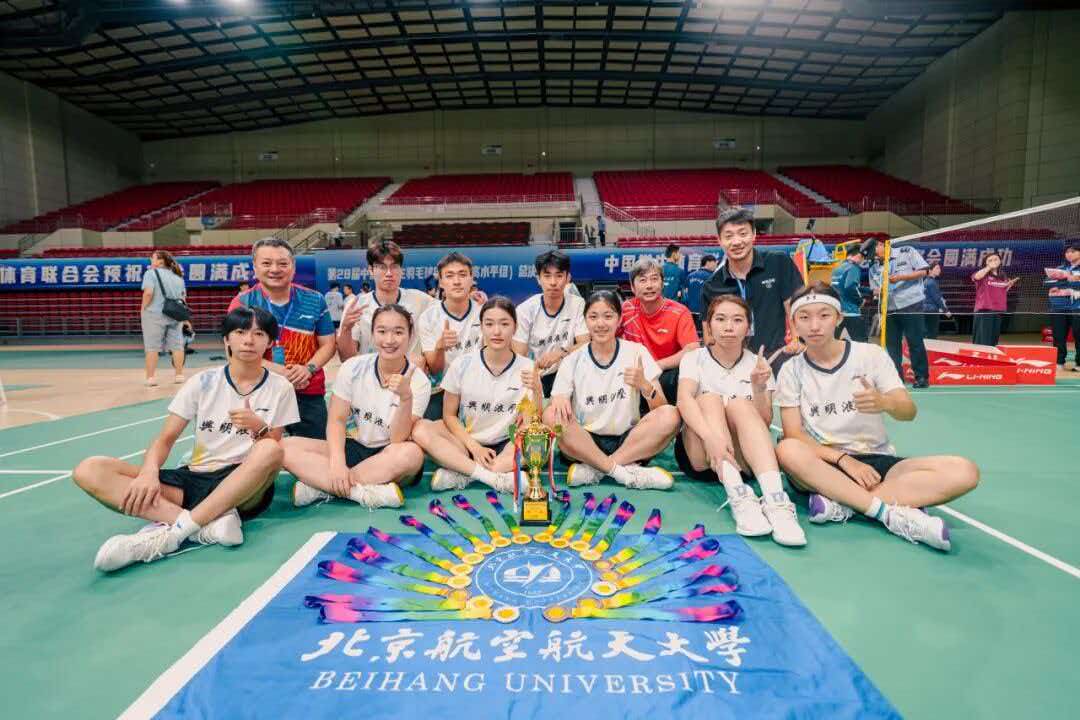 Beihang NewsBeihang badminton team secures 3 golds at 28th National University Badminton ChampionshipMore