On May 12, Beihang University and the Universidade Federal do Rio de Janeiro (UFRJ) jointly inaugurated the Confucius Institute and launched the Beihang Innovation Institute in Brazil at a ceremony held at the Ruxin Conference Center of Beihang University. The event also marked the official unveiling of the Beihang Brazil Center.
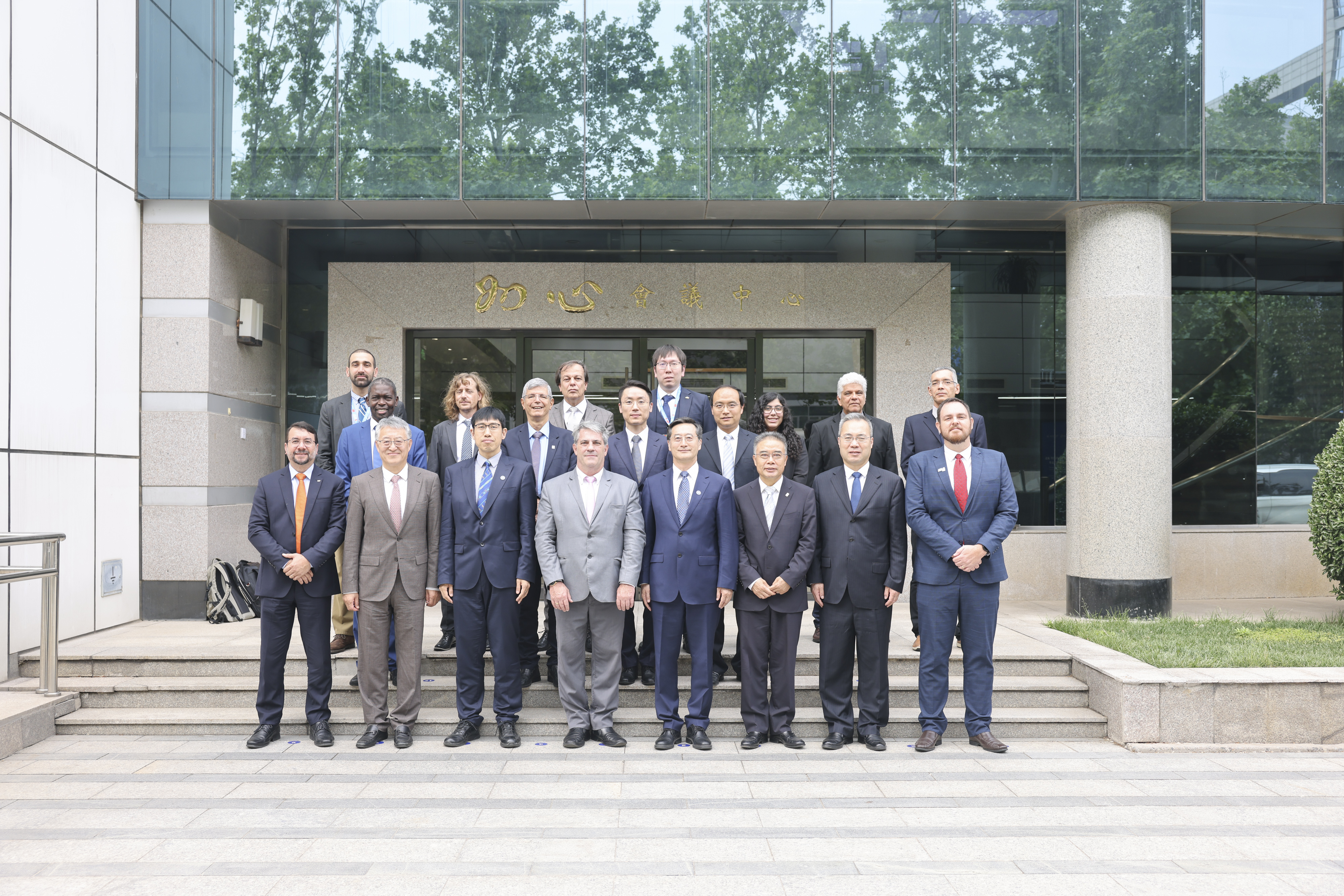
The ceremony was attended by Wang Yunpeng, President of Beihang University; Marcelo Bregagnoli, Deputy Minister of Education of Brazil; Roberto Medronho, Rector of UFRJ; Zhao Lingshan, Vice Chairman and Secretary-General of the Chinese International Education Foundation (CIEF); Wang Zhiwei, Education Counselor of the Chinese Embassy in Brazil and Second-Level Inspector of the Department of International Cooperation and Exchanges at China’s Ministry of Education; Yu Zhicheng, Deputy Director-General of the International Cooperation Department at the Ministry of Industry and Information Technology (MIIT); and Ricardo Trindade, Director of the China Center at the University of São Paulo. Beihang Vice President Zhao Weisheng presided over the event.
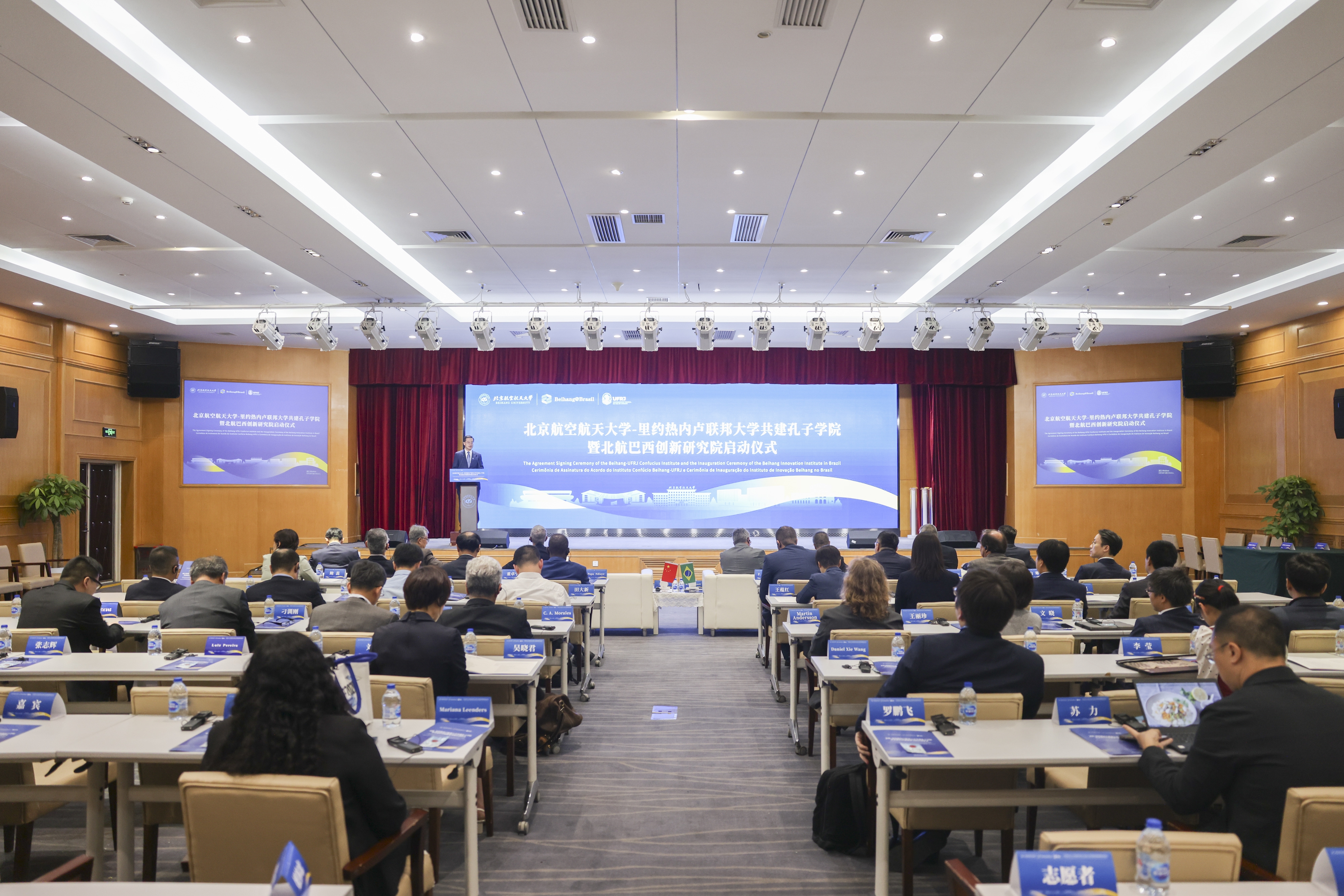
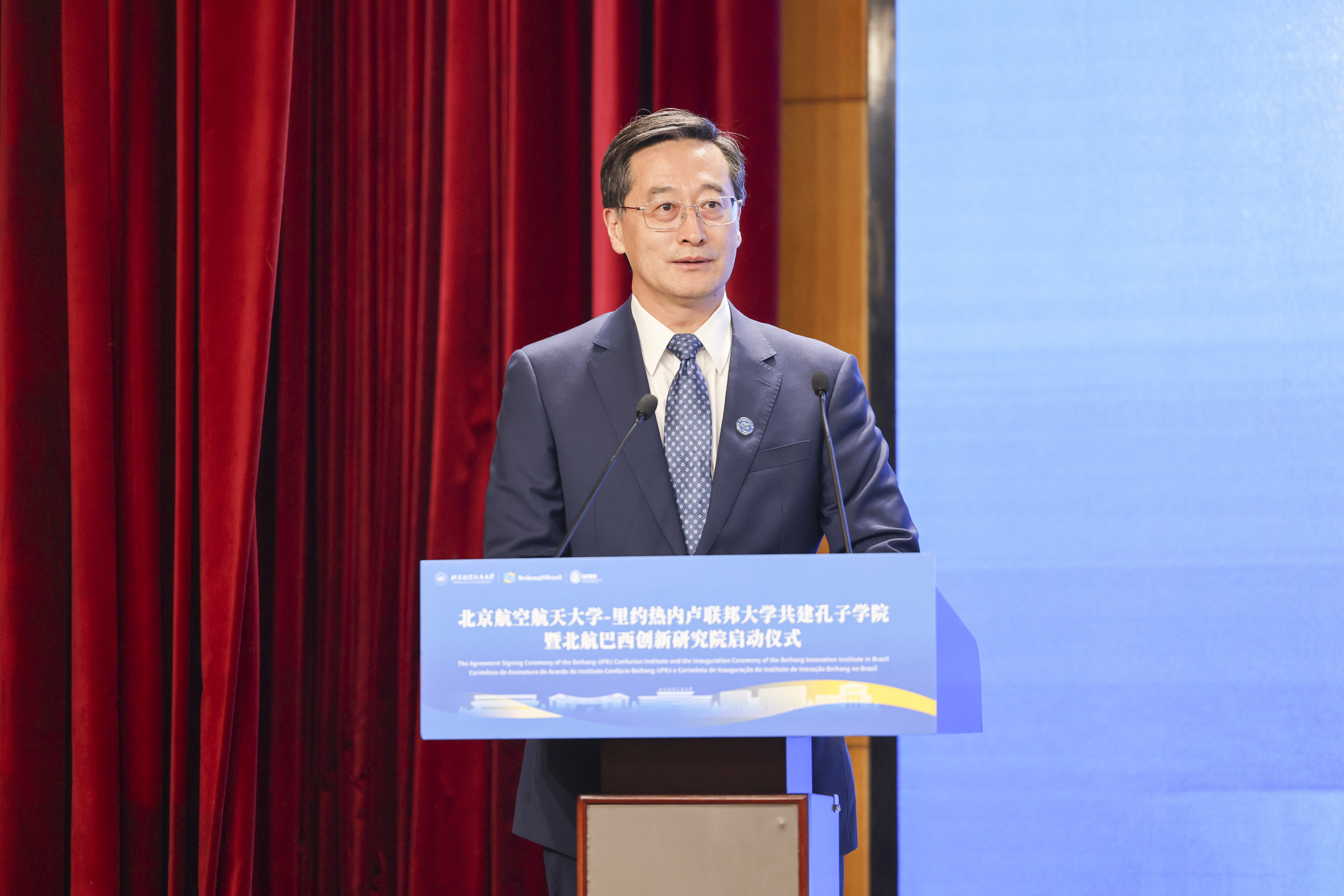
In his address, Wang Yunpeng highlighted Beihang’s long-standing collaboration with Brazilian partners such as UFRJ and the University of São Paulo, which has yielded fruitful results in scientific research, student exchanges, and faculty visits. He emphasized that the establishment of the Beihang-UFRJ Confucius Institute, the Innovation Institute in Brazil, and the Beihang Brazil Center represents a strategic move to enhance China-Brazil cooperation in education, technology, and talent development. “This milestone not only strengthens ties between Beihang and UFRJ but also marks a significant step in deepening bilateral collaboration between China and Brazil,” Wang said. He expressed hope that the partnership would contribute to global sustainable development and address shared challenges.
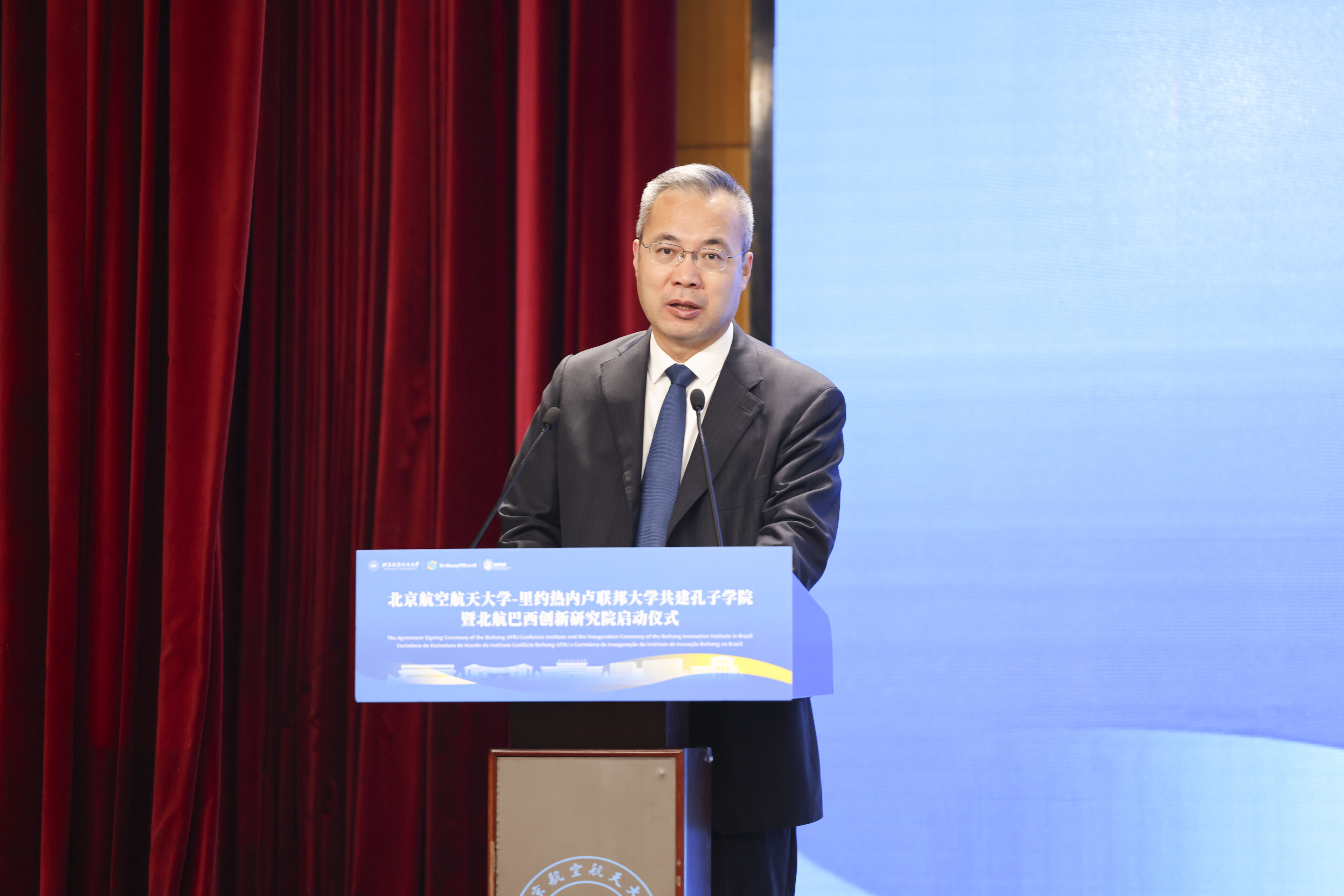
Yu Zhicheng, on behalf of the MIIT, extended his congratulations to Beihang and expressed his expectations for joint efforts in technological innovation, industry-academia collaboration, and sustainable development, which would further strengthen the partnership between China and Brazil.
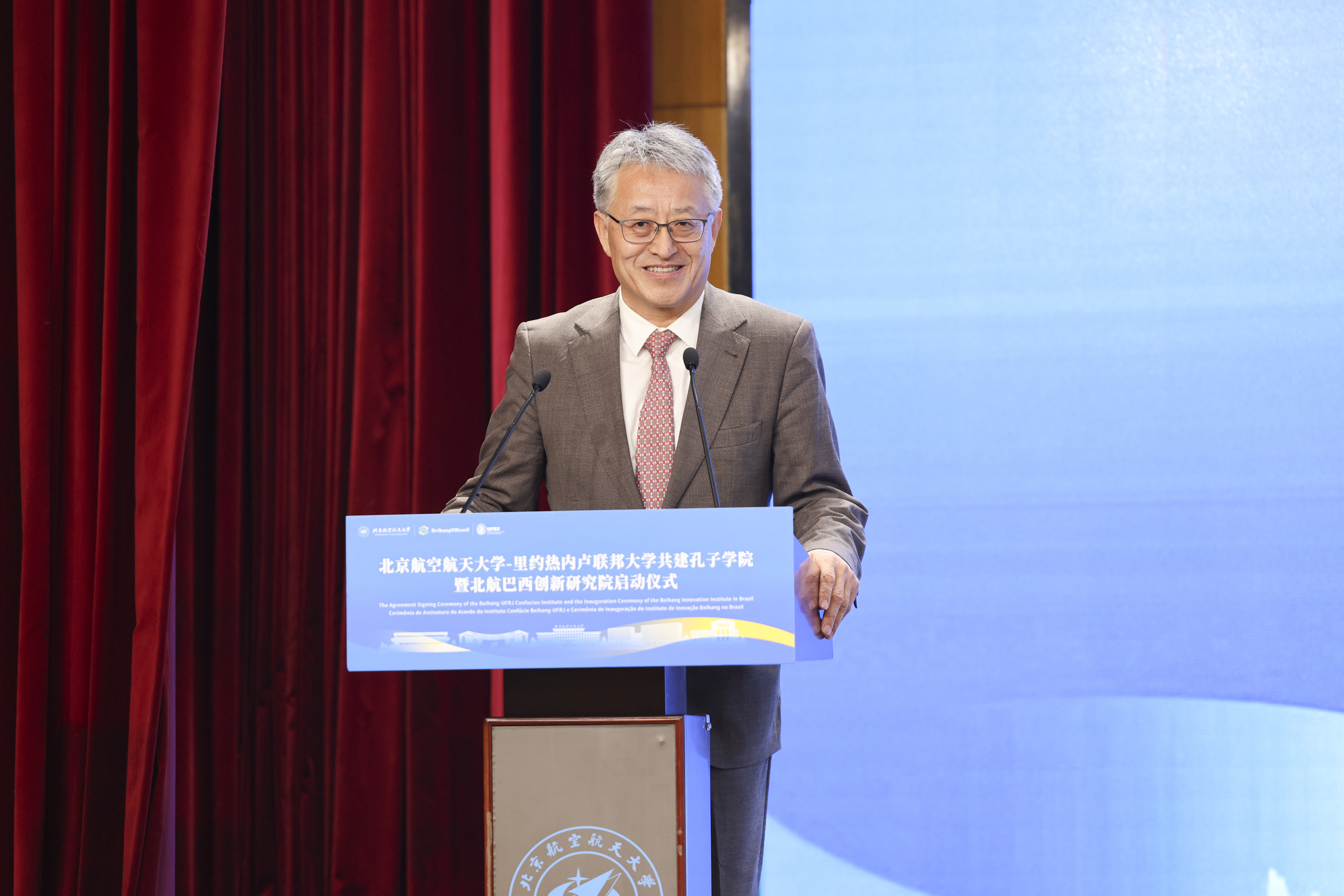
Wang Zhiwei praised Beihang’s proactive engagement with Brazilian institutions, calling it a testament to the university’s vision and commitment to advancing educational and technological cooperation between the two nations.
Ricardo Trindade reflected on the history of cooperation between Beihang and the University of São Paulo and expressed his sincere congratulations on the establishment of the Beihang Innovation Institute in Brazil and the Beihang Brazil Center. He looked forward to future collaborations that would further strengthen academic and research exchanges between the two countries.
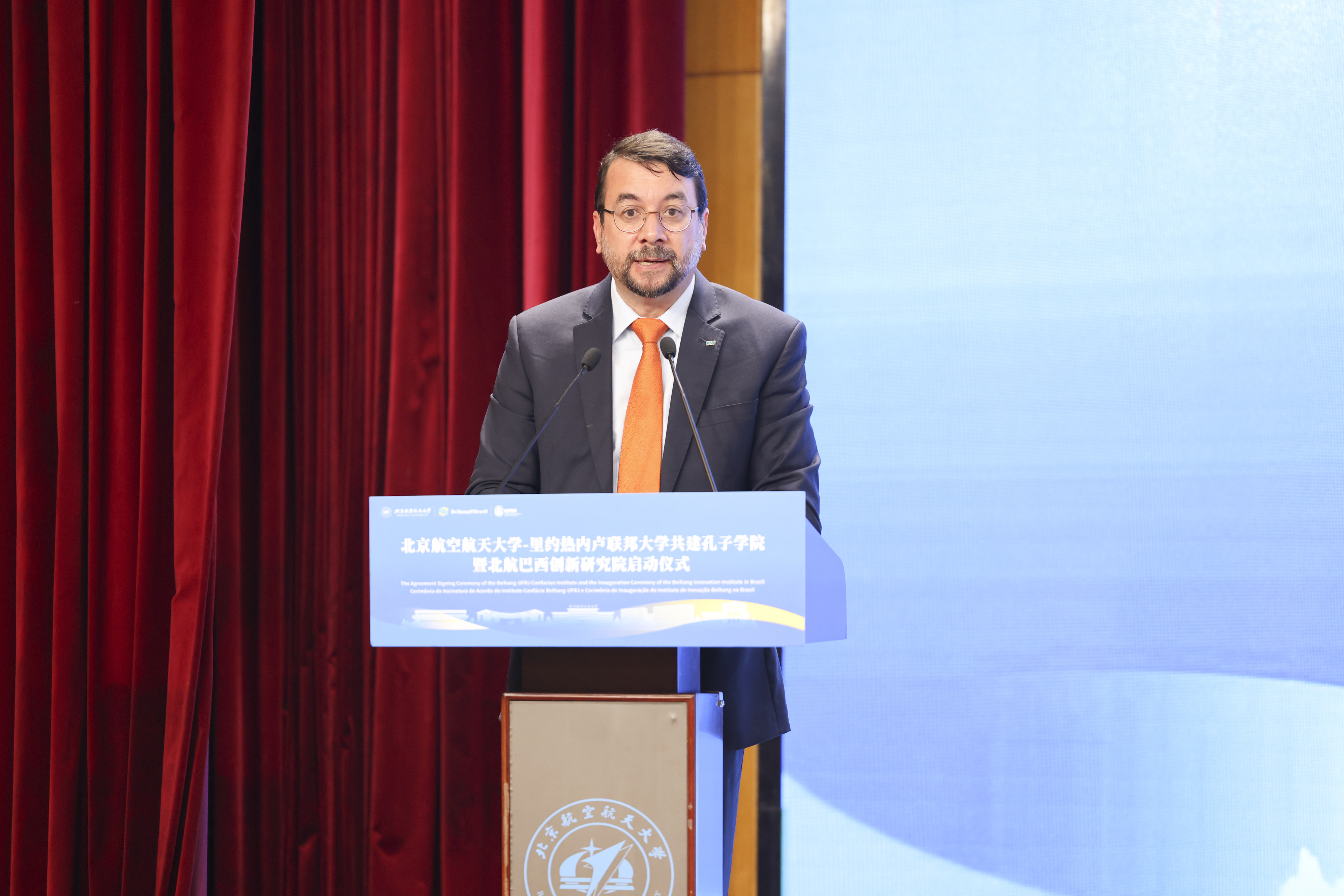
Zhao Lingshan described the Confucius Institute and the Innovation Institute as symbols of 50 years of China-Brazil educational cooperation, predicting expanded collaboration in education, technology, and culture to strengthen bilateral friendship.
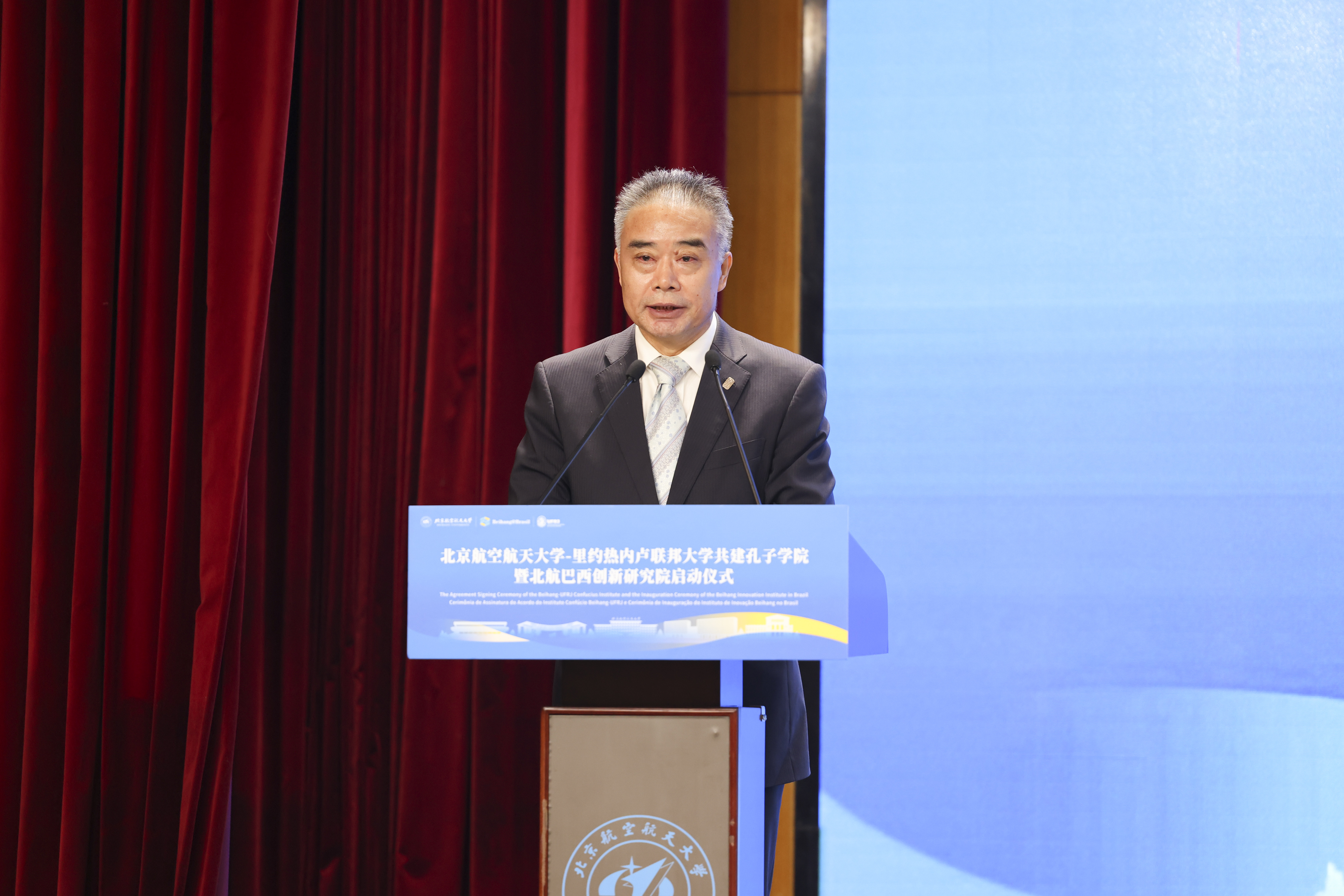
Roberto Medronho expressed his honor in partnering with Beihang University, noting that the establishment of the institutes and the center is the result of years of mutual trust. He anticipated expanded cooperation in AI, green aviation, and other emerging fields.
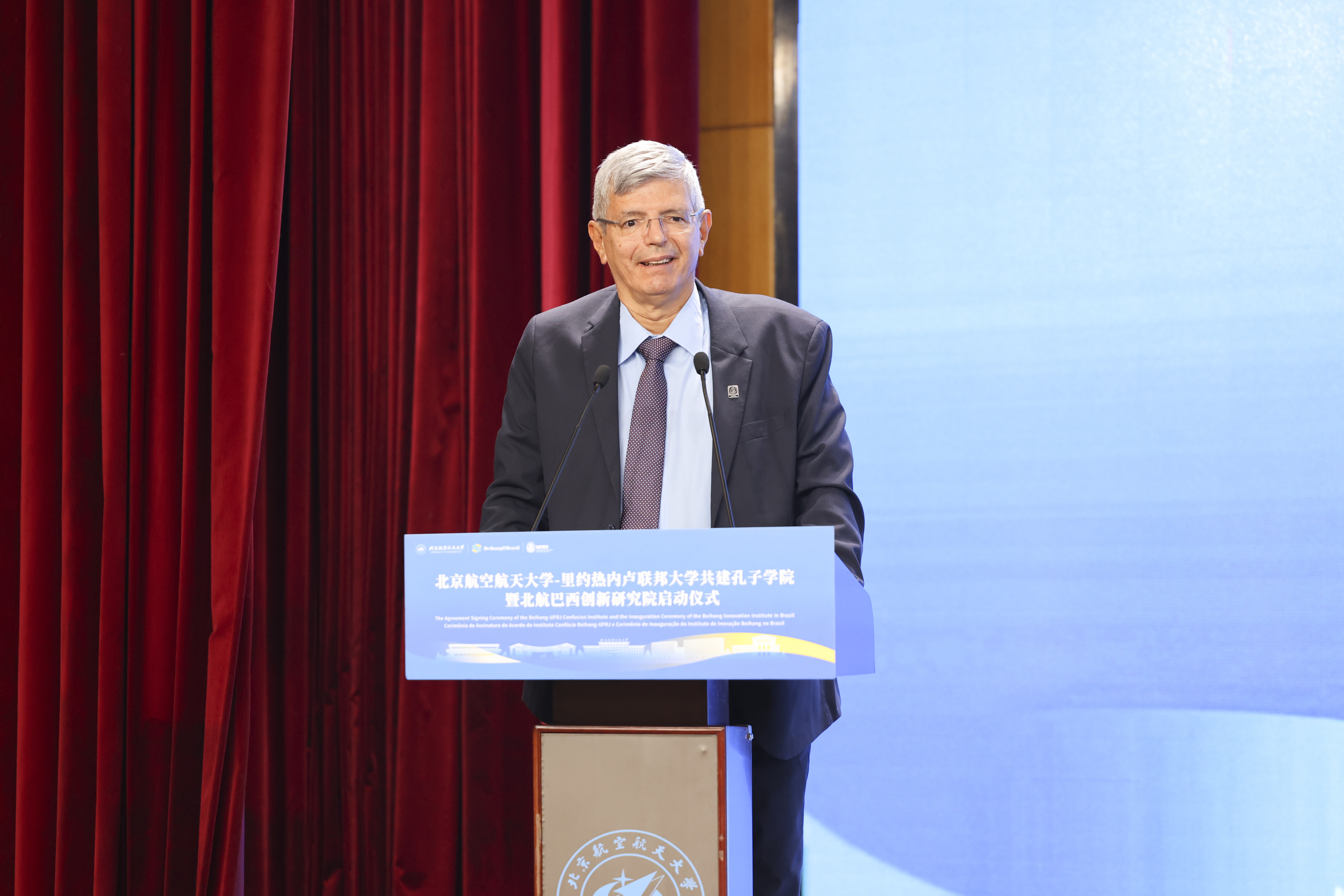
Marcelo Bregagnoli described the three platforms as “bridges” that would connect Brazilian youth with Chinese language and culture while fostering joint research to tackle global challenges such as climate changeand resource scarcity. He hoped that Beihang would continue to expand its collaborations with Brazilian universities, unlocking the potential for educational and technological cooperation among BRICS nations and contributing to global sustainable development.
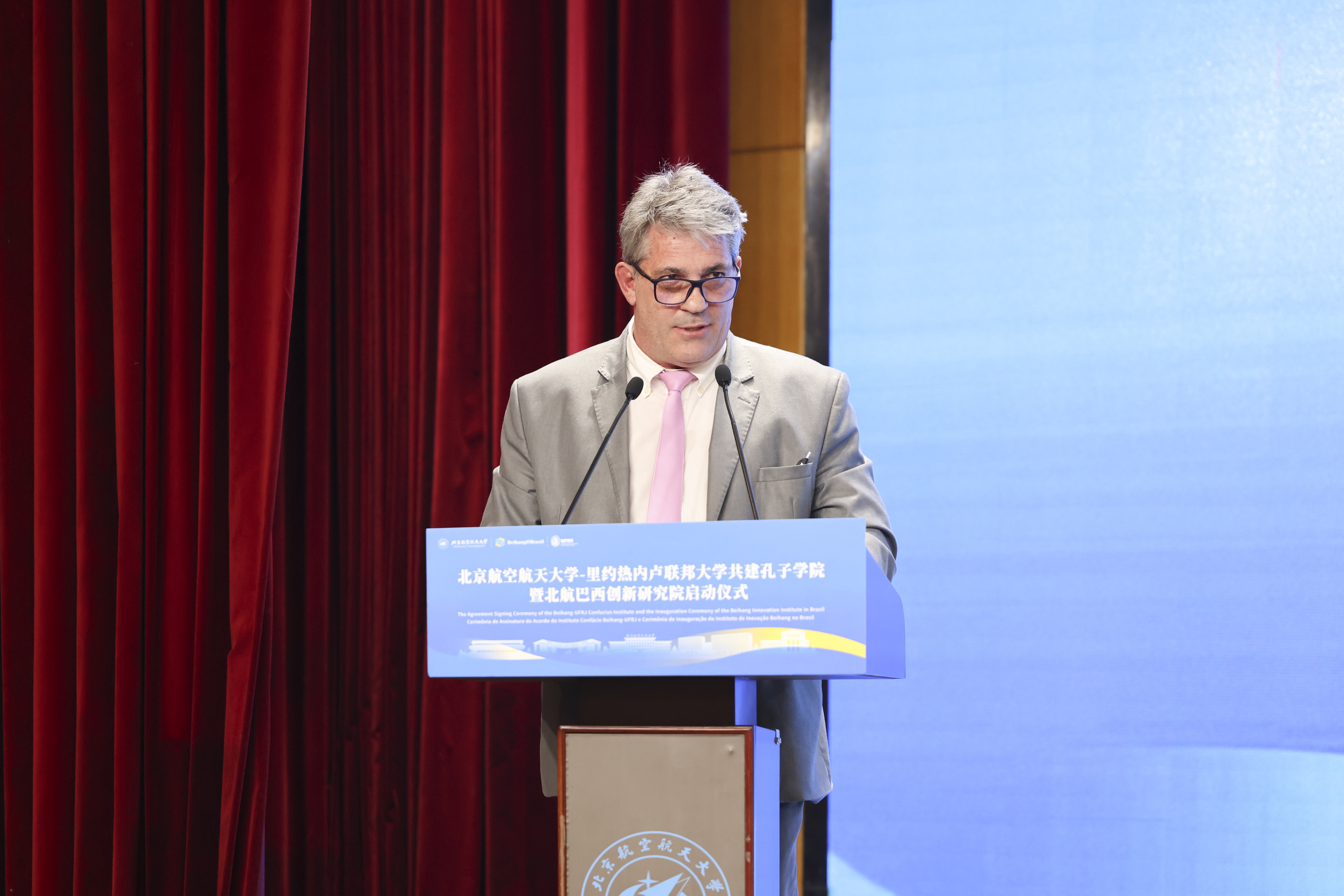
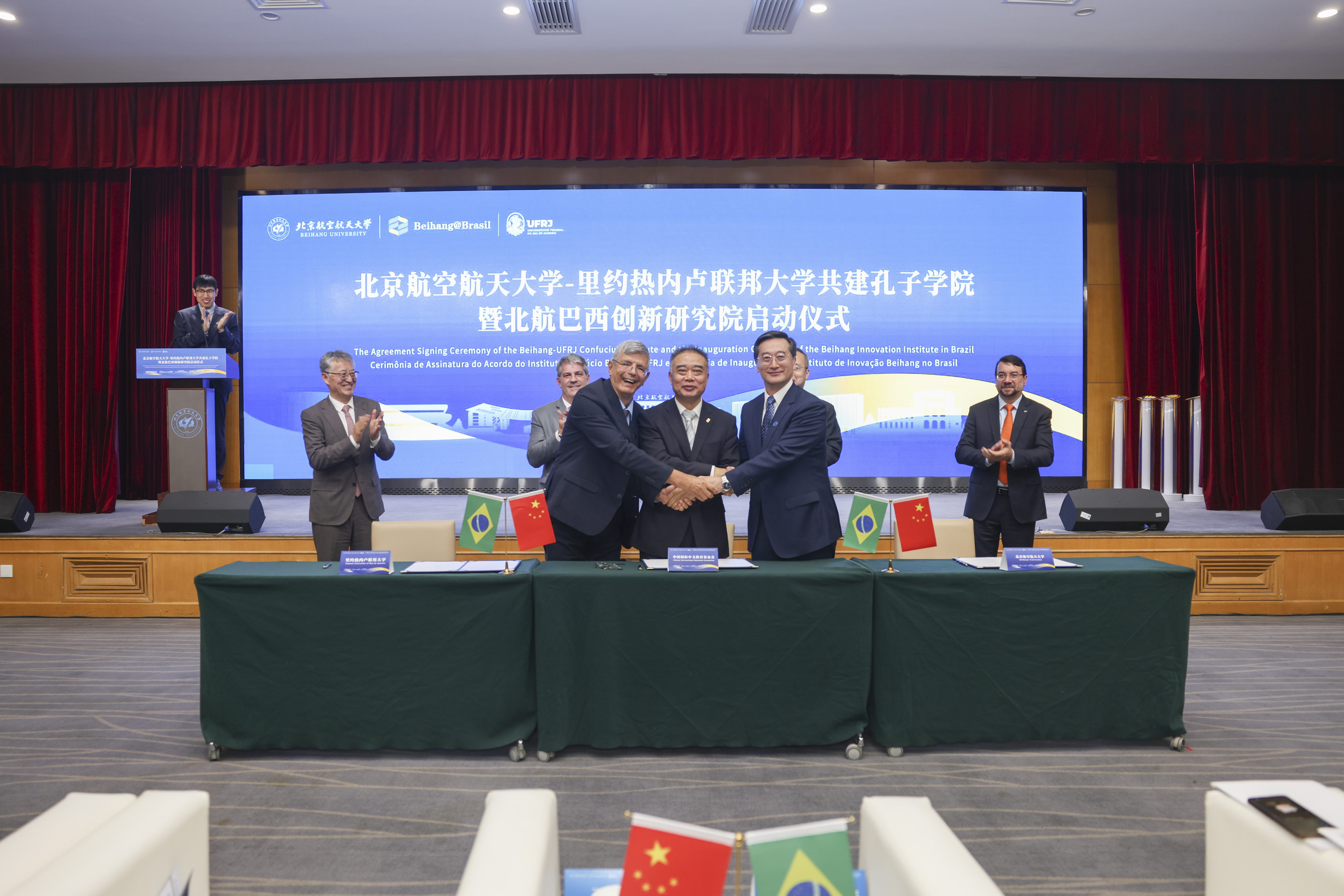
Following the speeches, Wang Yunpeng, Roberto Medronho, and Zhao Lingshan signed the agreement for the Beihang-UFRJ Confucius Institute, which will integrate Chinese language education with Beihang’s aerospace expertise under a “Chinese + Aerospace” model, and foster joint efforts in language teaching, cultural exchanges, research collaboration, and talent cultivation.
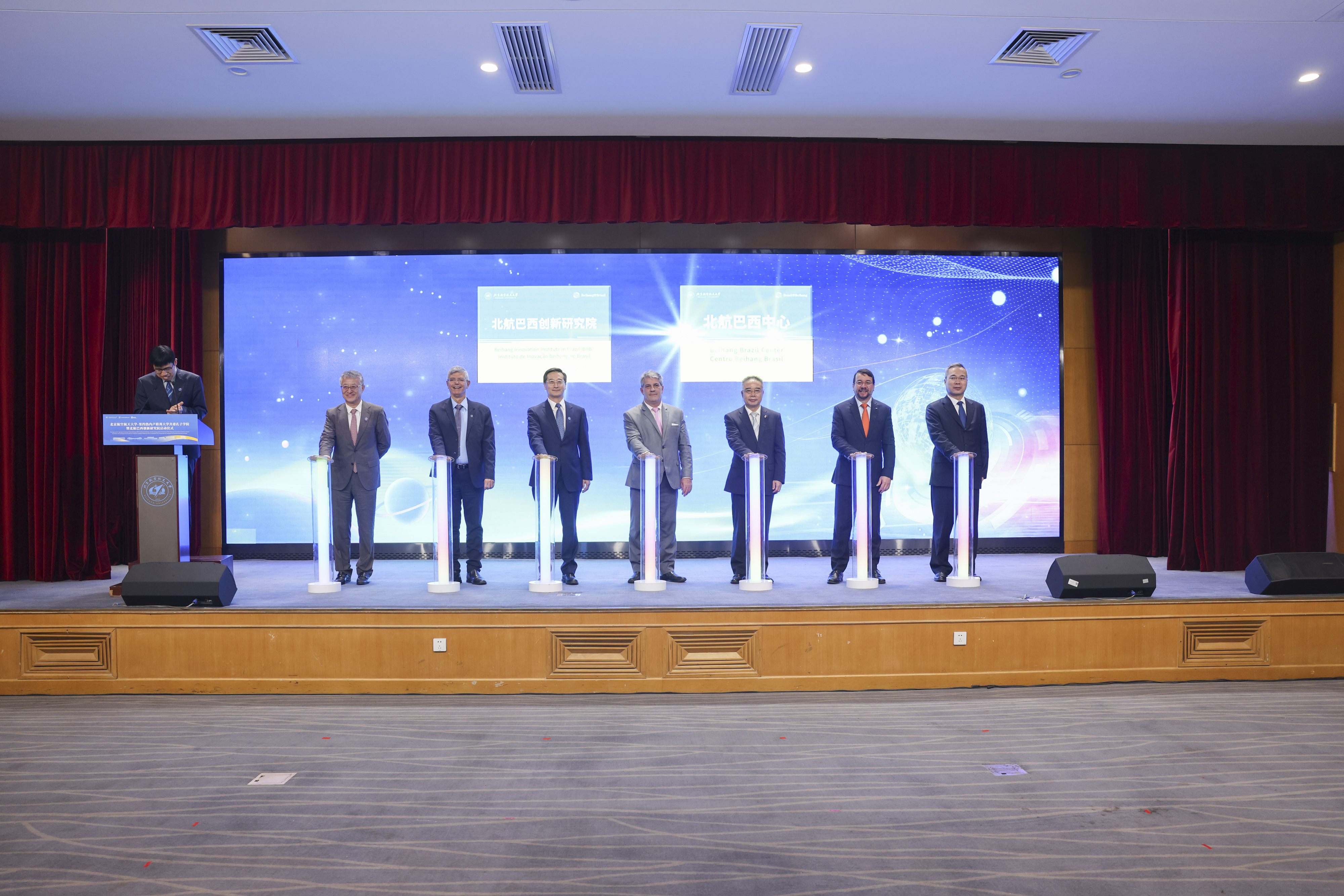
The inauguration ceremony concluded with the unveiling of the Beihang Innovation Institute in Brazil and the Beihang Brazil Center by Wang Yunpeng, Marcelo Bregagnoli, Roberto Medronho, Ricardo Trindade, Zhao Lingshan, Wang Zhiwei, and Yu Zhicheng. The institute will focus on cutting-edge research and industrial applications, while the center, located at Beihang Hangzhou International Campus, will serve as a strategic hub for talent cultivation, scientific research, and cultural exchange.
During their visit, the Brazilian delegation also toured the Center for Micro-Nano Innovation of Beihang (Beihang Nano), gaining insights into advanced micro-nano technology research.
The three initiatives—the Beihang-UFRJ Confucius Institute, the Beihang Innovation Institute in Brazil, and the Beihang Brazil Center—reflect Beihang’s integrated strategy for China-Brazil collaboration, combining cultural exchange, scientific innovation, and industrial synergy. The effort aligns with the Fourth Ministerial Meeting of the China-CELAC Forum and Brazilian President Luiz Inácio Lula da Silva’s state visit to China, underscoring Beihang’s active role in bolstering bilateral educational ties.
The ceremony was also attended by representatives from various departments and schools of Beihang University, as well as scholars from both China and Brazil.
Editor: Lyu Xingyun


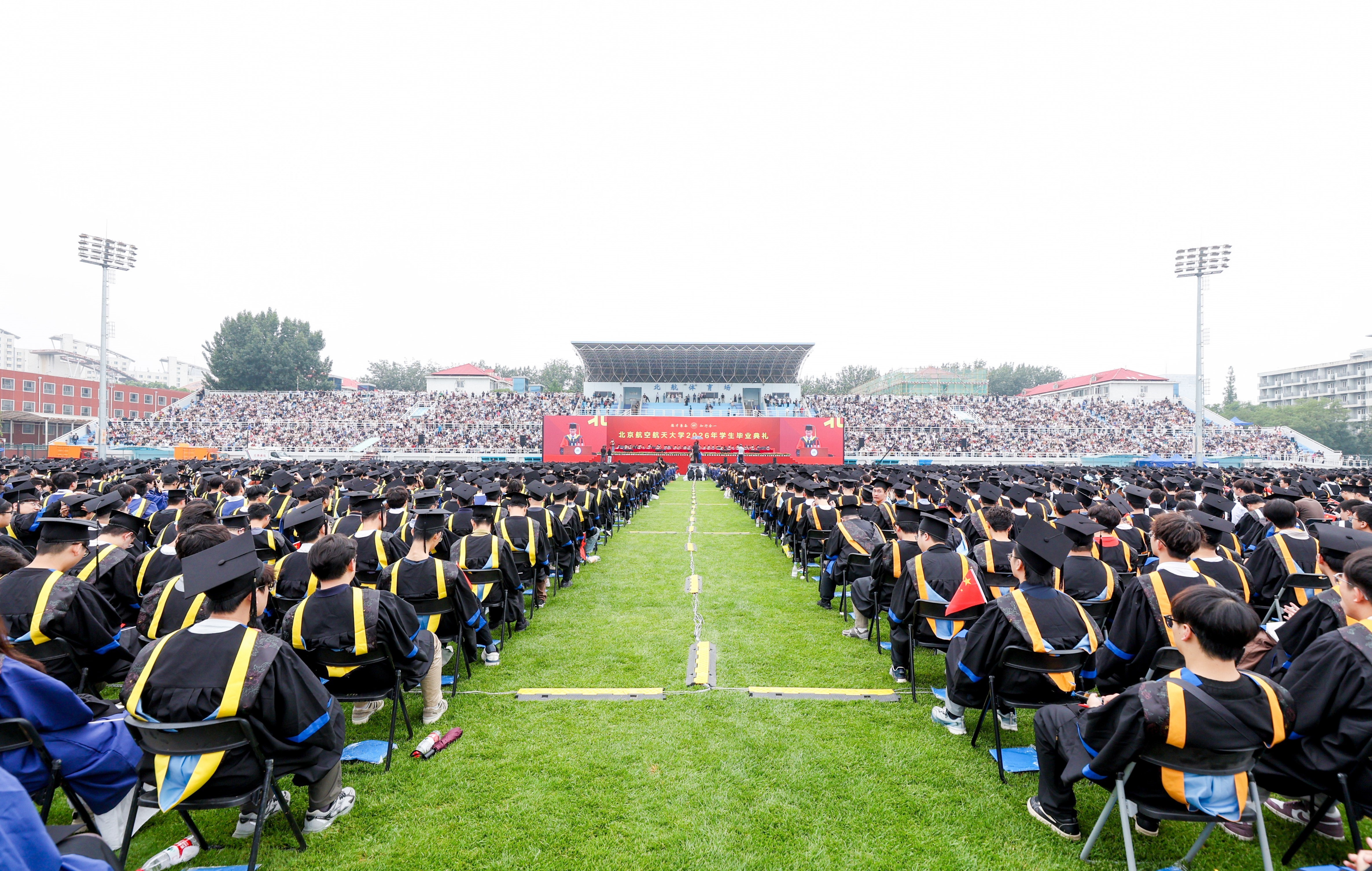 Beihang NewsBeihang holds 2026 Commencement and Degree Conferral CeremonyMore
 Beihang NewsBeihang hosts 2026 Campus Open Day & Admissions Information Session across three campuses in Beijing and HangzhouMore
 Beihang NewsBeihang University holds graduation gala for Class of 2026More
 Beihang NewsMETU President Ahmet Yozgatlıgil visits Beihang UniversityMore
 Beihang NewsUniversity leaders take group photos with 2026 graduatesMore
 Beihang NewsTrio Hélios Piano Concert staged at BeihangMore