On the afternoon of June 16, Carlos Gustavo Moreira, a member of the Brazilian Academy of Sciences (Academia Brasileira de Ciências, ABC) and a distinguished speaker at the International Congress of Mathematicians (ICM), delivered a lecture titled “Fractal Geometry of the Markov and Lagrange Spectra and Their Set Difference” at Beihang University.
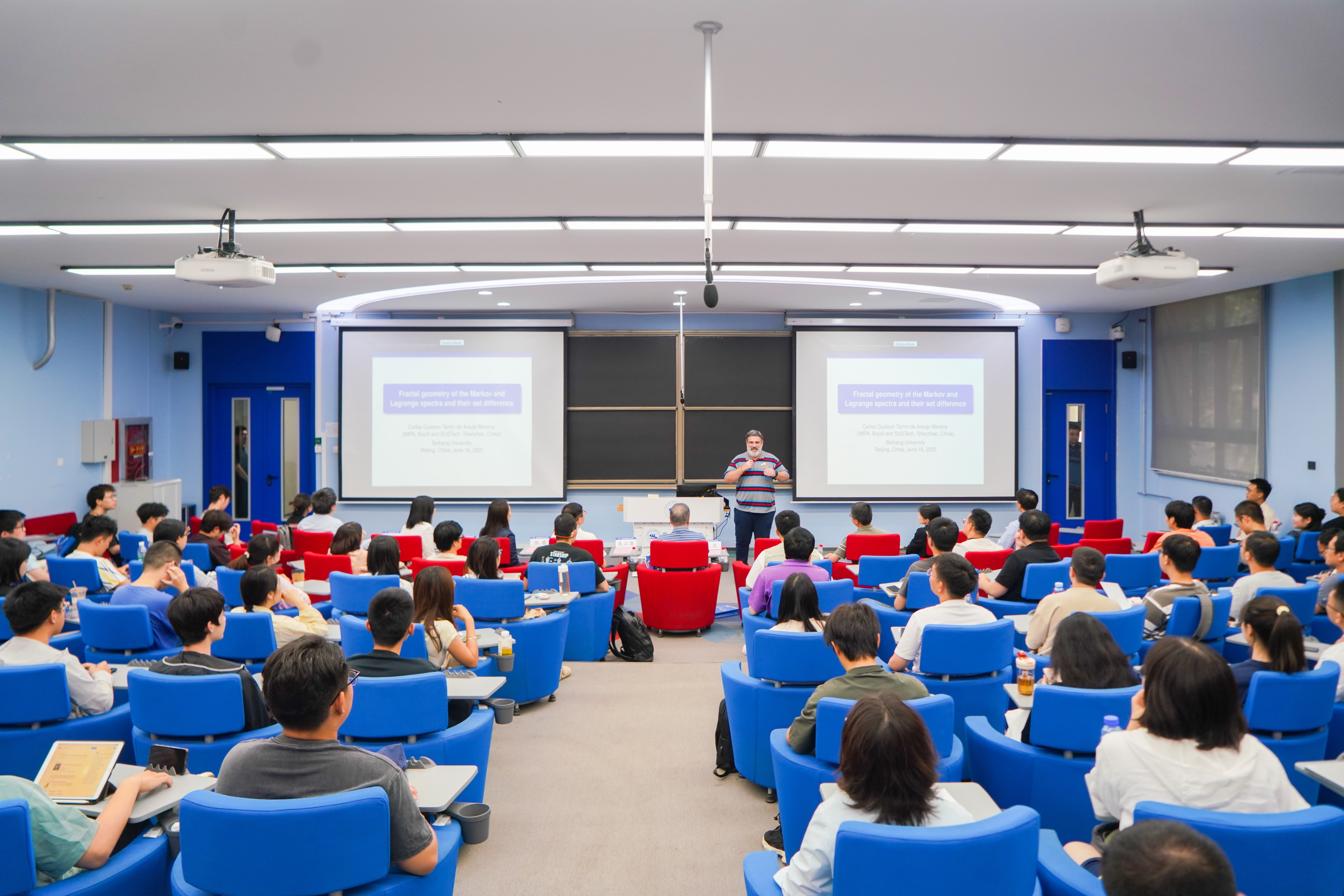
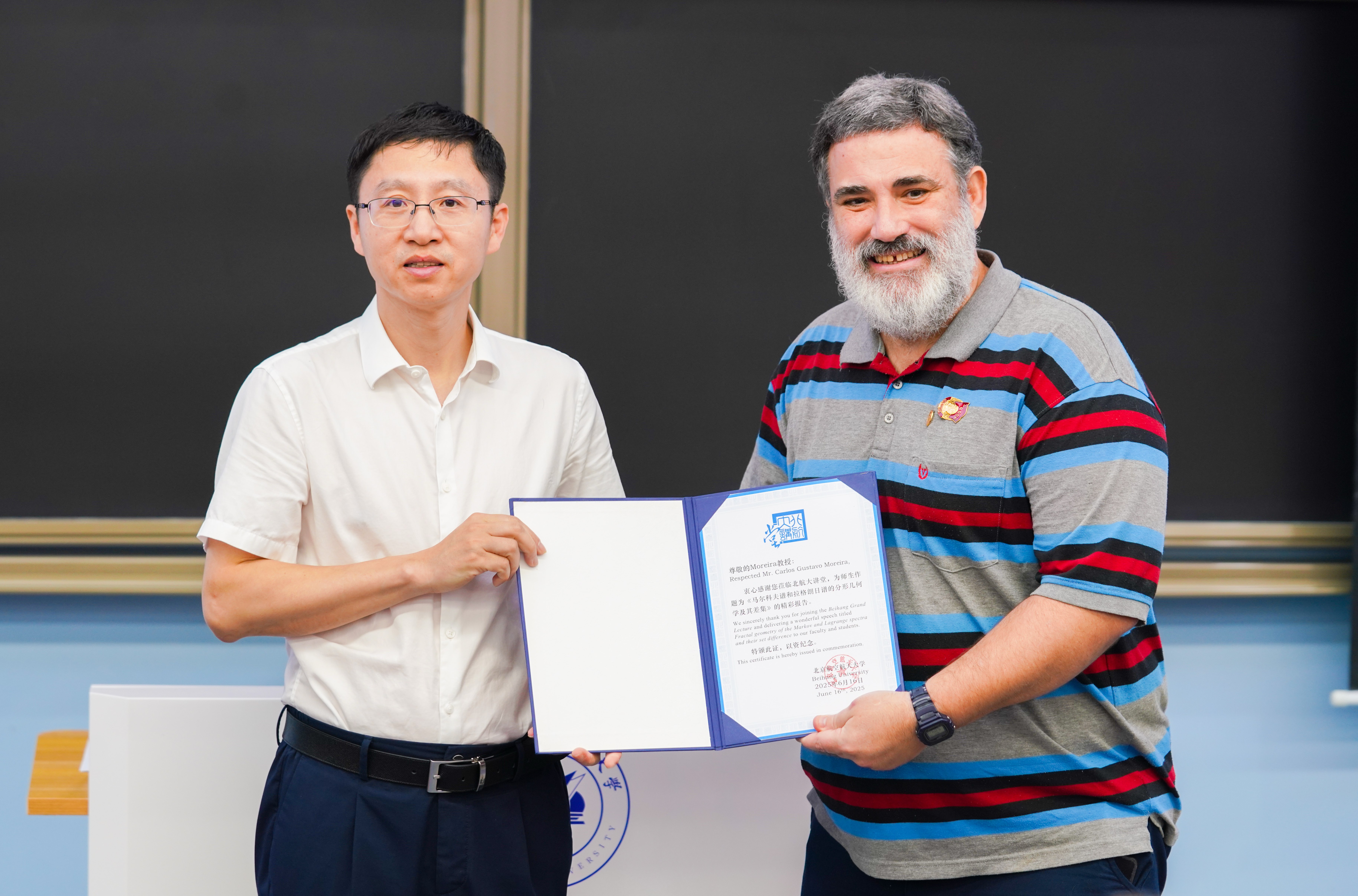
The event was hosted by Professor Wen Lan, Academician of the Chinese Academy of Sciences, Professor at Peking University, and Director of the Academic Committee of the Key Laboratory of Mathematics, Informatics and Behavioral Semantics (Ministry of Education). Beihang Vice President Wu Jianghao delivered opening remarks and presented Academician Moreira with an honorary certificate of the Beihang Grand Lecture.
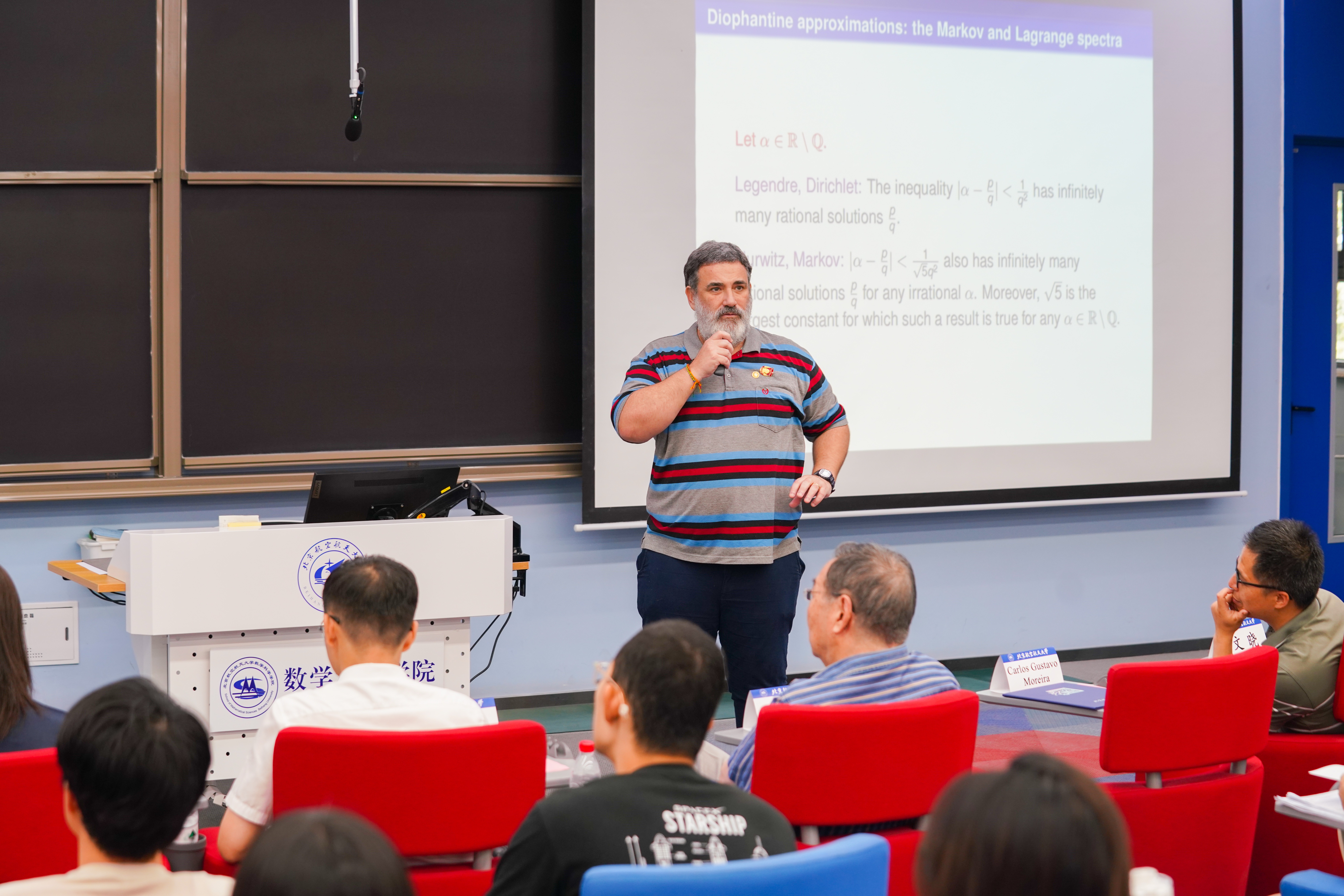
In his lecture, Academician Moreira explored the fractal geometry of the Markov (M) and Lagrange (L) spectra, classical objects in Diophantine approximation theory. He shared his latest findings on the fractal dimensions of the set difference (M\L) between these two spectra, achieved in collaboration with other researchers. These results are closely connected to symbolic dynamics, continued fraction theory, and the fractal geometry of arithmetic sums of regular Cantor sets, holding significant value for the study of homoclinic bifurcations in dynamical systems.
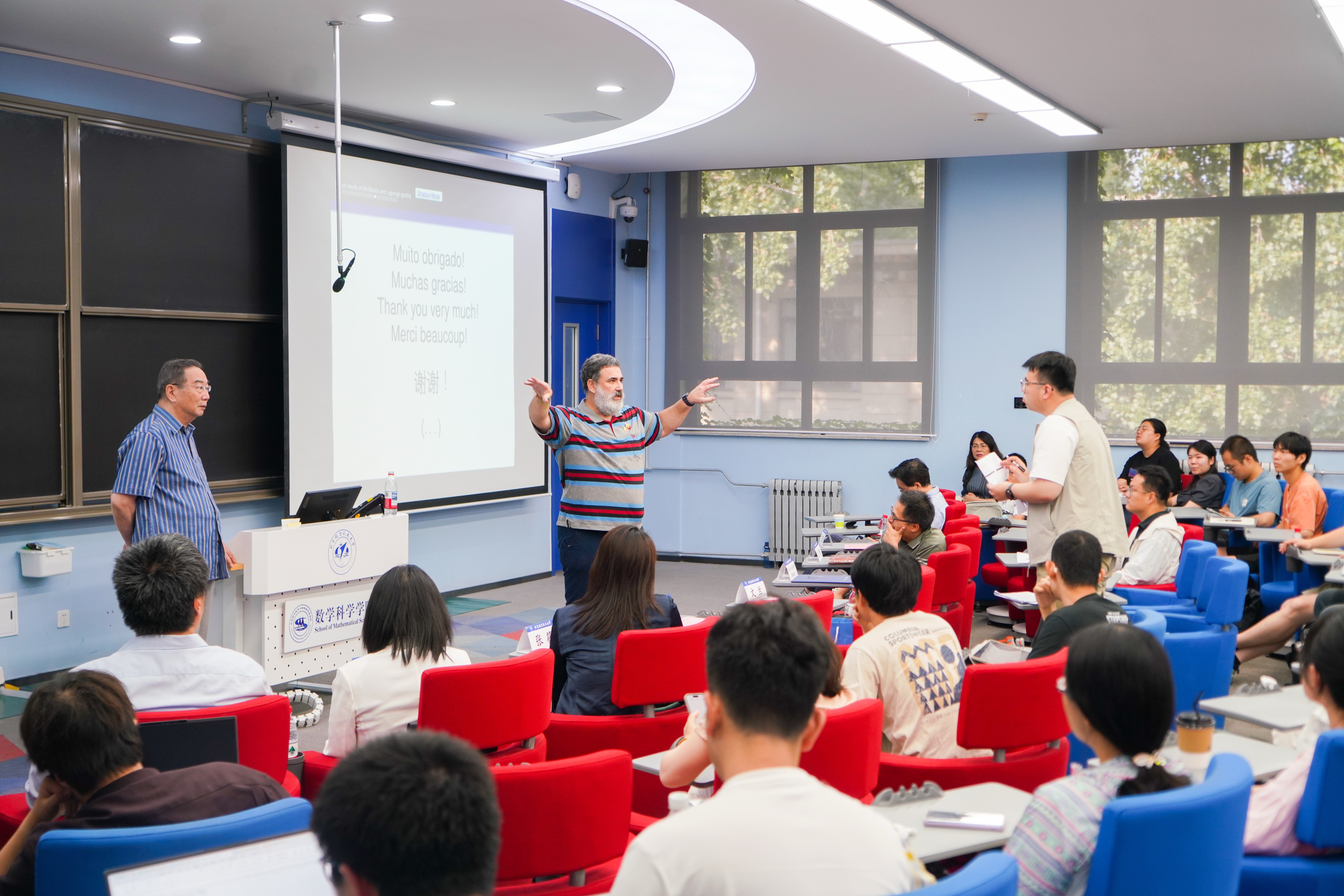
The lecture sparked lively discussions, with students and faculty actively engaging inthe Q&A session. Academician Moreira patiently answered each question and encouraged students to explore uncharted territories, integrate theoretical knowledge with practical innovation, and collaborate with top international research teams to advance their mathematical pursuits.
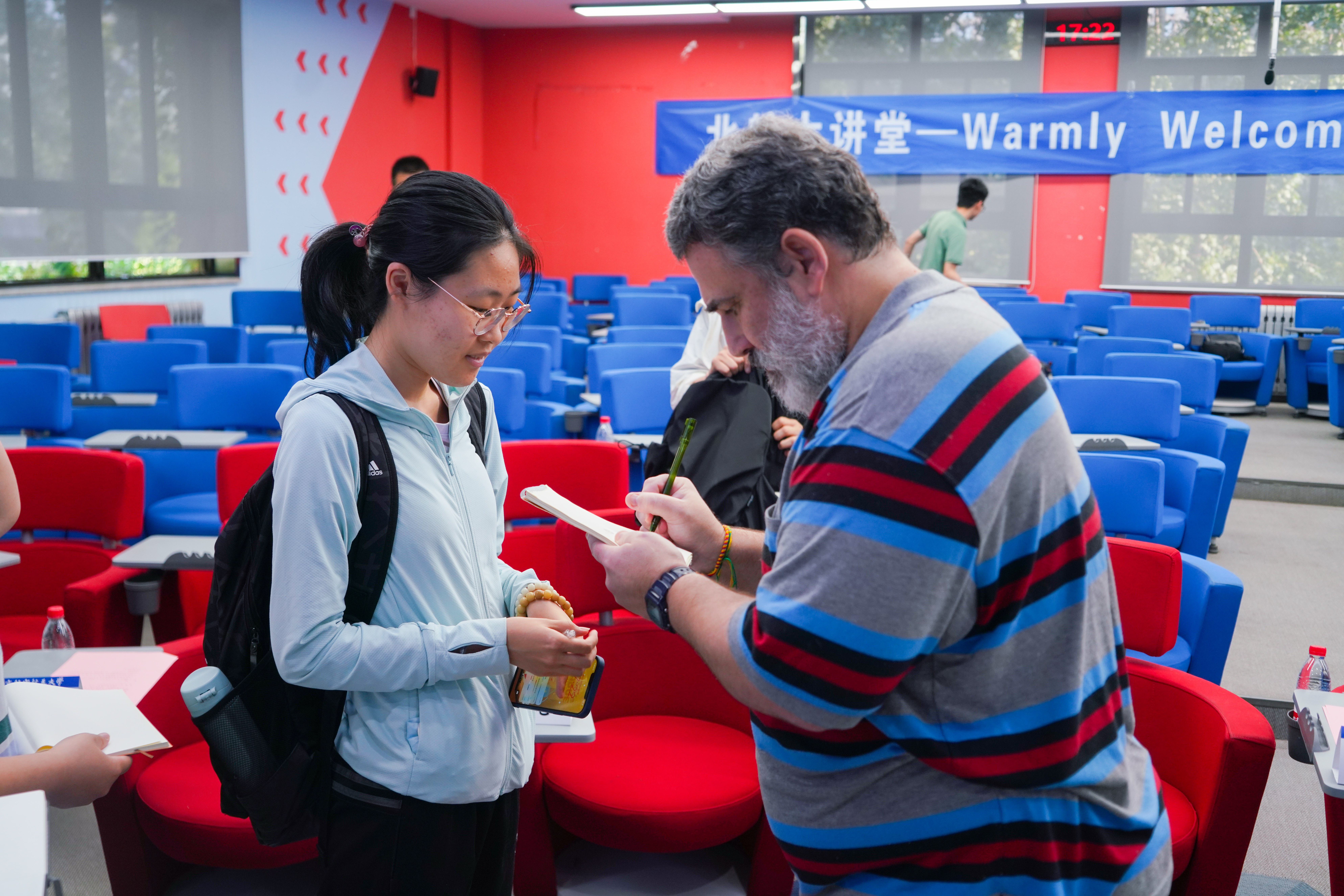
Academician Moreira will continue his academic exchanges with faculty and students at the School of Mathematical Sciences in the coming days. This event marks another milestone in Beihang’s partnership with Brazil, following the establishment of the Beihang Brazil Center and the “China-Brazil Advances in Mathematics” symposium. The School of Mathematical Sciences will continue fostering cutting-edge China-Brazil research collaborations, contributing mathematical expertise to Beihang’s global academic network.
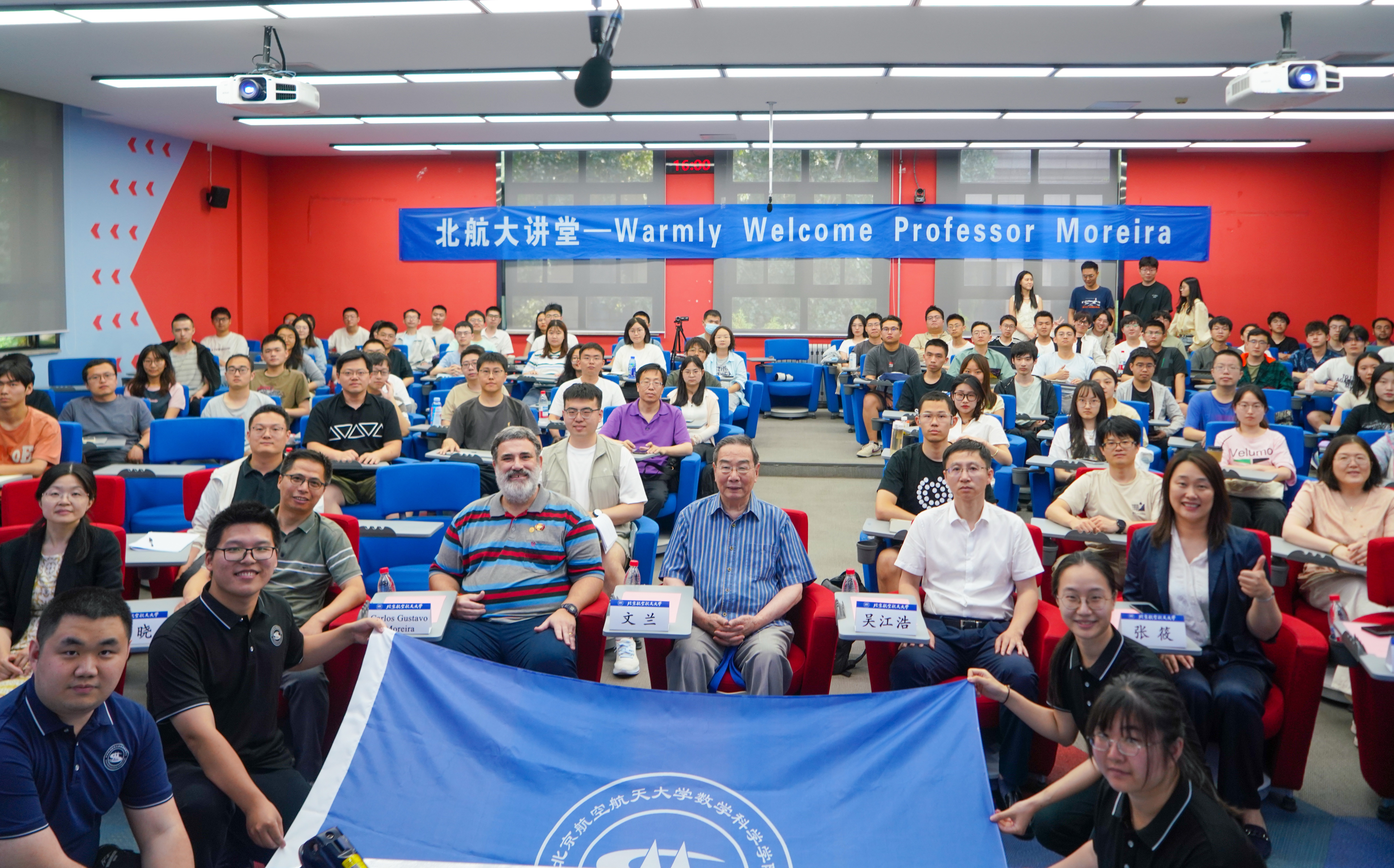
Carlos Gustavo Moreira is a full professor at Brazil’s National Institute for Pure and Applied Mathematics (IMPA). He is also a member of the Third World Academy of Sciences (TWAS) and the Brazilian Mathematical Olympiad Committee (BMOC). His research spans dynamical systems, ergodic theory, number theory, and combinatorics, with notable contributions to Diophantine approximation and fractal geometry. He won a bronze medal at the International Mathematical Olympiad (IMO) in 1989 and a gold medal in 1990. He has received numerous accolades, including the UMALCA Award in 2009, the TWAS Award in 2010, and the Paul Erdős Award from the World Federation of National Mathematics Competitions (WFNMC) in 2018. He was an invited speaker at the Dynamical Systems session of the ICM 2014 in South Korea and a plenary speaker at the ICM 2018 in Brazil.
Faculty and students from Beihang University’s School of Mathematical Sciences, School of Artificial Intelligence, and Sino-French Engineer School, as well as scholars from Peking University, Tsinghua University, the Chinese Academy of Sciences, and other leading institutions in Beijing attended the event.
Editor: Lyu Xingyun


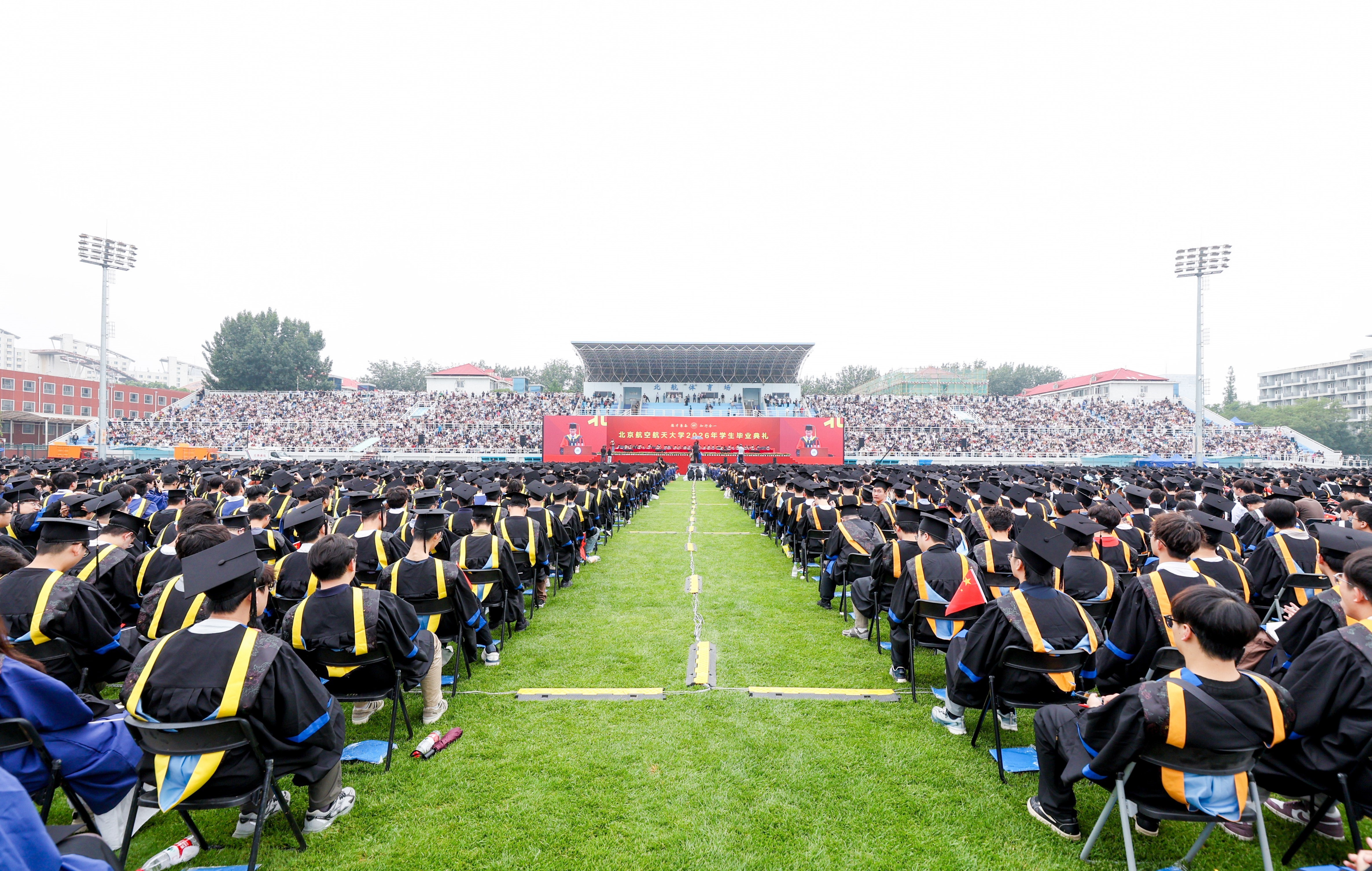 Beihang NewsBeihang holds 2026 Commencement and Degree Conferral CeremonyMore
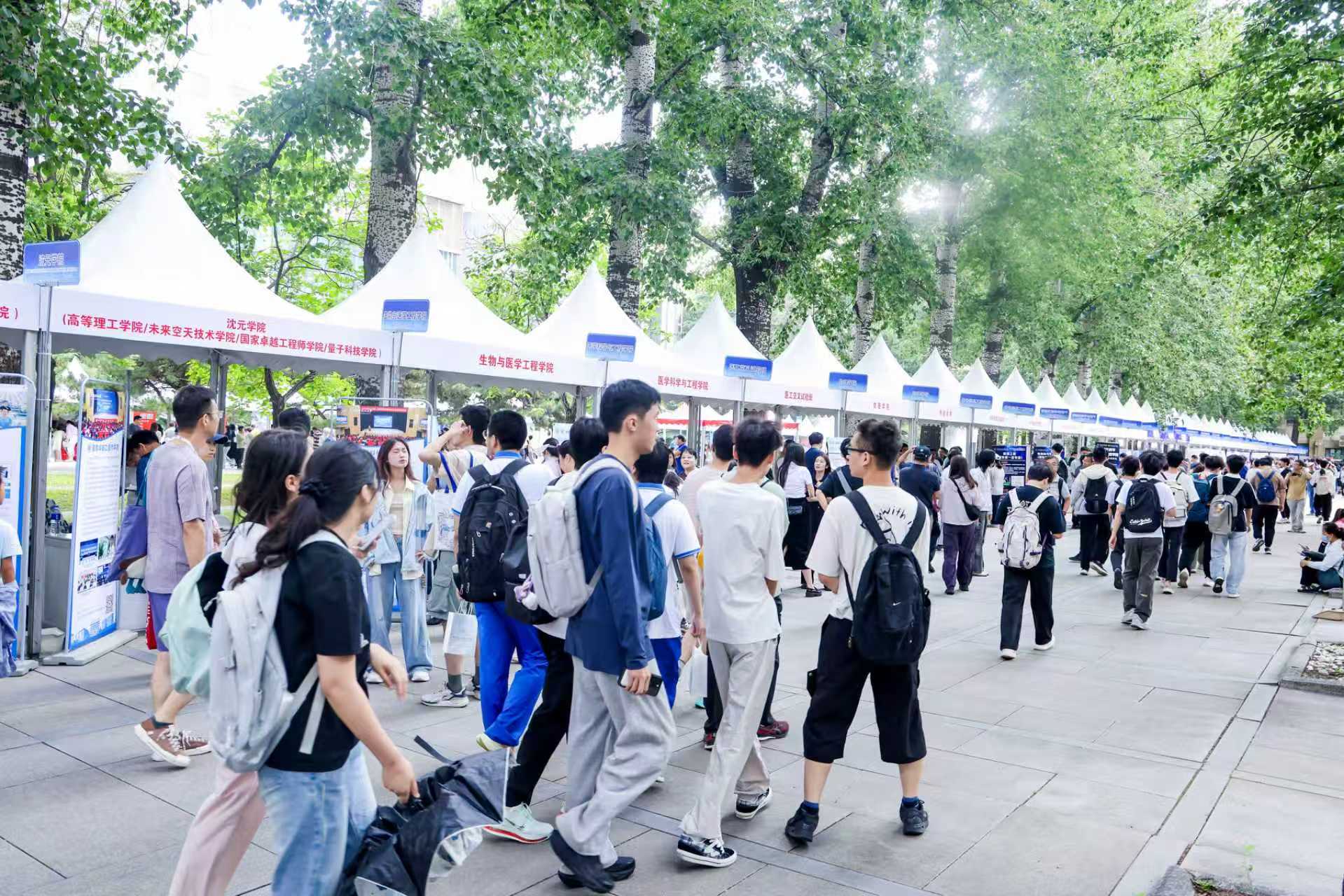 Beihang NewsBeihang hosts 2026 Campus Open Day & Admissions Information Session across three campuses in Beijing and HangzhouMore
 Beihang NewsBeihang University holds graduation gala for Class of 2026More
 Beihang NewsMETU President Ahmet Yozgatlıgil visits Beihang UniversityMore
 Beihang NewsUniversity leaders take group photos with 2026 graduatesMore
 Beihang NewsTrio Hélios Piano Concert staged at BeihangMore