"Lunar Palace 1," a bioregenerative life support system (BLSS) developed by Professor Liu Hong's team from the School of Biological Science and Medical Engineering at Beihang University, has been included in the eighth-grade biology textbook published by the People's Education Press (PEP), marking a significant integration of cutting-edge aerospace research into China's foundational education.
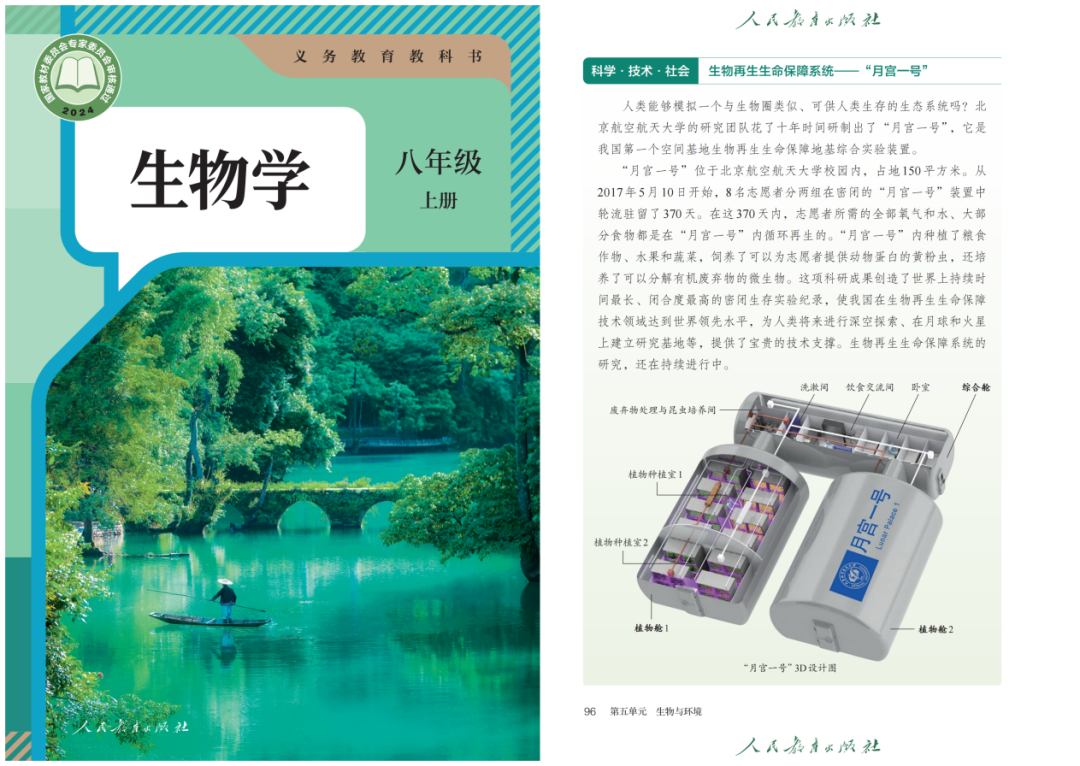
"Lunar Palace 1" featured in PEP textbook
Described as a "micro biosphere" designed for deep space exploration, "Lunar Palace 1" offers a compelling real-world example of how artificial ecosystems can sustain human life. Its inclusion in the national curriculum allows middle school students to explore the intersection of ecological science and space technology directly in their classrooms.
Bringing Science to Life in Education
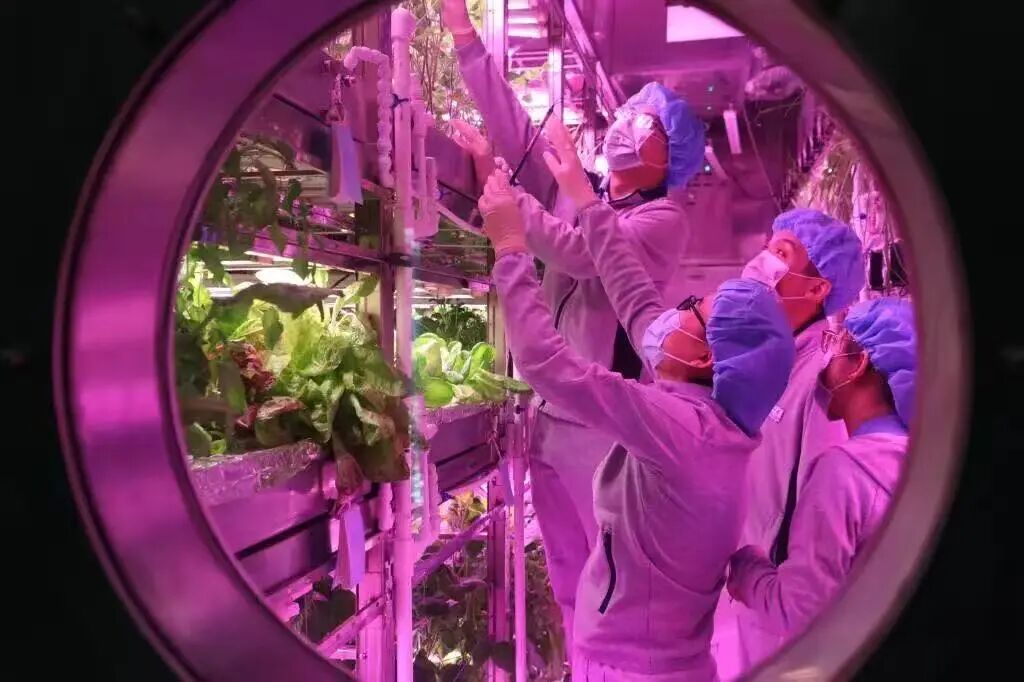
In the new edition of the biology textbook, "Lunar Palace 1" appears as a case study under the "Biology and Environment" theme. It is introduced as a practical application of artificial ecosystems, clearly presenting the four-link ecological structure involving "humans, plants, Tenebrio molitor (mealworms), and microorganisms" through illustrative diagrams and text. The textbook explains the principles of oxygen, water, and food recycling within the system, offering a direct view of material circulation and energy flow in an ecosystem, including oxygen and water production through plant photosynthesis and waste recycling through microbial degradation.
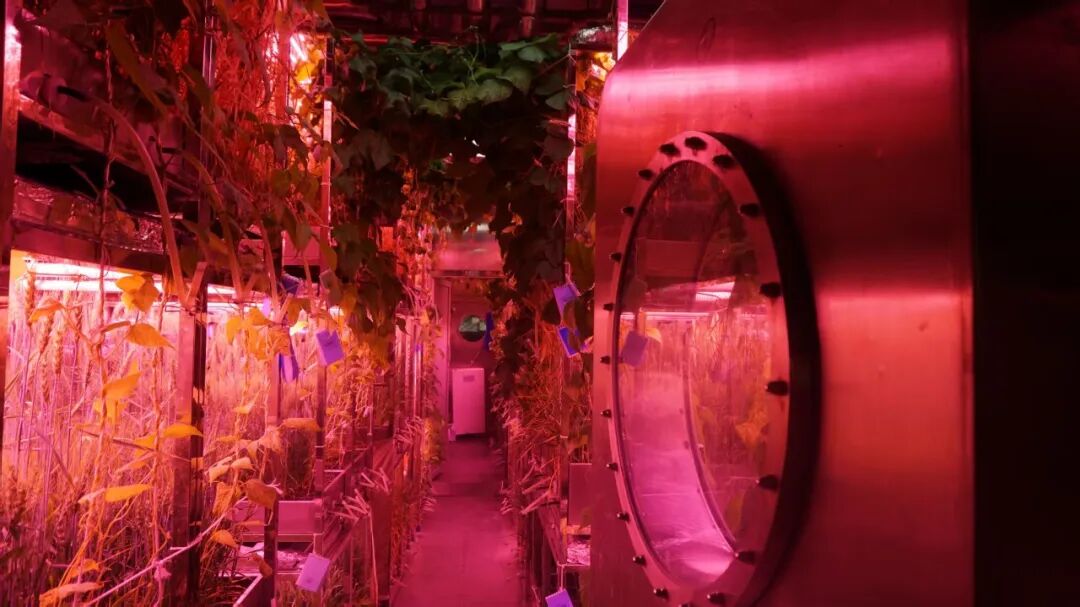
This integration aligns seamlessly with core middle school biology topics, using cutting-edge research to make abstract ecological concepts tangible. Moreover, it weaves an authentic Chinese scientific achievement into fundamental education, fostering national pride and a passion for science and technology among young learners.
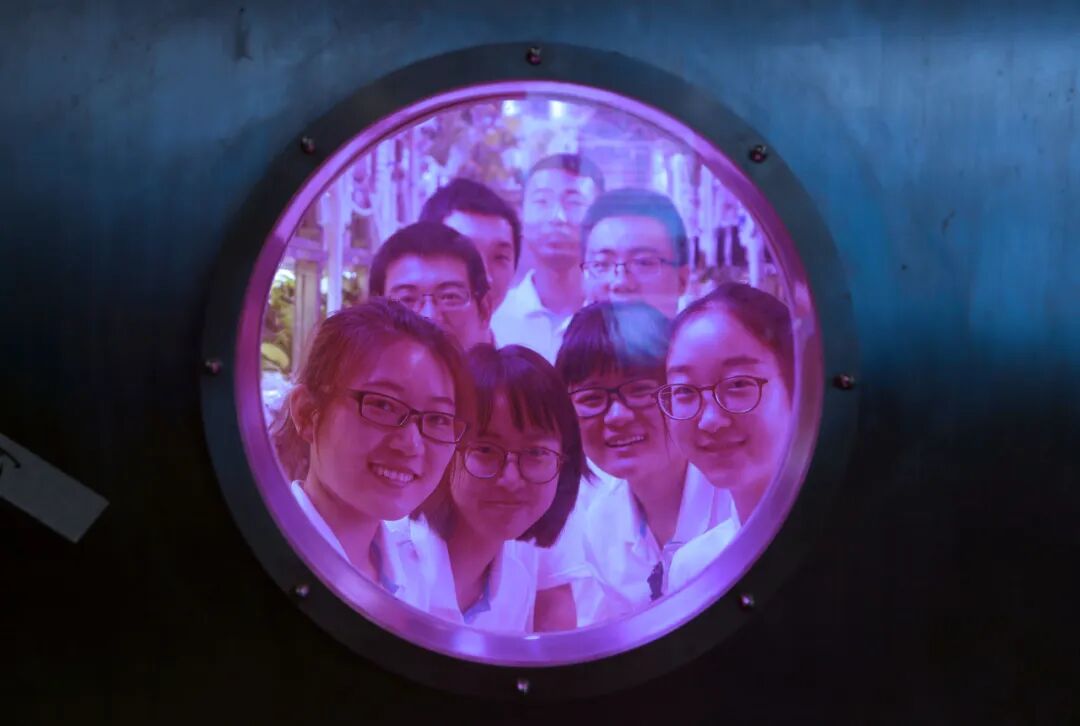
Crew members meet inside the self-contained simulated space lab during the first shift change of the "Lunar Palace 365" experiment
Pioneering the Frontier of Space Research
Developed through over a decade of research by Professor Liu's team, "Lunar Palace 1" is a ground-based BLSS facility. It represents the world's first successful four-component artificial closed ecosystem (human-plant-animal-microorganism), providing a critical verification platform for future self-sufficiency in food, water, and oxygen at lunar or Martian bases.
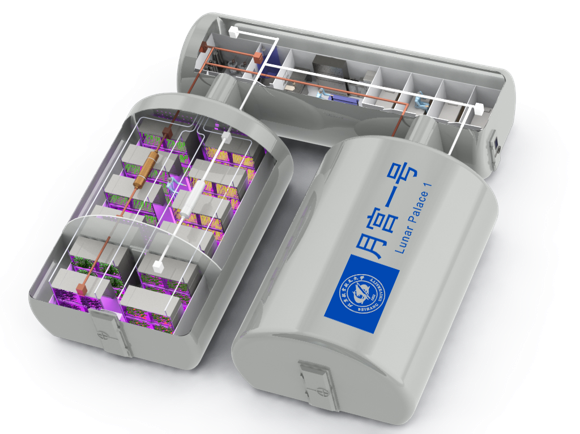
The "Lunar Palace 1"
The project has achieved multiple world records. In 2014, it completed a 105-day closed experiment with three crew members, achieving a material closure rate of 97%. Upgraded and tested in 2018, the "Lunar Palace 365" experiment housed four people for 370 days, setting a world record for the longest duration and highest-closure (98.2%) experiment of its kind. Currently, the "Lunar Palace 1" team is focusing on deep space exploration, preparing for scientific experiments in space station and lunar environments, and tackling key technologies to pave a solid "life oasis" for humanity's journey into deeper space.
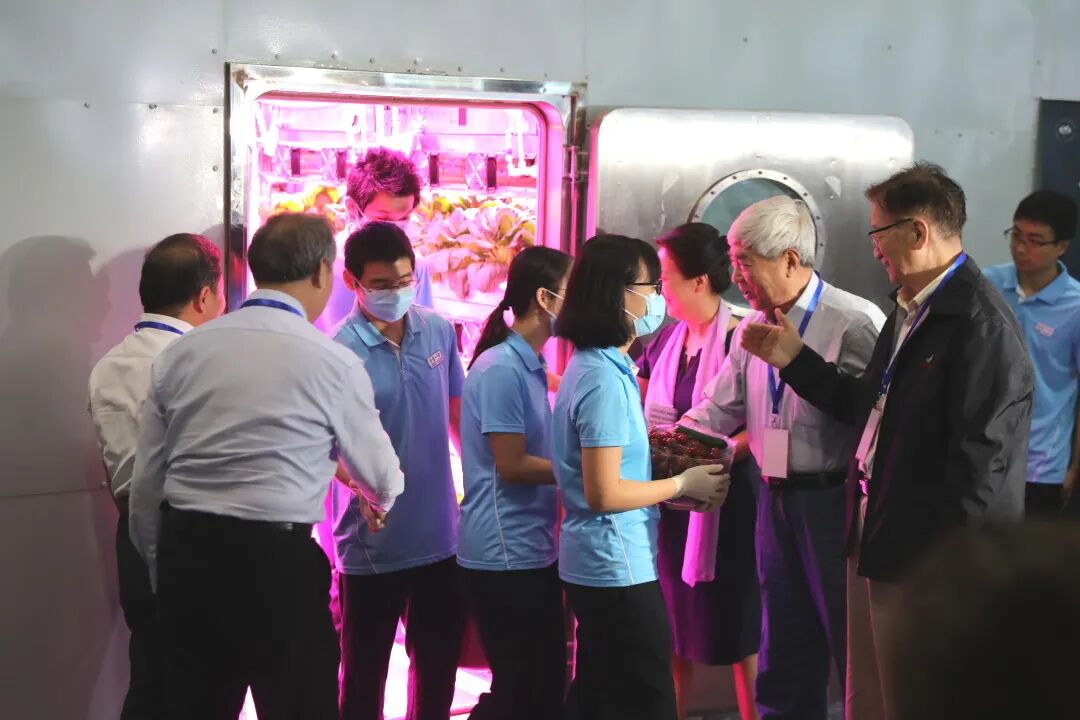
The "Lunar Palace 365" experiment concludes successfully
A Young and Accomplished Team
The team behind these achievements numbers 45 members, including faculty leads, PhD candidates, and master's students, with 90% under the age of 35. They have overcome more than 30 key technological challenges and received 12 major honors, including the China Youth May Fourth Medal for Outstanding Youth Collective.
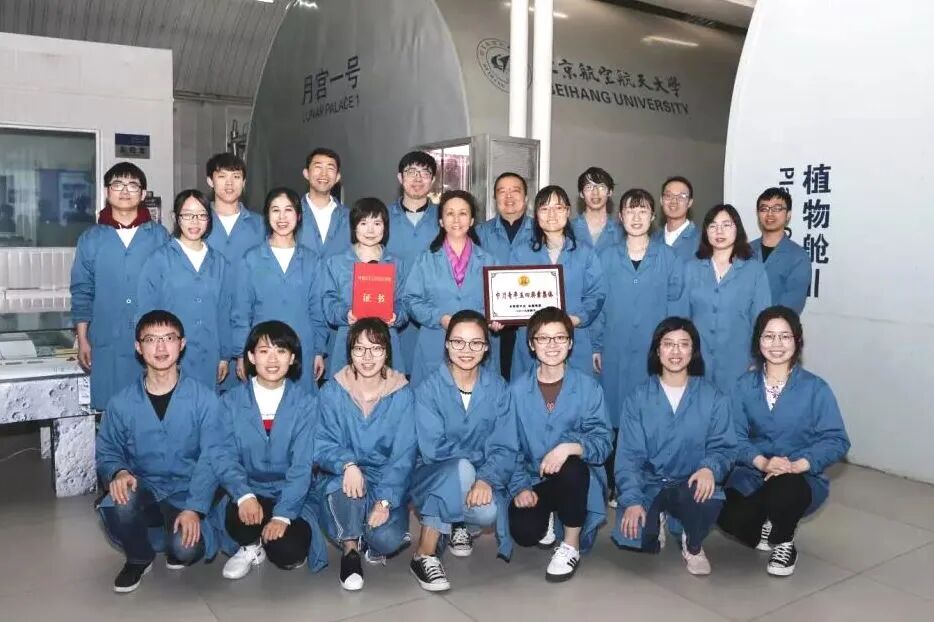
The "Lunar Palace 1" research team
Balancing research with educational commitment, Professor Liu leads a nationally recognized online course, "Survival in Space," and has developed a multidisciplinary curriculum based on the project's outcomes. Her students have earned numerous accolades, including nominations for "Chinese University Student of the Year," the Innovation and Entrepreneurship Scholarships by the Ministry of Industry and Information Technology, and the National Scholarships.
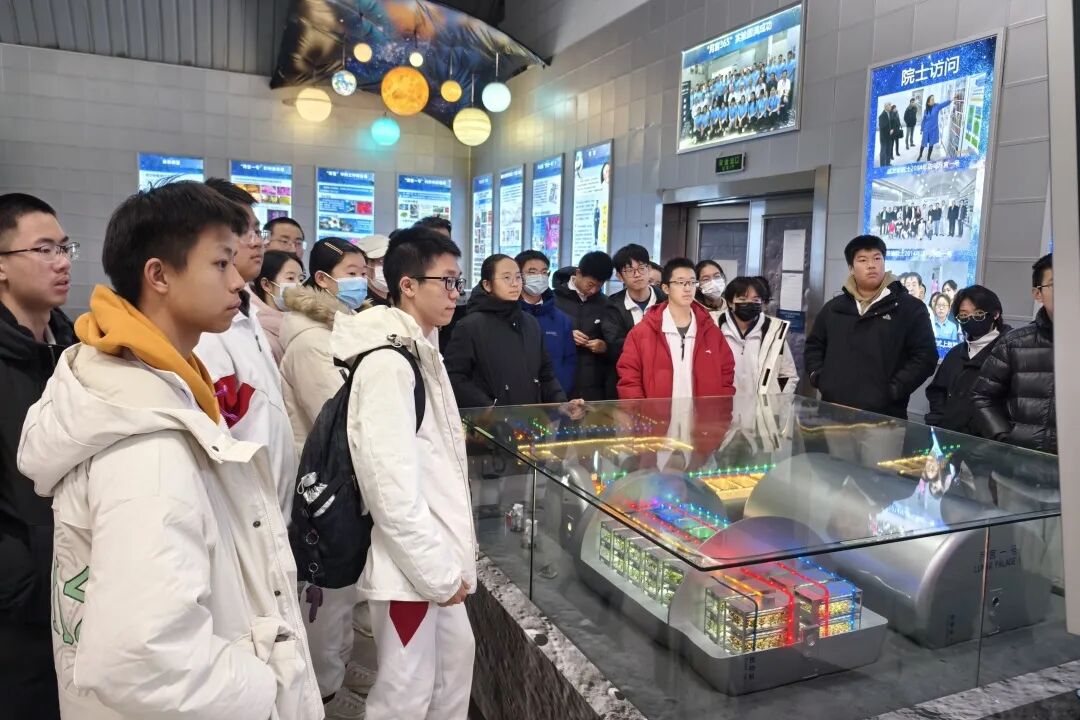
Middle school students tour the "Lunar Palace 1" facility
Initiatives like "Lunar Palace 1 Open Day" and "Voyage Through the Stars" engage students from primary to university levels. The team has also delivered science lectures to over 300 students in Zhongyang County, Shanxi Province, and published nearly 100 science articles widely covered by mainstream media.
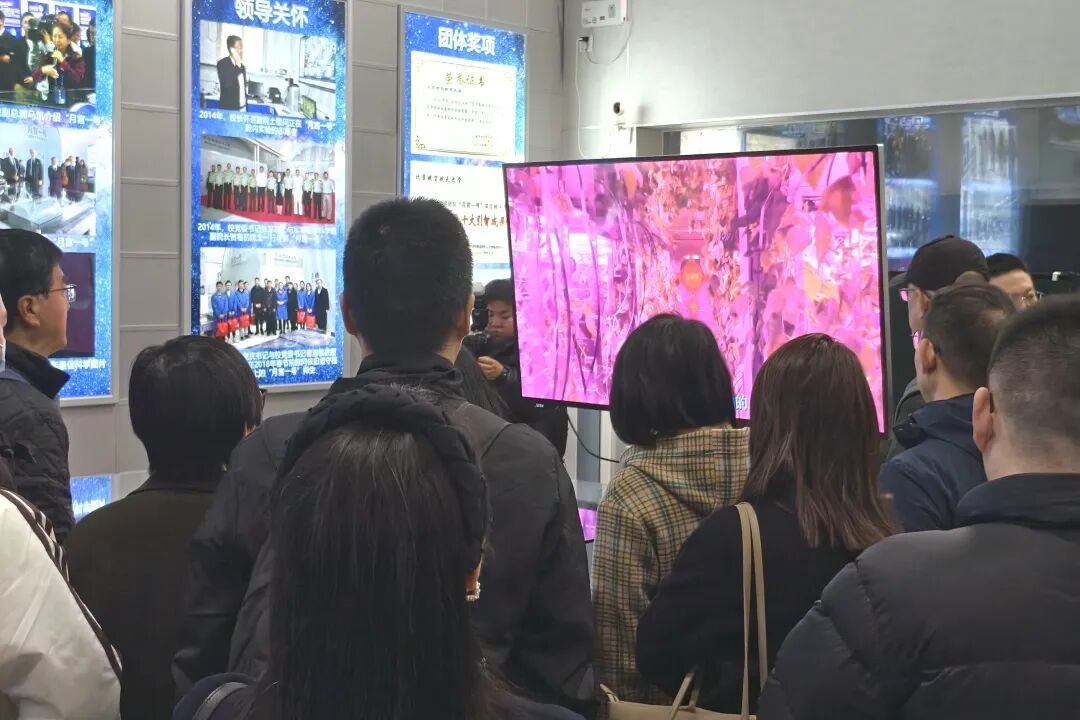
Tech transfer camp visits "Lunar Palace 1"
A Scholarship Rooted in Scientific Spirit
In 2019, Professor Liu received the Beihang Excellence Award for Moral Achievement and Talent Cultivation, the highest honor for educational contribution at Beihang University. She donated the entire prize money to establish the "Lunar Palace 1" Scholarship, which supports undergraduate students who demonstrate significant academic progress—defined as at least a 20% improvement in their major ranking—with priority given to students from financially disadvantaged backgrounds. In its inaugural 2025 selection, seven students were recognized, embodying the legacy of scientific dedication through their growth and diligence.
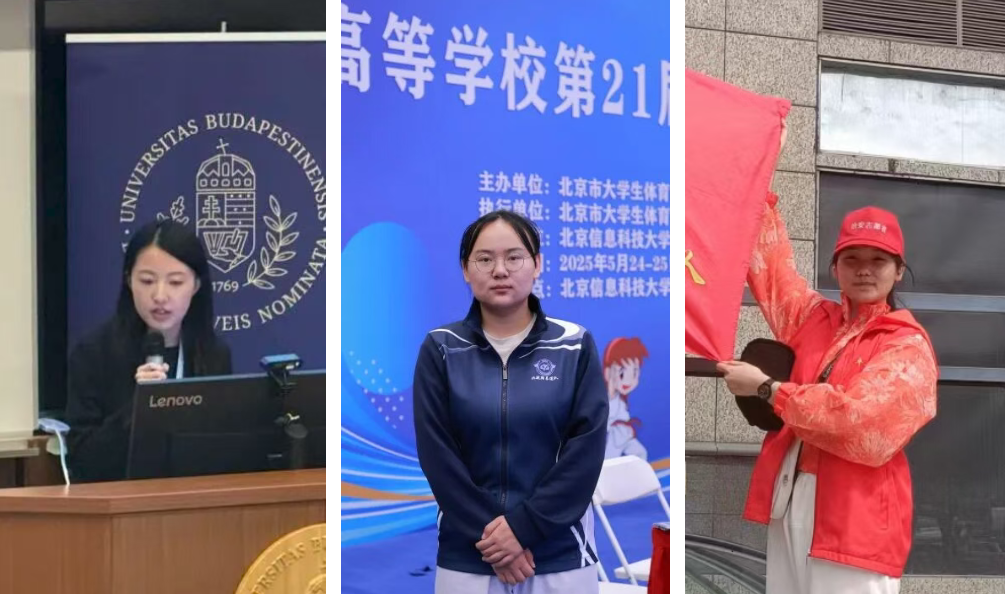
Inaugural recipients of the "Lunar Palace 1" Scholarship
From laboratory breakthroughs to classroom knowledge dissemination, "Lunar Palace 1" stands not only as a scientific achievement but also as a vital link connecting research and education, inspiring more young people to dedicate themselves to building a strong aerospace nation.
Editor: Lyu Xingyun


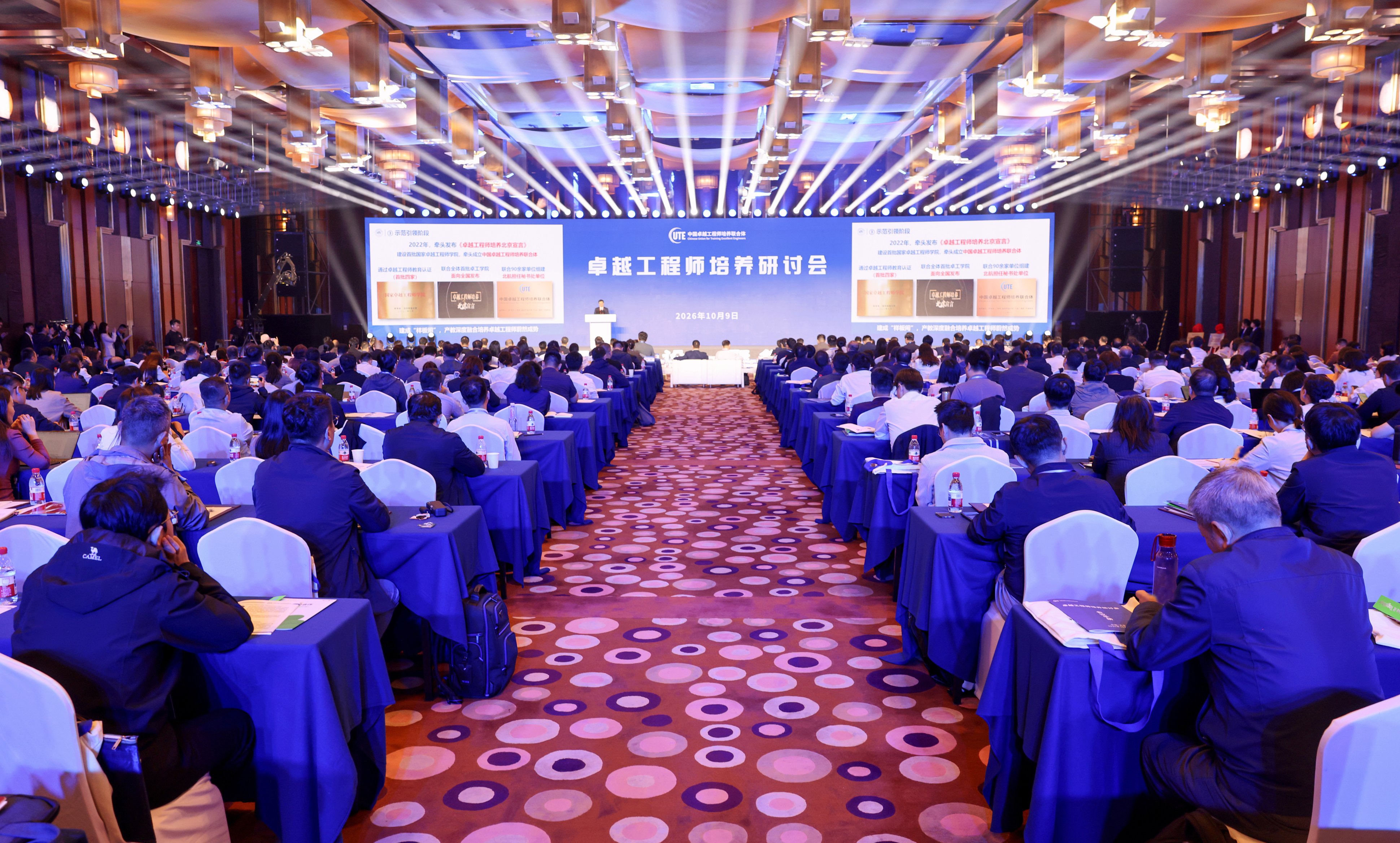 Beihang News2026 Symposium on Excellent Engineer Training held in BeijingMore
 Beihang NewsProfessor Liu Mingjie's team publishes article in Science, revealing high-modulus toughening mechanism in nacreMore
 Beihang NewsWang Yunpeng appointed Secretary of the CPC Beihang University CommitteeMore
 Beihang NewsElsevier Senior Vice President Said Taha visits Beihang UniversityMore
 Beihang NewsPresident Wang Yunpeng visits Hangzhou to advance university-city integration and attends opening ceremony of H3IMore
 Beihang NewsBeihang team wins 2026 Best Paper Award from Proceedings of the IEEEMore