Hashi Hassan Abdulkadir (Chinese name Sun Hui), an international student from Somalia, made history by becoming the first international student from the School of Aeronautic Science and Engineering at Beihang University to win a national award in China's premier aerospace graduation project competition.
At the 7th National Graduation Project Exchange for Aerospace Engineering Majors, held recently at Xiamen University, over 370 outstanding undergraduate capstone projects from 74 Chinese universities were showcased. The School of Aeronautic Science and Engineering at Beihang University delivered a stellar performance, securing one Special Prize, two First Prizes, two Second Prizes, and nine Excellence Awards. Among the honorees was Hashi Hassan Abdulkadir, who won an Excellence Award for his research.
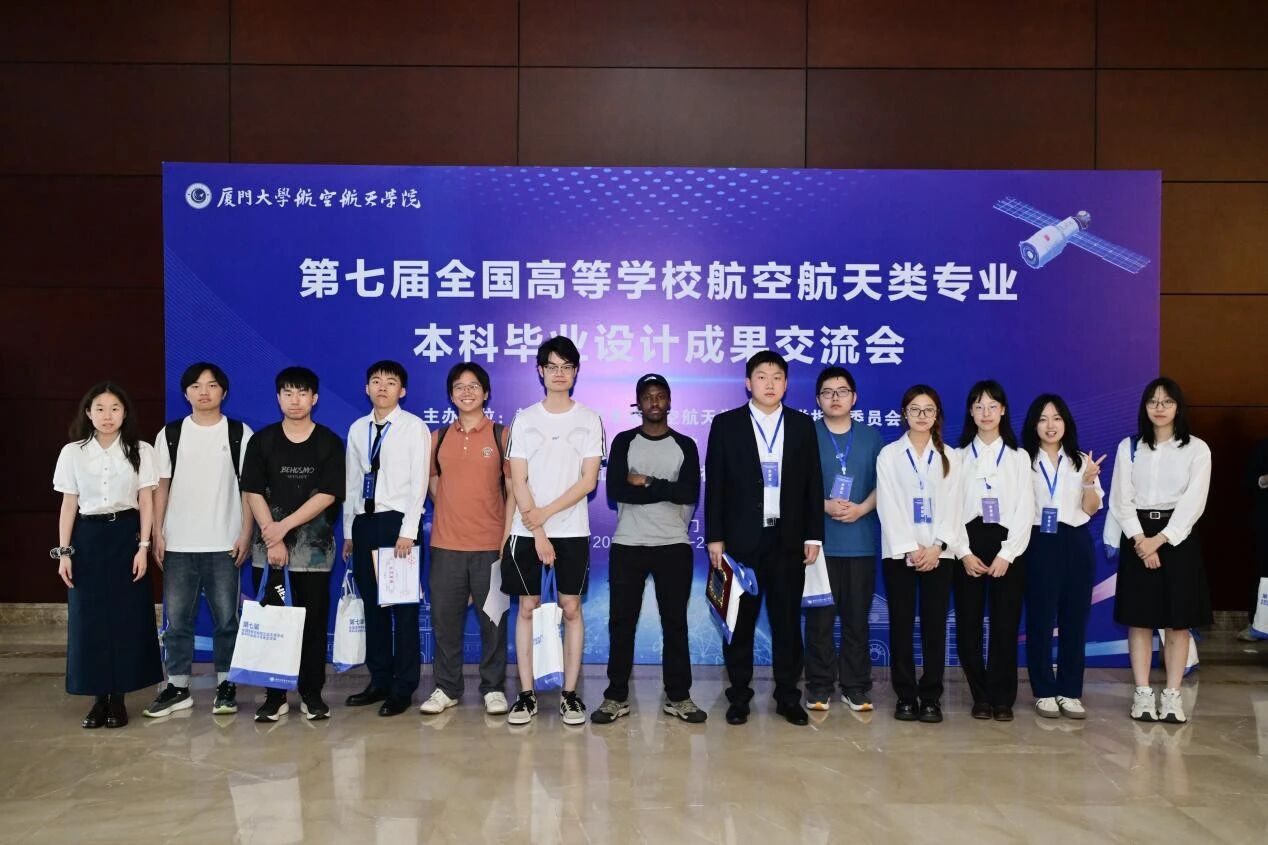
A Historic Moment: Surprise and a Sense of Responsibility
"I was absolutely thrilled. I am the first international student from our school to take part in this national competition, and to have my efforts recognized on such a platform made me incredibly excited," Abdulkadir recalled, his voice still filled with joy as he remembered hearing his name announced at the award ceremony. He admitted that he initially participated with the goal of learning and exchanging ideas, never expecting to stand out among so many talented domestic students.
When he learned that he was the first international student from the School to win such an honor, the surprise turned into a profound sense of responsibility. "I was very surprised, but it means a great deal to me," he said. "I hope my experience can inspire other international students—to help them believe that if you are willing to work hard, you can find your own path."
Six Months of Dedication: Tackling the eVTOL Optimization Challenge
Abdulkadir's award-winning graduation project is titled "Optimal Design of eVTOL Tilt-Rotors Based on Multi-Fidelity Methods." The research focuses on electric vertical takeoff and landing (eVTOL) aircraft, a key frontier in the future of aviation. At its core, he used variable-fidelity modeling to build surrogate models for optimizing tilt-rotor designs, ultimately aiming to improve both hover and cruise efficiency. "I wanted to work on a real engineering problem and truly develop my engineering design capabilities," he explained.
From topic selection to final submission, the entire project took six months. The biggest challenge, he said bluntly, was the "trade-off between accuracy and efficiency." High-fidelity CFD simulations are highly accurate but computationally expensive and time-consuming, while low-fidelity methods alone cannot meet design precision requirements. To solve this dilemma, he reviewed extensive literature and, under the guidance of his supervisor, repeatedly tested different approaches. He eventually adopted a variable-fidelity data fusion method combined with surrogate modeling, significantly reducing computational cost while maintaining the accuracy of the optimization results.
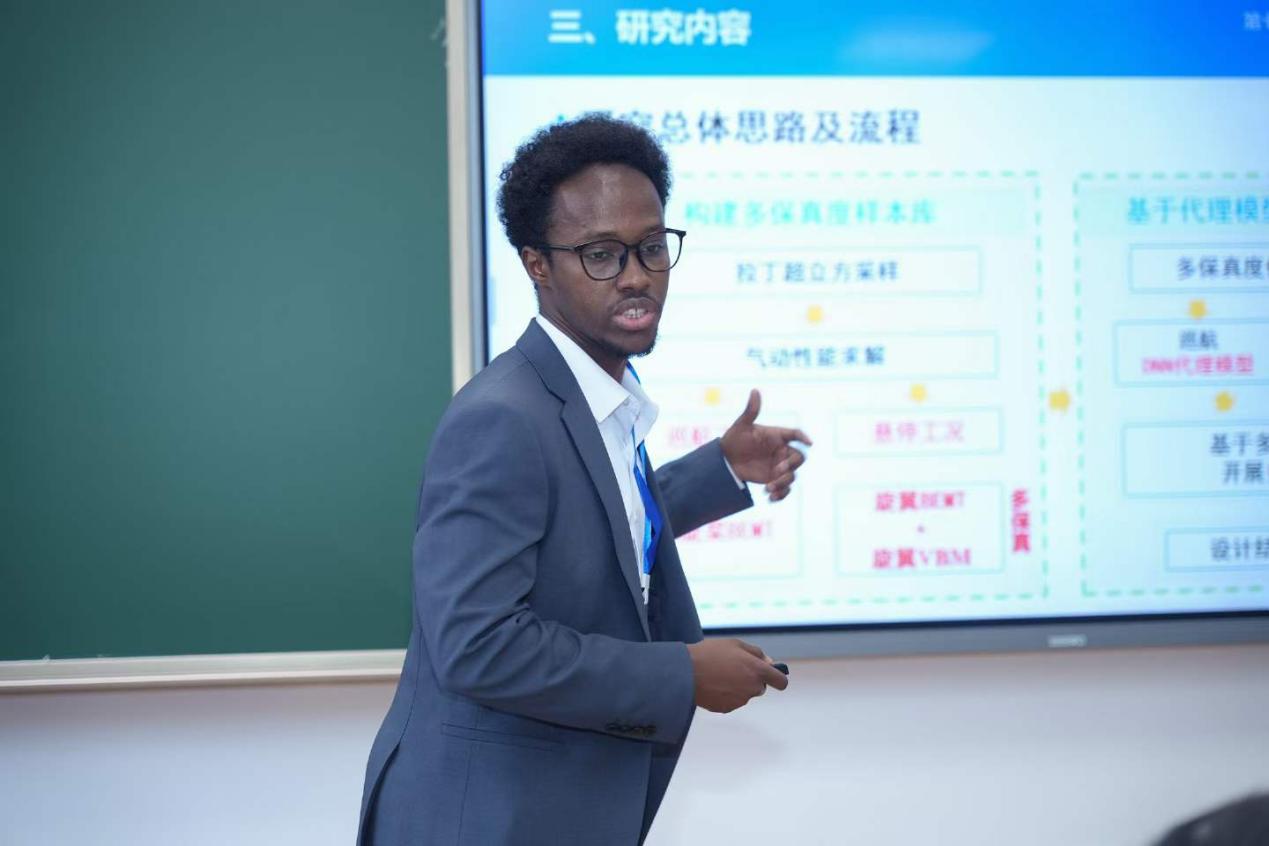
"My supervisor Hu Tianxiang gave me patient and meticulous guidance throughout the entire process," Abdulkadir recalled. "What impressed me most was that when I believed it was impossible to get reasonable results using only low-fidelity methods, he didn't give me the answer. Instead, he asked questions that led me to think about the root cause and analyze the key issues. Through those discussions, I found my own way to improve the approach. That experience taught me how to independently identify problems and find solutions—far more valuable than any specific technical knowledge.”
To present his best work at the national exchange, Abdulkadir invested far more effort than his graduation project required, refining every detail and polishing his defense multiple times. For him, the greatest reward was never the certificate. "The biggest gain is self-confidence," he reflected. "Before coming to Beihang, I never imagined I could do academic research in Chinese, let alone compete alongside students from China's top universities. This experience has made me believe that with real dedication and hard work, language and cultural barriers can be overcome. That confidence is the most valuable thing I will take back to Somalia."
Four Years at Beihang: Growing Through Rigor and Community
In 2022, driven by a childhood dream of aerospace, Abdulkadir traveled from Somalia to China and stepped onto the campus of Beihang University. "China plays a pivotal role in global technological development, and Beihang is among the world's best universities in aeronautics and astronautics. Studying here was an opportunity I had always dreamed of."
However, the beginning was not easy. Language was the first major hurdle. "Although I had studied Chinese for a year before arriving, it was far from enough for specialized courses and daily conversations." He practiced listening and speaking every day, actively sought out conversations with Chinese classmates, and was never afraid of making mistakes. By his third year, his persistence paid off: he was able to take fully Chinese-taught specialized courses alongside his Chinese peers and passed all the exams.
What Abdulkadir loves most about Beihang is the atmosphere. "You see aircraft models everywhere on campus. There is a sense of mission—'serving the nation through aerospace endeavors' is not just a slogan. You can feel it in the DNA of every Beihang person." He also spoke highly of the university's rigorous academic environment. "The students here are incredibly hardworking. They stay up late discussing an experiment or a problem. That relentless pursuit of precision and excellence is what engineering is really about."
He is full of gratitude for the faculty and students around him. "All the teachers and classmates have been very kind and helpful in both academic and daily life. I especially want to thank my senior fellow, Li Changzhi, who always encouraged me during our research discussions." Outside the classroom, Abdulkadir has also developed a deep appreciation for Chinese culture and life. "Chinese people are incredibly warm and hospitable, and the history and culture are profound. I especially love Beijing's hutong culture and all kinds of northern Chinese snacks. These memories have made my time abroad truly unforgettable."
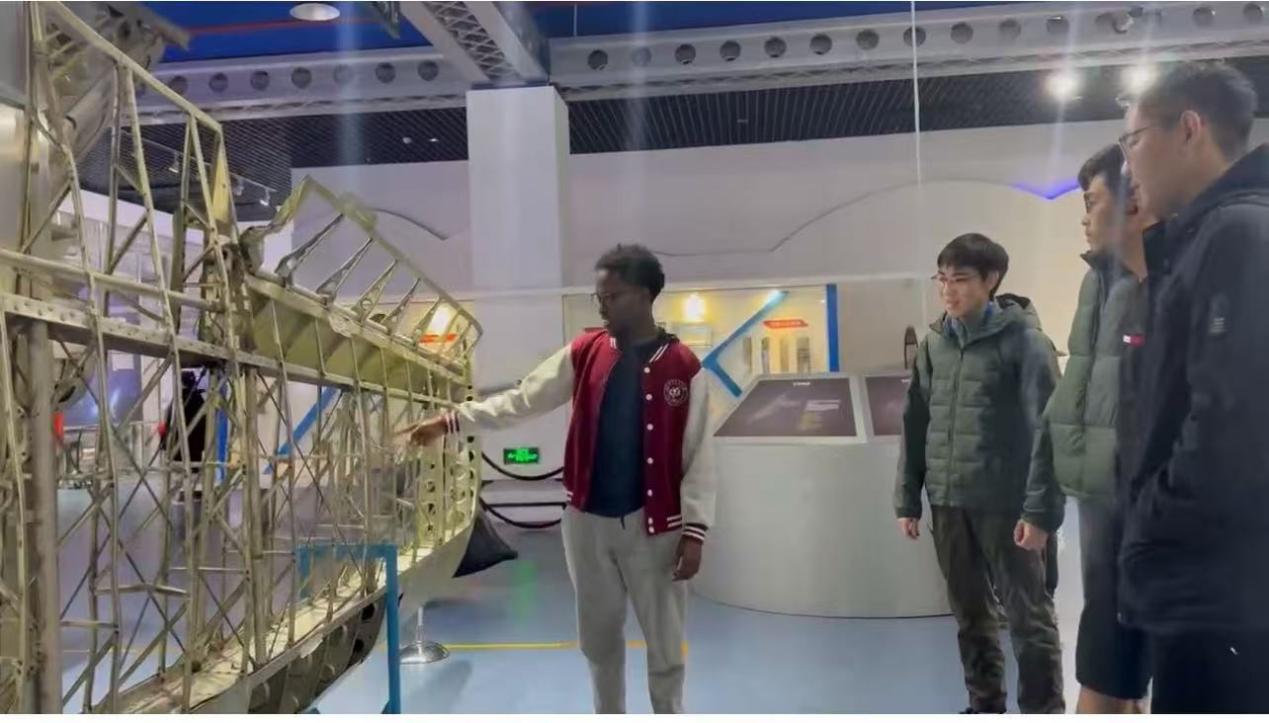
Understanding Aerospace: The Art of Balancing Precision and Efficiency
Four years of study and practice have reshaped Abdulkadir's understanding of aerospace engineering. "When I first enrolled, I thought aerospace engineering was simply about designing airplanes. But the deeper I go, the more I realize this field constantly pushes physical limits with almost zero tolerance for error. Every calculation, every detail matters." His graduation project, he said, brought this lesson home: "In engineering practice, finding the optimal path between accuracy and efficiency is itself an art."
He also reflected on cultural differences in learning styles. "Chinese students have very solid foundations in math and engineering, and their work ethic is truly admirable. International students, on the other hand, often bring unique perspectives shaped by the practical needs and challenges of their home countries, which can inject fresh ideas into research." In his view, this cross-cultural exchange creates a more creative learning environment where everyone grows together.
To fellow international students studying in China, Abdulkadir offered his heartfelt advice: "Don't be afraid of difficulties. Language barriers, cultural differences, academic pressure—they may feel overwhelming at first, but they are temporary. Keep going. Don't hesitate to ask for help when you need it, and don't isolate yourself. See every challenge as an opportunity to grow. Go all out, and anything is possible."
Abdulkadir's journey and achievement offer a vivid example of the School of Aeronautic Science and Engineering's success in nurturing international talent. In recent years, the School has continuously improved its system for international talent cultivation, launching multiple English-medium courses and building diverse platforms for global exchange. Looking ahead, the School will continue to deepen its educational reforms, balance domestic talent development with international engagement, and strive to cultivate more high-caliber aerospace professionals with global vision, innovative spirit, and practical abilities, contributing to the advancement of aerospace engineering worldwide and to the building of a shared future for humanity.
Editor: Lyu Xingyun


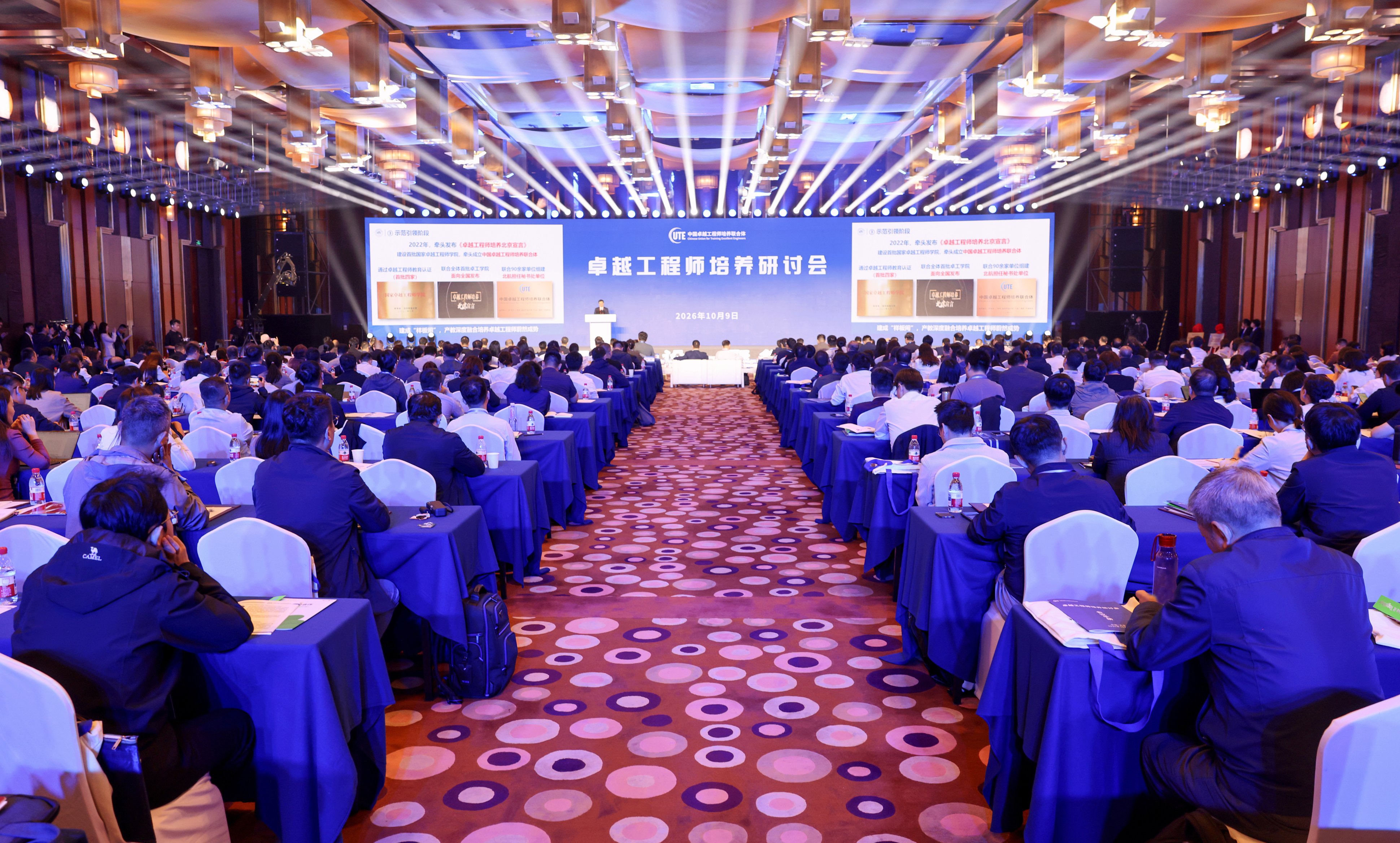 Beihang News2026 Symposium on Excellent Engineer Training held in BeijingMore
 Beihang NewsProfessor Liu Mingjie's team publishes article in Science, revealing high-modulus toughening mechanism in nacreMore
 Beihang NewsWang Yunpeng appointed Secretary of the CPC Beihang University CommitteeMore
 Beihang NewsElsevier Senior Vice President Said Taha visits Beihang UniversityMore
 Beihang NewsPresident Wang Yunpeng visits Hangzhou to advance university-city integration and attends opening ceremony of H3IMore
 Beihang NewsBeihang team wins 2026 Best Paper Award from Proceedings of the IEEEMore