Recently, Chang Lingqian’s research group has published a research paper titled “Single Living Cell Analysis Nano-platform for High-throughput Interrogation of Gene Mutation and Cellular Behavior” in the well-known journal Nano Letters, and was selected as the inside cover article of the current issue.
In the research, the authors report a new type of living cell array research platform, which can efficiently deliver a Domino fluorescent probe capable of signal amplification in situ into living cells through nano electro-delivery technology, and detect intracellular gene mutations at the single-cell level. Furthermore, the chip has the function of cell addressing, which can realize in situ analysis of drug resistance in tumor cells (Figure 1). In the study of clinical lung cancer cell samples, it is found that the proportion of lung cancer cells with certain gene mutations is positively correlated with the sensitivity of the cells to targeted drugs. This platform provides a general method for single cell analysis and intracellular gene detection, and has great application potential in guiding precise clinical treatment.

Figure 1. Principle of single living cell analysis nanoplatform
EGFR mutations have the highest prevalence in lung cancer gene mutations. Although EGFR-targeted drugs can effectively extend the lives of patients, tumor cells are prone to drug resistance, resulting in the failure of targeted drugs. Predicting the presence of EGFR mutations in patients and inferring the resistance of their tumor cells to targeted drugs play a significant role in improving the effectiveness of lung cancer treatment.
The research group designs an intracellular DNA probe, termed “Domino-probe”, which employs the principle of base complementary pairing to form a compact spiral strand by assembling paired hairpin DNA sequences.
As compared to the classical molecular beacons, the reaction speed of Domino-probes recognized by target RNA is accelerated by 4-fold and the fluorescence signal is increased by 10-fold. To deliver Domino-probe efficiently, the research group develops a nanopore electro-delivery chip that can deliver Domino-probe to millions of lung cancer cells positioned in the addressable microwell to achieve intracellular EGFR gene mutation detection (Figure 2).
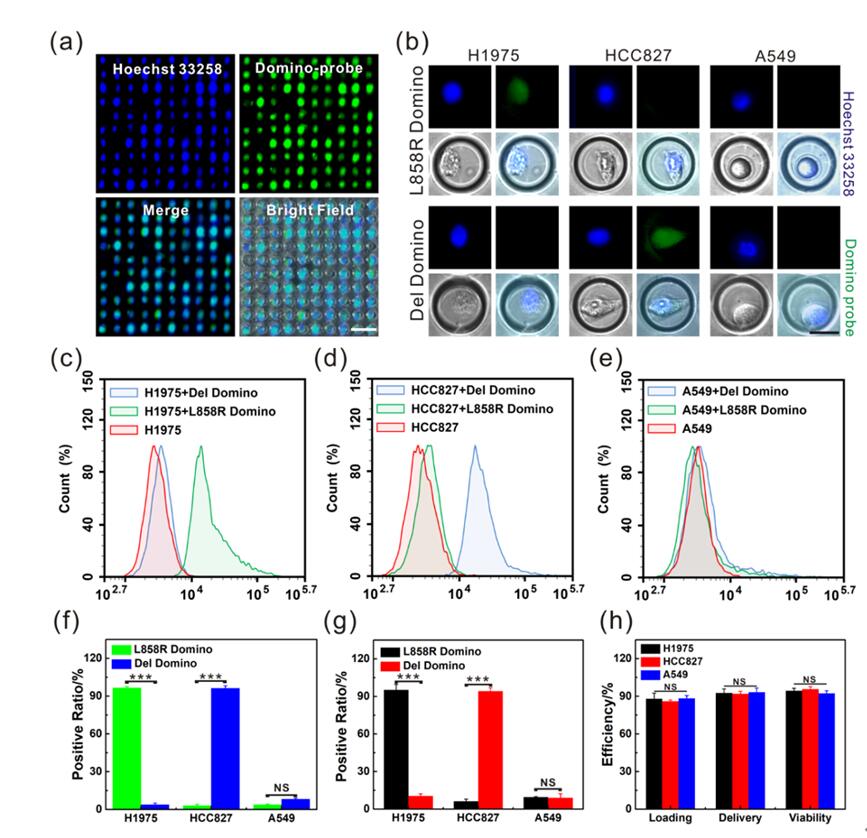
Figure 2. Gene mutation detection by SLCA nanoplatform
The research group uses this platform to study gene mutations in single living cells from clinical samples of lung cancer patients, revealing a positive correlation between EGFR mutations and the tolerance of the corresponding targeted drugs. The nanoplatform proposed in this work enables in-situ cell culture, gene detection in living cells, and spatial-temporal controllable analysis of cell behavior.
The first author of this article is Dr. Zaizui Dong from Beijing Advanced Innovation Center for Biomedical Engineering, School of Biological Science and Medical Engineering of Beihang University. Moreover, Professor Wu Nan from Beijing Cancer Hospital and Professor Xue Xinying from Beijing Shijitan Hospital are joint corresponding authors.
The link to the article is:
https://pubs.acs.org/doi/full/10.1021/acs.nanolett.1c00199
Reported by Chang Lingqian
Reviewed by Han Huiyu
Edited by Jia Aiping
Translated by Zang Mingming


 Beihang News2026 Symposium on Excellent Engineer Training held in BeijingMore
 Beihang NewsProfessor Liu Mingjie's team publishes article in Science, revealing high-modulus toughening mechanism in nacreMore
 Beihang NewsWang Yunpeng appointed Secretary of the CPC Beihang University CommitteeMore
 Beihang NewsElsevier Senior Vice President Said Taha visits Beihang UniversityMore
 Beihang NewsPresident Wang Yunpeng visits Hangzhou to advance university-city integration and attends opening ceremony of H3IMore
 Beihang NewsBeihang team wins 2026 Best Paper Award from Proceedings of the IEEEMore