A research team led by Associate Professor Zhang Bei from the School of Automation Science and Electrical Engineering has proposed a novel polarization measurement method based on vortex polarization state analyzer (vortex-PSA), achieving for the first time a single-step, real-time, and high-precision measurement of full spatial polarization information via a characteristic pattern strategy. The work, entitled "Stokes Polarimeter via Characteristic Pattern Strategy by Vortex-PSA Module," has been published in IEEE Transactions on Instrumentation and Measurement.
Conventional Stokes polarimeter generally measures the Stokes vector by rotating or electrically controlled optical retarder devices as the polarization state analyzer (PSA), to convert the polarization information into intensity variations. For one-shot Stokes measurement, many other configurations, like the separate-retarder and multichannel polarimeters, were proposed to avoid dynamic modulation. For more compact one-shot Stokes polarization measurement, spatially modulated polarimeters have emerged. Their core idea is to establish a pixel-to-Stokes mapping strategy, typically by calibrating the Mueller matrix/parameters of each pixel. Recently, methods that directly retrieve Stokes parameters from spatially modulated images—often using machine learning—have gained interest. However, calibrating each pixel or the pretraining process of machine learning may require some efforts.
In this work, researchers focus on a compact and one-shot Stokes polarimeter by vortex characteristic patterns. Unlike previous spatial modulation Stokes polarimeter relying on a mapping strategy with calibration/pretraining images to establish a pixel-to-Stokes relation between the output pattern and the tested Stokes vector, they provide an alternative "Characteristic-Pattern-to-Stokes" strategy for polarization measurement. It involves two key techniques: 1) the proposed vortex-PSA module, which generates characteristic patterns that are directly interpretable and easy to extract and 2) simple and effective extraction of the output vortex characteristic pattern in the frequency domain.
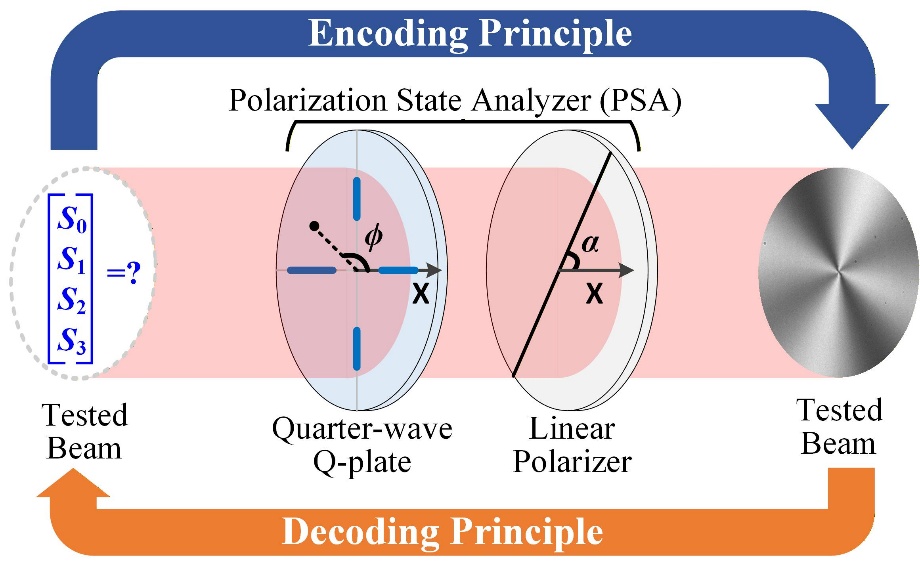
Fig. 1 Schematic of the main principle of the "Characteristic-Pattern-to-Stokes" strategy
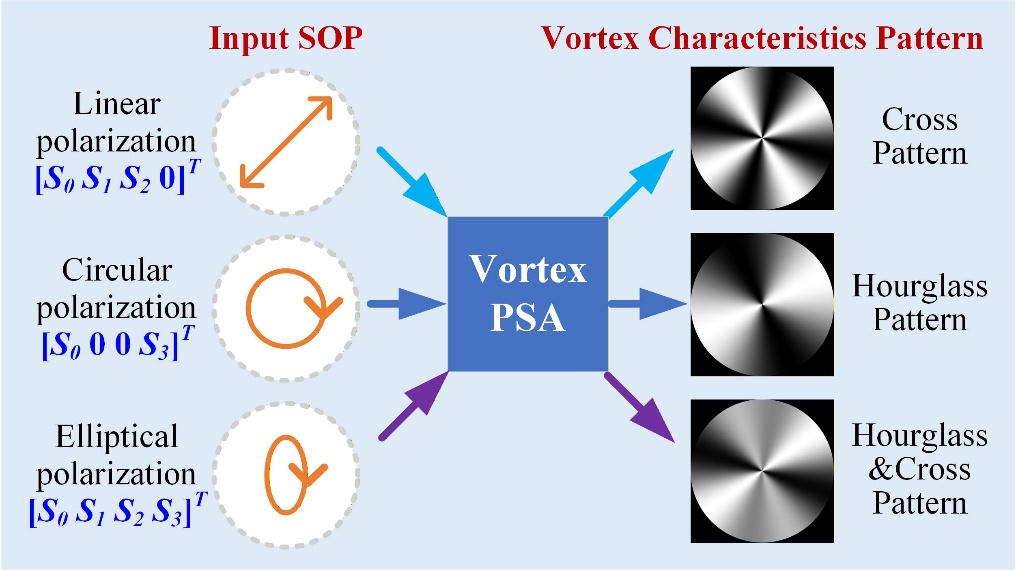
Fig. 2 Conversion process of the tested polarization to vortex characteristic patterns by the proposed vortex-PSA module
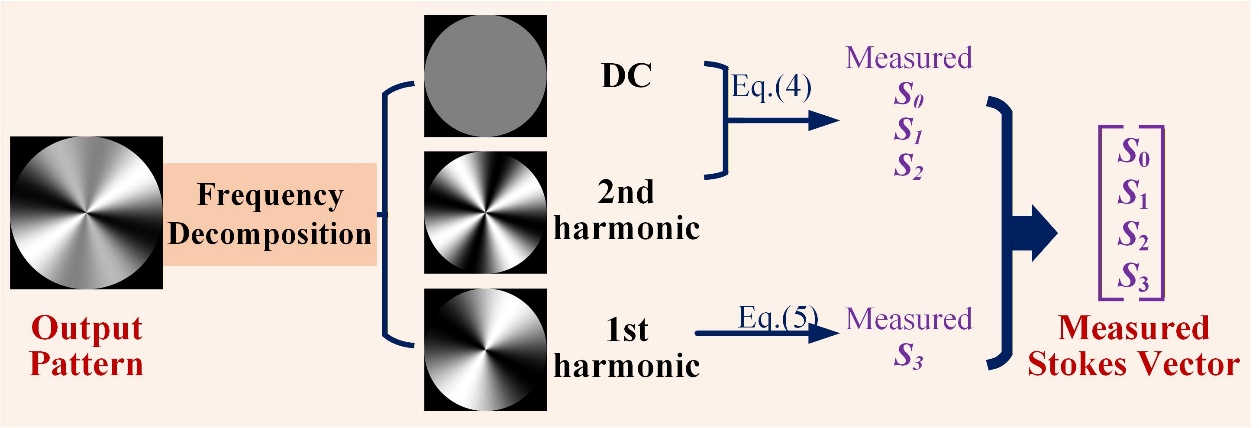
Fig. 3 Stokes vector extraction process by the output image, which contributes to the proposed algorithm based on Fourier analysis
More specifically, based on their proposed vortex-PSA module, the tested Stokes vector turns to a vortex characteristic pattern, whose shape is related to the tested polarization state and can be directly interpreted. Moreover, the vortex characteristic pattern can be decomposed into different harmonic components, making it easy to extract using their pattern decomposition algorithm by Fourier analysis. With the proposed "Characteristic-Pattern-to-Stokes" strategy, the researchers achieved Stokes vector measurement with error metric from 0.0136 to 0.0451, without requiring complex precalibration or pretraining procedures, making the system easy to operate.
In the field of vortex polarization, the research team has been conducting sustained research and has achieved a series of results, including high-precision measurement of polarizers (published in Measurement), simultaneous full-information measurement of birefringence (published in Measurement), and polarization orientation measurement under wide-band scenarios (published in IEEE Transactions on Instrumentation and Measurement).
Currently, the team is advancing the development of key technologies such as the "single-step vortex Mueller polarimeter" and "multi-spectral vortex ellipsometer," aiming to build a comprehensive vortex polarization measurement system and contribute to China's independent innovation in high-end scientific instrumentation.
Link to the article: https://ieeexplore.ieee.org/document/11112581/
Editor: Lyu Xingyun


 Beihang NewsBeihang celebrates 42nd Teachers' DayMore
 Beihang NewsBeihang's first student-designed human-powered aircraft completes test flightMore
 Beihang NewsBeihang leaders engage in dialogue with new undergraduate and graduate student representativesMore
 Beihang NewsBeihang University holds 2026 opening convocation to welcome new studentsMore
 Beihang NewsBeihang University welcomes 9,022 new graduate studentsMore
 Beihang NewsProfessor Yu Shui wins Best Screenplay Award at 21st Changchun Film FestivalMore