Polarization direction (PD) characterization is a fundamental core technology in fields such as optical sensing, precision detection, navigation and positioning, and biomedical imaging. Since the proposal of Malus's law in the 19th century, traditional methods have generally relied on mechanical rotation, making it difficult to meet the practical demands of dynamic scenarios (e.g., high-speed target detection) and broadband scenarios (e.g., navigation, early-stage tumor screening). This has become a critical bottleneck constraining technological upgrades in related industries.
The research team led by Associate Professor Zhang Bei from the School of Automation Science and Electrical Engineering at Beihang University has been deeply engaged in the field of full-space vortex PD characterization. Relying on core technologies in full-space modulation and vortex optics, the team has completed several original research achievements, covering the development of core sensing module hardware, breakthroughs in wide-field applications, and the systematization of theoretical frameworks. All related achievements are protected by fully independent intellectual property rights, providing a systematic solution for the comprehensive upgrade of PD characterization technology.
A taxonomic review of PD metrology
This research provides a systematic taxonomy of PD measurement techniques, categorizing them into relative and absolute measurement paradigms. By establishing cross-disciplinary connections between measurement physics and engineering requirements, the research serves as a roadmap for selecting optimal PD sensing configurations in emerging application scenarios and accelerating the adoption of next-generation polarization metrology solutions.
This work, primarily completed by Shan Chenning (Master's student enrolled in 2023), was published under the title "A Taxonomic Review of Polarization Direction Metrology: From Rotating Malus to Vortex Devices" in IEEE Transactions on Instrumentation and Measurement, the renowned journal for detection and instrumentation.
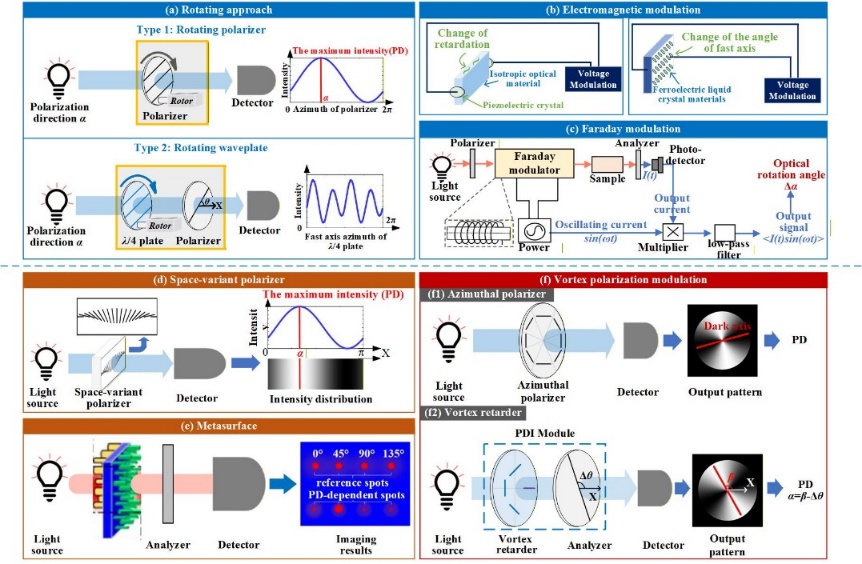
Figure 1. A systematic review of six PD measurement technologies
Link to the article: https://ieeexplore.ieee.org/document/11151609
A "plug-and-play" PD measurement module without mechanical rotation
The research focuses on PD visualization of linearly-polarized light. Different from using conventional rotation or multiple beam-path approaches, a more direct and popular solution is to generate the so-called "Malus pattern" and visualize the PD directly by an azimuthal polarizer (AP). However, there has been no proper solution to plug-and-play the AP for the measurement directly since their high-performance hardware suffered from complex coupling relations, and their algorithms relied on filtering and manual operations.
This research is the first to: 1) point out the problems and propose the integration of the AP as a "plug-and-play" module; 2) propose a high-performance hardware configuration without coupling relation; and 3) propose a frequency-domain algorithm with high anti-noise ability and automatic identification. All the involved issues are experimentally verified.
This work, primarily completed by Zhu Xinyun (Master's student enrolled in 2021), was published in IEEE Transactions on Instrumentation and Measurement under the title of "Plug-and-Play Typed Polarization Direction Indicator by Azimuthal Polarizer."
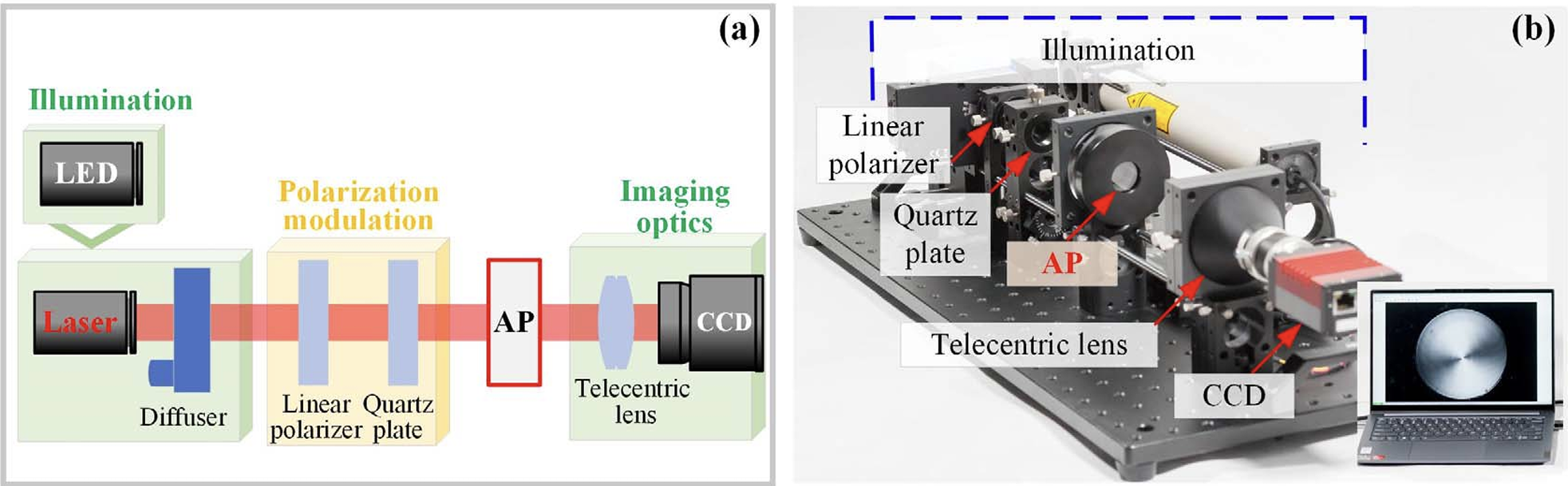
Figure 2. "Plug-and-Play" PD measurement module without mechanical rotation
Link to the article: https://ieeexplore.ieee.org/document/9976284
Overcoming the wavelength sensitivity limitations of vortex waveplates to achieve broadband PD measurement
Polarization direction indicator (PDI) by vortex retarder has been proved to be a powerful tool in PD measurement. It features on one-shot, non-mechanical motion and non-electromechanics and high robustness to random noises. However, as a wavelength-sensitive device and the key component in the PDI, a vortex retarder can only work in single-wavelength mode, which, obviously, poses severe application limitations since most practical polarization direction measurement applications actually require broadband detection. This research aims to explore the common concern that if a PDI by vortex retarder can work in broadband or wide-spectrum detection mode. It is the first time to theoretically and experimentally prove that a PDI by vortex retarder can work as a broadband PDI, even across the entire visible wavelength band.
The work, primarily completed by Zhu Xinyun (Master's student enrolled in 2021), was published in IEEE Transactions on Instrumentation and Measurement under the title of "Vortex Retarder Allows Broadband Polarization Direction Indicator."
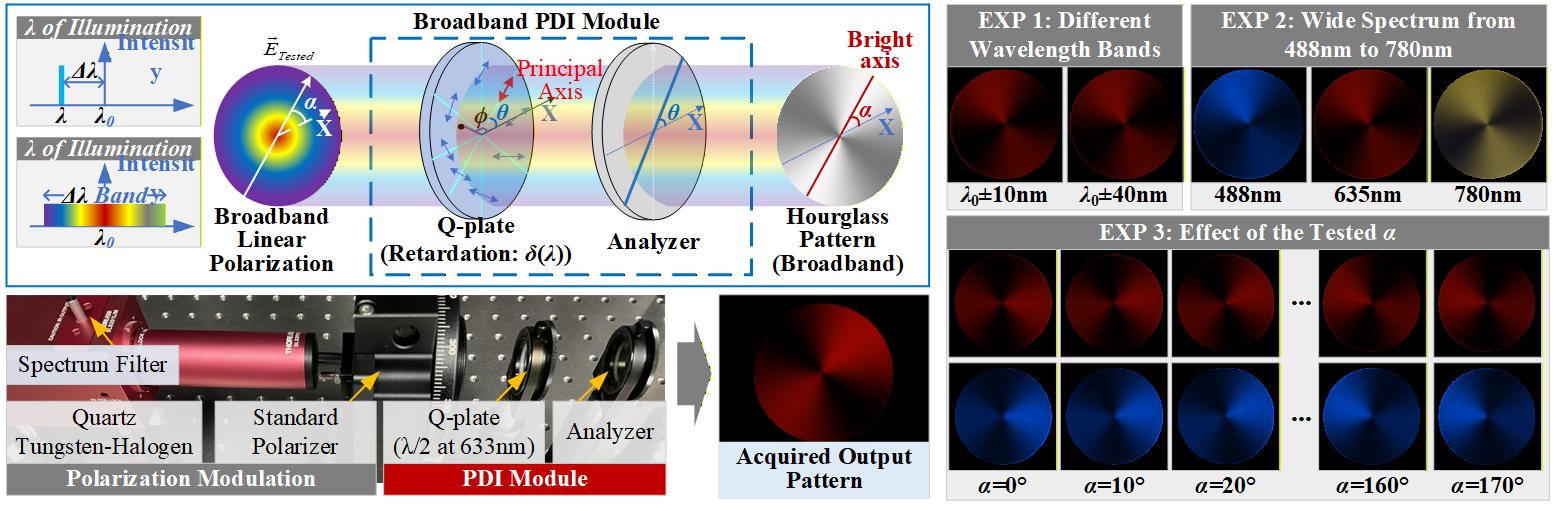
Figure 3. Application of the Vortex-PDI module in broadband PD measurement
Link to the article: https://ieeexplore.ieee.org/document/10589671
Expansive work on PD
Building on the comprehensive research on full-space vortex PD, the team has continuously expanded the research boundaries and focused on two key initiatives in instrumental applications, further extending the application scope of PD measurement technology. First, the core technology has been extended to ellipsometry, successfully achieving single-step transient characterization of ellipsometry (results published in IEEE Transactions on Instrumentation and Measurement @2025). This provides a novel technical approach for precise PD measurement in the field of ellipsometry. Second, the research has been expanded to the multi-spectral domain, leading to the development of a full-space modulated multi-spectral ellipsometer. This not only enriches the product range of polarization detection instruments but also promotes the application of vortex polarization measurement technology in multi-spectral scenarios.
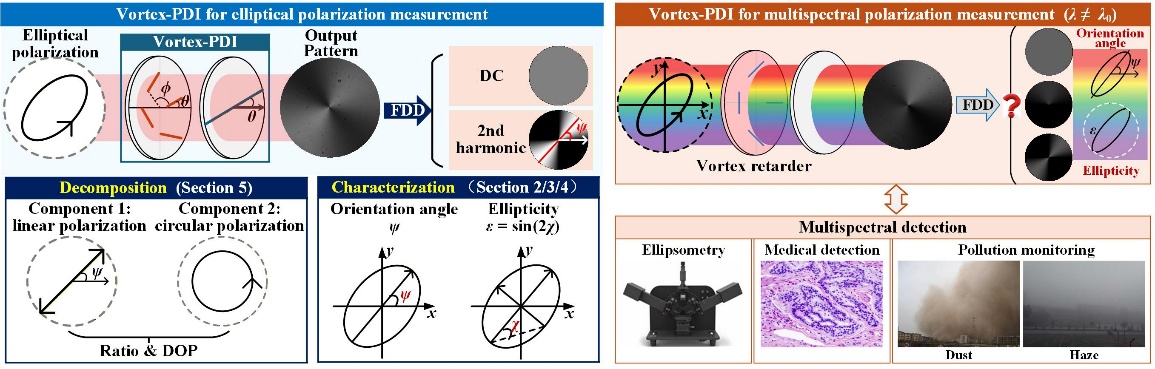
Figure 4. (a). Principle of Vortex-PDI in elliptical polarization; (b). Vortex-PDI for multi-spectral polarization measurement
Link to the article: https://ieeexplore.ieee.org/document/11108961
To accelerate technology transfer and instrument promotion, the research team has openly shared all resources involved in the aforementioned achievements and extended studies, including instrument equipment, algorithm software, and experimental data. The team sincerely invites domestic and international peers to collaborate and jointly advance the industrialization and large-scale multi-scenario application of the related instruments.
Editor: Liu Tingting


 Beihang NewsBeihang celebrates 42nd Teachers' DayMore
 Beihang NewsBeihang's first student-designed human-powered aircraft completes test flightMore
 Beihang NewsBeihang leaders engage in dialogue with new undergraduate and graduate student representativesMore
 Beihang NewsBeihang University holds 2026 opening convocation to welcome new studentsMore
 Beihang NewsBeihang University welcomes 9,022 new graduate studentsMore
 Beihang NewsProfessor Yu Shui wins Best Screenplay Award at 21st Changchun Film FestivalMore