Recently, Associate Professor Cui Wenhao from the School of Economics and Management published a research paper titled "The Explicative Market Microstructure Noise" in the Journal of the American Statistical Association (JASA), a world-renowned statistics journal. As the official journal of the American Statistical Association, JASA covers various areas including statistical theory, methodology, and applications, and has long enjoyed high academic influence.
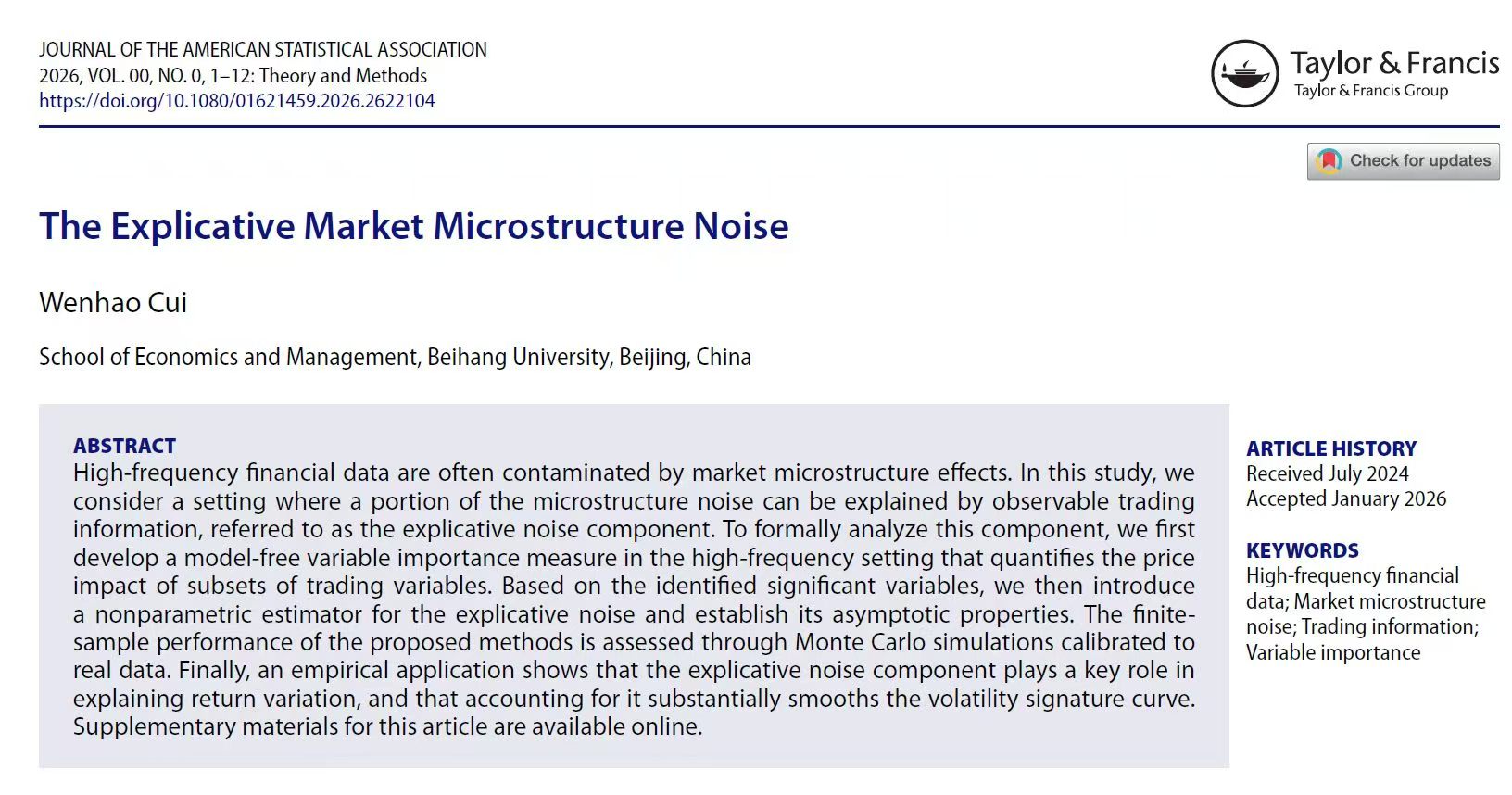
While high-frequency financial data (such as tick-by-tick transaction data) enhance market transparency and predictive capabilities, they are also heavily contaminated by market microstructure noise, which reflects distortions caused by imperfections in the trading process. These include bid-ask bounce, price discreteness, latency, and asymmetric information, all of which lead to deviations from fundamental asset values.
Traditional research typically treats this noise as random error, ignoring its structural relationship with observable trading information. This study breaks away from this conventional assumption by decomposing market microstructure noise into two components: "explicative noise" and "residual noise." The explicative noise can be explained by observable trading variables such as bid-ask spreads, trading volume, quote depth, and trade durations, and carries clear economic meaning. Centered on this concept, the paper systematically conducts innovative research in the following three aspects:
First, it proposes a model-free measure of variable importance in a high-frequency setting, allowing for population-level assessment of trading information and providing a feasible inference procedure. Second, it introduces a nonparametric series estimator of the explicative noise component and establishes its asymptotic properties and uniform convergence rate. Finally, empirical results show that the signed bid-ask spread is the most (or second most) influential trading information. Explicative noise significantly explains return variation, and accounting for it substantially smooths the volatility signature curve.
This study demonstrates that market microstructure noise is not completely random but can be systematically explained by trading information. By identifying and estimating the "explicative noise," researchers can more accurately recover the fundamental price process of assets, thereby improving the reliability of volatility estimation, risk management, and market efficiency tests. This finding provides a new theoretical foundation and practical tools for modeling and applying high-frequency financial data.
Editor: Liu Tingting


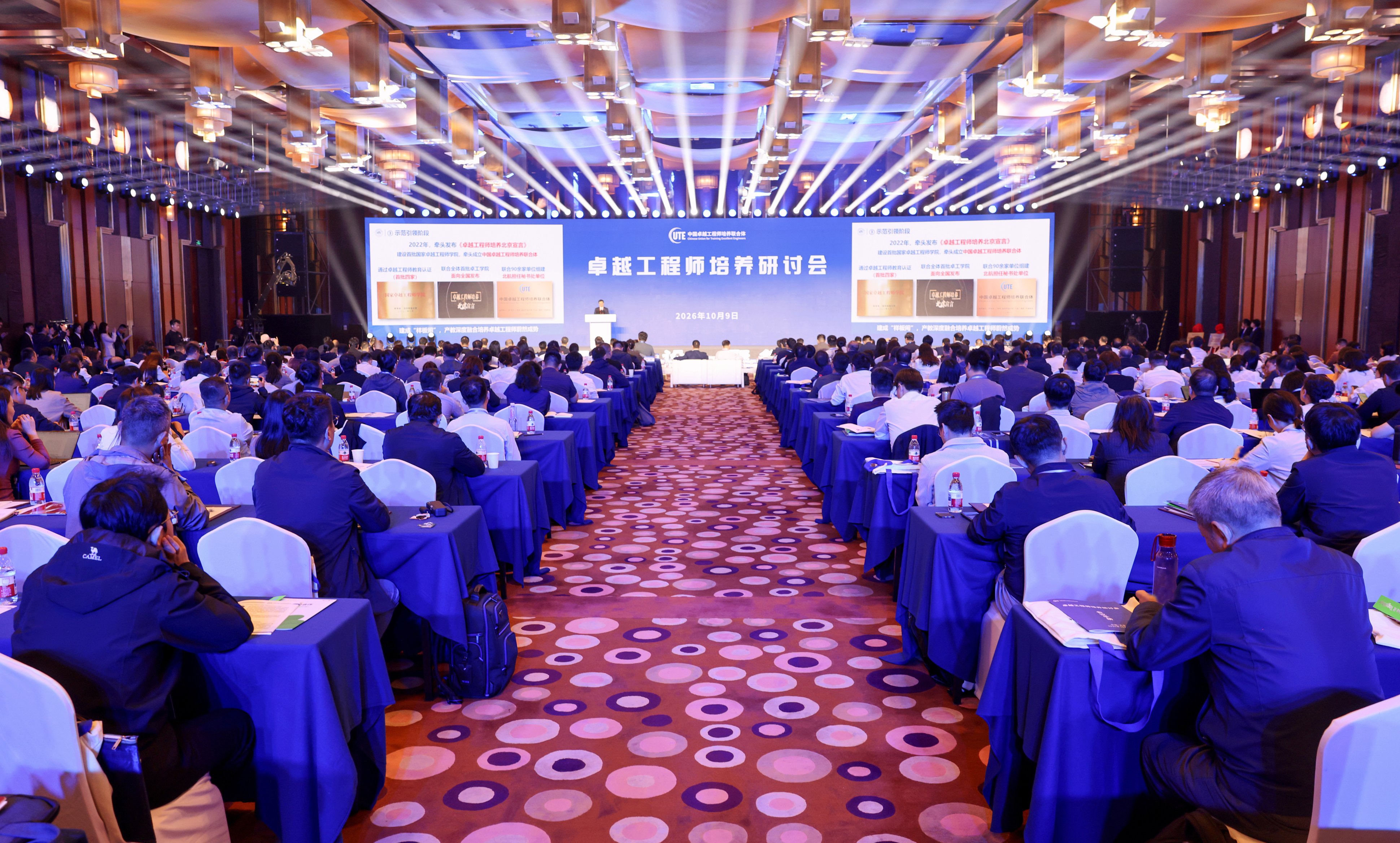 Beihang News2026 Symposium on Excellent Engineer Training held in BeijingMore
 Beihang NewsProfessor Liu Mingjie's team publishes article in Science, revealing high-modulus toughening mechanism in nacreMore
 Beihang NewsWang Yunpeng appointed Secretary of the CPC Beihang University CommitteeMore
 Beihang NewsElsevier Senior Vice President Said Taha visits Beihang UniversityMore
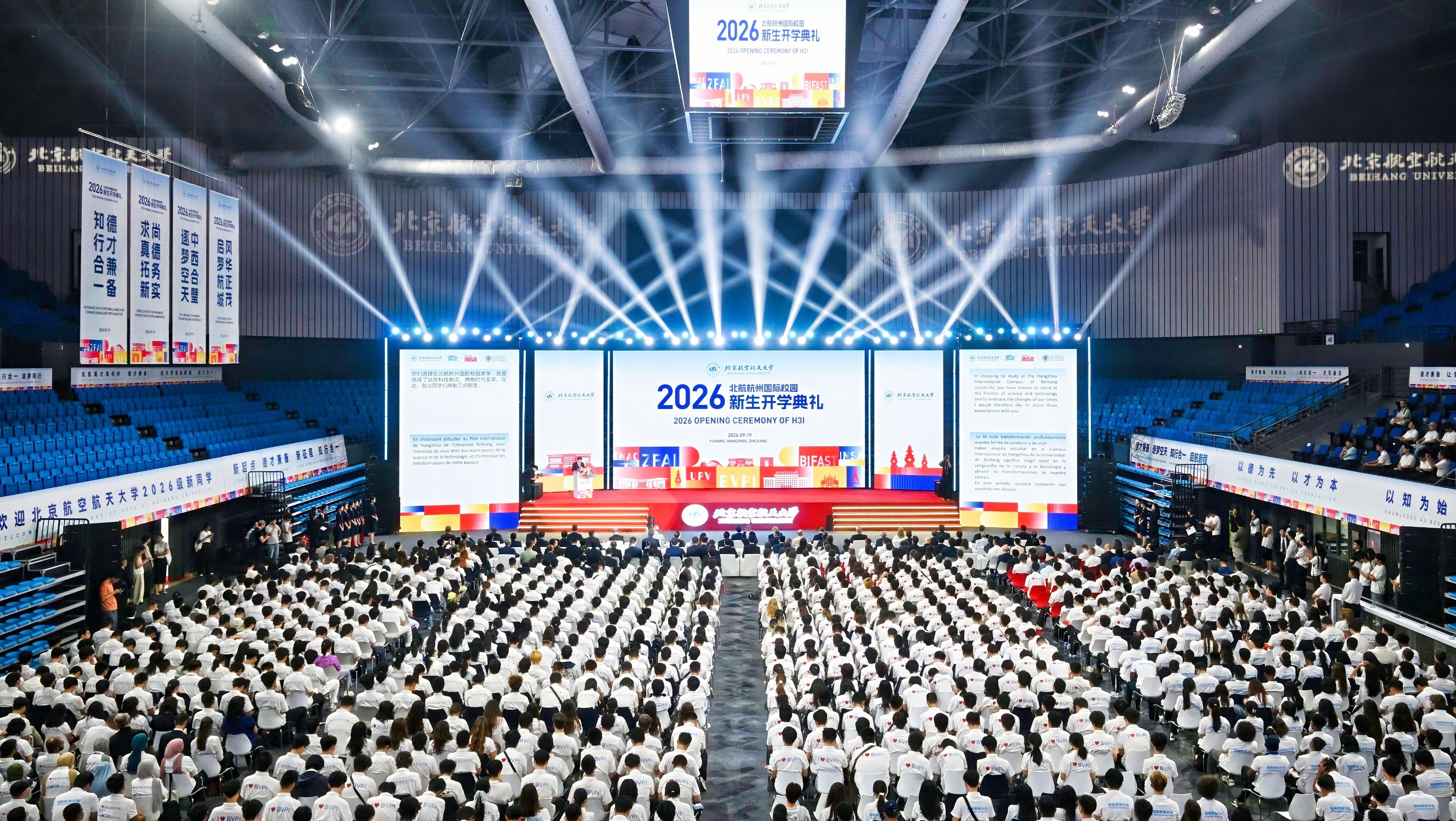 Beihang NewsPresident Wang Yunpeng visits Hangzhou to advance university-city integration and attends opening ceremony of H3IMore
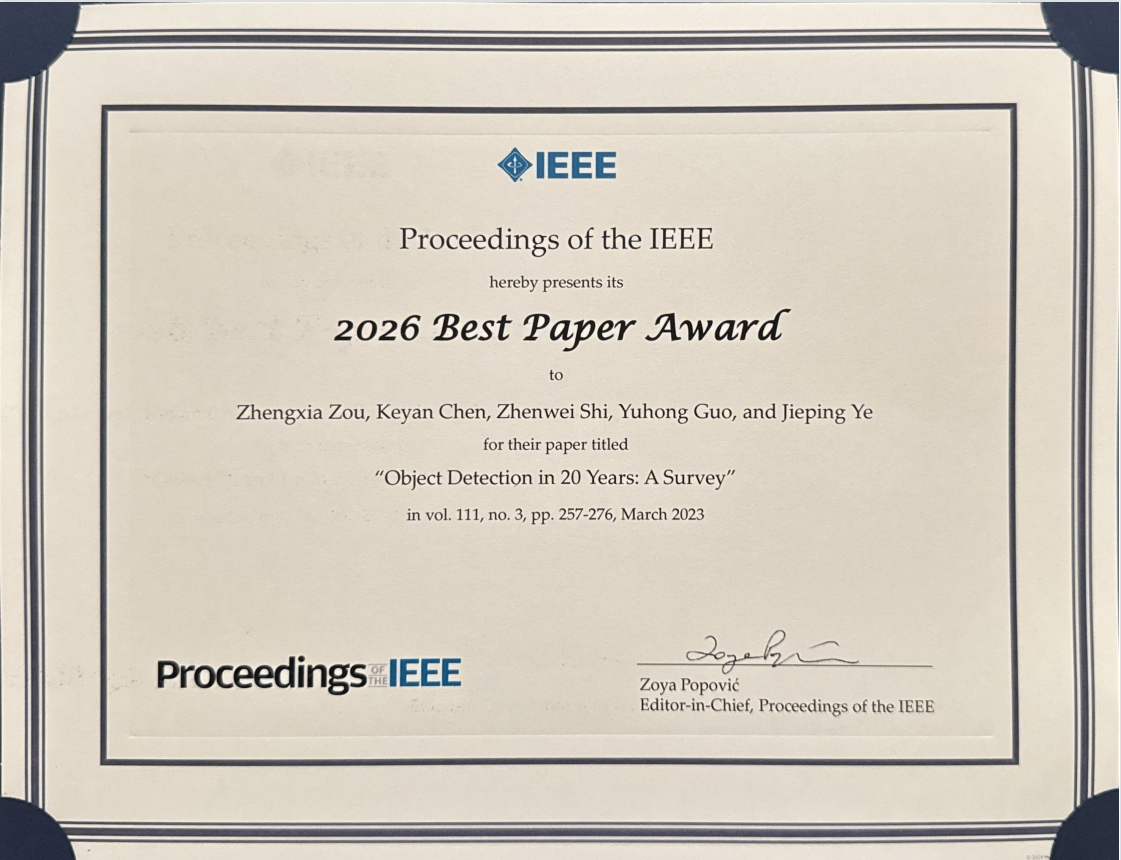 Beihang NewsBeihang team wins 2026 Best Paper Award from Proceedings of the IEEEMore