Recently, the research group led by Professors Zhao Weisheng, Zhang Yue, and Associate Professor Zhang Kun from the School of Integrated Circuit Science and Engineering achieved a milestone breakthrough in the field of magnetoelectric spin-orbit (MESO) logic devices. The team proposed for the first time a novel "Magnetic Tunnel Junction (MTJ)-Enhanced MESO Logic" architecture, successfully boosting the device's readout voltage from the microvolt level to the millivolt level. The related findings, titled "Giant spin-orbit magnetic state readout enhanced by a magnetic tunnel junction," were published in Nature Communications, marking a critical step toward the practical application of ultra-low-power logic chips in the post-Moore era.
MESO logic, composed of a voltage-controlled magnetoelectric writing module and a spin-orbit readout module, is highly expected to substitute the silicon-based transistors and enable energy-efficient and scalable computing. Nevertheless, the output voltage of readout module based on spin-to-charge conversion is far lower than the minimum magnetoelectric writing voltage, which greatly restricts the cascading function of MESO logic.
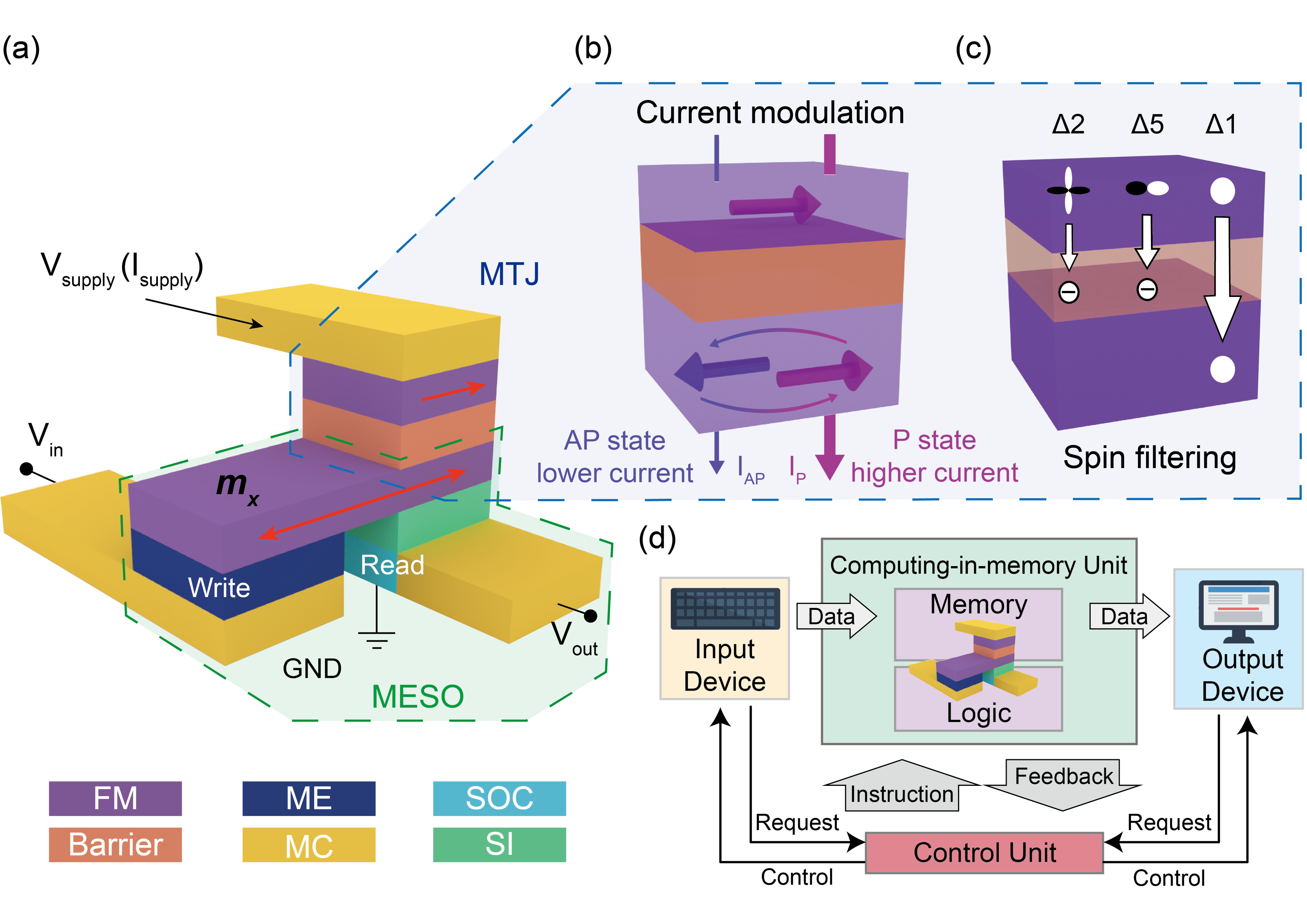
Fig. 1 Concept, principle, and application of MTJ-enhanced MESO devices
To address this challenge, the research team innovatively proposed a magnetic tunnel junction (MTJ)-enhanced MESO logic to implement giant readout signal. Up to 1.5 mV output voltage is obtained, marking a significant improvement of approximately two orders of magnitude compared to previous findings, which set a new record for room-temperature readout signals in similar devices. The team ascribed the substantial enhancement to current modulation by junction resistance and the spin filtering effect of MgO-based MTJ.
This research was jointly completed by the State Key Laboratory of Spintronics at Hangzhou International Innovation Institute (H3I) of Beihang University and the School of Integrated Circuit Science and Engineering at Beihang University. Professors Zhao Weisheng, Zhang Yue, and Associate Professor Zhang Kun are the corresponding authors. Dr. Huang Yan, a postdoctoral researcher at H3I, and Liu Guo, a doctoral student at the School of Integrated Circuit Science and Engineering, are the co-first authors. This work was supported by the National Natural Science Foundation of China, National Key Research and Development Program of China and Beijing Natural Science Foundation.
This breakthrough by the Beihang team not only resolves the core challenge of weak readout signals in MESO logic devices but also innovates the design architecture of logic devices for the post-Moore era, providing a new technological pathway for the practical application of ultra-low-power, high-reliability spintronic devices. In recent years, the State Key Laboratory of Spintronics at Beihang has been committed to the technological development of low-power, high-speed spintronic devices, achieving a series of advancements in physical mechanisms, material preparation and device fabrication, with numerous high-quality papers published in top international journals such as Nature Materials, Nature Electronics and Nature Communications.
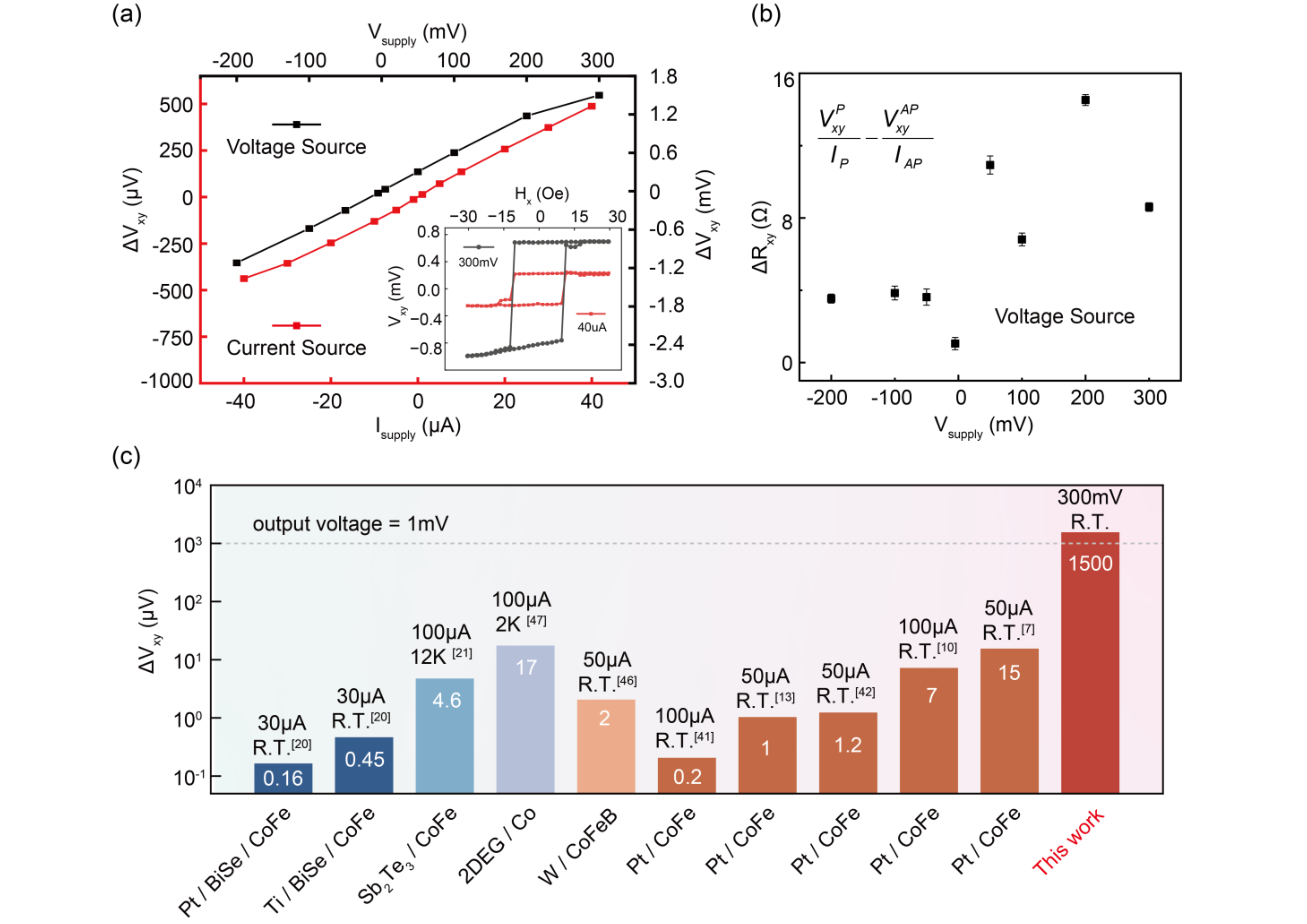
Fig. 2 Readout performance of the devices
Article link: https://doi.org/10.1038/s41467-026-73382-9
Editor: Liu Tingting


 Beihang NewsBeihang celebrates 42nd Teachers' DayMore
 Beihang NewsBeihang's first student-designed human-powered aircraft completes test flightMore
 Beihang NewsBeihang leaders engage in dialogue with new undergraduate and graduate student representativesMore
 Beihang NewsBeihang University holds 2026 opening convocation to welcome new studentsMore
 Beihang NewsBeihang University welcomes 9,022 new graduate studentsMore
 Beihang NewsProfessor Yu Shui wins Best Screenplay Award at 21st Changchun Film FestivalMore