Neuromorphic computing (NC), inspired by the brain's structure and function, offers an efficient computing paradigm suitable for distributed intelligence and edge computing. Its advantages stem from highly parallel neuron–synapse architectures that integrate algorithm and hardware at the physical level. Such devices can not only achieve massive parallel computing with extremely low power consumption but also hold the promise of endowing hardware with continuous online learning capabilities through synaptic dynamics mechanisms. However, to enable hardware to learn stably over the long term, relying solely on simple positive-feedback dynamics is far from sufficient. This self-stabilizing ability, which actively adjusts to produce negative feedback based on past activity levels, is known as homeostatic plasticity. The Bienenstock-Cooper-Munro (BCM) rule effectively prevents networks from falling into uncontrolled excitation or inhibition by dynamically adjusting their sensitivity thresholds according to the historical activity of neurons. Nevertheless, while the BCM rule holds significant theoretical importance, realizing this rule in solid-state devices has remained a long-standing challenge in the field of neuromorphic intelligence.
Recently, the research team led by Professor Huang Anping from the School of Physics at Beihang University, along with collaborators, achieved a significant breakthrough in this area. They constructed a novel memristor based on layered CuInP2S6(CIPS) two-dimensional materials and, for the first time, spontaneously realized the complete BCM learning rule in a single two-terminal device by exploiting inherent junction parasitic capacitance and second-order ionic dynamics. The related results were published under the title "Realization of the Bienenstock-Cooper-Munro rule in a single memristor" in the internationally renowned comprehensive journal Nature Communications.
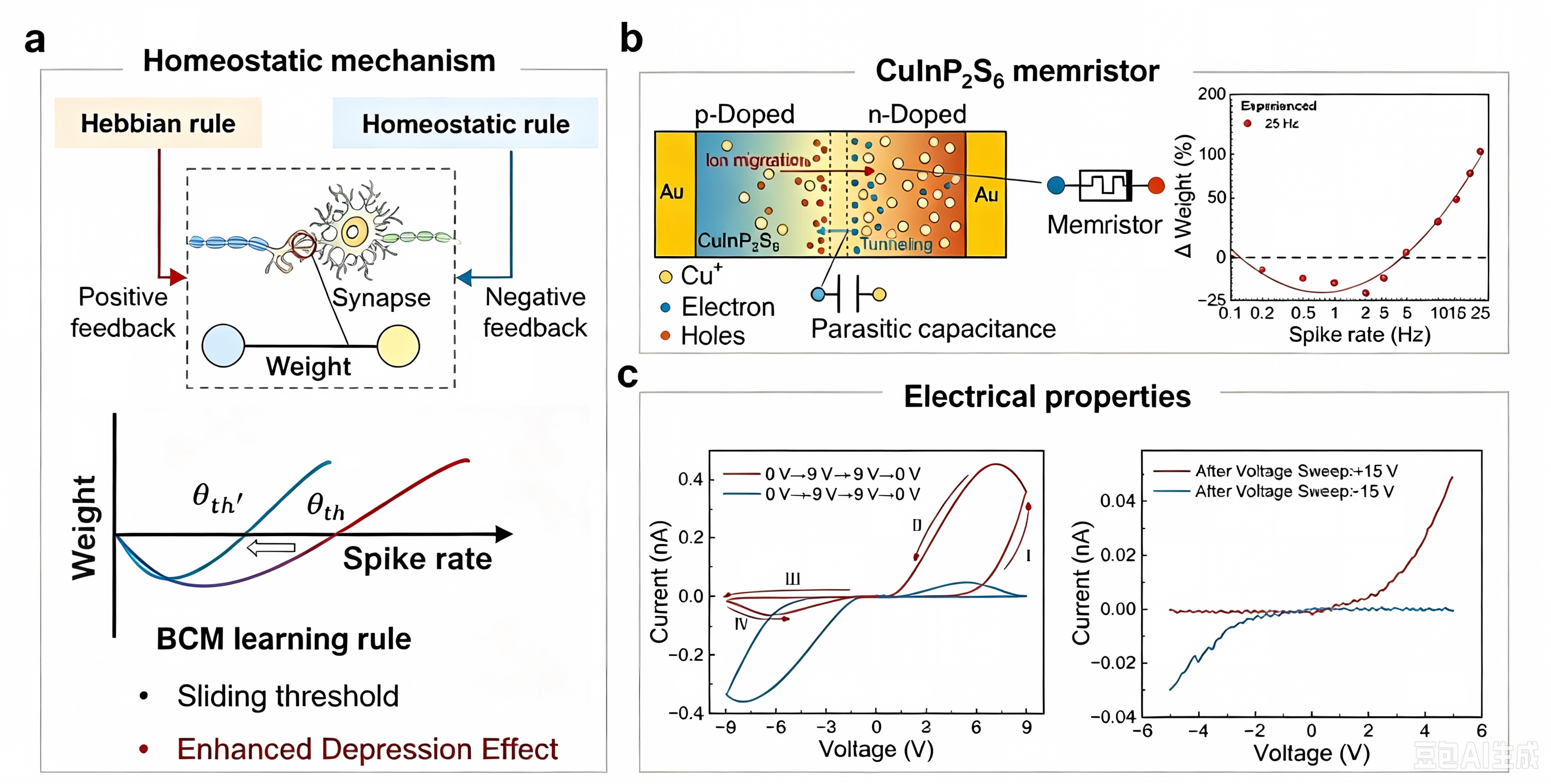
Fig. 1 Homeostatic plasticity mechanisms in synapses and the homojunction characteristics of the CuInP2S6 synaptic memristor
The research team discovered that the CIPS memristor internally contains two key functionalities: first, second-order dynamics arising from Cu⁺ ion migration, which enables a history-dependent sliding threshold; and second, the device's internal junction parasitic capacitance, which generates reverse voltage spikes during pulse intervals. In the past, when discussing device parasitic capacitance, the immediate reactions were often bandwidth reduction, waveform distortion, and additional energy consumption. However, in this work, the reverse spikes produced by the junction capacitance precisely supply the most missing piece of the BCM rule: an inhibitory process that does not rely on natural forgetting but can automatically vary with pulse frequency. If conventional memristors excel at answering "how to write the weight," this work takes a step further: after the weight is written, can the device decide, based on its own historical state, whether to continue learning next time or to stabilize itself first? This ability to actively adjust the learning direction based on historical activity is a more critical step for neuromorphic hardware to achieve long-term stable learning.
The coupling of the two dynamics—ion migration and parasitic capacitance—causes the weight change to exhibit a non-monotonic response to pulse frequency. To uncover its physical origin, the team employed Kelvin Probe Force Microscopy (KPFM) to directly observe the directional migration of Cu⁺ ions under bias voltage, leading to the formation of a reconfigurable p-n homojunction. This homojunction accumulates minority carriers under forward bias, generating a diffusion capacitance far exceeding conventional interface capacitance. After the pulse is removed, the stored charge is released, producing a reverse voltage transient, which causes the actual voltage (Vₘ) experienced by the memristor to equal the input voltage (Vᵢₙ) minus the capacitor voltage (Vc). Based on this, the team established a universal dynamic model coupling second-order ionic dynamics with junction capacitance, successfully reproducing the complete BCM rule, including non-monotonic EDE and sliding threshold behavior.
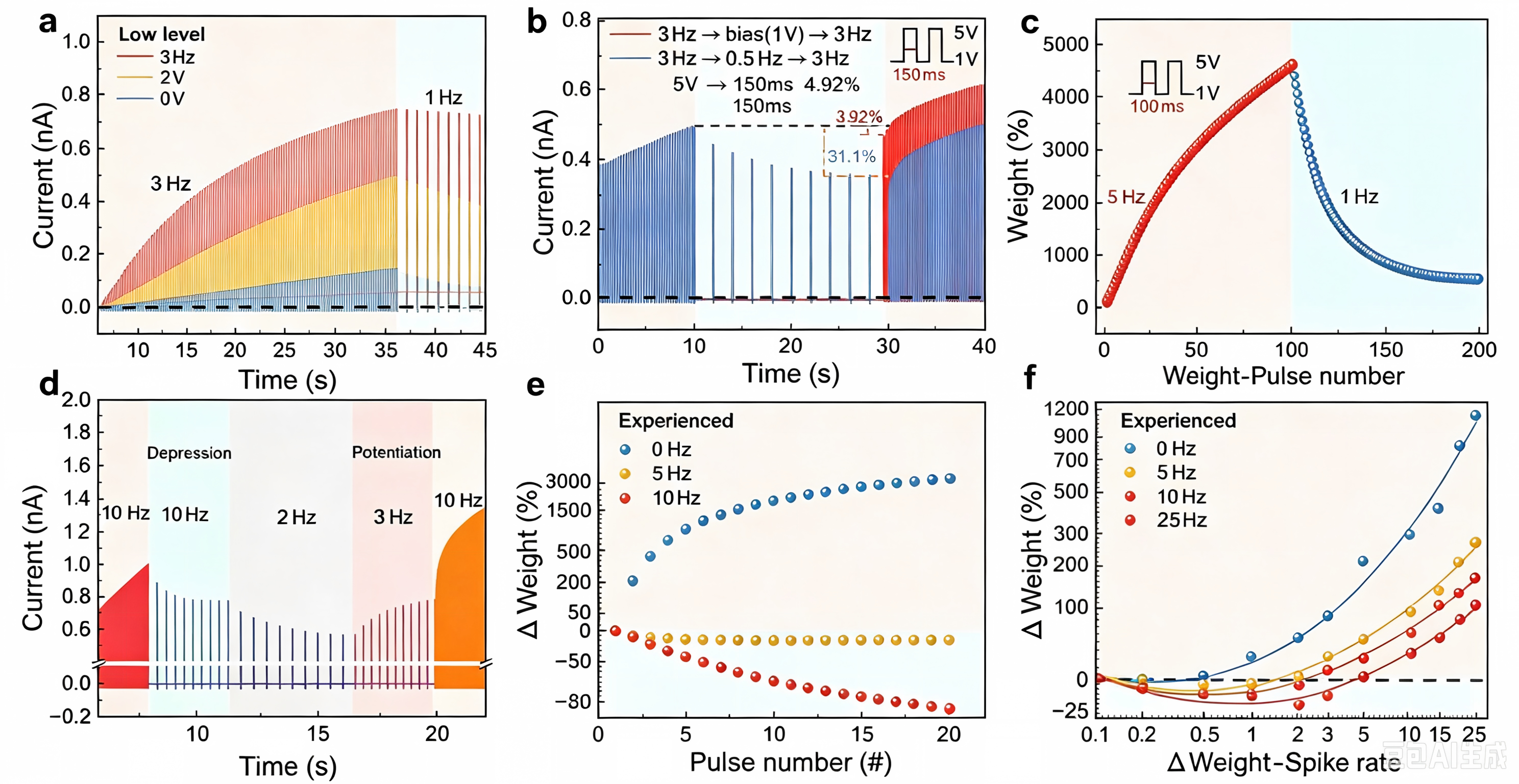
Fig. 2 Non-monotonicity EDE and sliding threshold of the BCM rule in the CIPS memristor
The core breakthrough of the paper lies in the fact that the realization of the EDE function does not rely on an external gate electrode, special pulse encoding, or peripheral control circuits, but originates from the device's internal junction parasitic capacitance, which is typically viewed as a negative factor. This discovery not only provides a neuromorphic device with an autonomous homeostatic regulation mechanism that requires no external intervention but also reveals a novel device design concept—"functionalization of parasitic effects."
Notably, this strategy is highly universal. The team successfully reproduced EDE behavior on a conventional MoS2 memristor by externally connecting a series RC circuit, demonstrating that introducing similar capacitive design can enable existing memristor platforms to acquire complete BCM learning capabilities. This offers a universal and efficient hardware pathway for large-scale integration of adaptive homeostatic plasticity into neuromorphic intelligent devices, holding significant importance for achieving long-term stable learning in neuromorphic intelligent hardware.
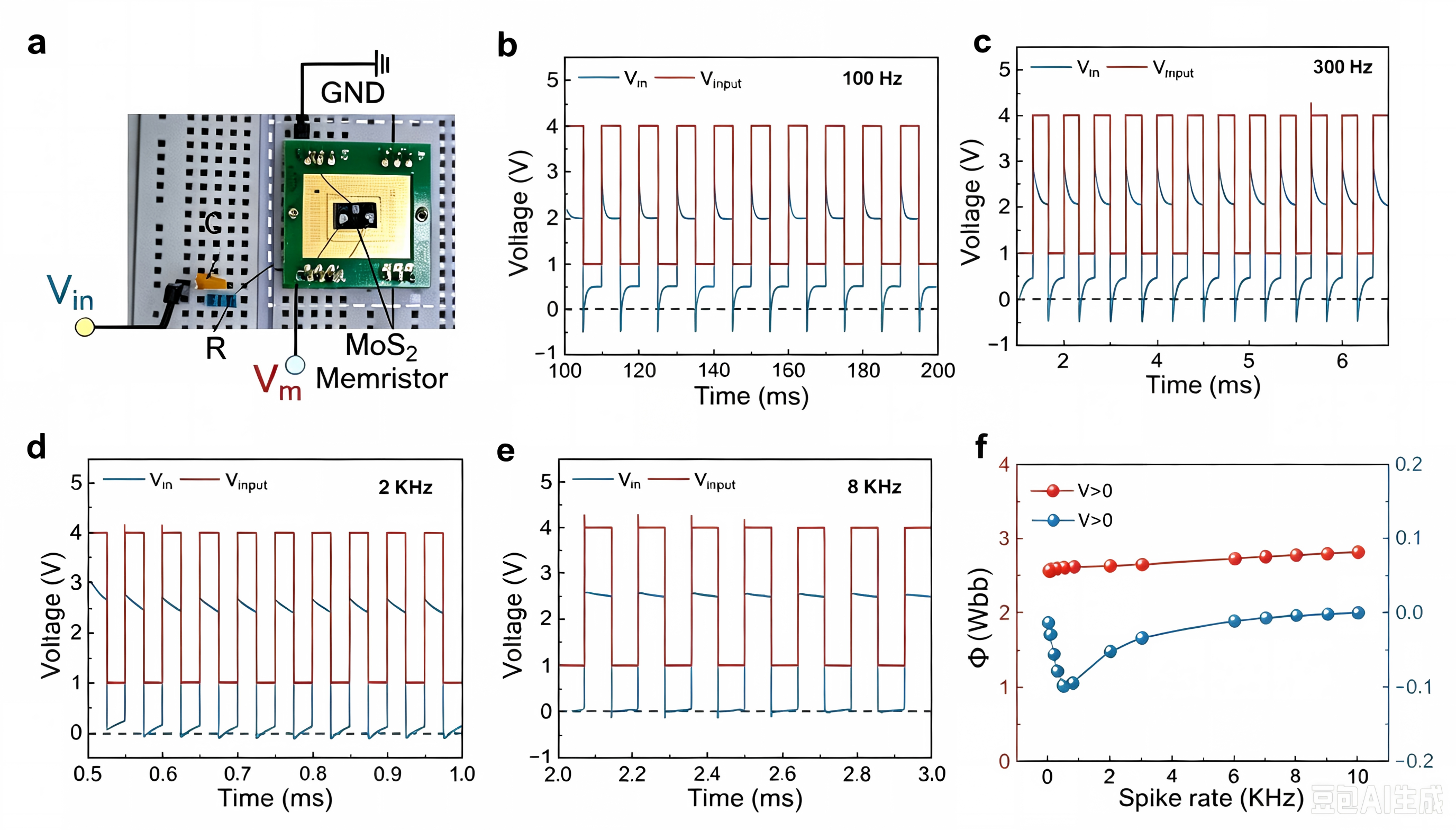
Fig. 3 Observation of frequency-dependent non-monotonic behavior in the equivalent circuit
Huang Jiangshun, a Ph.D. student at Beihang University's School of Physics, is the first author of the article. Professor Huang Anping, Researcher Zhang Xingwang from the Institute of Semiconductors, Chinese Academy of Sciences (CAS), and Researcher Di Zengfeng from the Shanghai Institute of Microsystem and Information Technology, CAS, are the corresponding authors. The School of Physics at Beihang University is the primary affiliation. This work was supported by the National Natural Science Foundation of China, the Industry University Research Cooperation Fund of the Eighth Research Institute of China Aerospace Science and Technology Corporation, and other projects.
Article link: https://doi.org/10.1038/s41467-026-75488-6
Editor: Liu Tingting


 Beihang News2026 Symposium on Excellent Engineer Training held in BeijingMore
 Beihang NewsProfessor Liu Mingjie's team publishes article in Science, revealing high-modulus toughening mechanism in nacreMore
 Beihang NewsWang Yunpeng appointed Secretary of the CPC Beihang University CommitteeMore
 Beihang NewsElsevier Senior Vice President Said Taha visits Beihang UniversityMore
 Beihang NewsPresident Wang Yunpeng visits Hangzhou to advance university-city integration and attends opening ceremony of H3IMore
 Beihang NewsBeihang team wins 2026 Best Paper Award from Proceedings of the IEEEMore