At 09:08 on December 13, 2025, the AZPPT-5—an ablative Z-pinch pulsed plasma thruster independently developed by Beihang University—was successfully launched into orbit aboard the Di'er-5 space experimental spacecraft via a Kuaizhou-11 Y8 carrier rocket.
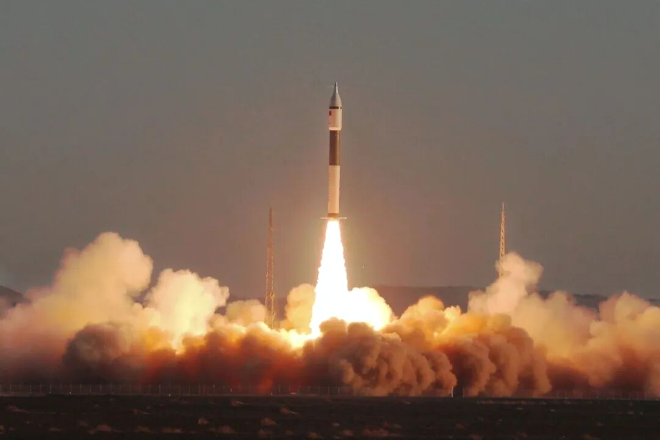
Launch of the Kuaizhou-11 Y8 carrier rocket [Photo/Our Space]
This marks the world's first in-orbit application of such a propulsion system, signifying a major step forward for the research team in developing next-generation space electric propulsion technologies and in cultivating innovative talent for the emerging aerospace intelligent electric propulsion undergraduate program.
The AZPPT-5 was developed by a student team — comprising Wang Jiqin, Bai Yuxin, Guo Wenqi, Ma Haoran, Kong Weiyi, and Liu Peixu — under the guidance of Professor Wang Weizong, Professor Tang Haibin, Dr. Zhang Guangchuan and Dr. Yan Jiaqi from the Intelligent Electric Propulsion and Space Energy Innovation Research Center of the School of Astronautics. The project evolved through platforms such as the Fengru Cup competition, research-oriented courses, and undergraduate thesis projects.

Beihang team members at the Jiuquan Satellite Launch Center
For more than three years, the team tackled key scientific challenges including material ablation, plasma acceleration, and energy deposition, achieving original breakthroughs in core technologies such as electrode structure optimization, electromagnetic regulation, new propellant preparation, precise micro-thrust measurement, and high spatiotemporal resolution plasma diagnostics.
The development of AZPPT-5 also reflects the outcomes of Beihang's integrated "Small Satellite Power System" project, which supports the University's "Two-Leading" talent development model in aerospace engineering. Since the Ministry of Education approved China's first undergraduate program in Aerospace Intelligent Electric Propulsion Technology in 2022, the School of Astronautics has established a comprehensive teaching system integrating theoretical courses, experimental practice, and practical development. Students have since developed and launched several pioneering electric propulsion systems, including the world's first 100-W-class magnetically shielded Hall thruster LpHet-100 and the first electromagnetic nozzle thruster MNT-10.
The in-orbit success of AZPPT-5 was also made possible by the strong support of Beihang alumni. The Di'er-5 space experimental spacecraft was developed by AZ Space Technologies (AZSPACE), a company founded by Beihang alumnus Zhang Xiaomin. The Di'er-5 is a small cargo spacecraft in-orbit variant (B300-L) with a payload capacity of more than 300 kilograms and over 100 payload management units, designed for one year of orbital operation.
Through the jointly established Space Flight Joint Research Center, AZSPACE and Beihang have collaborated closely in student internships, platform development, and technological innovation. This partnership enabled thorough system integration and environmental testing before launch.
This mission exemplifies Beihang's effective translation of scientific research into engineering practice and demonstrates how alumni engagement can advance aerospace innovation, support talent development, and promote the industrialization of cutting-edge technologies.
Source: School of Astronautics, Our Space
Editor: Lyu Xingyun


 Beihang News2026 Symposium on Excellent Engineer Training held in BeijingMore
 Beihang NewsProfessor Liu Mingjie's team publishes article in Science, revealing high-modulus toughening mechanism in nacreMore
 Beihang NewsWang Yunpeng appointed Secretary of the CPC Beihang University CommitteeMore
 Beihang NewsElsevier Senior Vice President Said Taha visits Beihang UniversityMore
 Beihang NewsPresident Wang Yunpeng visits Hangzhou to advance university-city integration and attends opening ceremony of H3IMore
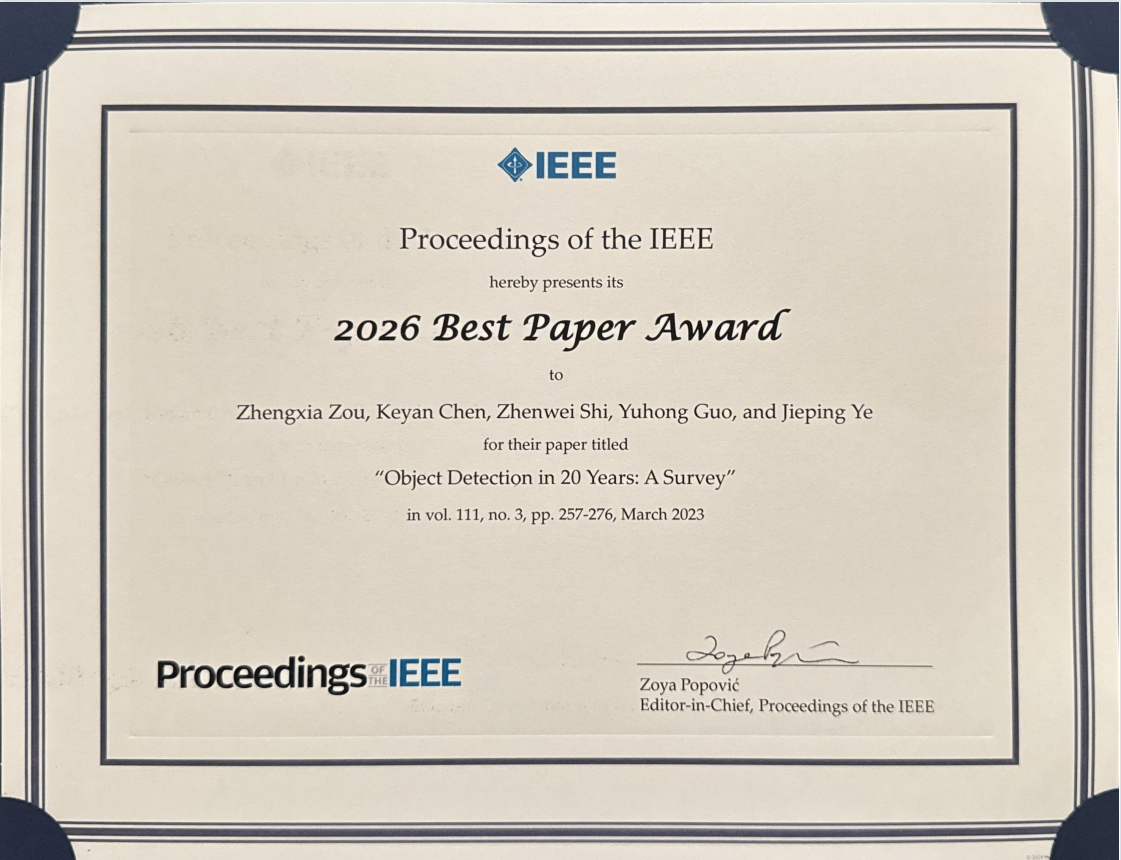 Beihang NewsBeihang team wins 2026 Best Paper Award from Proceedings of the IEEEMore