A new university education consortium dedicated to cultivating talent for China's aerospace sector was inaugurated at Beihang University on October 11, bringing together nearly 300 representatives from more than 160 institutions spanning universities, enterprises, research institutes, professional societies, museums, and primary and secondary schools.
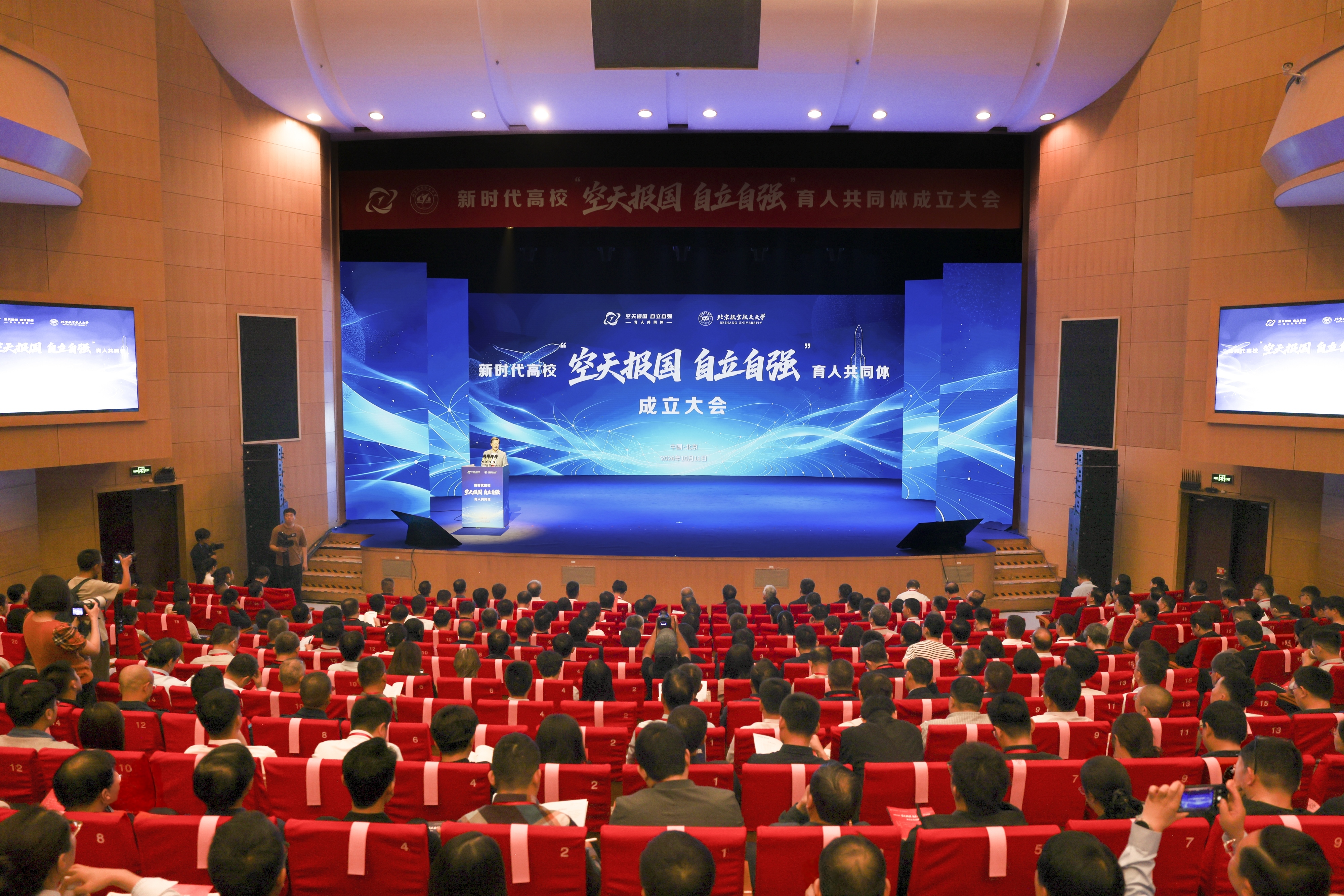
The education consortium on "Aerospace for the Nation, Self-Reliance for the Future" is the first of its kind in China's aerospace field. It operates under the joint guidance of the Department of Moral Education of the Ministry of Education, the Department of Personnel and Education of the Ministry of Industry and Information Technology, and the Education Working Committee of the CPC Beijing Municipal Committee. A council serves as its highest decision-making body, with its secretariat based at Beihang University.
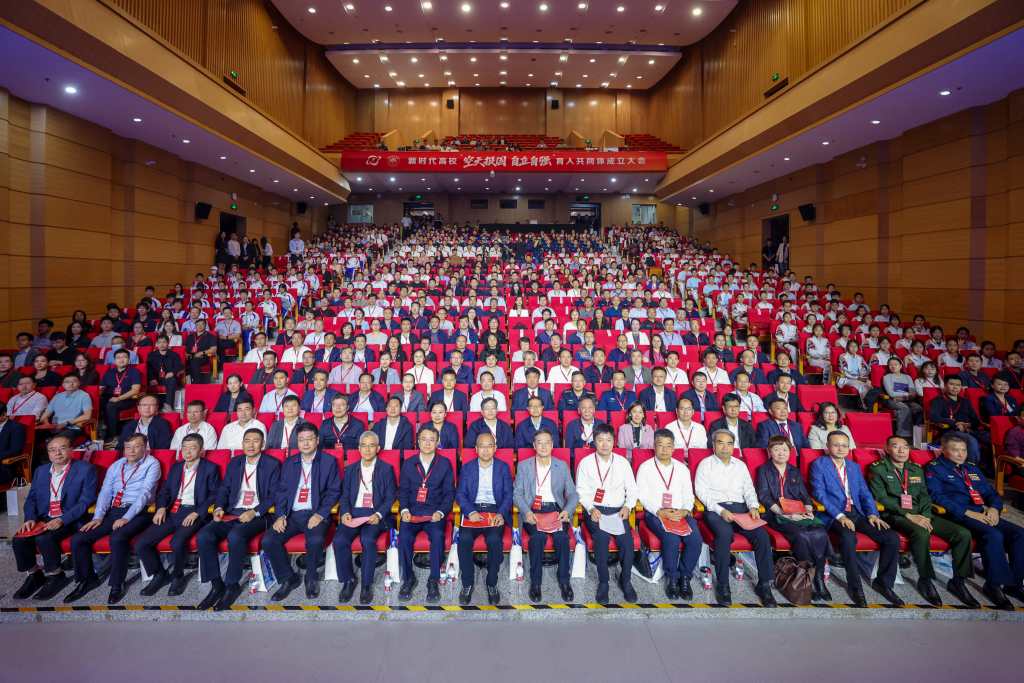
The event was attended by Yu Yingjie, Member of the Standing Committee of the CPC Beijing Municipal Committee and Secretary of the Education Working Committee; Ge Yuanjie, Director of the Department of Moral Education of the Ministry of Education; Fu Jianqi, Director of the Department of Personnel and Education of the Ministry of Industry and Information Technology; Li Junfeng, Executive Deputy Secretary of the Education Working Committee of the CPC Beijing Municipal Committee; Zhou Jie, Deputy Party Secretary and General Manager of China Aerospace Science and Technology Corporation (CASC); and Wang Yunpeng, Secretary of the CPC Beihang University Committee. The ceremony was chaired by Deng Yi, Vice President of Beihang University.
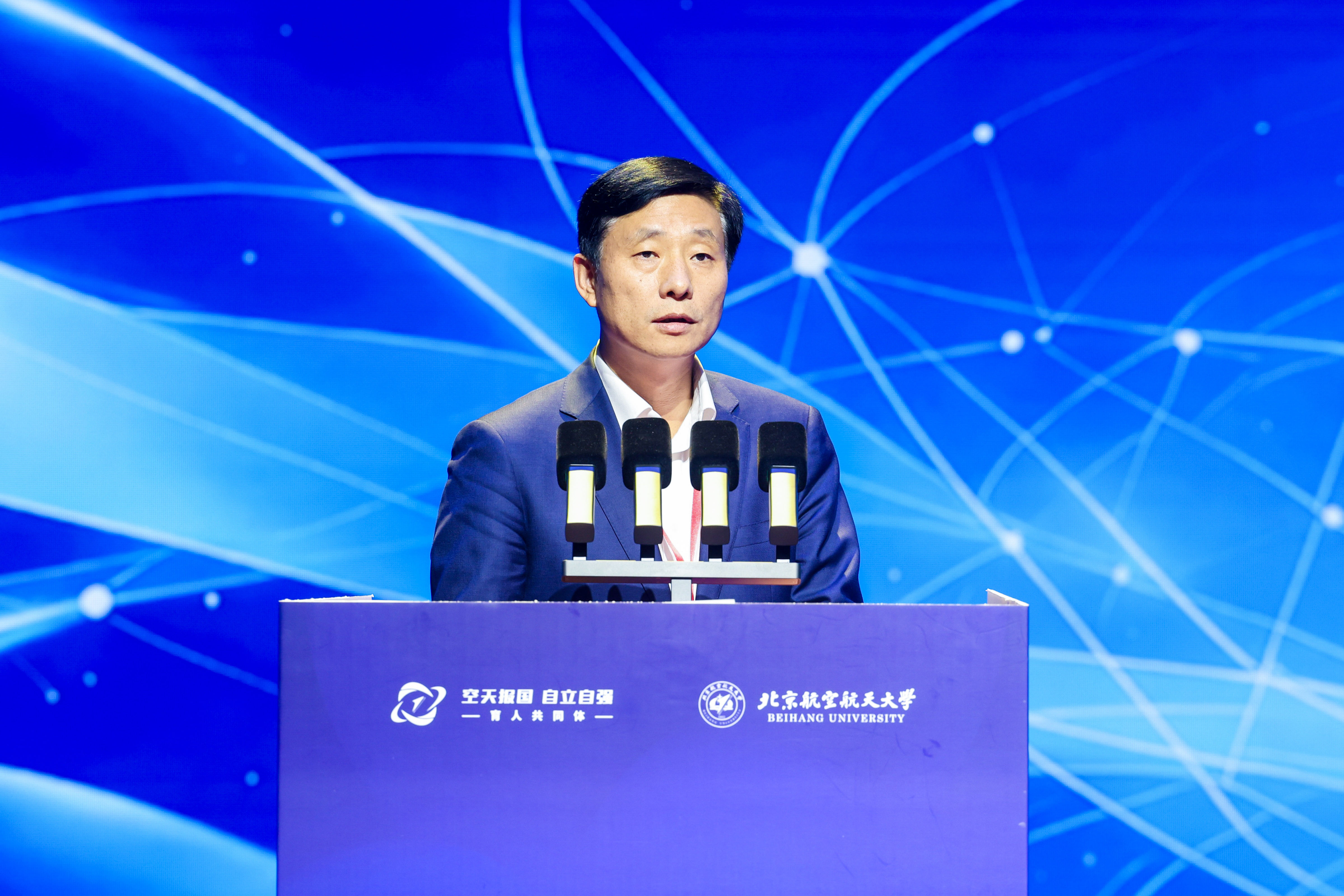
In his address, Wang Yunpeng welcomed the guests and expressed gratitude to the supervising ministries and member institutions for their support. He outlined three priorities for building a strong consortium: keeping ideological and political education at its core and integrating the spirit of China's aerospace achievements into talent cultivation; advancing industry-education integration so that students gain practical skills in real-world settings; and establishing mechanisms for co-building, resource sharing, and joint development to cultivate aerospace professionals capable of meeting the nation's needs.
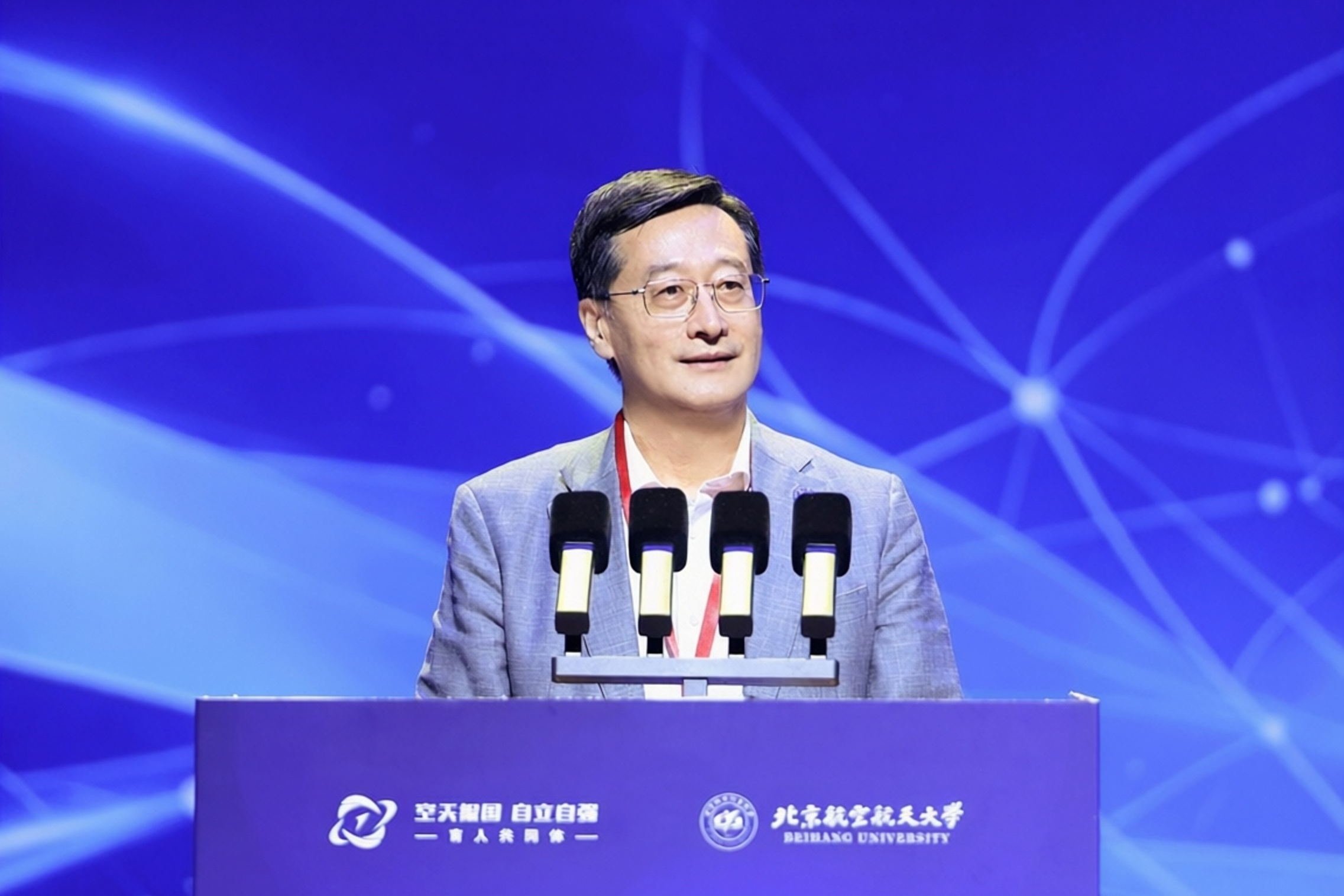
Yu Yingjie described the consortium as a concrete step toward fulfilling the fundamental task of fostering virtue through education and serving the nation's aerospace ambitions and technological self-reliance. He called on Beihang and other universities to shoulder their responsibilities, urging member institutions to draw on the aerospace sector's rich heritage to cultivate successors who are politically reliable and firmly committed to national service. He also stressed the importance of innovative models for training top-tier talent, including project-based and practice-oriented approaches, and of translating research achievements into innovation momentum that supports national strategic goals.
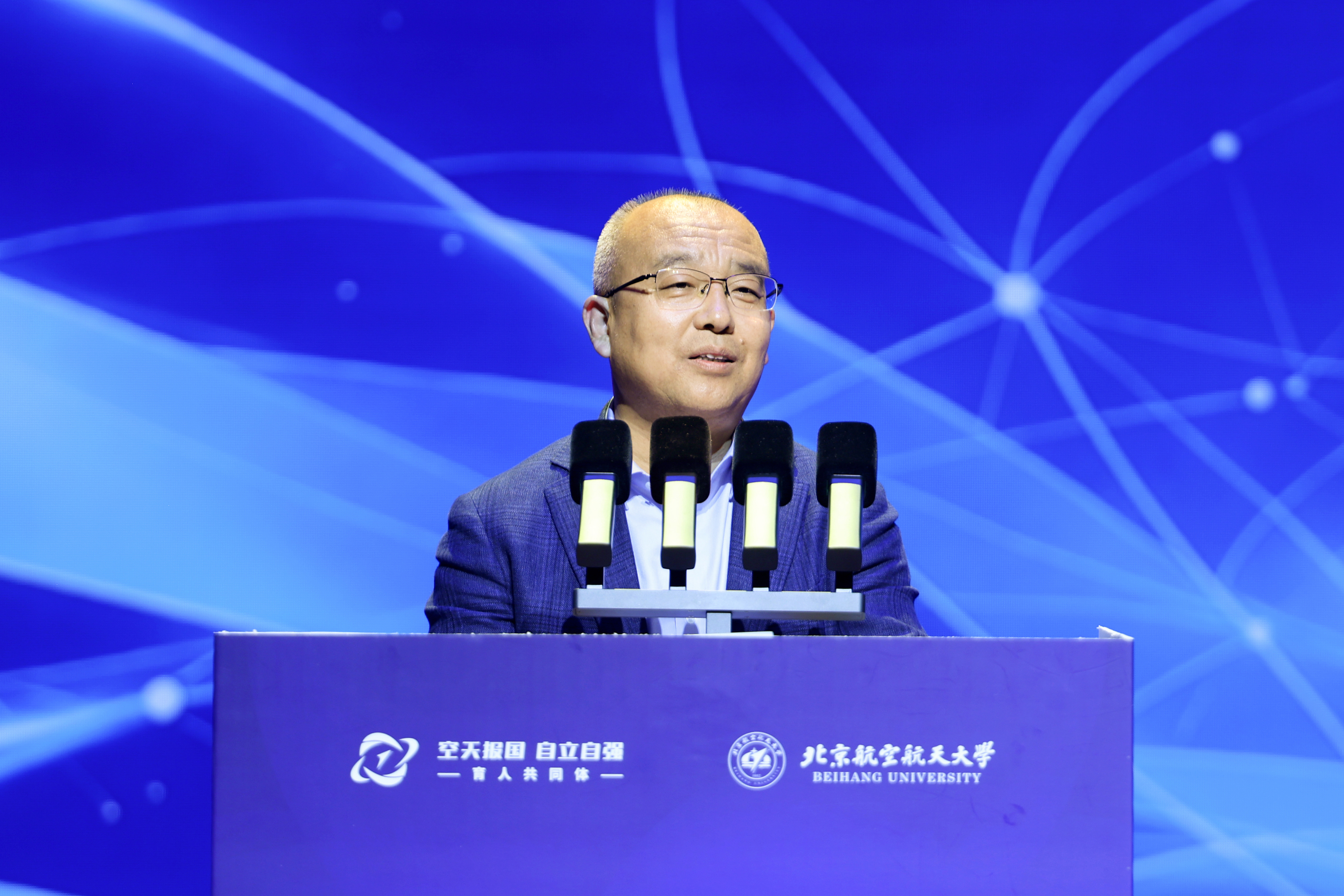
Ge Yuanjie expressed hope that member institutions would deepen students' sense of mission by drawing on the heritage and achievements in the aerospace field. He called for a collaborative education ecosystem in which resources flow effectively among universities and enterprises, and for curricula that align with industry standards and integrate practical training with real-world production. Such an approach, he said, would help students develop both professional competence and a strong sense of national purpose.
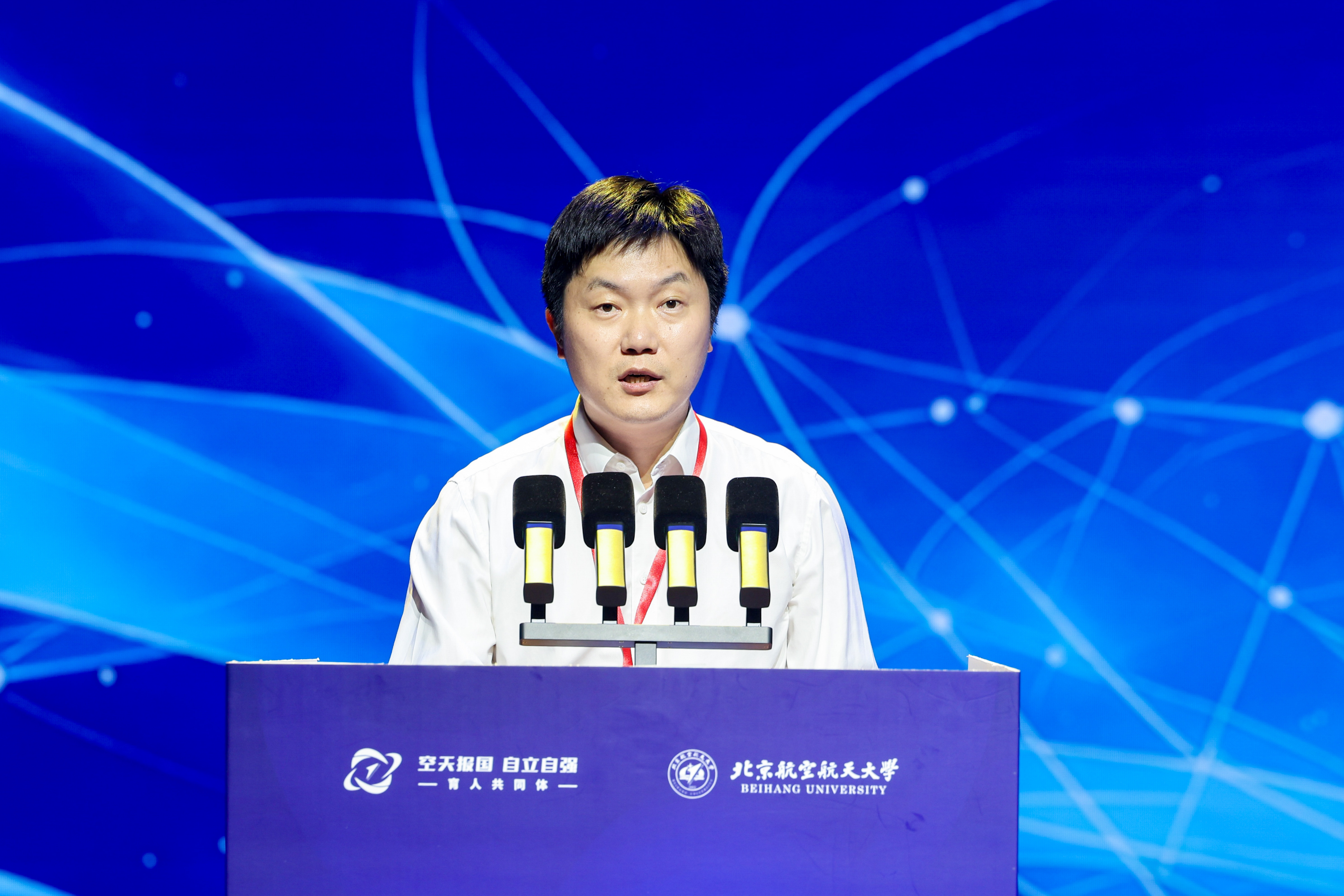
Fu Jianqi called on member institutions to foster patriotism, strengthen ideological guidance, and draw on exemplary role models to inspire faculty and students to serve the nation through aerospace. He emphasized the need to cultivate outstanding engineers with solid theoretical foundations, strong professional qualities, and innovative thinking, while enhancing resource sharing to train talent that truly meets industry needs and equipping students to tackle critical technological bottlenecks. He also urged closer integration of industrial and technological innovation, stronger organized research, and faster translation of research outcomes into new quality productive forces.
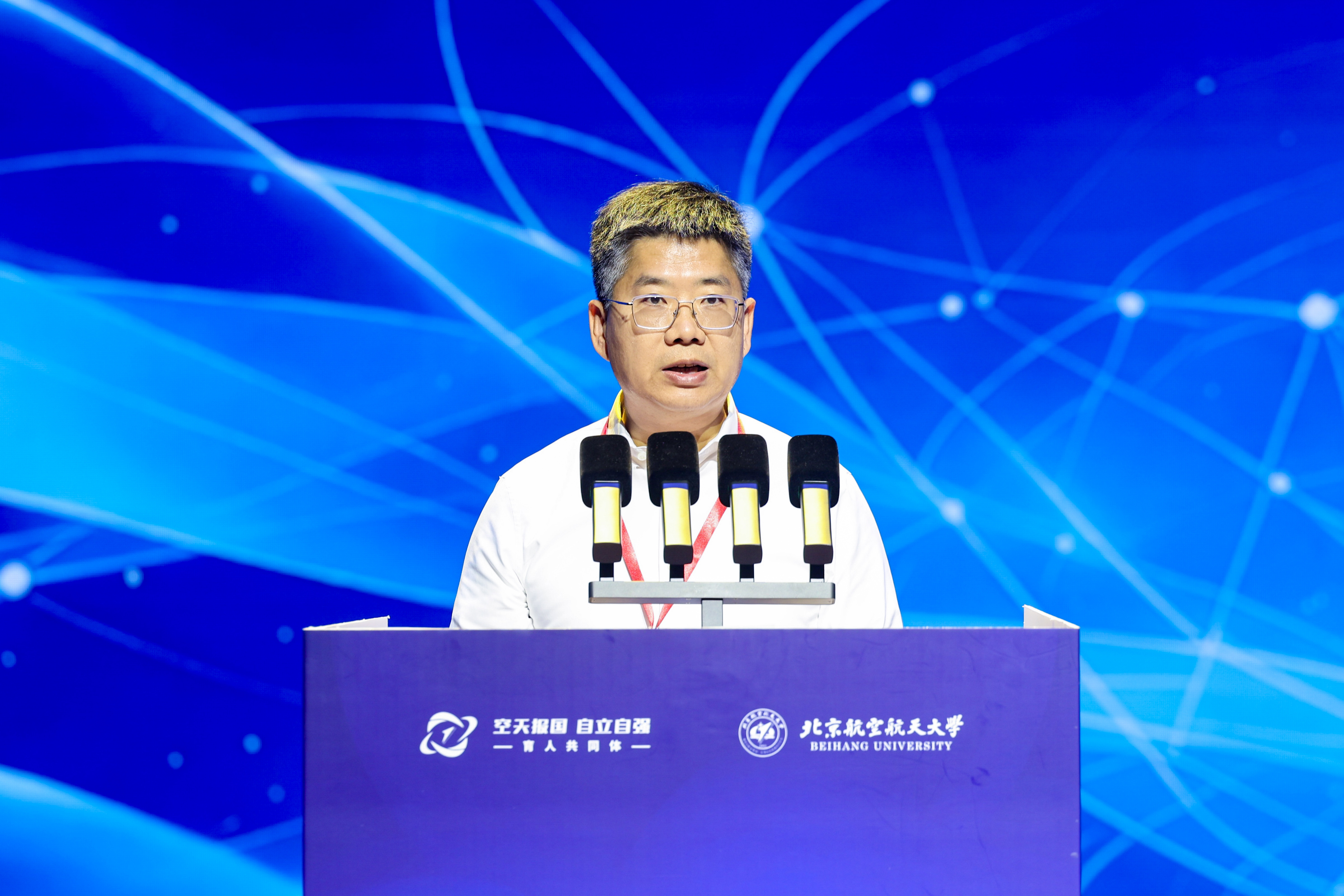
Zhou Jie, on behalf of CASC, thanked those who have supported aerospace development and talent cultivation. He said the corporation would contribute actively to the consortium's development, advance major strategic programs, and leverage its large-scale application scenarios and system integration strengths to achieve high-level technological self-reliance. He also voiced support for universities in developing forward-looking disciplines in fields such as artificial intelligence, advanced manufacturing, and command and control, and for deepening university-enterprise collaboration through shared faculty, co-created courses, and joint platforms.
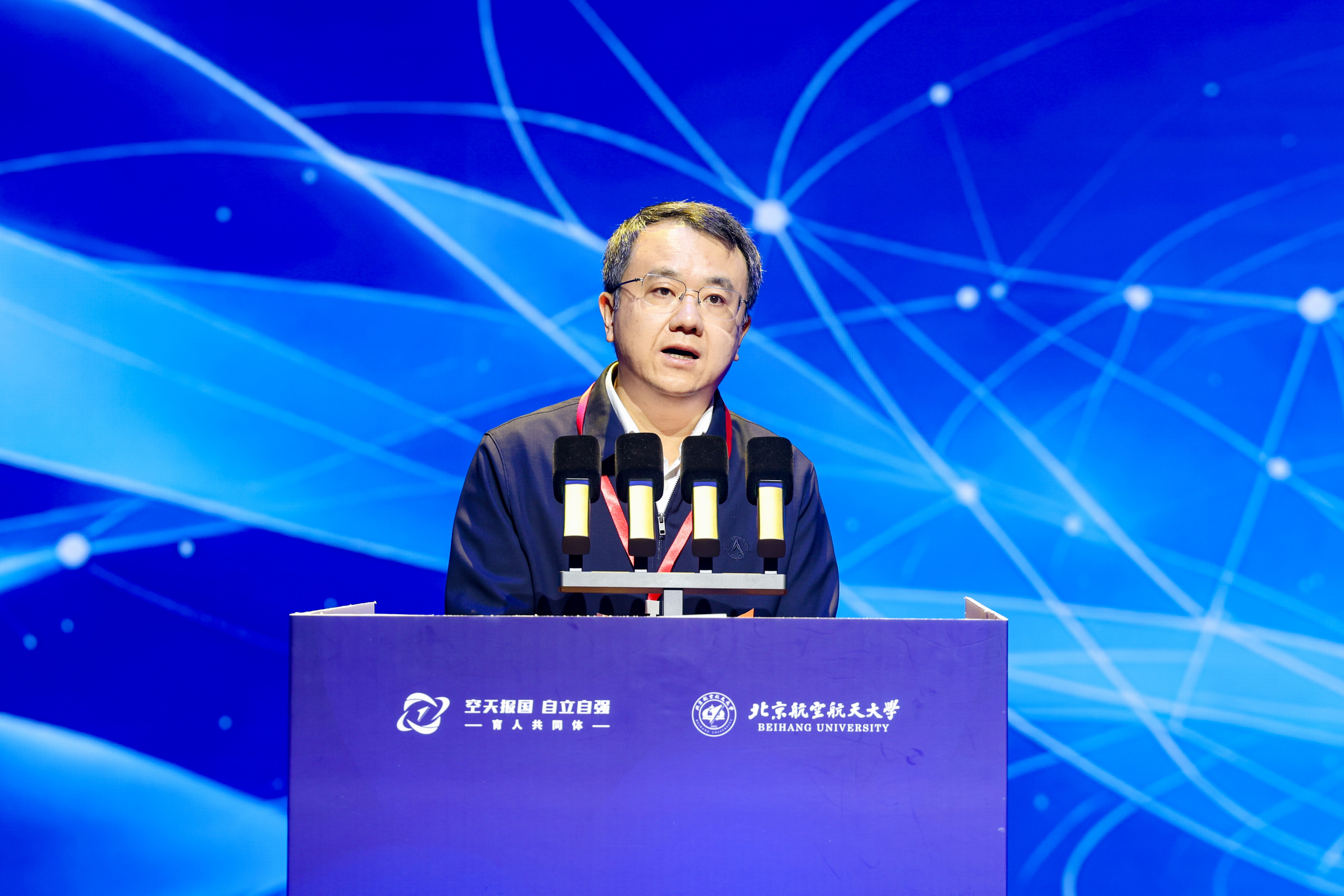
Shao Zhihao, Principal of the High School Attached to Northeast Normal University, offered congratulations on behalf of his institution and expressed sincere thanks to leaders and colleagues concerned with basic education development. He stated that as a member institution, his school would give students opportunities to learn beyond campus and connect curricula at different levels, working together to inspire a passion for aerospace in young people.
At the ceremony, representatives of member institutions signed the consortium agreement, formally establishing the initiative. Attendees also witnessed the release of six action plans covering Party building, ideological and political education, industry-academia integration, practical training, secondary-higher education collaboration, and cultural outreach.
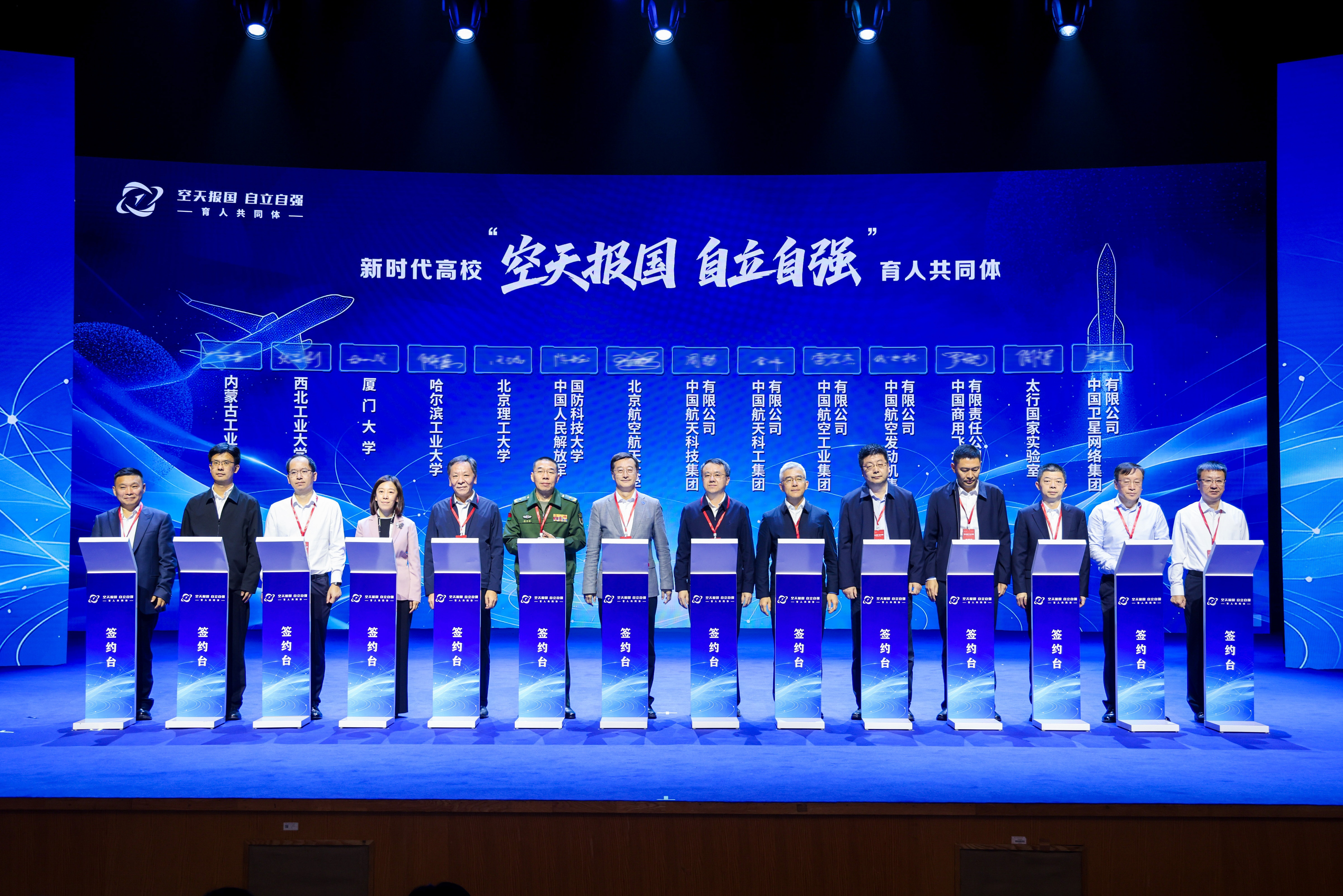
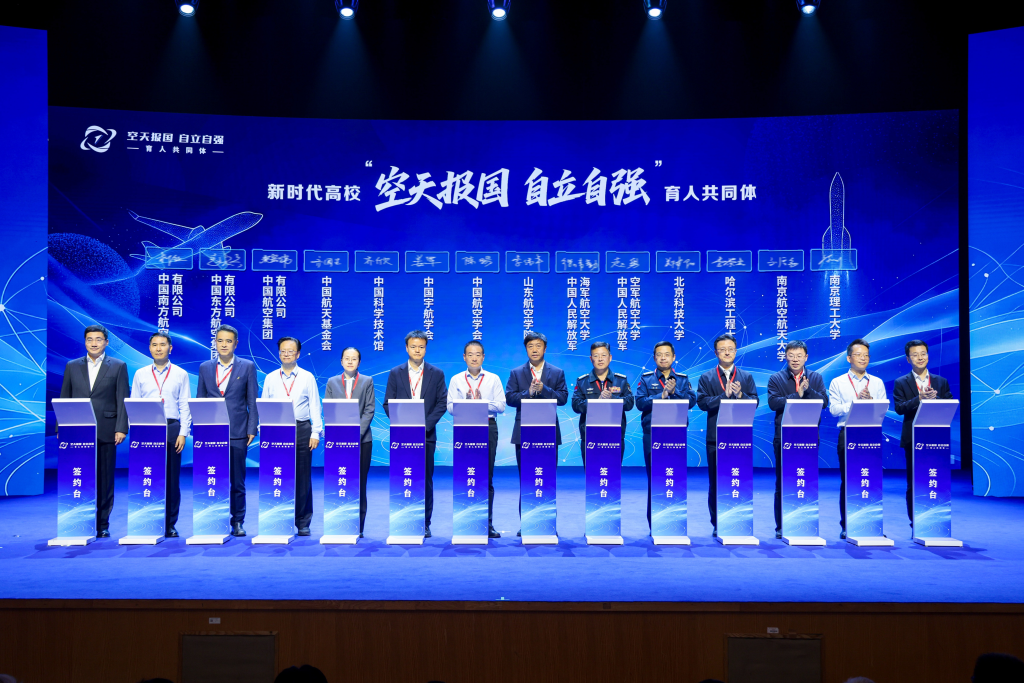
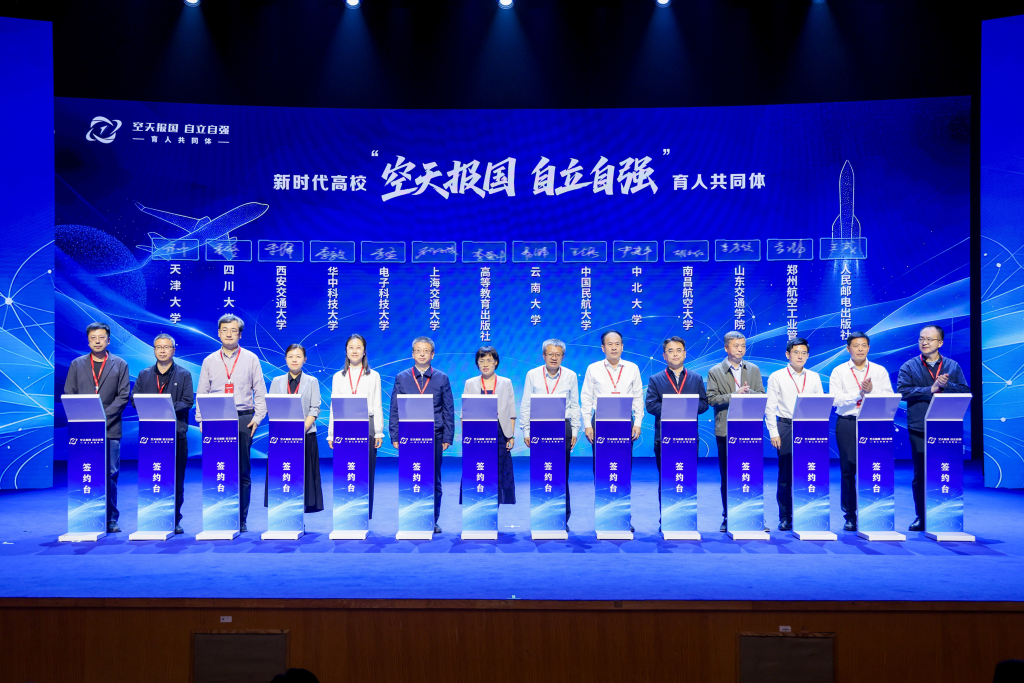
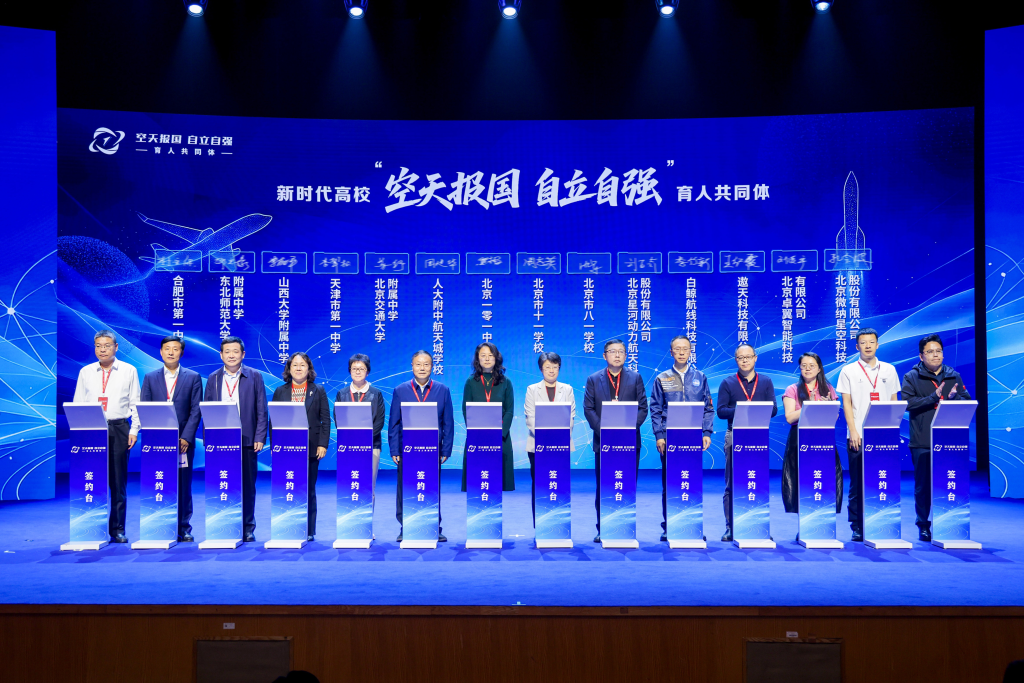
The ceremony also featured two demonstration classes, with opening lectures delivered by Su Donglin, an academician of the Chinese Academy of Engineering and a professor at Beihang University's School of Electronic and Information Engineering, and Liu Baiqi, founder and chairman of Galactic Energy and a Beihang alumnus.
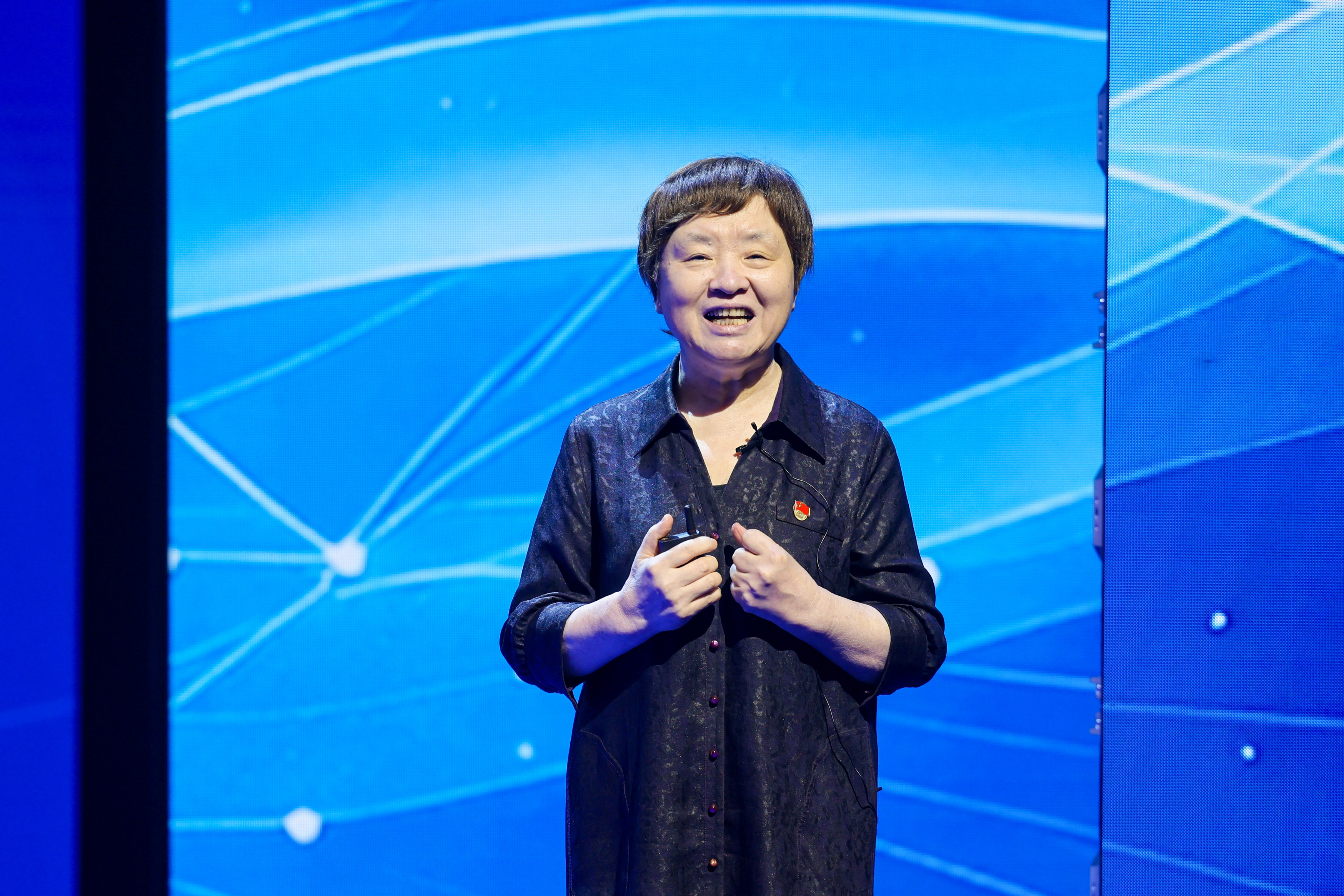
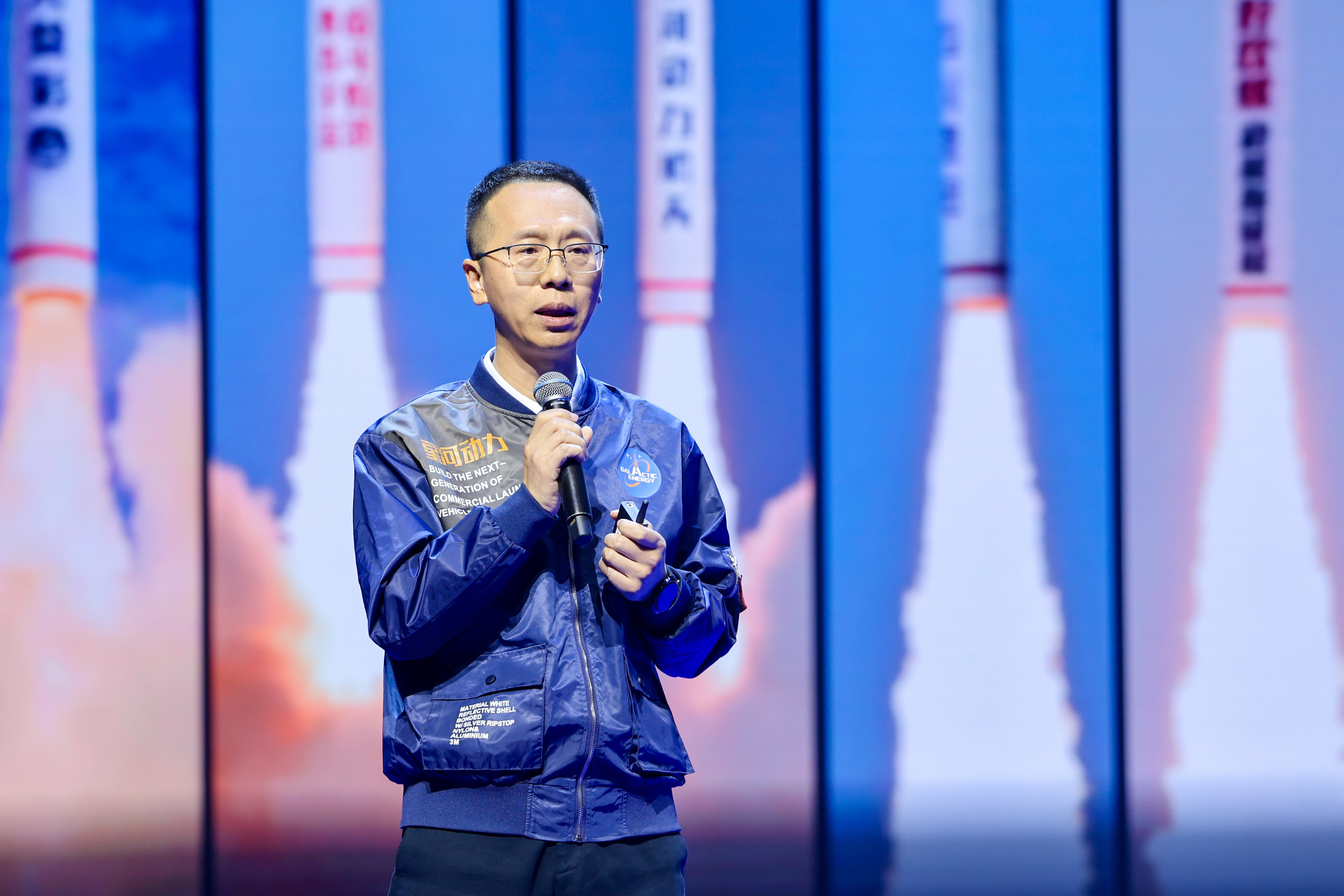
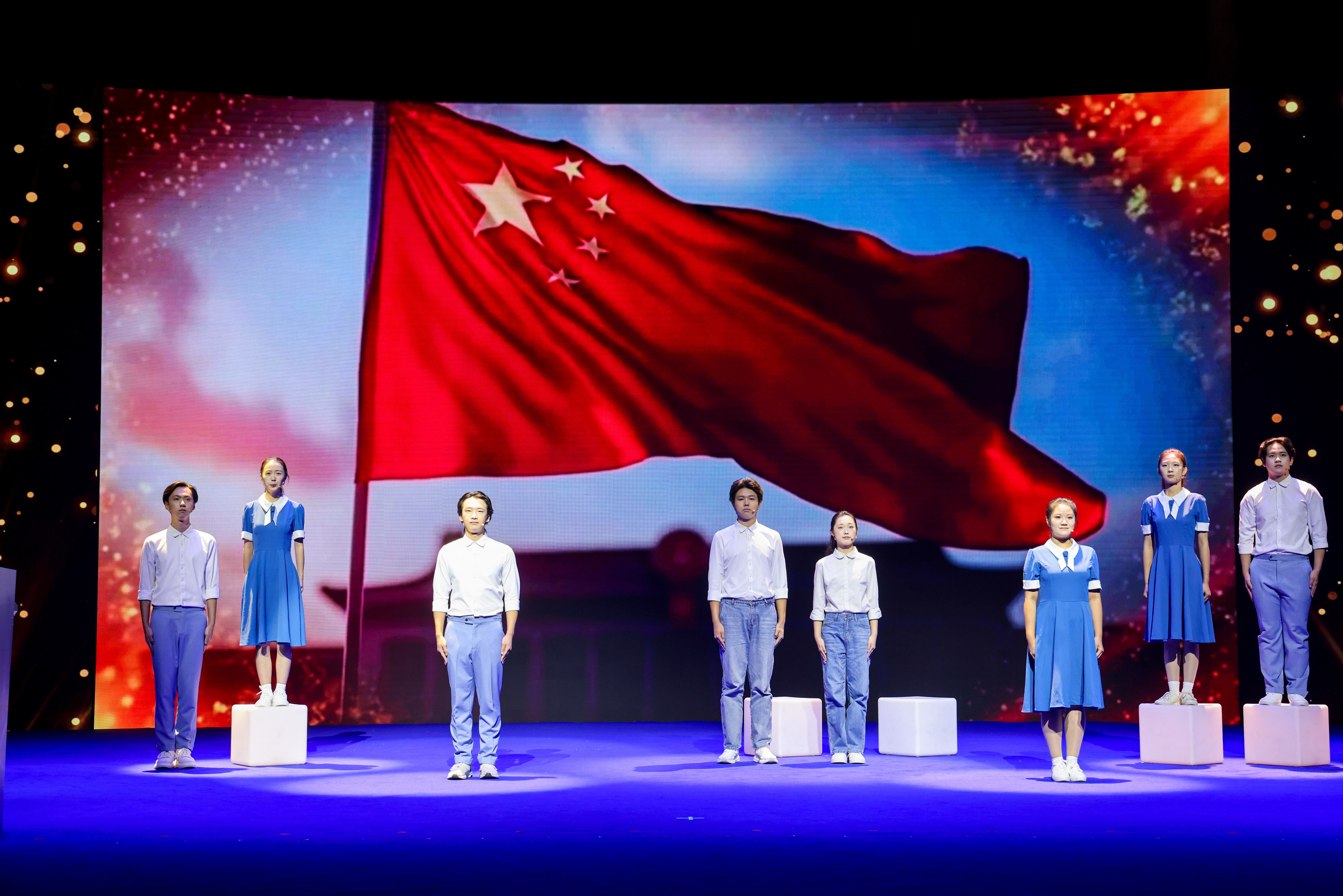
Beihang students also performed an original poetry recitation during the ceremony, expressing their commitment to contributing to China's aerospace development.
Looking ahead, the consortium will continue to advance joint Party-building, collaborative research, shared internship and training bases, aerospace science camps for secondary school students, and public outreach. By linking the education chain from primary through higher education with the innovation chain of industry-academia-research-application, it seeks to translate the "Two Bombs, One Satellite" and manned spaceflight legacies into tangible educational outcomes. It aims to develop a scalable model for collaborative aerospace education that cultivates committed, innovative professionals for China's aerospace future.
Editor: Lyu Xingyun


 Beihang News2026 Symposium on Excellent Engineer Training held in BeijingMore
 Beihang NewsProfessor Liu Mingjie's team publishes article in Science, revealing high-modulus toughening mechanism in nacreMore
 Beihang NewsWang Yunpeng appointed Secretary of the CPC Beihang University CommitteeMore
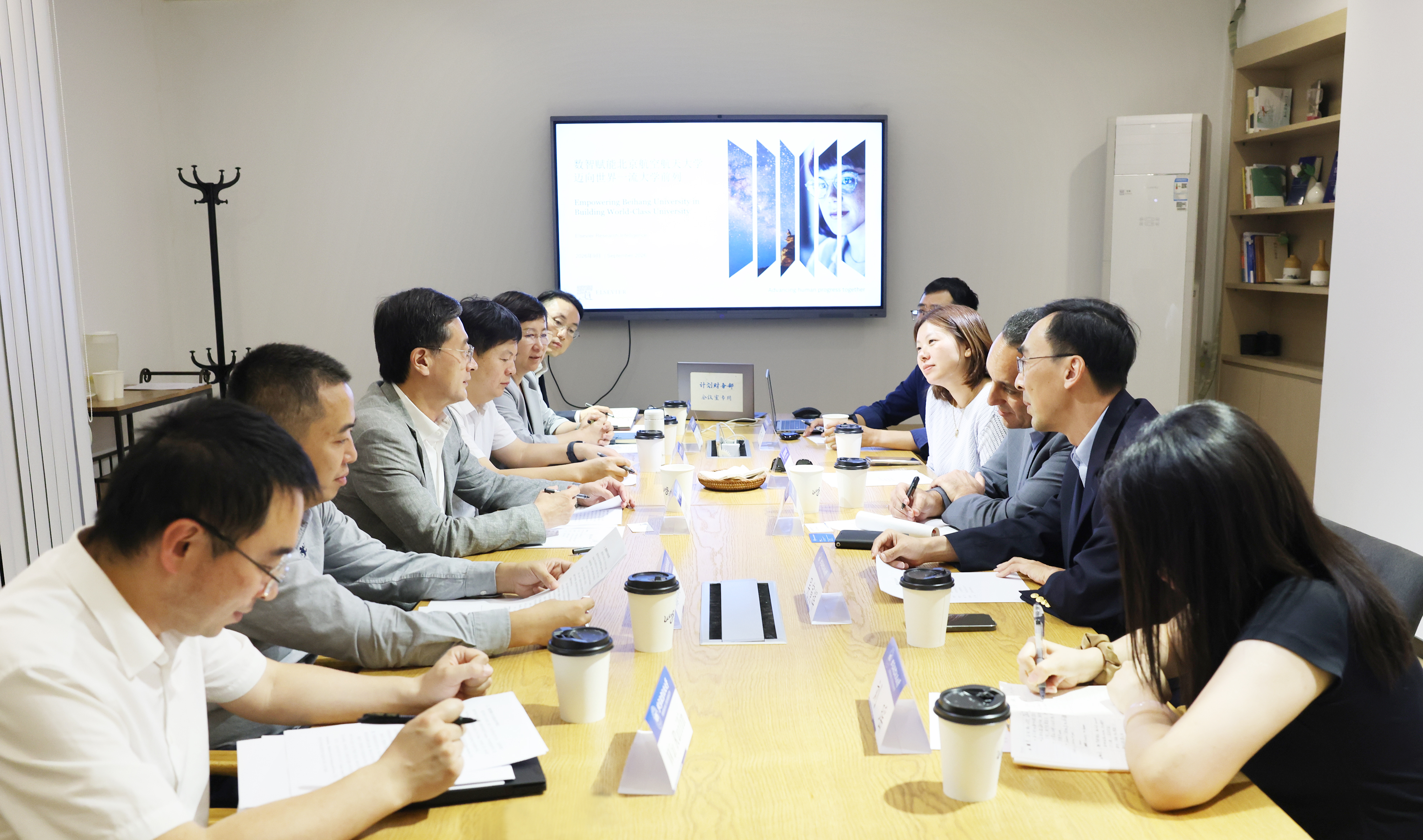 Beihang NewsElsevier Senior Vice President Said Taha visits Beihang UniversityMore
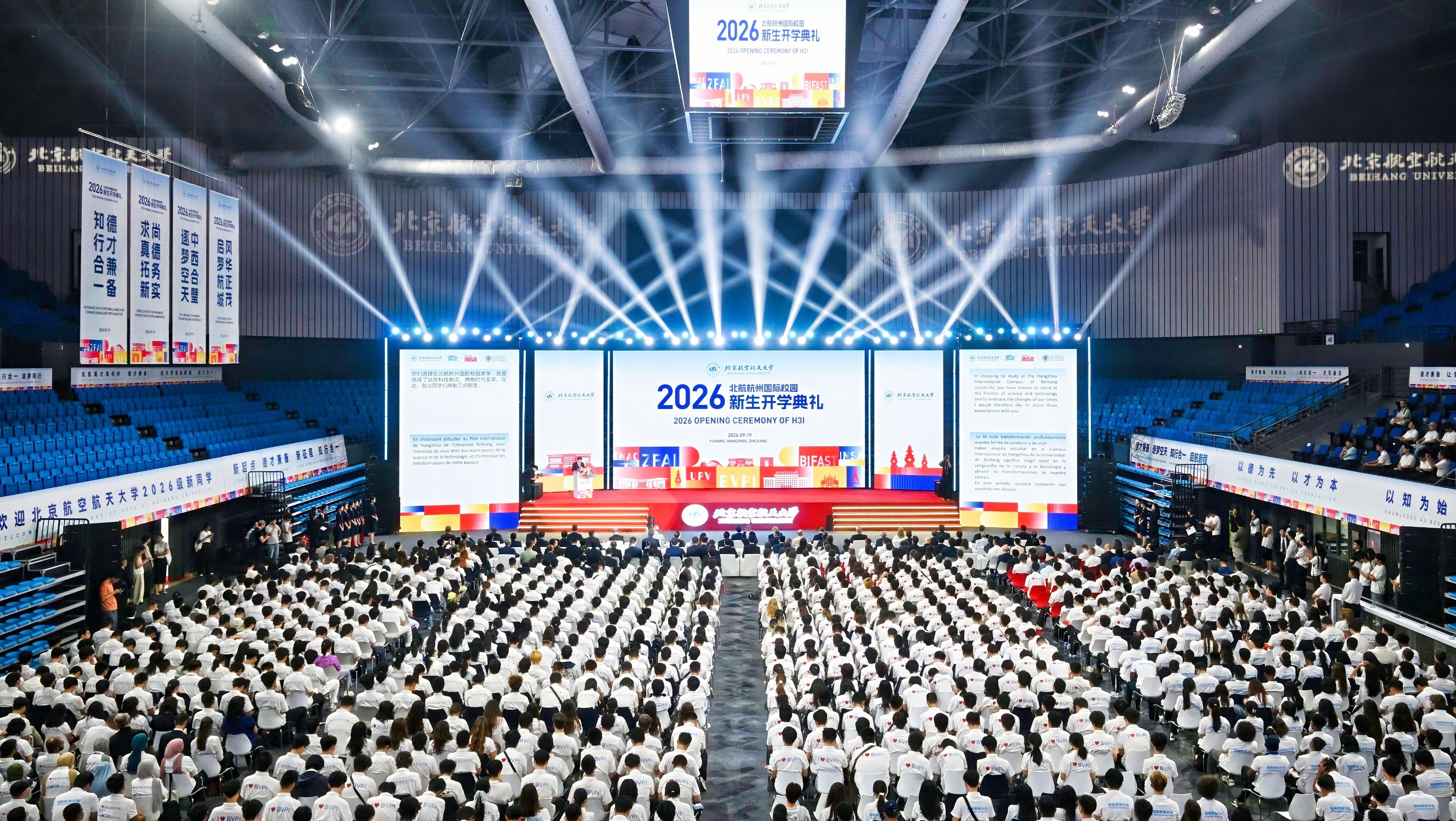 Beihang NewsPresident Wang Yunpeng visits Hangzhou to advance university-city integration and attends opening ceremony of H3IMore