A research team led by Professor Zhao Weisheng and Associate Professor Zhang Hui from the School of Integrated Circuit Science and Engineering at Beihang University, in collaboration with teams from Tsinghua University, the Institute of Physics of the Chinese Academy of Sciences (CAS), and Beijing Institute of Nanoenergy and Nanosystems of CAS, has made significant progress in the study of two-dimensional superconductivity at correlated oxide interfaces.
Their research, published in Nature Communications on March 28, 2025, under the title “Magnetotransport evidence for the coexistence of two-dimensional superconductivity and ferromagnetism at (111)-oriented a-CaZrO₃/KTaO₃ interfaces,” reveals the magnetotransport evidence for the coexistence of a two-dimensional (2D) superconducting state and a 2D ferromagnetic state at the interface between amorphous CaZrO₃ film and (111)-oriented KTaO₃ single crystal.
Correlated oxide heterointerfaces are known for hosting emergent physical phenomena driven by inversion symmetry breaking, lattice mismatch, charge transfer, and quantum confinement. Among them, two-dimensional superconductivity at insulating oxide interfaces has drawn broad attention for its rich physics and field tunability. The recent discovery of superconducting 2D electron gases (2DEGs) at the KTaO₃ (KTO)-based heterointerfaces has attracted much attention because its TC is up to ~2 K, nearly an order of magnitude higher than that of SrTiO₃ (STO). KTO is in many ways similar to STO. However, the 2DEGs residing in KTO derive from 5d orbitals rather than 3d orbitals, exhibiting a large atomic spin-orbit coupling (SOC) and unique properties compared to the 2DEGs in STO. Zhang Hui’s group has been at the forefront of KTO-based 2DEG research, demonstrating high-mobility conduction, strong Rashba effects, and optoelectronic tunability. Their continued efforts on (111)-oriented KTO interfaces have led to discoveries such as gate-tunable superconducting–insulating transitions and quantum metallic phases.
In this study, the team fabricated amorphous CaZrO₃ films on (111)-oriented KTaO₃ substrates, forming 2DEGs with tunable carrier densities. All samples exhibited superconductivity, with the critical temperature rising with carrier concentration. Remarkably, the fingerprint of ferromagnetism, i.e., hysteretic magnetoresistance loops, is observed in the superconducting state. The butterfly-shaped hysteresis with twin peaks emerges against the background of superconducting zero resistance, and the peak amplitude increases with the sweep rate of the magnetic field, indicating that the magnetization dynamics are at play in the superconducting state. Moreover, the magnetoresistance hysteresis is strongly dependent on temperature, achieving a maximum near the superconducting transition temperature. This behavior is well described by the thermal activated phase slip model. Density functional theory (DFT) calculations suggest that the magnetic moment is primarily contributed by the Ta 5dyz orbital, and the Stoner ferromagnetism is identified.
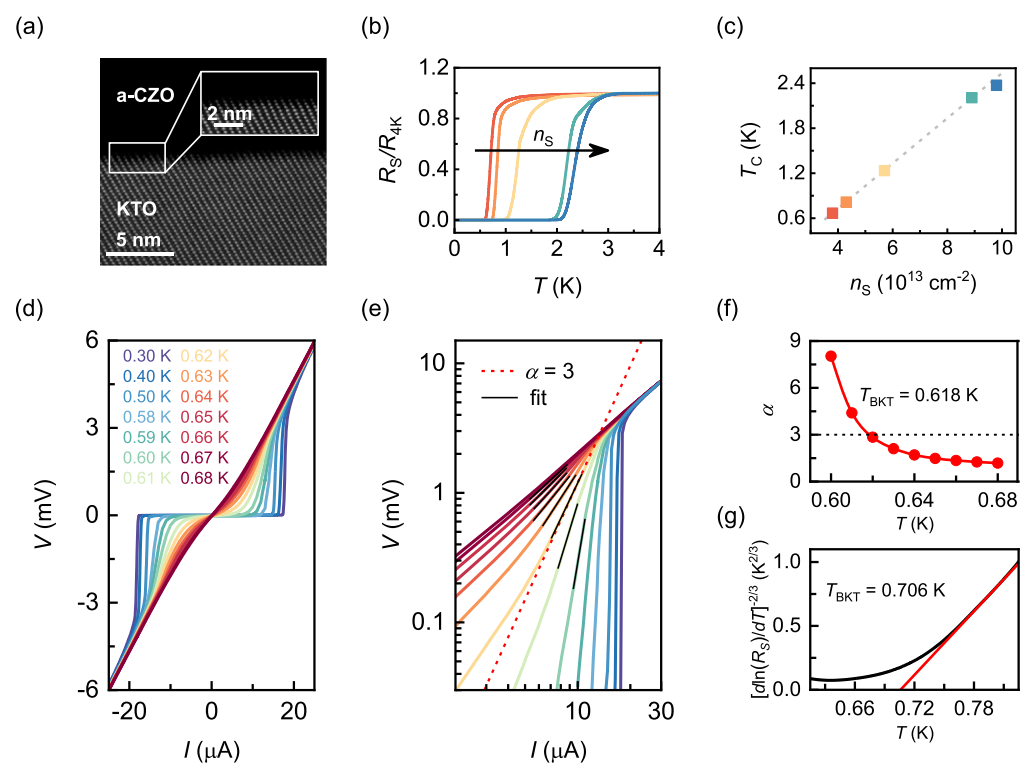
Fig. 1: Two-dimensional superconductivity at a-CZO/KTO (111) interface
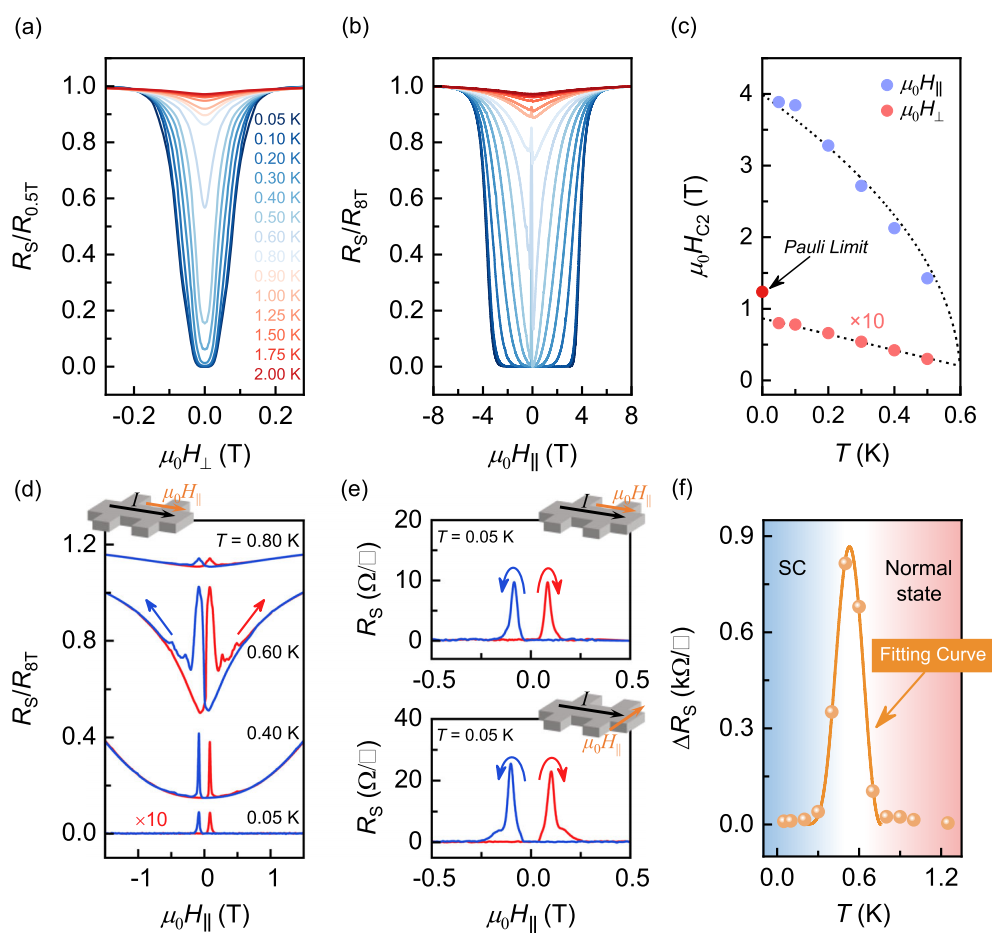
Fig. 2: MR loops in superconducting state
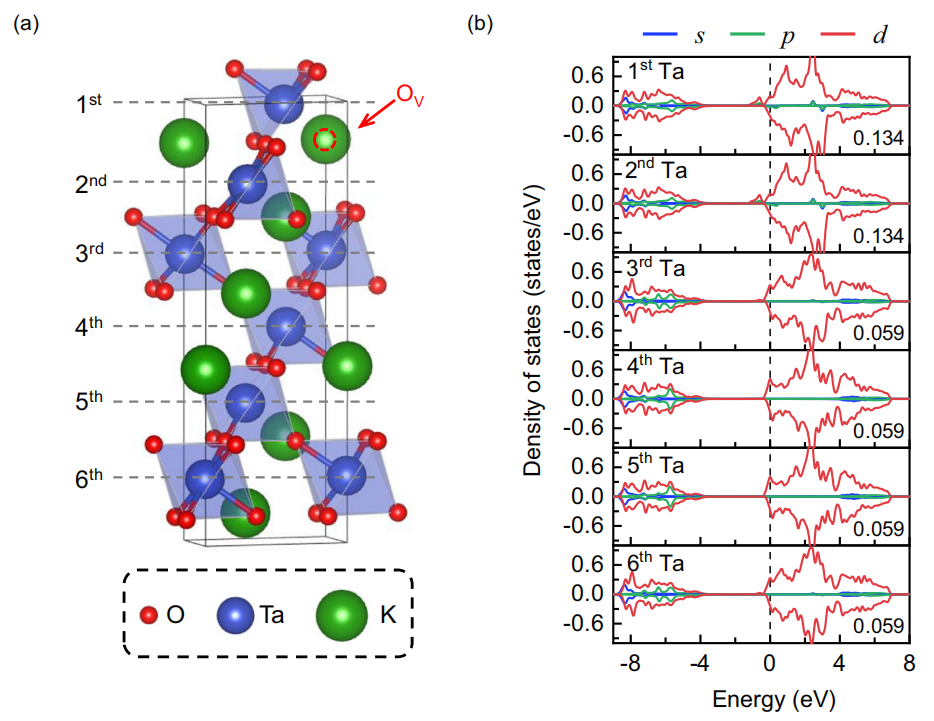
Fig. 3: DFT calculations on KTO(111) layer structure
The research reveals the strong interplay between ferromagnetism and superconductivity, paving the way towards the exploration of quantum emergent phenomena. It also has important implications for understanding unconventional superconductivity and developing superconducting spintronic devices.
Associate Professor Zhang Hui and Master’s student Xiao Yinan (Class of 2022) from Beihang University, doctoral student Gao Qixuan from Tsinghua University, and Assistant Researcher Wu Ning from Beijing Institute of Nanoenergy and Nanosystems of CAS are co-first authors of the paper. The co-corresponding authors are: Associate Professor Zhang Hui and Professor Zhao Weisheng from Beihang University, Researcher Sun Jirong from the Institute of Physics of CAS, and Associate Professor Zhang Jinsong from Tsinghua University. Beihang University is recognized as the primary affiliation for this research.
The work was supported by the National Key R&D Program of China, the National Natural Science Foundation of China, the Strategic Priority Research Program of the Chinese Academy of Sciences, and other funding sources.
The article can be accessed at: https://www.nature.com/articles/s41467-025-58300-9
Editor: Tian Zimo


 Beihang NewsChen Maozhang honored as "Charity Model" of China Charity AwardsMore
 Beihang NewsBeihang celebrates 42nd Teachers' DayMore
 Beihang NewsAssociate Professor Wang Shitong's team wins second prize at HICOOL 2026 Global Entrepreneurship CompetitionMore
 Beihang NewsBeihang's first student-designed human-powered aircraft completes test flightMore
 Beihang NewsBeihang leaders engage in dialogue with new undergraduate and graduate student representativesMore
 Beihang NewsBeihang University holds 2026 opening convocation to welcome new studentsMore