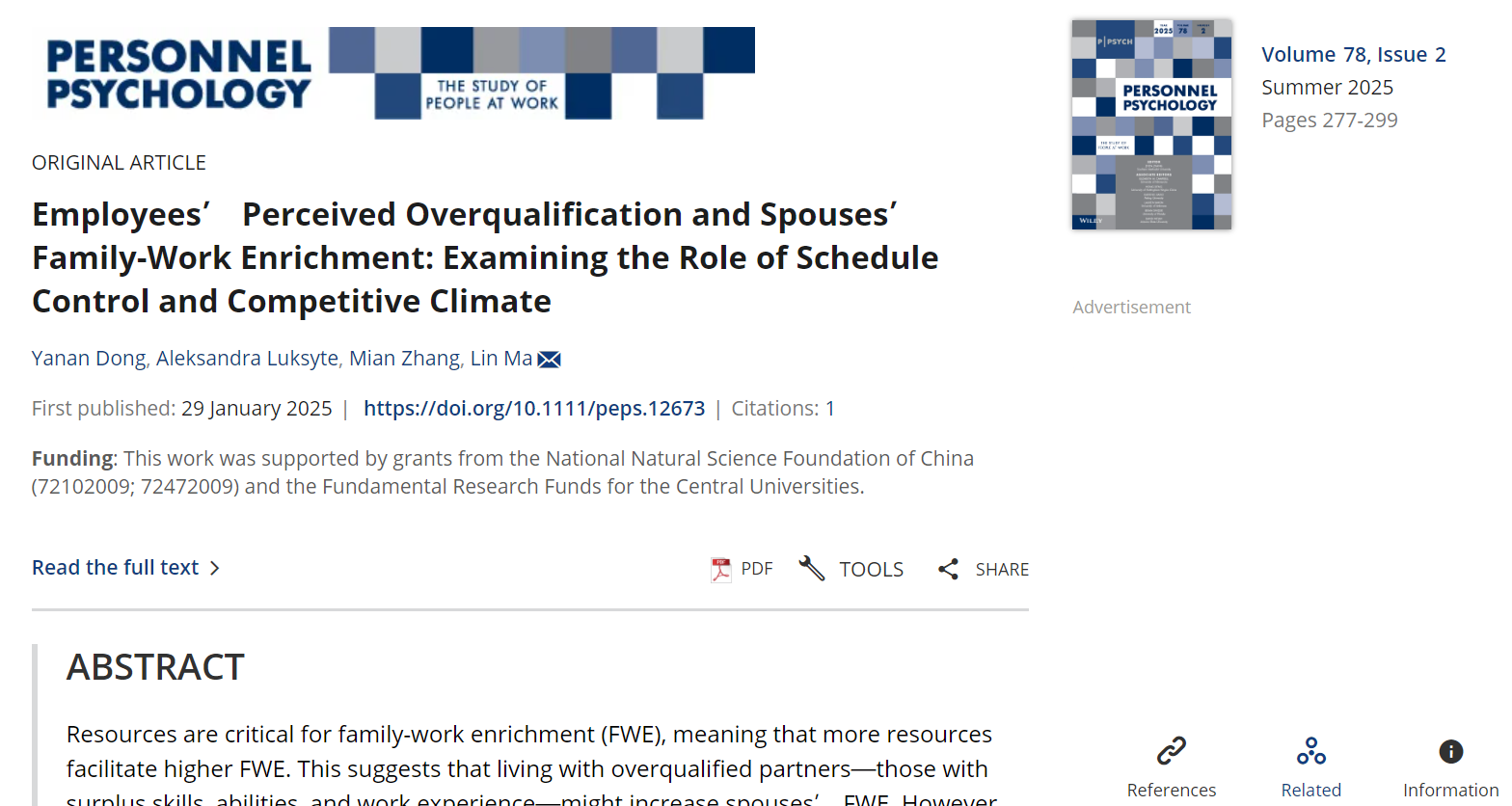
Researchers from Beihang University’s School of Economics and Management have uncovered a counterintuitive benefit of workplace overqualification in a study published in Personnel Psychology (ABS 4*),a leading international journal in the field of management. The paper, titled “Employees’ Perceived Overqualification and Spouses’ Family-Work Enrichment: Examining the Role of Schedule Control and Competitive Climate,” was co-authored by Dong Yanan, Ma Lin (corresponding author), Aleksandra Luksyte from the University of Western Australia, and Zhang Mian, Associate Professor at Tsinghua University. Drawing on the crossover of resources theory, this study demonstrates how employees perceiving themselves as overqualified can positively facilitate their spouses’ family-work enrichment (FWE).
Research Context
In the context of globalization and the knowledge economy, the phenomenon of employees perceiving themselves as overqualified has become increasingly common. Overqualification, defined as a mismatch where an employee’s education, skills, or experience exceed the demands of their current job, is particularly prevalent in China, where nearly half of job seekers believe their educational level surpasses the job requirements.
While traditional views suggest that overqualified employees may experience burnout due to underutilized capabilities, this study integrates the crossover of resources theory and the FWE model to demonstrate how overqualified employees can transfer surplus resources to the family domain, thereby enhancing their spouses’ FWE.
Key Findings
Using data from employee-spouse samples at a large nursing hospital and an IT company in Hebei Province, the team drew several breakthrough conclusions. The study found that schedule control acts as a “valve” for resource flow. When employees can autonomously manage their working hours, their surplus skills are more likely to be transformed into instrumental support for their spouses (e.g., helping with housework, childcare), significantly enhancing the spouses’ FWE. In contrast, rigid schedules limit this resource transfer—both instrumental and emotional—sometimes even reducing the enrichment experienced by spouses. On the other hand, the competitive climate determines the direction of “resource competition.” In low-competition environments, a relaxed organizational culture encourages overqualified employees to redirect unused resources into supporting their spouses both instrumentally and emotionally, generating effective family-work gains. In high-competition settings, workplace pressures encroach upon family time and energy, turning overqualification into a hindrance for spousal enrichment.
Therefore, the authors argue that when organizations offer flexible scheduling and reduce internal competition, employees are more likely to convert workplace skills and energy into family support resources, creating a virtuous cycle where work empowers the family, and the family in turn enhances work performance.
Implications and Significance
In today’s efficiency-driven society, where workplace overqualification and dual-income households coexist, transforming the challenge of “high ability, low placement” into a source of family support is key to improving societal well-being. Beihang scholars, through rigorous empirical research, reveal that overqualification should not be simply labeled as “wasted talent,” but rather seen as a valuable resource for enhancing family well-being. When organizations empower employees with scheduling autonomy and foster inclusive cultures, overqualified employees can become contributors to family happiness, achieving a dual goal of personal fulfillment and familial support.
Grounded in China’s high-competition, high-education workplace context, this research provides not only new perspectives for organizational management, but also valuable insights for dual-earner families navigating blurred work-family boundaries in the post-pandemic era. It showcases Beihang’s deep academic thinking in the fields of organizational behavior and human resource management.
Link to the paper: https://doi.org/10.1111/peps.12673
Editors: Tian Zimo, Lyu Xingyun


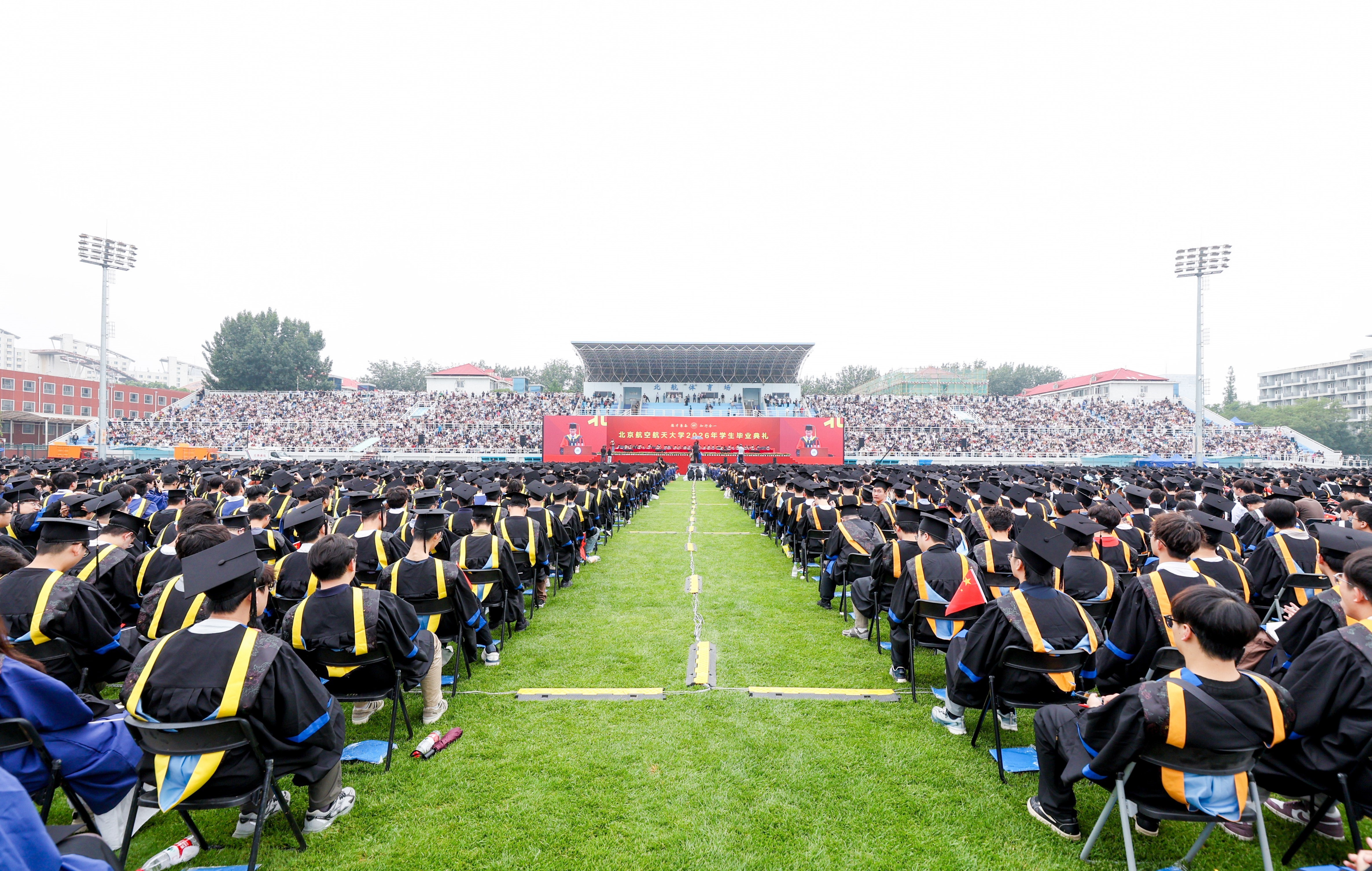 Beihang NewsBeihang holds 2026 Commencement and Degree Conferral CeremonyMore
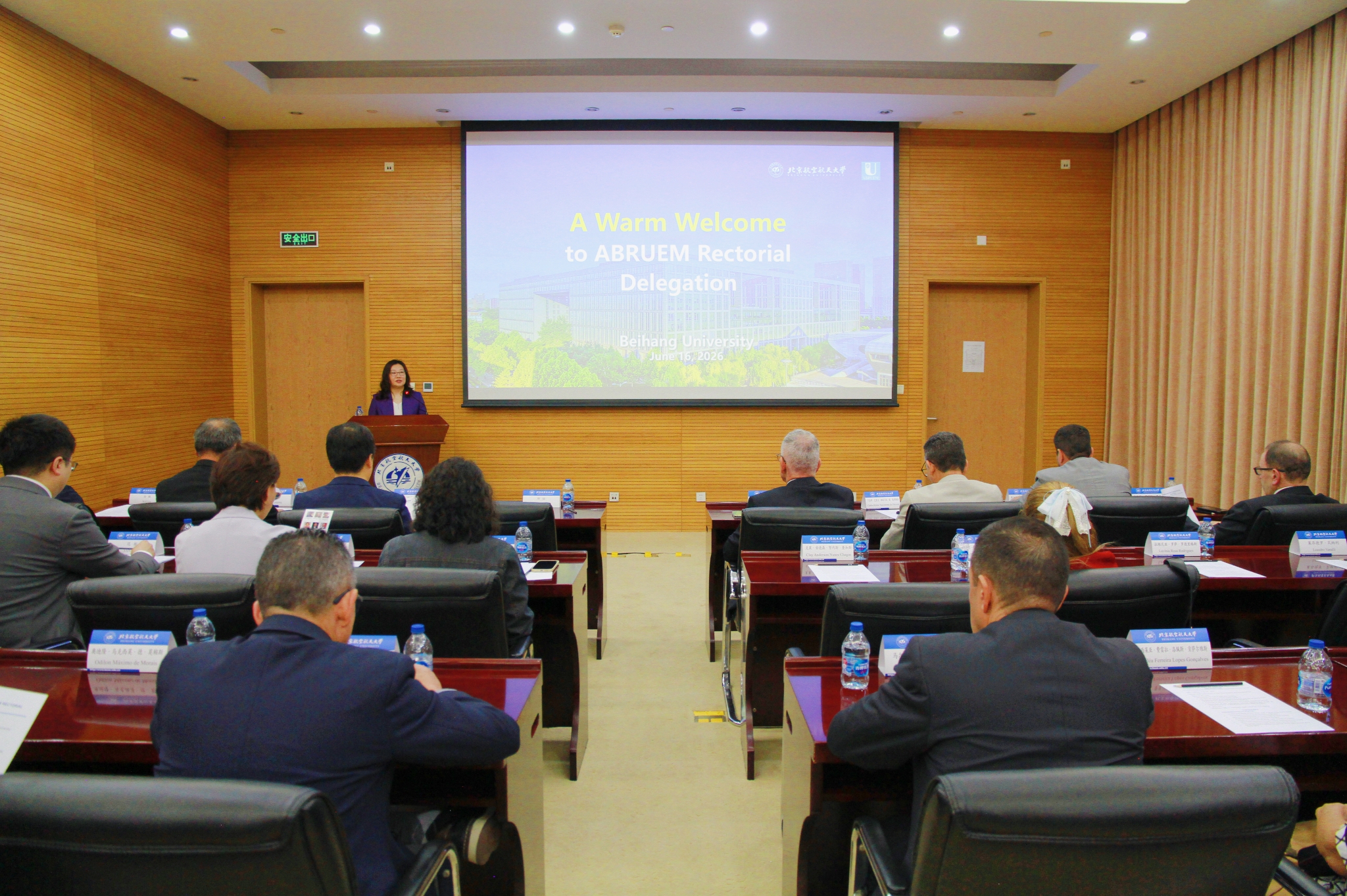 Beihang NewsABRUEM delegation visits Beihang UniversityMore
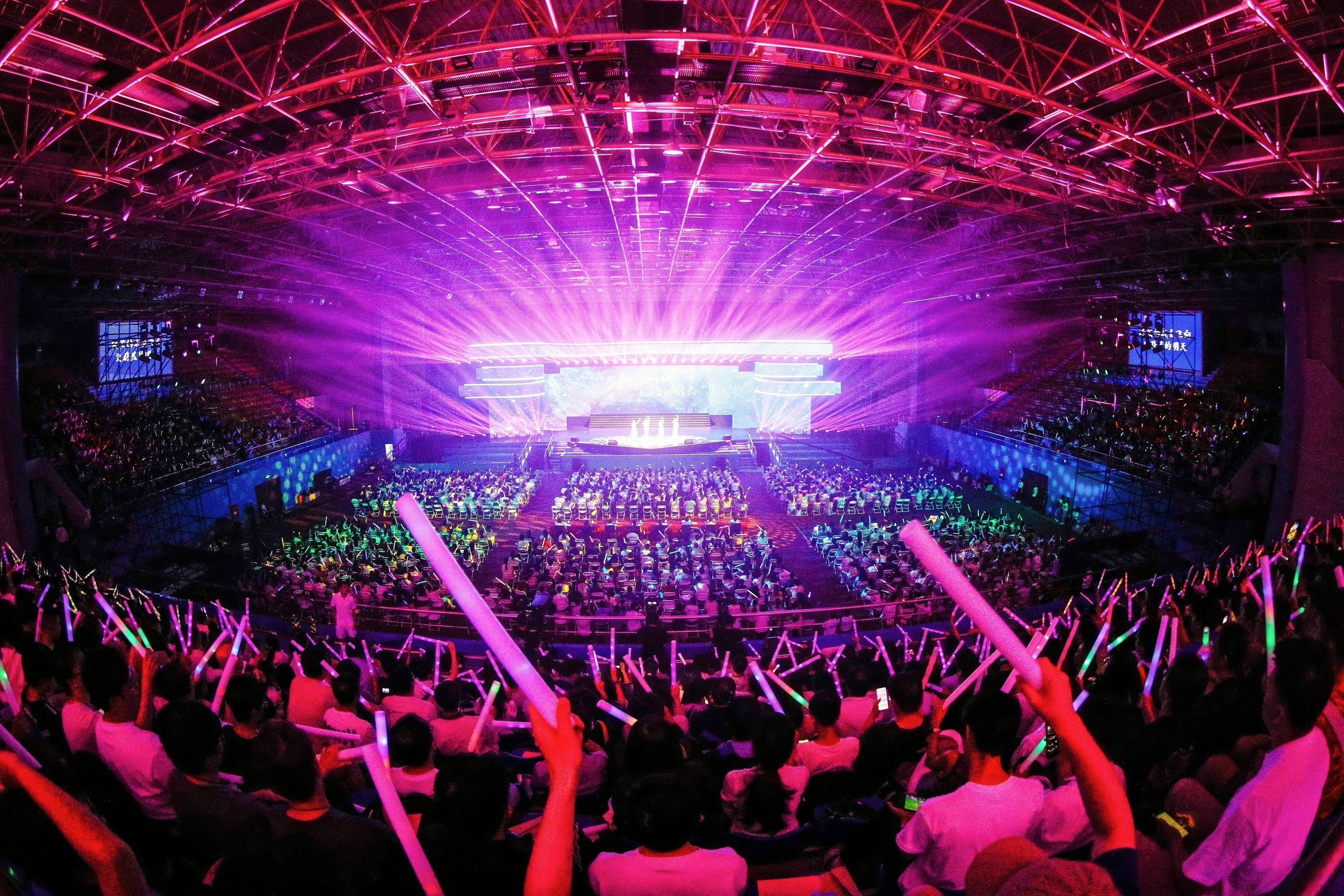 Beihang NewsBeihang University holds graduation gala for Class of 2026More
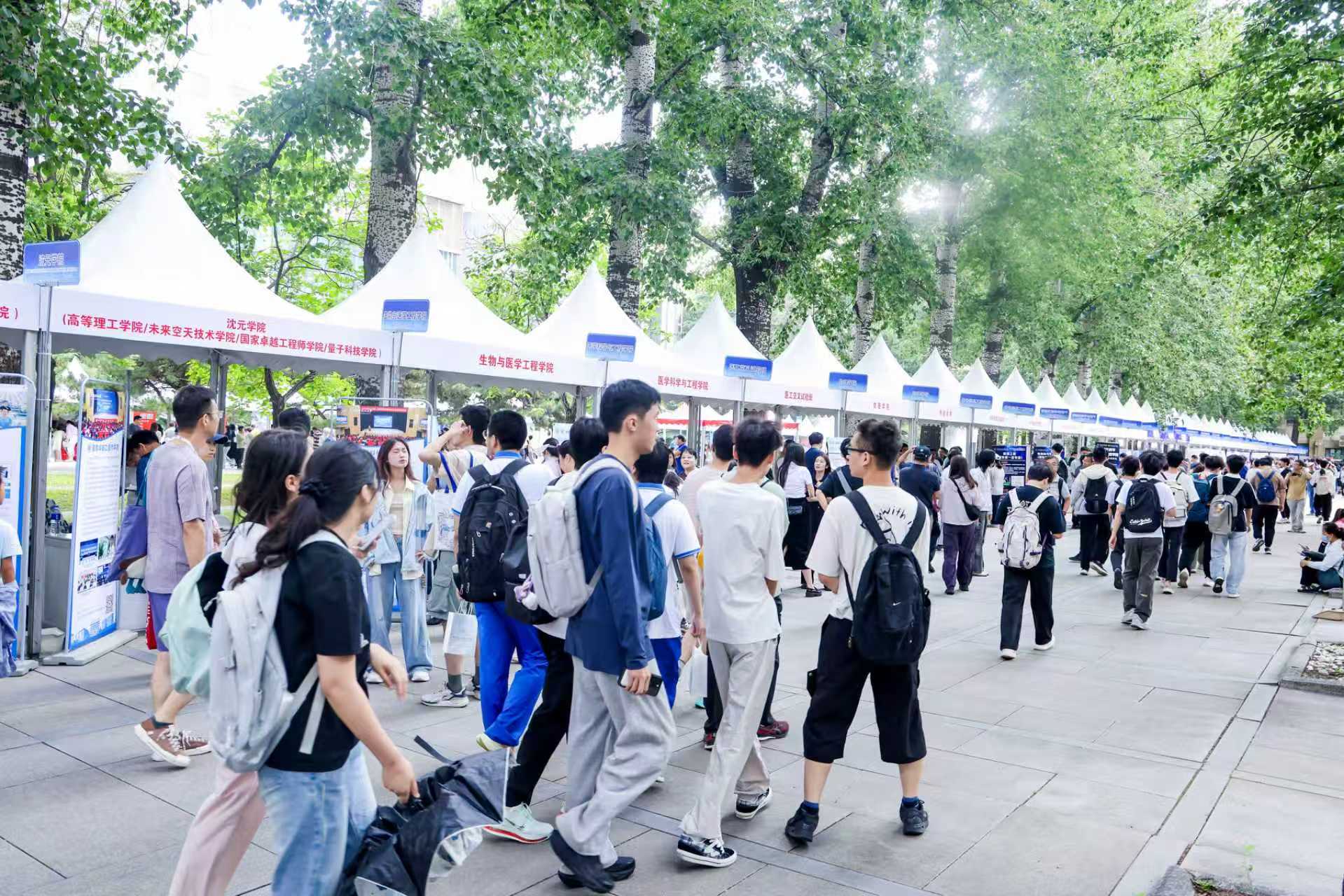 Beihang NewsBeihang hosts 2026 Campus Open Day & Admissions Information Session across three campuses in Beijing and HangzhouMore
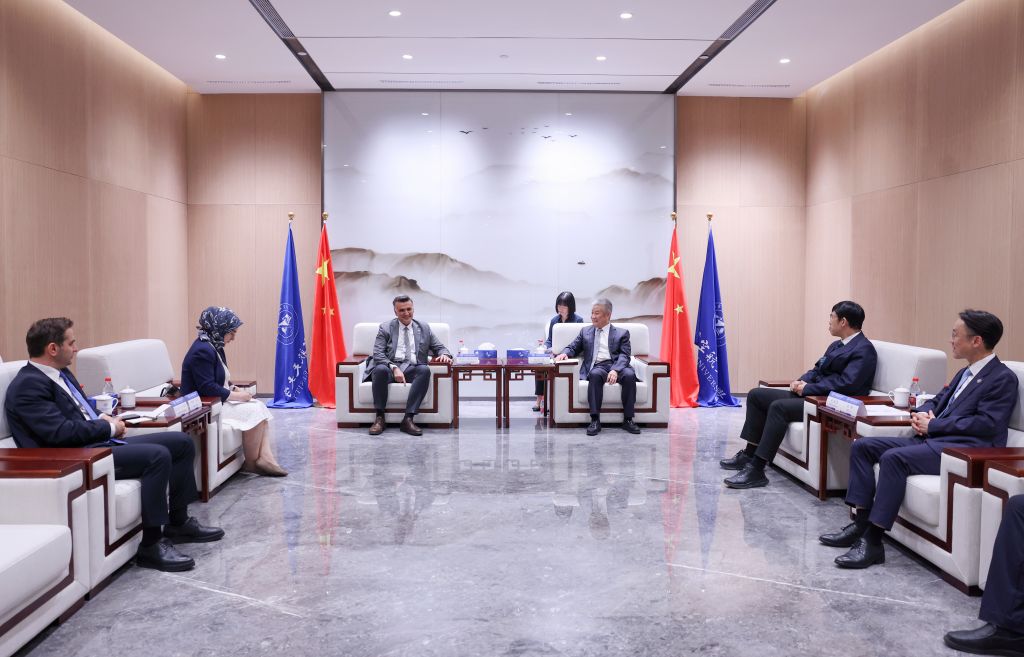 Beihang NewsMETU President Ahmet Yozgatlıgil visits Beihang UniversityMore
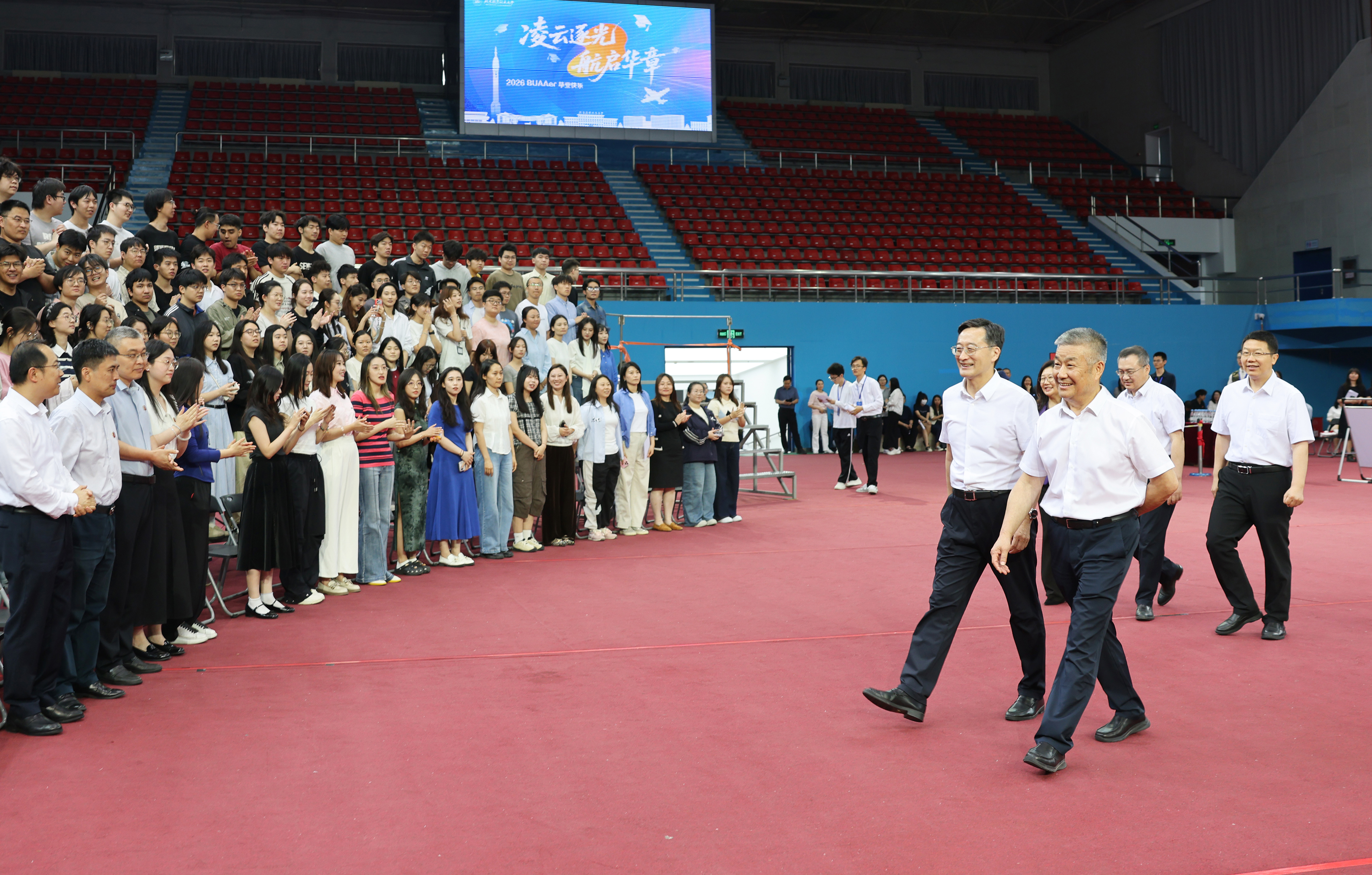 Beihang NewsUniversity leaders take group photos with 2026 graduatesMore