A research team from Beihang University has achieved a significant breakthrough in flexible magnetoelectric materials, with their findings published as a Research Article in the prestigious journal Science. The study, titled "Strain-coupled, crystalline polymer-inorganic interfaces for efficient magnetoelectric sensing," was led by Professor Liu Mingjie and Professor Li Jing from the School of Chemistry, in collaboration with Professor Zhao Lidong from the School of Materials Science and Engineering.
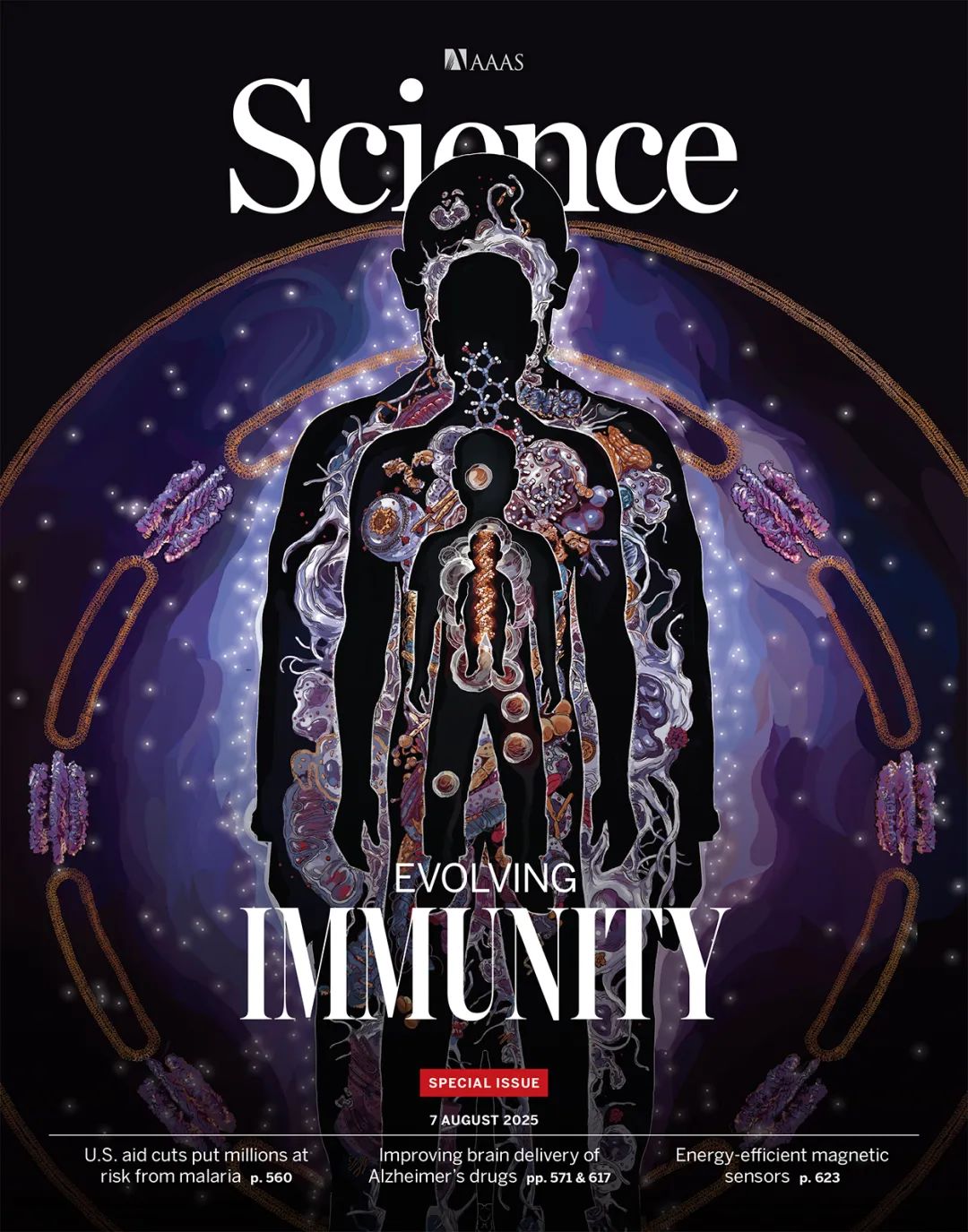
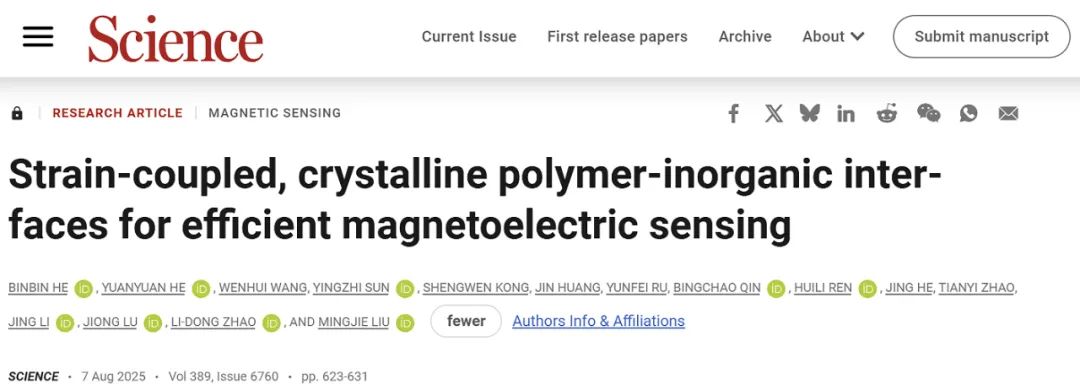
Magnetoelectric sensing holds promise for flexible sensors, offering precise detection of both electric and magnetic fields with minimal power consumption. However, its practical use has been constrained by weak magnetoelectric effects and limited overall performance, particularly under mechanical strain.
In the study, the team successfully fabricated robust magnetoelectric polymer-inorganic nanocomposites through an interfacial cocrystallization strategy. By leveraging diazonium chemistry on vanadium diselenide (VSe2) monolayers, they created a submolecular-flat interface between ferromagnetic VSe2 and ferroelectric poly (vinylidene fluoride) (PVDF) nanocrystals. This highly crystalline interface has few mobile polymer chains and thus limits energy dissipation and enhances interfacial energy transfer. The scalable composite films show exceptional magnetoelectric performance, with a magnetocapacitive coefficient of 23.6%. These films enable ultrafast magnetoelectric detection, approaching a 10-fold increase in speed compared with conventional sensors, and offer opportunities for integrating multifunctional materials such as thermoelectric coolers into wearable devices.
Ph.D. candidate He Binbin is the first author of the paper, with Professors Liu Mingjie, Zhao Lidong, and Li Jing as corresponding authors. Beihang University is the primary affiliation of the research.
The work received guidance from Jiang Lei, Academician of the Chinese Academy of Sciences, and technical support from researchers at the Institute of Chemistry, CAS and the School of Mechanical Engineering and Automation, Beihang University. It was supported by the National Key R&D Program, the National Natural Science Foundation of China, the Tencent Xplorer Prize, etc.
Link to the paper:https://www.science.org/doi/10.1126/science.adt2741
Editor: Lyu Xingyun


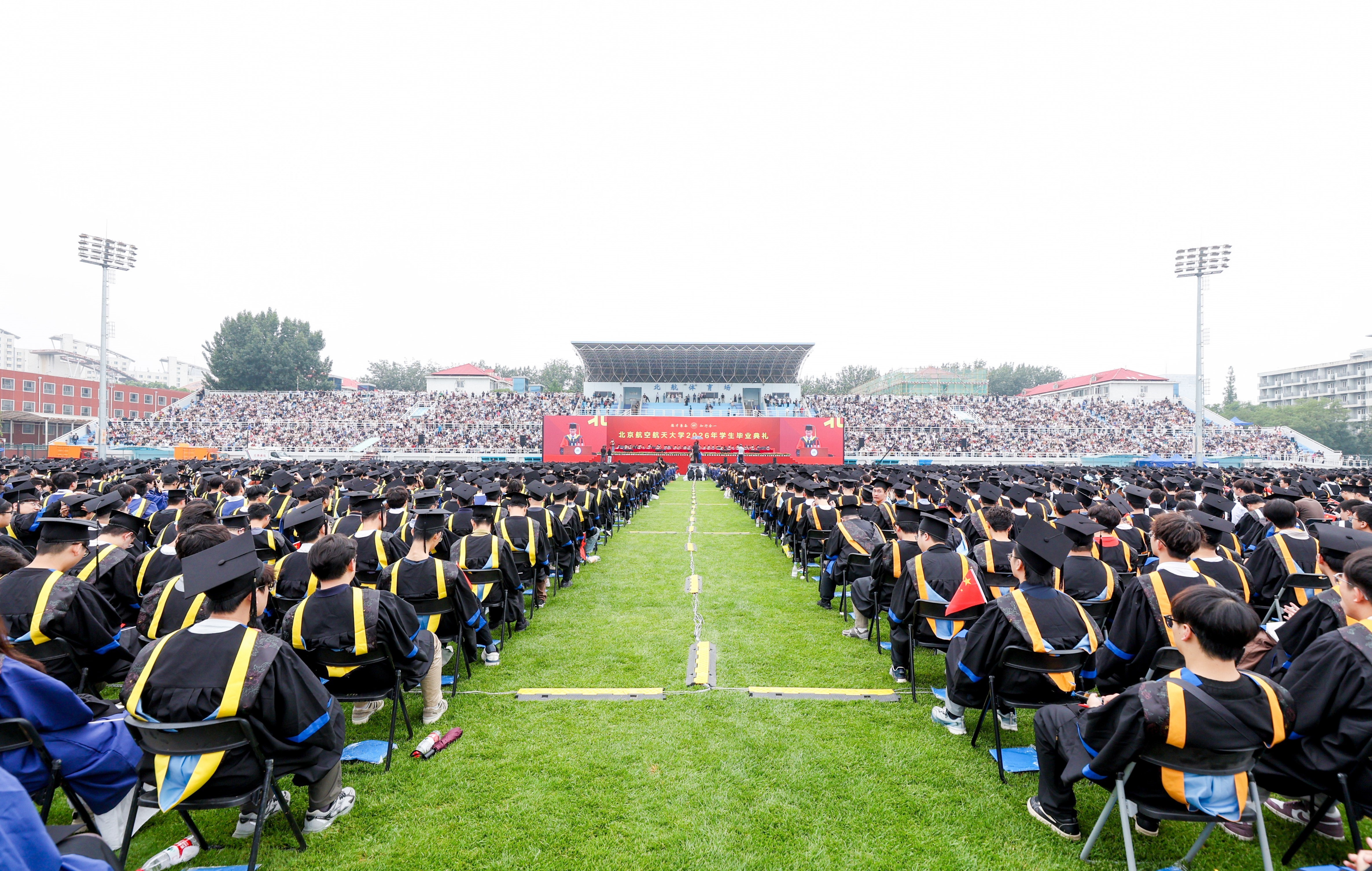 Beihang NewsBeihang holds 2026 Commencement and Degree Conferral CeremonyMore
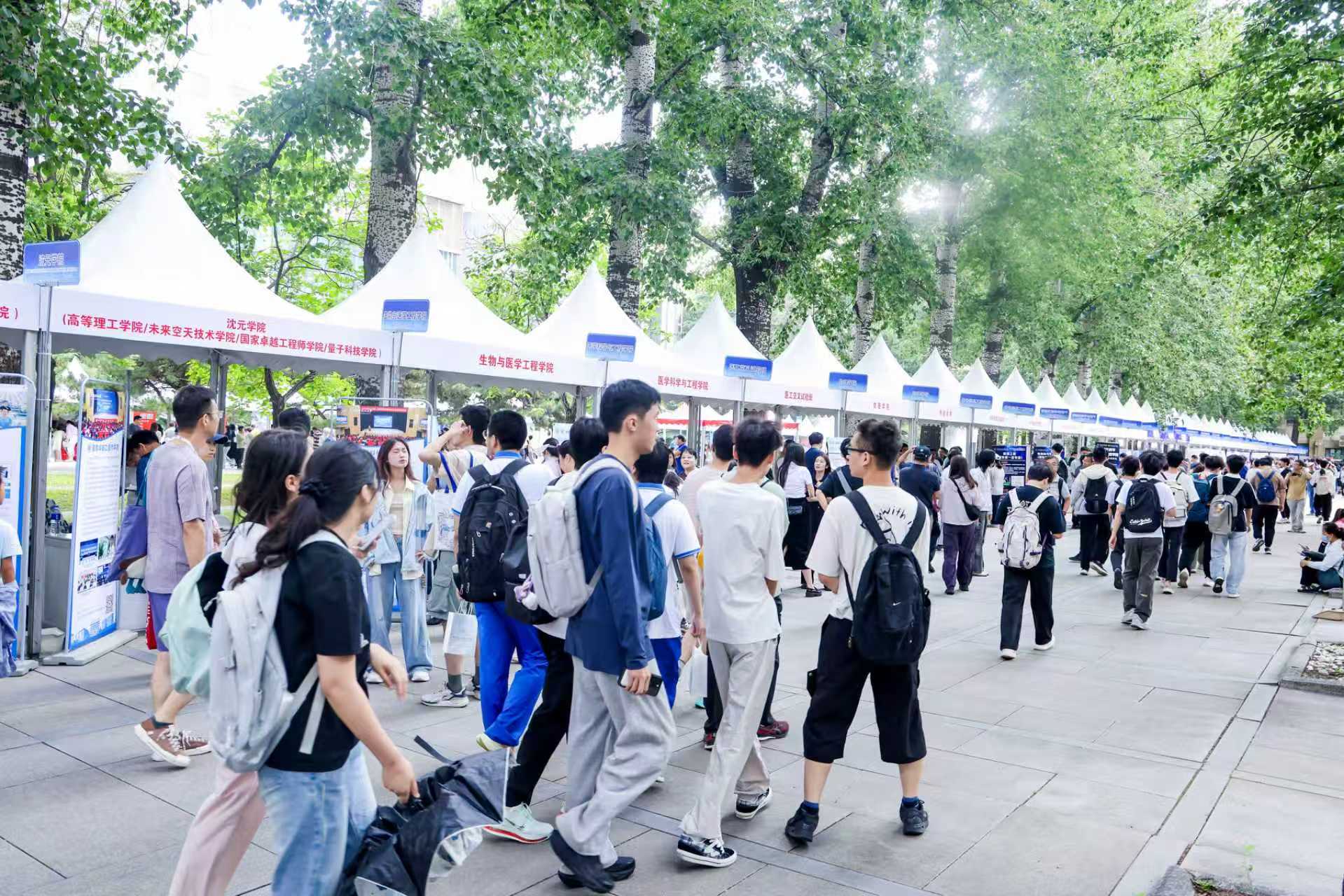 Beihang NewsBeihang hosts 2026 Campus Open Day & Admissions Information Session across three campuses in Beijing and HangzhouMore
 Beihang NewsBeihang University holds graduation gala for Class of 2026More
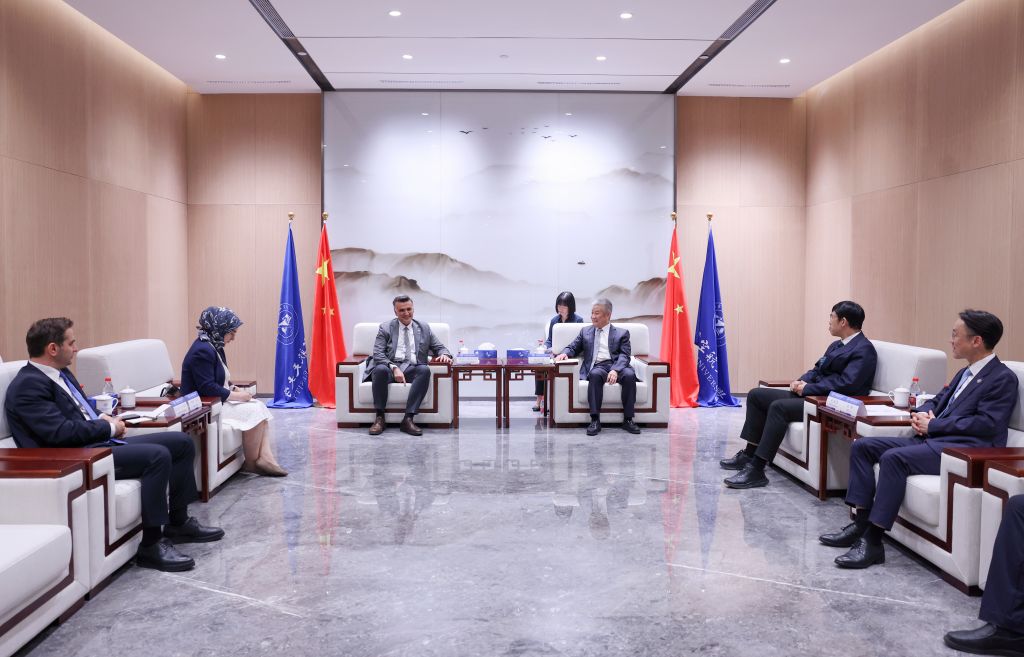 Beihang NewsMETU President Ahmet Yozgatlıgil visits Beihang UniversityMore
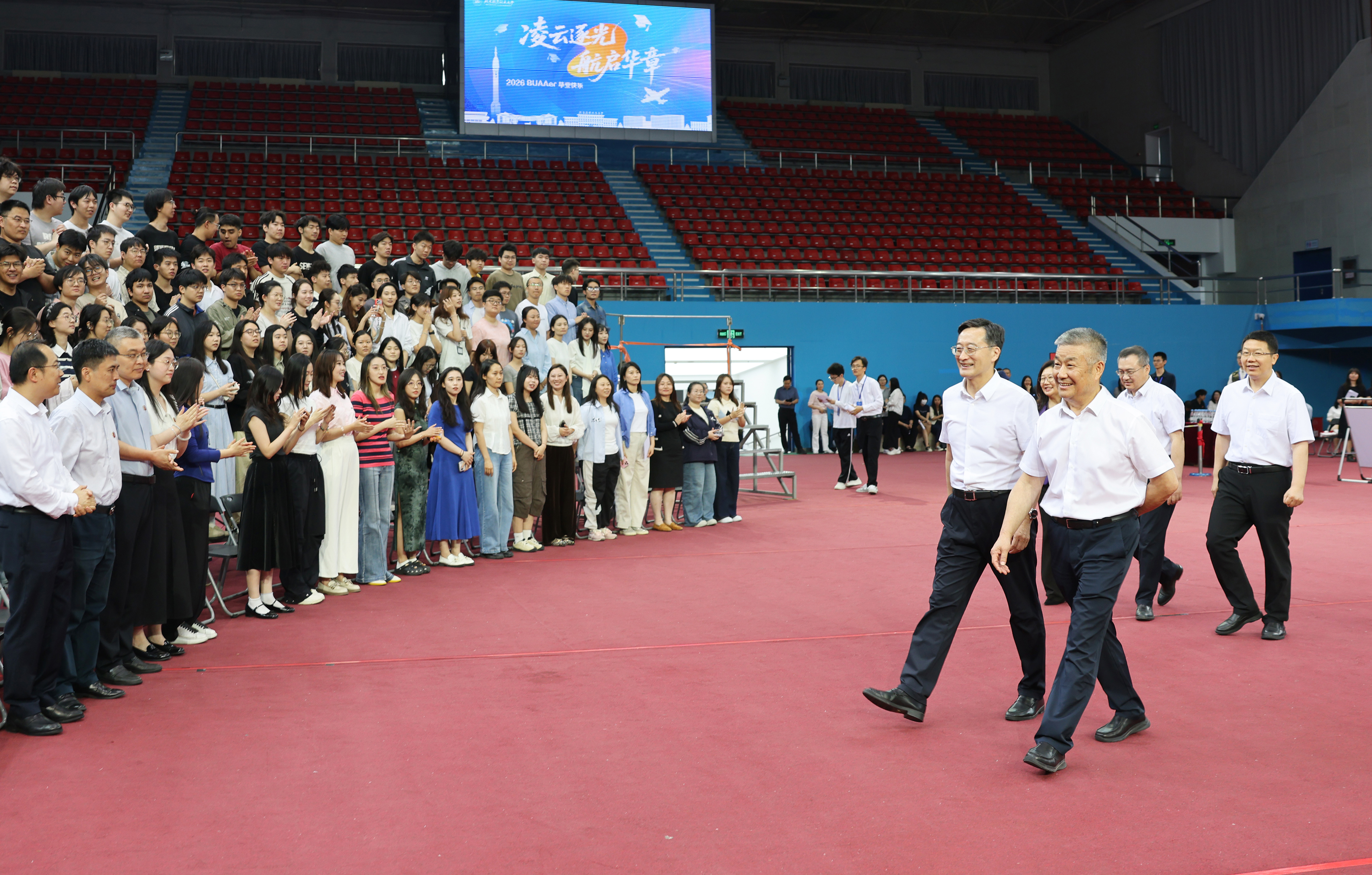 Beihang NewsUniversity leaders take group photos with 2026 graduatesMore
 Beihang NewsTrio Hélios Piano Concert staged at BeihangMore