A research team led by Professor Wang Dangxiao from the School of Mechanical Engineering and Automation at Beihang University, in collaboration with City University of Hong Kong and Peking University, has developed a fully transparent, high-resolution, and dynamically programmable microfluidic haptic interface. This breakthrough was published in the prestigious journal Advanced Science (IF=14.1) under the title “Fully Transparent Haptic Interface for High-Resolution Tactile Feedback on Touchscreens.”
Haptic technology has the potential to bring tactile richness to touchscreens on smartphones, tablets, and laptops, unlocking new possibilities for digital interaction and communication. However, despite notable advancements in visual resolution, the resolution of tactile pixels—referred to as “taxels”—lags significantly behind, limiting the immersive tactile feedback required for a truly enriched user experience.
To address this challenge, Professor Wang’s team reports a transparent haptic interface with a 3D architecture that dynamically reconfigures high-resolution taxels through a densely integrated actuator array.

Figure 1: Design and architecture of the optically transparent and high spatial resolution haptic interface
The novel inverted pyramid microfluidic structure design enables the dense integration of microfluidic chambers with a pitch of 1.5 mm and a density of 49 dots/cm²—surpassing the two-point discrimination threshold of human fingertips. By modulating the activation positions, timing, and pressure of the chamber array, the system generates precise, dynamic topographic changes synchronized with on-screen content, delivering rich and localized mechanical stimuli.
In addition, by precisely tuning the refractive index of a glycerol-based solution to match that of the PDMS material, the device achieves high optical transparency while effectively eliminating the visibility of internal microfluidic structures. The entire device is only 1.5 mm thick and weighs less than 9 grams.
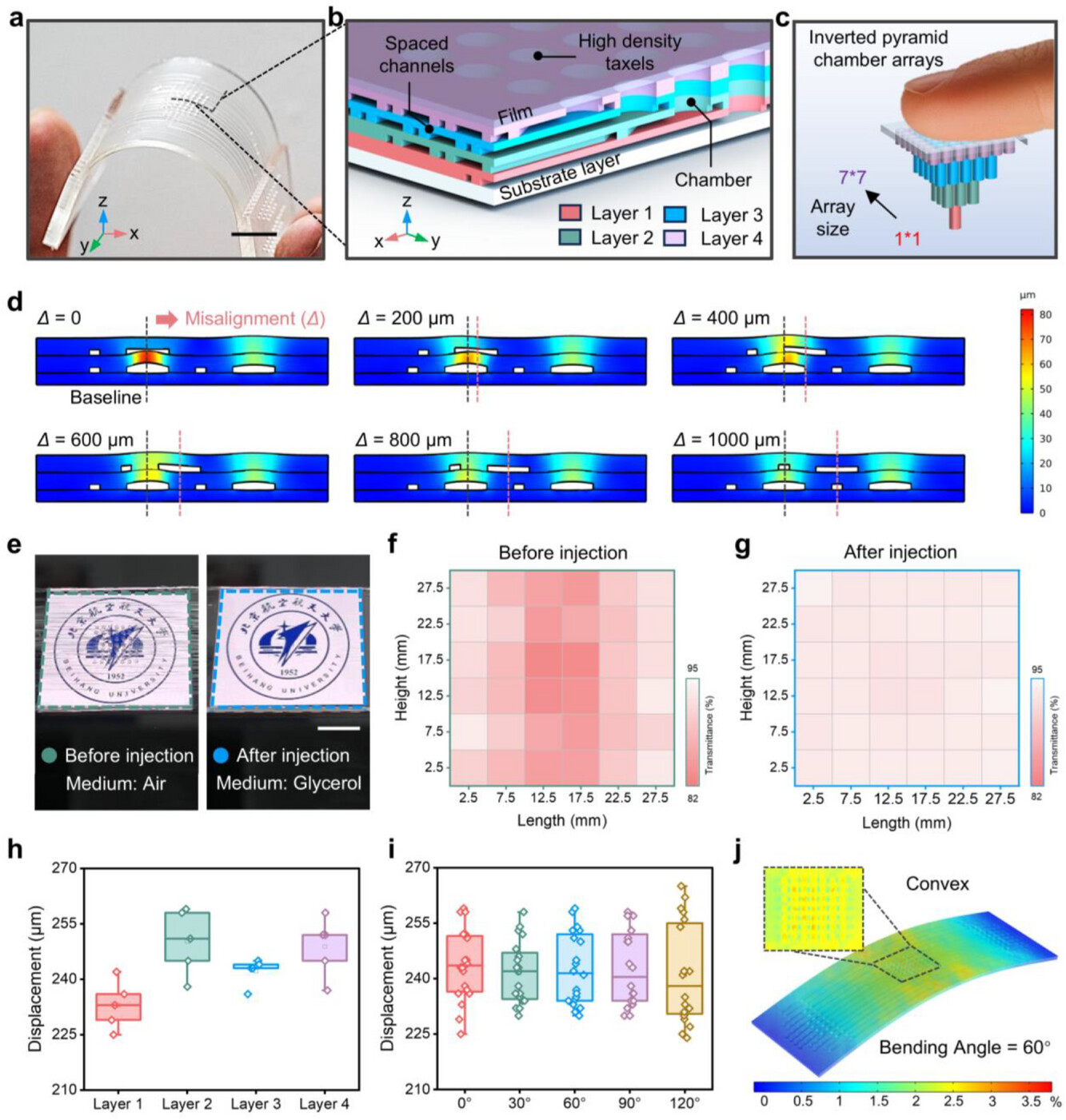
Figure 2: Design and characterization of the transparent microfluidic actuator array
This haptic interface shows transformative potential for enhancing touchscreen interactions in applications such as touch panel control, virtual exploration, and gaming, as it can be reversibly attached to various touchscreens and create nuanced topographical features that align with on-screen visuals.
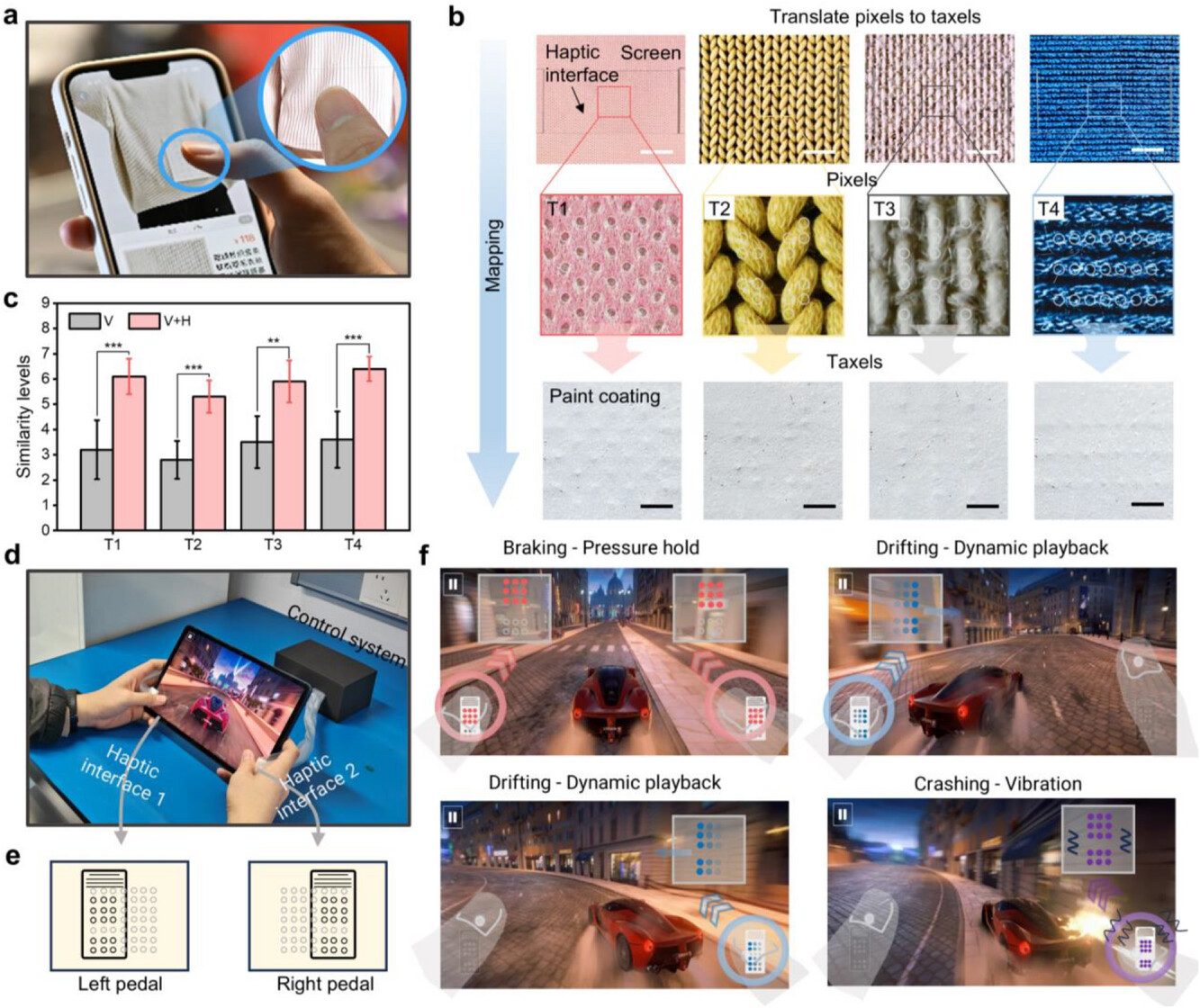
Figure 3: Example of applications of the haptic interface for highly immersive touchscreen interaction
The paper’s co-first authors are Shan Boxue, a Ph.D. candidate at Beihang University, Guo Yuan, a postdoctoral researcher at City University of Hong Kong, and Wang Yun, an associate professor at Beihang University. The corresponding authors are Professor Wang Dangxiao of Beihang University, Professor Yu Xinge of City University of Hong Kong, and Researcher Dai Zhaohe of Peking University. Beihang University is the primary affiliation for the research.
The study was supported by the National Natural Science Foundation of China under Grant Nos. 62373021 and 12432003.
Link to the article: https://doi.org/10.1002/advs.202511874
Editor: Lyu Xingyun


 Beihang NewsBeihang holds 2026 Commencement and Degree Conferral CeremonyMore
 Beihang NewsBeihang hosts 2026 Campus Open Day & Admissions Information Session across three campuses in Beijing and HangzhouMore
 Beihang NewsBeihang University holds graduation gala for Class of 2026More
 Beihang NewsMETU President Ahmet Yozgatlıgil visits Beihang UniversityMore
 Beihang NewsUniversity leaders take group photos with 2026 graduatesMore
 Beihang NewsTrio Hélios Piano Concert staged at BeihangMore