A research team led by Professor Wang Guangsheng from the School of Chemistry has made significant progress in the phase transition engineering for electromagnetic wave (EMW) absorbers. Their work, titled "Dielectric Modulation Based on TiO2 Phase Transition Engineering," has been published in the prestigious journal Advanced Functional Materials.
Doctoral student Bai Yunxia is the first author of the paper, with Professor Wang Guangsheng, Associate Professor Liu Dapeng, and Postdoctoral Fellow Zhao Peiyan serving as corresponding authors.

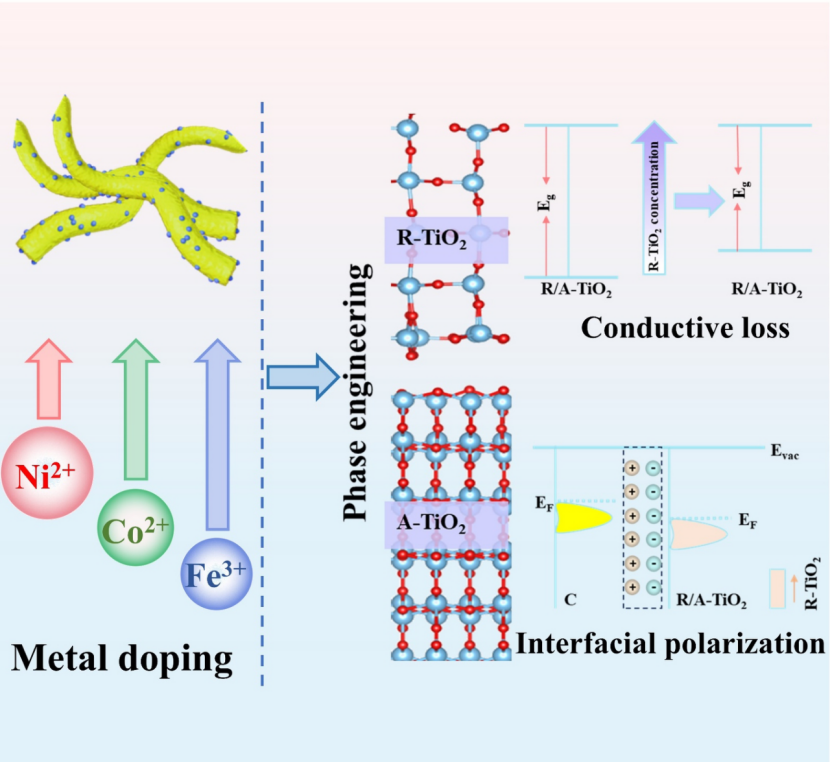
The rapid advancement of communication technologies has made electromagnetic waves ubiquitous, bringing convenience to daily life and industrial production. However, they also pose challenges to human health and the stable operation of electronic equipment, creating an urgent need for high-performance EMW absorbers. The performance of these materials largely depends on their dielectric properties, yet research on the specific mechanism by which phase transitions regulate dielectric properties remains relatively limited.

This study thoroughly investigatesthe mechanism of phase-change engineering for modulating electromagnetic properties through a strategy of metal doping. Transition metal doped TiO2 supported on carbon substrates (denoted as C-M/TiO2, C = carbon, M = Fe, Co, Ni) nanofibers are prepared using a simple electrospinning strategy combined with subsequent thermal treatment. The results show that the phase ratio of rutile-TiO2 to anatase-TiO2 can be easily adjusted by varying the type of transition metal dopant, which in turn regulated the conductivity and dielectric properties of the materials. Among the tested metals, Ni doping promoted the formation of a higher proportion of rutile-TiO2, thereby exerting a more significant effect on the dielectric parameters. Specifically, the optimized C-Ni/TiO2 sample achieved a minimum reflection loss of −62.2 dB and a maximum effective absorption bandwidth of 6.2 GHz (with a thickness of 2.2 mm).
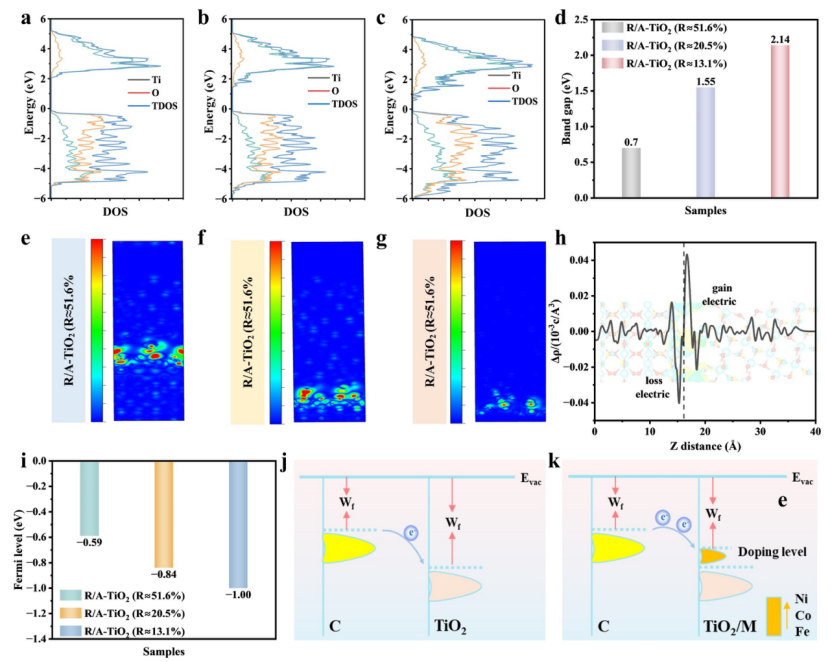
This work not only provides valuable insights into regulating dielectric parameters via phase transition engineering but also offers important theoretical guidance and potential material solutions for advancing electromagnetic protection in aerospace and telecommunications.
The research was supportedby the Fundamental Research Funds for the Central Universities and the National Natural Science Foundation of China.
Link to the article: https://doi.org/10.1002/adfm.202526359
Editor: Lyu Xingyun


 Beihang NewsBeihang celebrates 42nd Teachers' DayMore
 Beihang NewsBeihang's first student-designed human-powered aircraft completes test flightMore
 Beihang NewsBeihang leaders engage in dialogue with new undergraduate and graduate student representativesMore
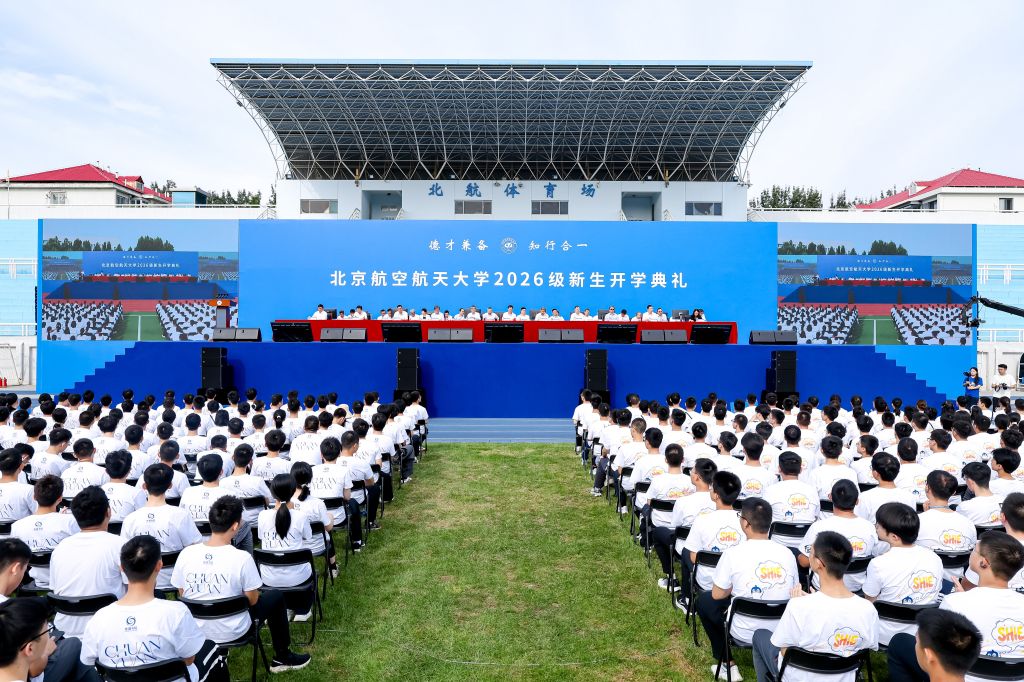 Beihang NewsBeihang University holds 2026 opening convocation to welcome new studentsMore
 Beihang NewsBeihang University welcomes 9,022 new graduate studentsMore
 Beihang NewsProfessor Yu Shui wins Best Screenplay Award at 21st Changchun Film FestivalMore