Recently, the research team led by Professors Guo Lin and Wang Hua from the School of Chemistry, Beihang University, has addressed the critical scientific and technological challenge of poor mechanical processability of sodium metal. They proposed a synergistic strategy combining interface lubrication and functional modification, enabling the large-scale fabrication of ultrathin sodium foils (≤50μm) over large areas. The relevant findings were published in the international academic journal Nature Synthesis under the title "Scalable ultrathin sodium metal anodes."
The first authors of the paper are Tang Mengyao and Dong Shuai from the School of Chemistry, Beihang University, and Yue Ke from Zhejiang University of Technology. The corresponding authors are Professor Guo Lin and Professor Wang Hua from the School of Chemistry, Beihang University, and Professor Er Jianwei from Zhejiang University of Technology. The School of Chemistry, Beihang University, is listed as the primary affiliation.
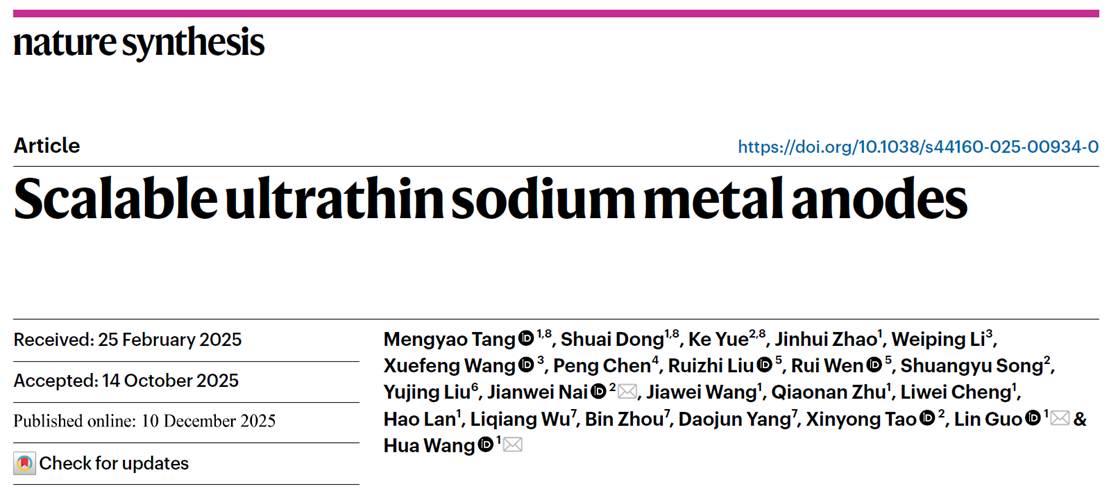
Sodium-ion batteries have been attracting extensive attention in both academic and industrial fields. However, the lack of large-area and ultrathin sodium (Na) metal foil hinders basic research on and commercialization of energy-dense Na-ion batteries.
To tackle this issue, the team successfully fabricated a metre-length, ultrathin (≤50 μm), mechanically strengthened Na metal foil by a roll-to-roll calendaring process with interfacial lubrication and functional modification. By developing self-lubricating polydimethylsiloxane as the multifunctional agent, the poor processability of metallic Na is addressed by forming a mechanically strong interface as well as a surface lubricant film during rolling (Figure 1).
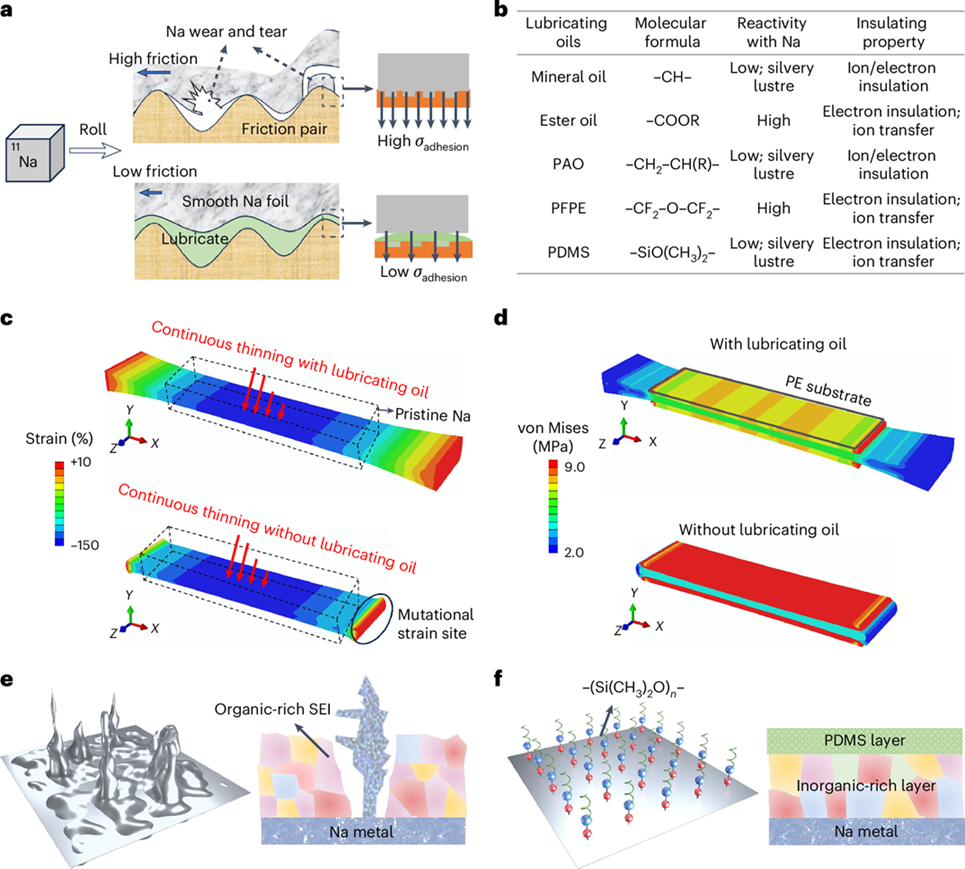
Figure 1. Design and fabrication of ultrathin sodium metal foil with a stable interface
Furthermore, polydimethylsiloxane-derived (Si–O)n-Na interphases can guide Na+-ion interfacial diffusion and enable a robust solid electrolyte interphase. Compared with pure sodium metal, the p-Na foil exhibits an 8-fold increase in hardness, enhanced tensile strength, reduced surface roughness, a significantly improved DMT modulus, and markedly enhanced air stability. This indicates that the ultrathin sodium foil possesses both excellent mechanical properties and structural stability, effectively meeting the application requirements for sodium-based batteries (Figure 2).
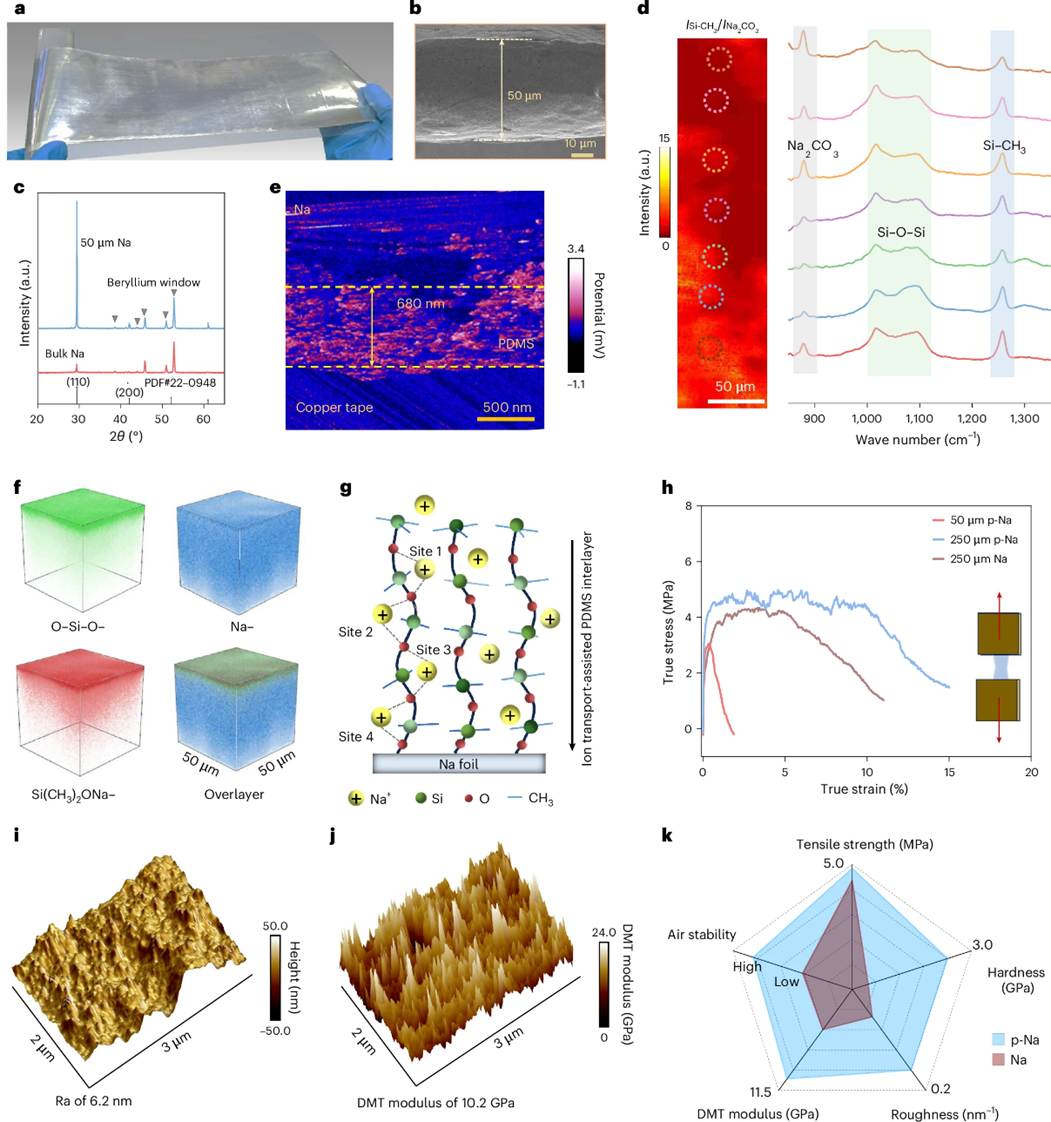
Figure 2. Physicochemical properties of ultrathin sodium foil
This approach enables the realization of amp-hour-level Na metal pouch cells under a low negative-to-positive capacity ratio of 1.9, showing an energy density of 180.2 Wh kg−1. This scalable ultrathin Na foil establishes a materials foundation for fundamental studies on Na-ion batteries and the potential manufacture of high-energy-density Na metal batteries (Figure 3).
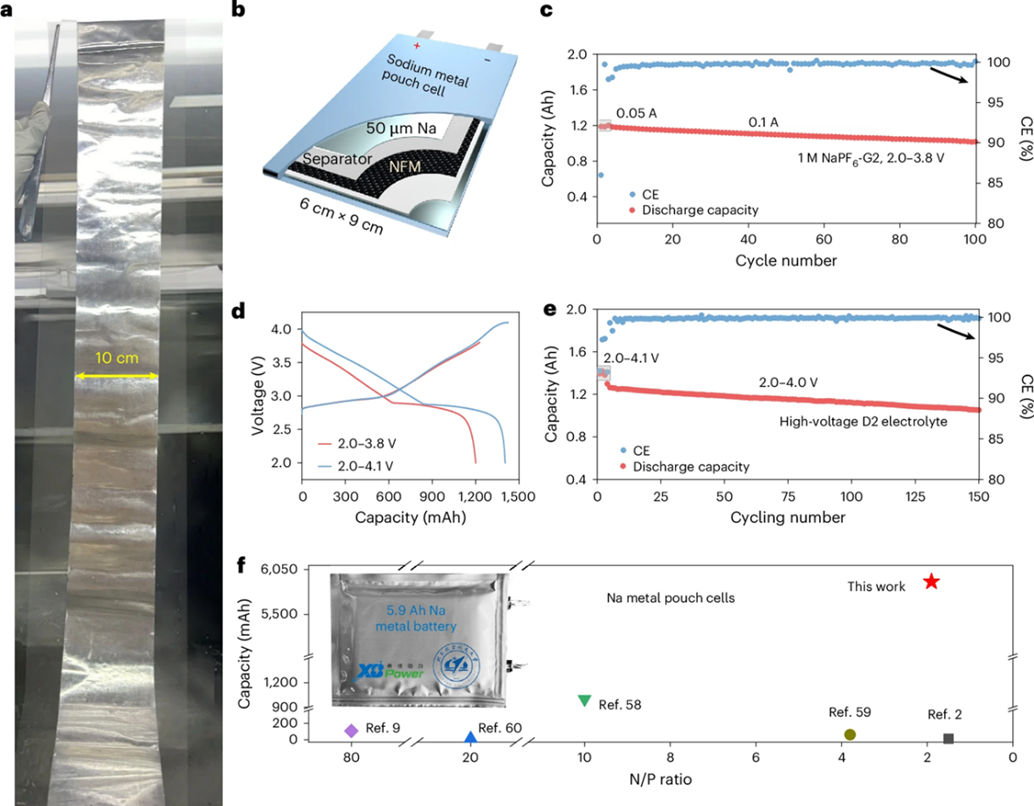
Figure 3. Electrochemical performance of sodium metal pouch cells
To verify the effectiveness and universality of the proposed strategy, the research also successfully prepared 50μm lithium metal foils and 100μm potassium metal foils. Meanwhile, it was confirmed that PDMS molecules modified with different functional groups exhibited similar functions, providing an effective approach to enhance the compatibility between SEI and various battery systems.
The large-scale fabrication of ultrathin sodium foils lays a materials foundation for sustainable, low-cost, and high-energy-density sodium metal batteries. It not only promotes the standardization of sodium electrodes in fundamental research but also significantly accelerates the development of sodium batteries toward high energy density.
This work was supported by the International Cooperation Project of National Key Research and Development Program of China and National Natural Science Foundation of China. It also received important technical support from the High-Performance Computing Platform and the Analysis & Testing Center of Beihang University.
Editor: Liu Tingting


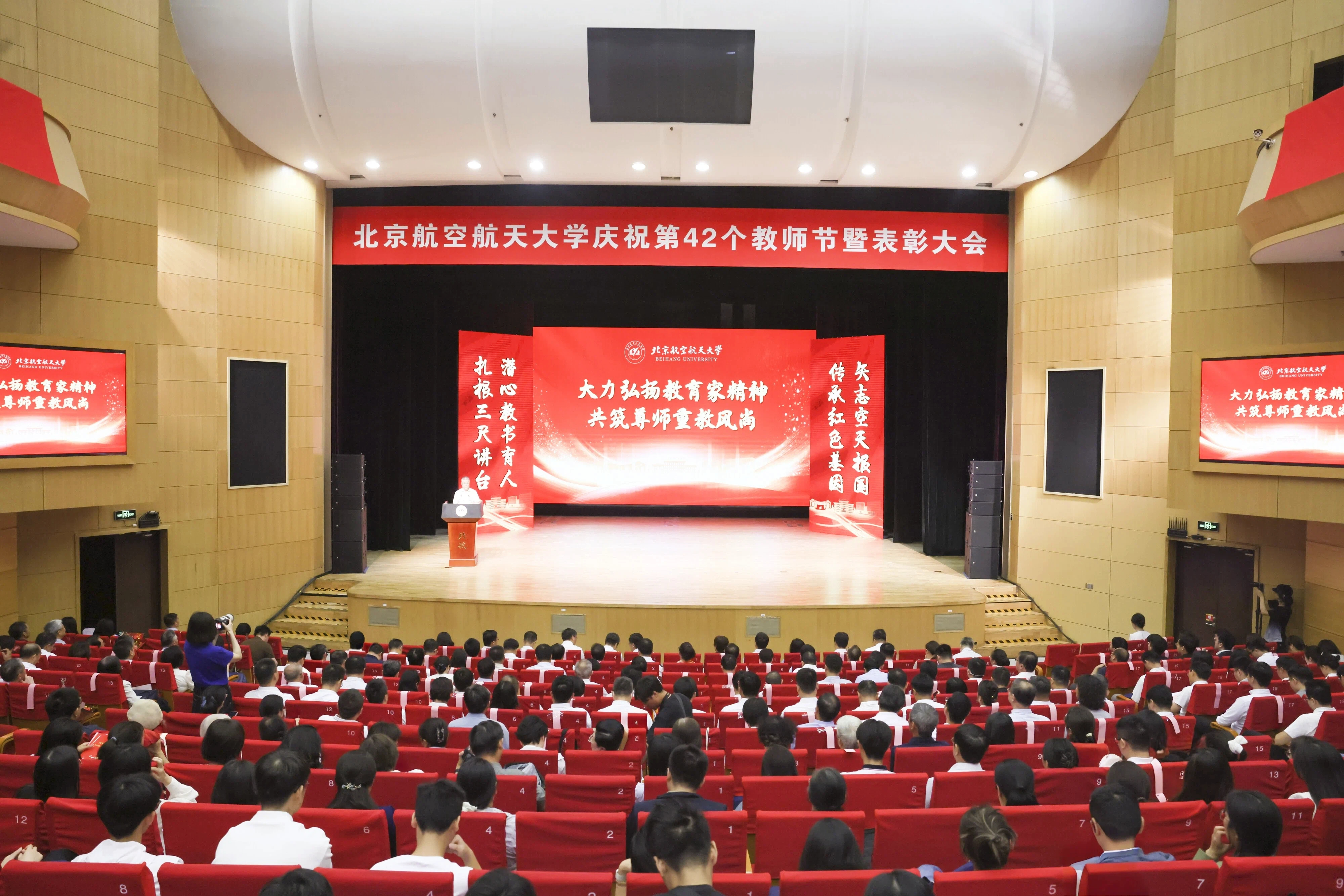 Beihang NewsBeihang celebrates 42nd Teachers' DayMore
 Beihang NewsBeihang's first student-designed human-powered aircraft completes test flightMore
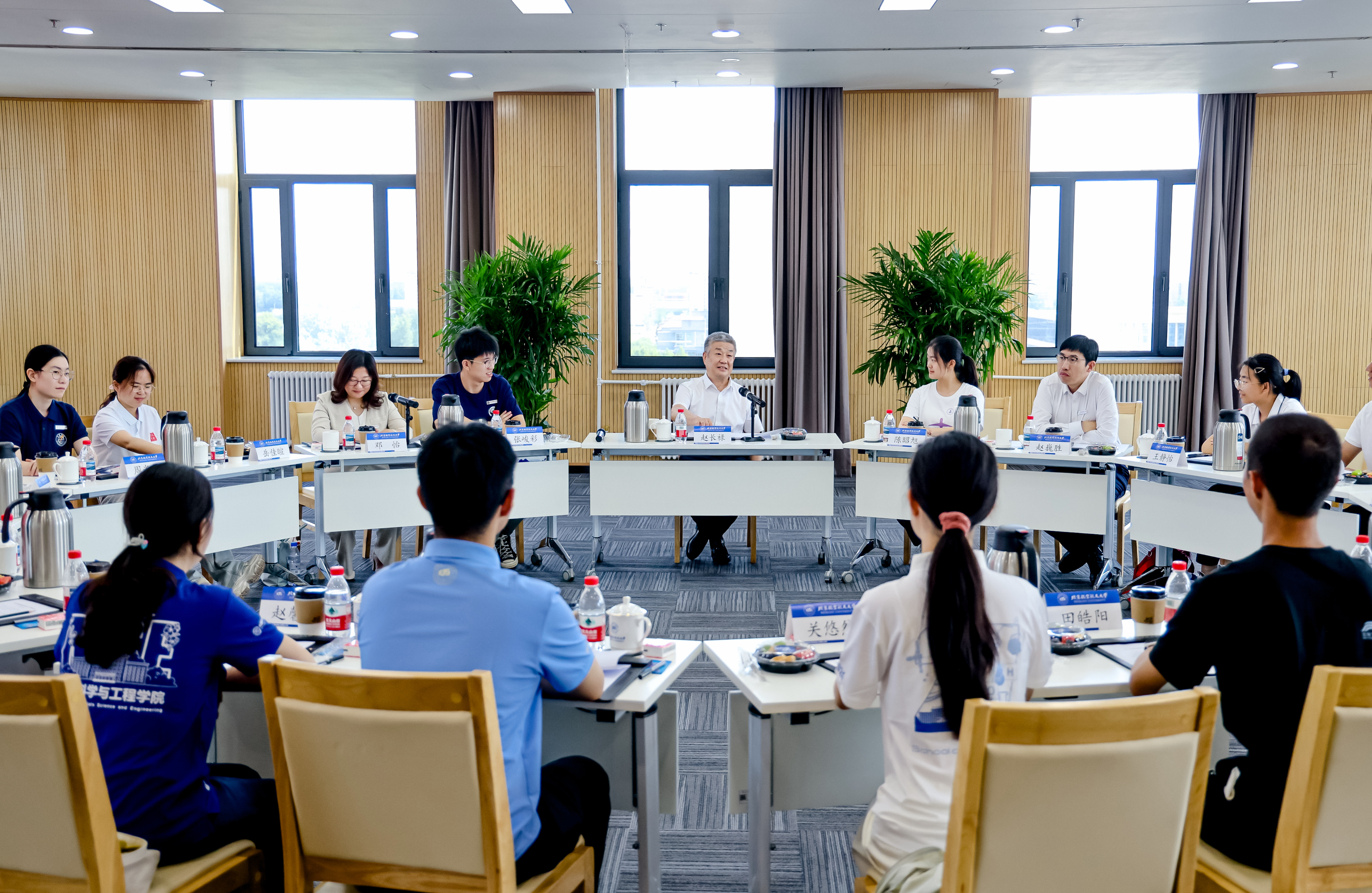 Beihang NewsBeihang leaders engage in dialogue with new undergraduate and graduate student representativesMore
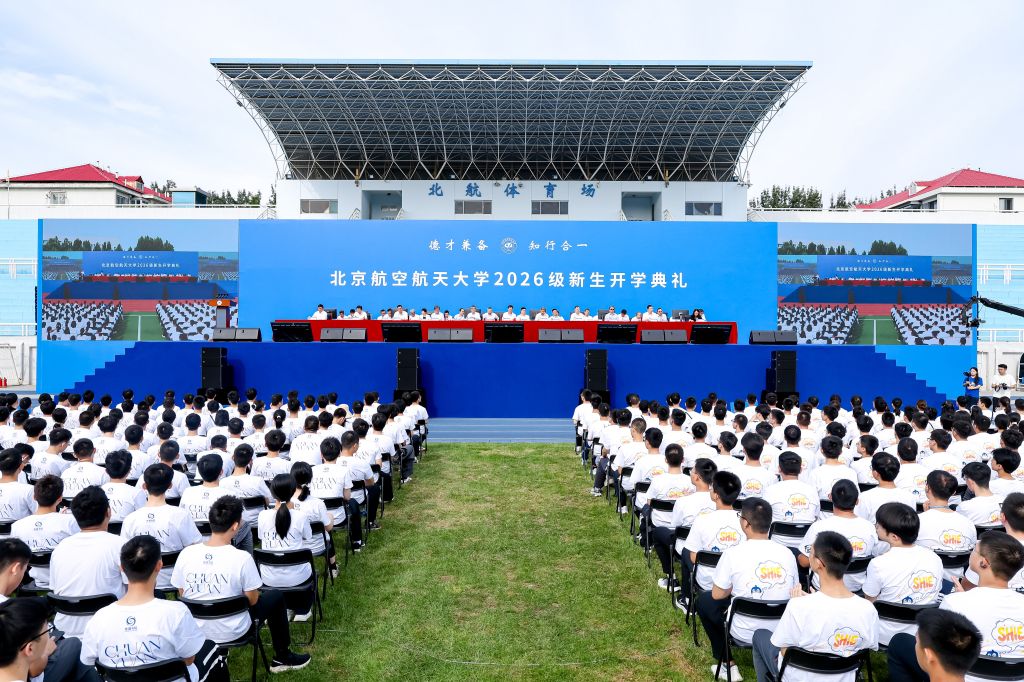 Beihang NewsBeihang University holds 2026 opening convocation to welcome new studentsMore
 Beihang NewsBeihang University welcomes 9,022 new graduate studentsMore
 Beihang NewsProfessor Yu Shui wins Best Screenplay Award at 21st Changchun Film FestivalMore