A research team led by Professors Wang Guangsheng and Liu Mingjie from the School of Chemistry and Professor Liu Limin from the School of Physics at Beihang University has proposed a novel homogeneous strain strategy to achieve self-wrinkling-induced lattice-structured MXene by uniform polymer shrinkage due to dehydration.
The study, titled "Regular-wrinkling tunable MXene lattice for electromagnetic interference shielding," has been published in the prestigious journal Nature Communications. The paper's first author is Dr. Zhang Shan from the School of Chemistry, with Professors Wang Guangsheng, Liu Mingjie, and Liu Limin serving as corresponding authors.
Protecting sensitive equipment from electromagnetic radiation damage requires the development of high-performance electromagnetic interference shielding films. As the film thickness is reduced to micro/nano scales, electromagnetic interference shielding capability generally decreases rapidly due to the weaker reflection. As a result, enhanced electromagnetic interference shielding performance in sub-μm thin films remains as an unsolved challenge.
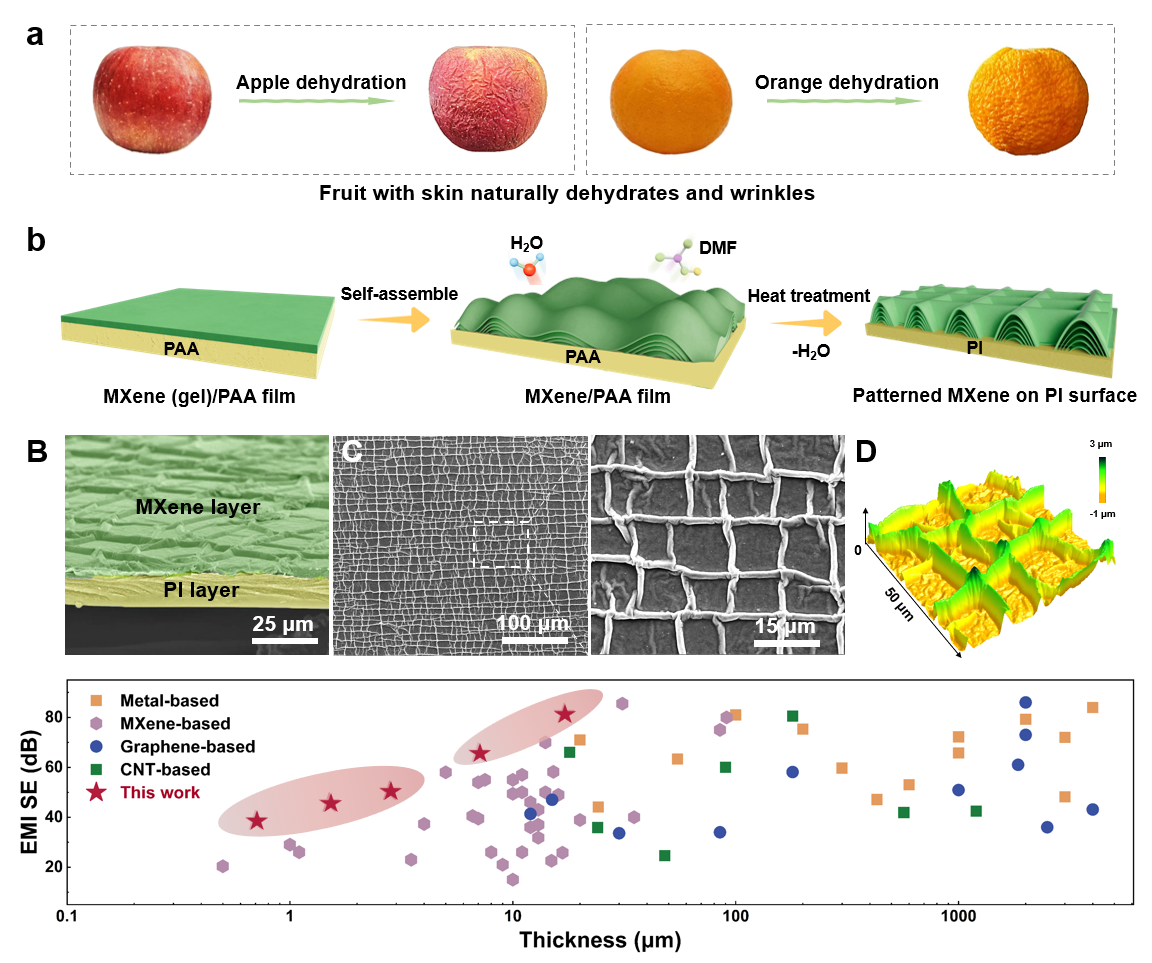
Figure 1. Formation process and characterization of the lattice-structured MXene
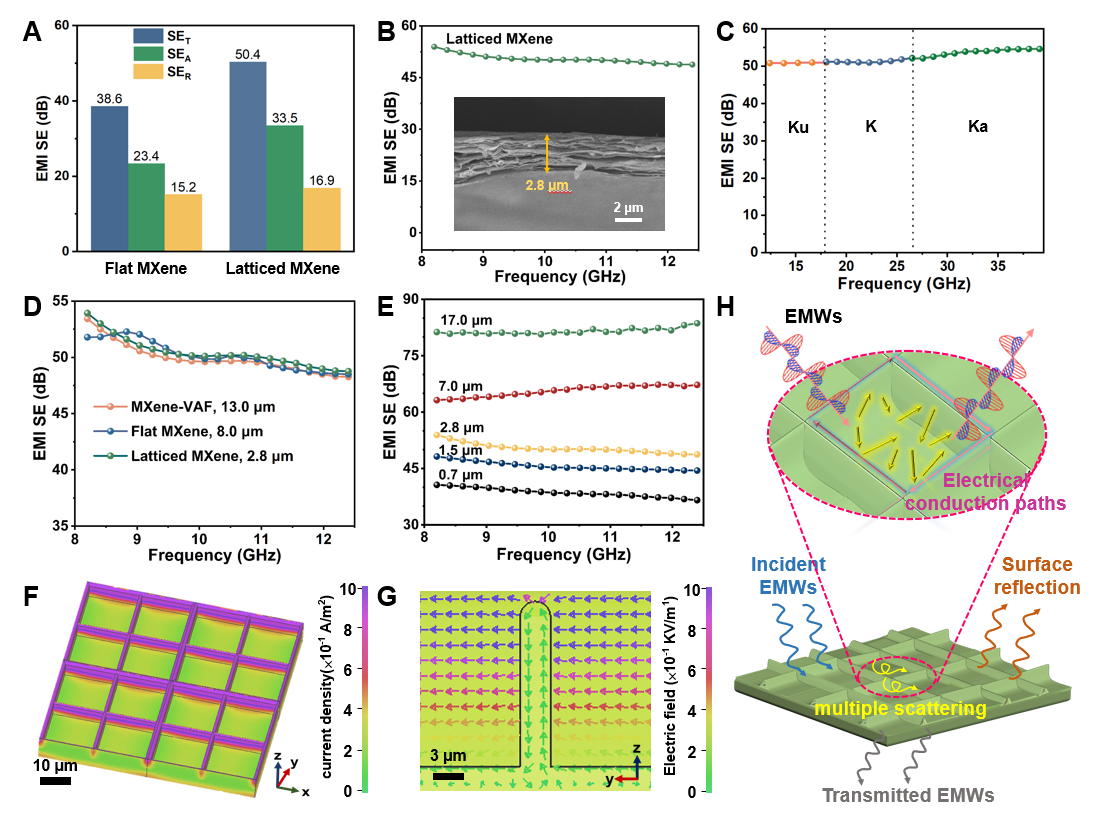
Figure 2. Electromagnetic interference shielding performance and mechanism of the lattice-structured MXene
Inspired by the naturally wrinkling of fruit skin, the Beihang team proposed a homogeneous strain strategy to achieve self-wrinkling-induced lattice-structured MXene by uniform polymer shrinkage due to dehydration. Uniform wrinkle amplitude can be tuned from 0.8 to 6 μm, which results in additional surface scattering of electromagnetic-waves and electrical conduction paths. The obtained lattice-structured films demonstrate an excellent electromagnetic interference shielding of up to 81.5 dB for a thickness of 17 μm, maintaining high electromagnetic interference shielding performance and stability after enduring various harsh testing conditions.
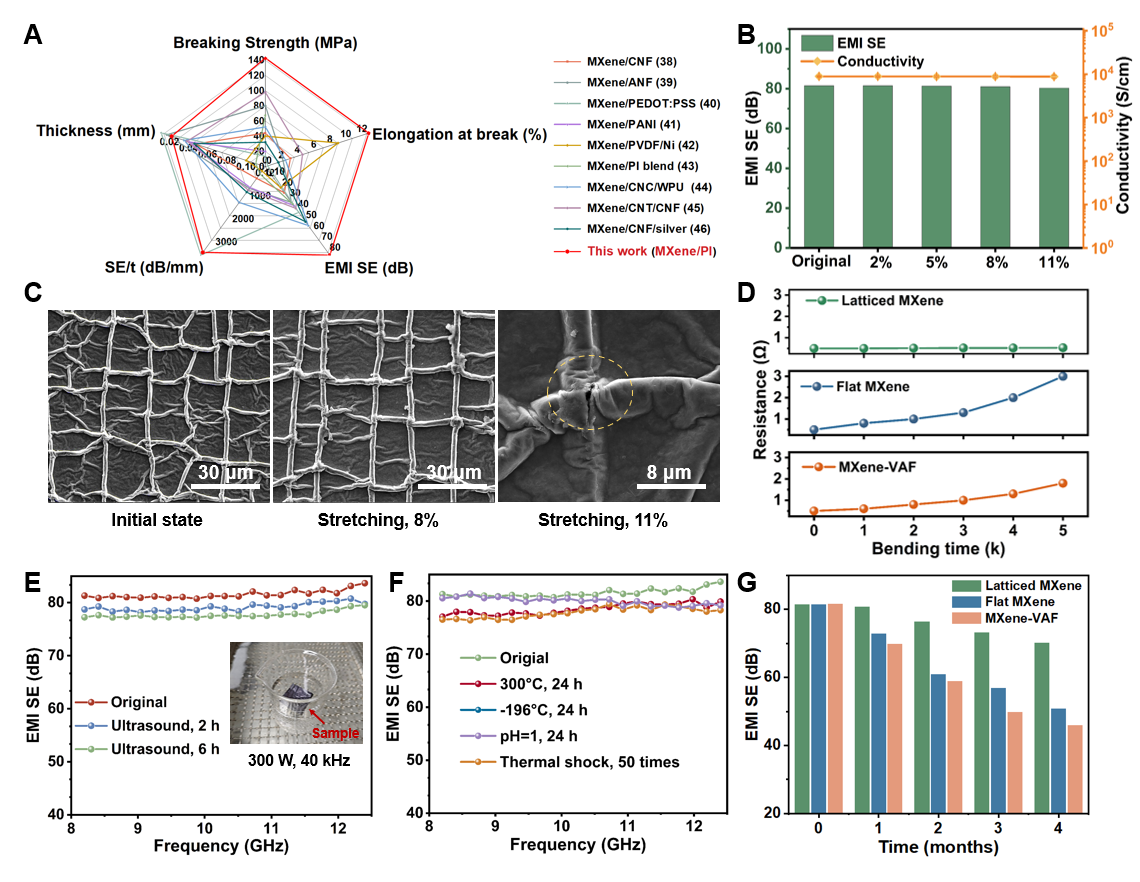
Figure 3. Mechanical properties and durability of the MXene/PI film after enduring various harsh testing conditions
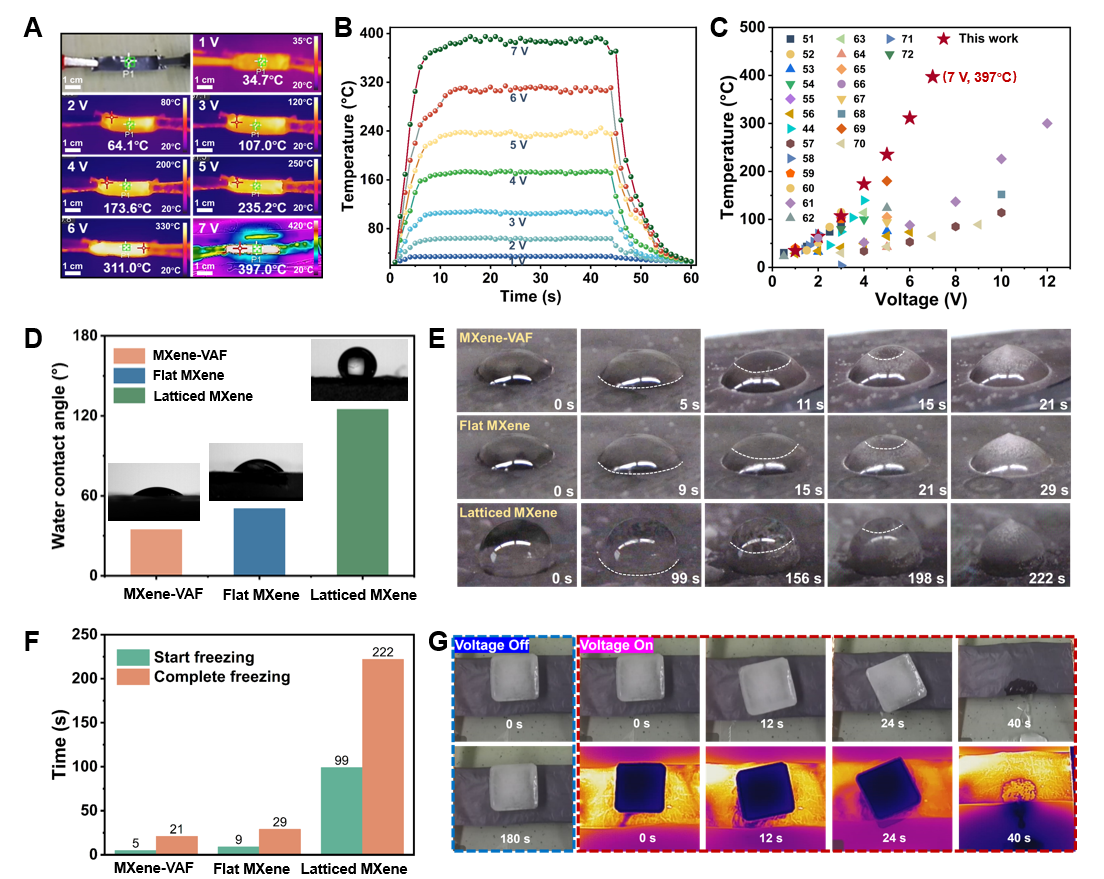
Figure 4. Joule heating effect and de-icing capability of the MXene/PI film
These results demonstrate the potential of wrinkling-induced, surface regular patterns for improving the electromagnetic interference shielding performance of ultra-thin films based on conventional materials.
The research was supported by the National Natural Science Foundation of China.
Link to the article: https://doi.org/10.1038/s41467-025-68035-2
Editor: Lyu Xingyun


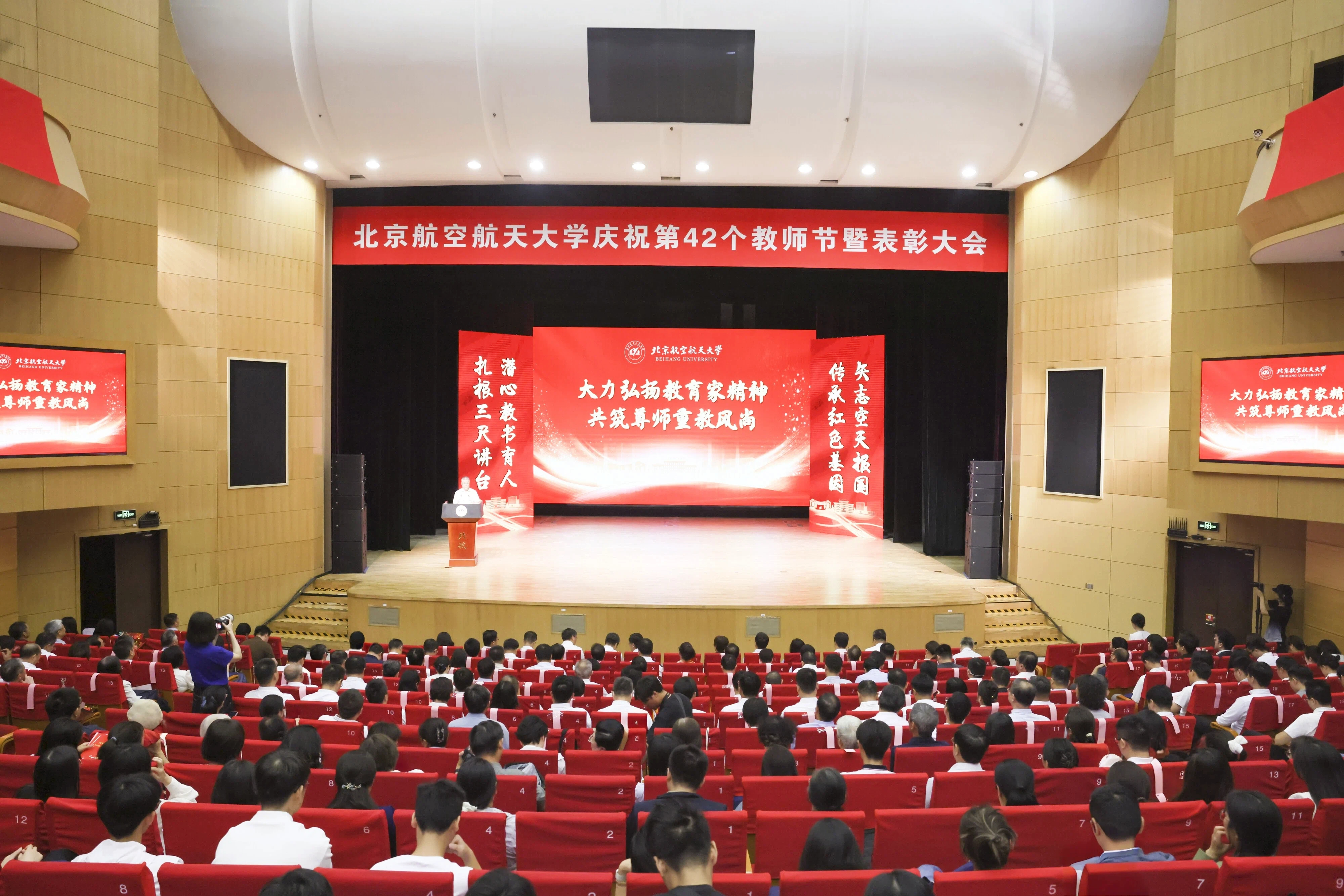 Beihang NewsBeihang celebrates 42nd Teachers' DayMore
 Beihang NewsBeihang's first student-designed human-powered aircraft completes test flightMore
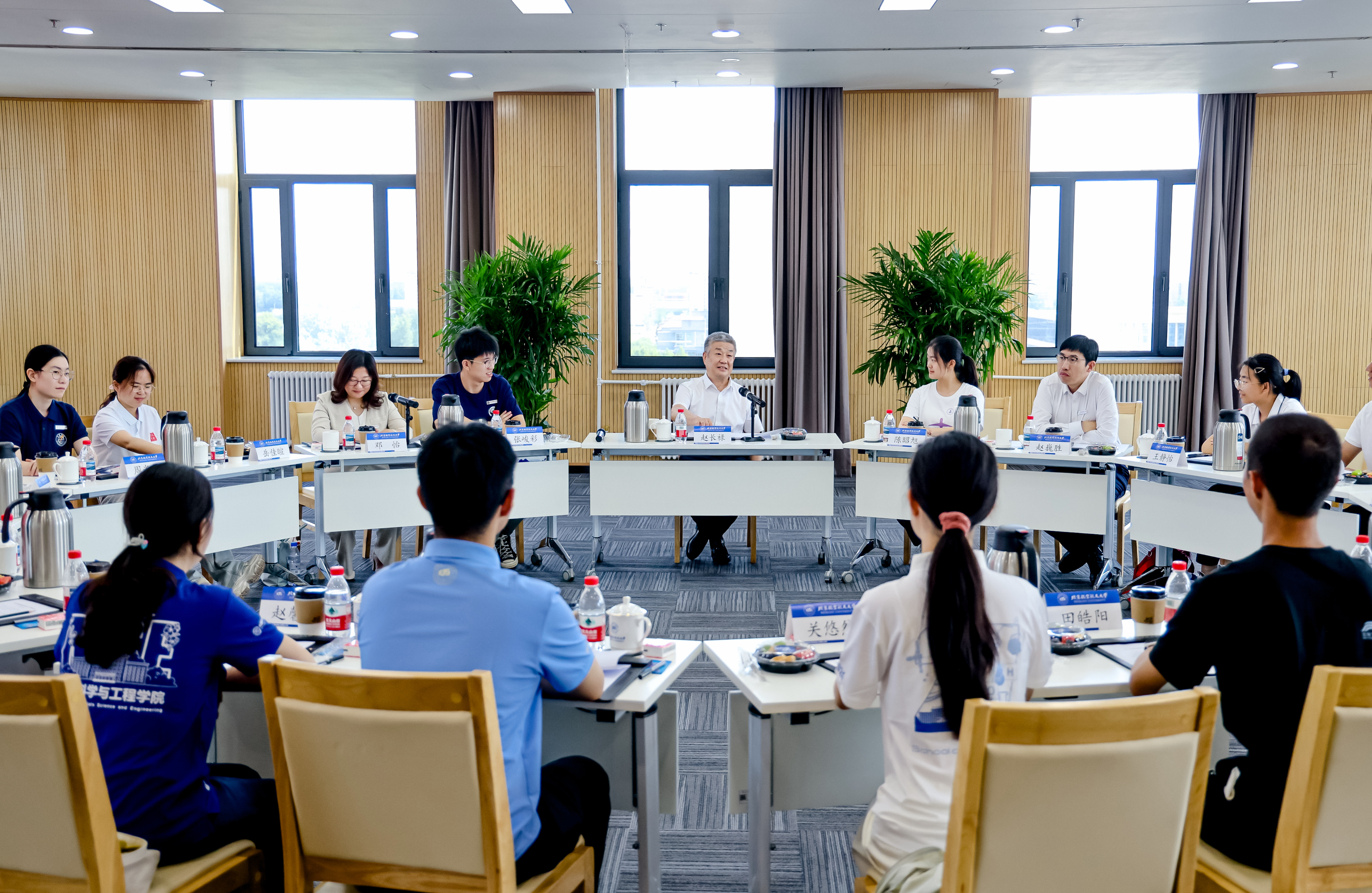 Beihang NewsBeihang leaders engage in dialogue with new undergraduate and graduate student representativesMore
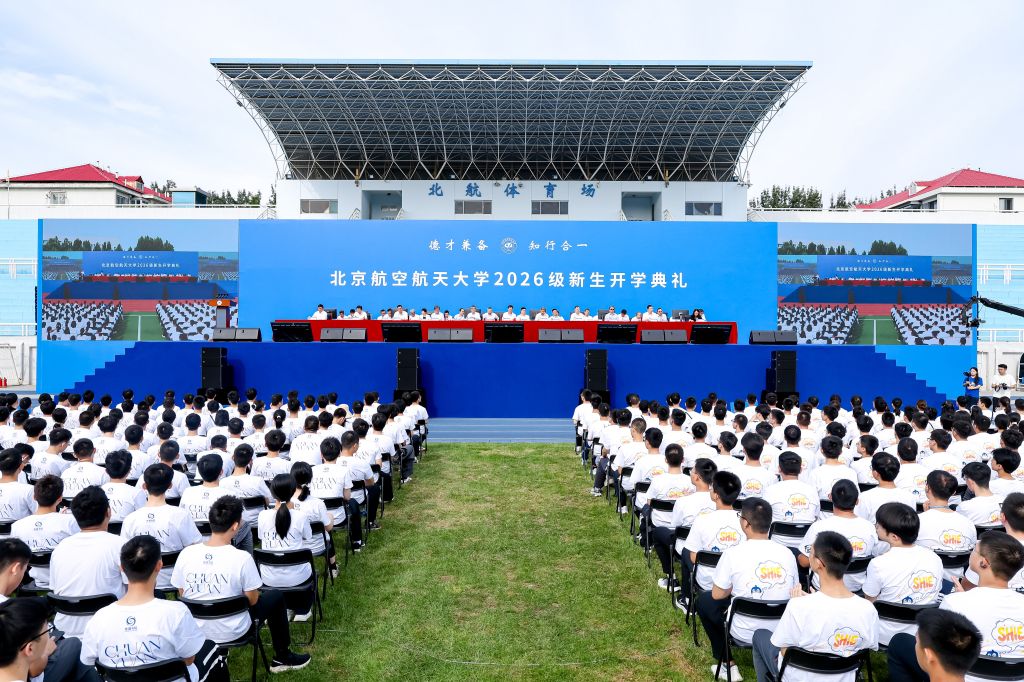 Beihang NewsBeihang University holds 2026 opening convocation to welcome new studentsMore
 Beihang NewsBeihang University welcomes 9,022 new graduate studentsMore
 Beihang NewsProfessor Yu Shui wins Best Screenplay Award at 21st Changchun Film FestivalMore