Recently, the research team led by Professors Zhao Weisheng and Zhang Yue from the School of Integrated Circuit Science and Engineering at Beihang University has achieved a breakthrough in ultrafast spintronic devices. The related research findings were published in the internationally renowned multidisciplinary journal Nature Communications under the title "Picosecond all-electrical perpendicular magnetization switching."
The findings demonstrate picosecond all-electrical magnetization switching in a CoTb/Ti/CoFeB/MgO heterostructure, where the in-plane magnetized CoTb layer acts as the SOT source, generating simultaneously in-plane spin current σy and out-of-plane spin current σz. The strong spin-orbit coupling in Tb significantly enhances the SOT efficiency, enabling 16 ps switching with projected 41 fJ/bit consumption in a 100×100 nm² device, setting a new world record for comparable devices and pushing spintronic devices toward the terahertz (THz) ultrafast operating frequency range.
Current-induced spin-orbit torque (SOT) is an effective approach to manipulate magnetic states in spintronic devices. Recent studies show picosecond electrical pulses can induce coherent magnetization switching, reducing switching time from nanosecond scale to picosecond scale. However, it remains unclear whether such ultrafast switching can be achieved in a perpendicular magnetic anisotropy system without an external magnetic field.
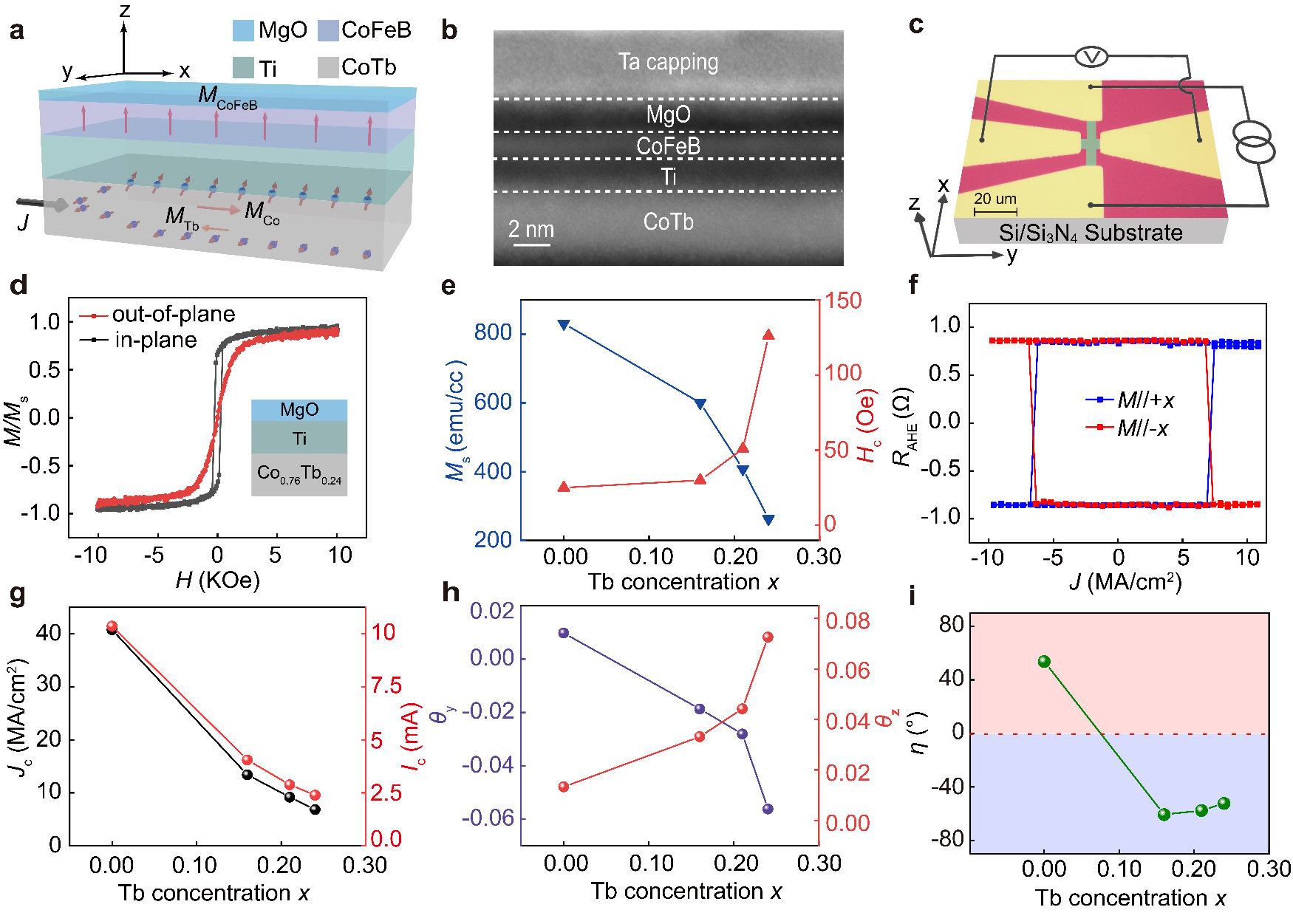
Fig.1 External-field-free SOT-driven perpendicular magnetization switching in the CoTb/Ti/CoFeB/MgO structure
To address this key challenge, the team designed and fabricated a CoTb/Ti/CoFeB/MgO multilayer structure (Fig.1). Through process optimization, the spin source CoTb layer achieved stable in-plane magnetic anisotropy, thereby generating both in-plane and out-of-plane spin currents. This broke the symmetry limitation of conventional SOT devices and enabled external-field-free perpendicular magnetization switching. Ferrimagnetic materials, characterized by their antiferromagnetically coupled dual sublattice structure, possess both low saturation magnetization and high coercivity, effectively suppressing stray field interference and enhancing thermal stability of magnetization, thus significantly improving device integration density. Moreover, the strong spin-orbit coupling effect introduced by the Tb element substantially enhances charge-to-spin conversion efficiency, reducing the critical switching current. Through composition tuning, the team stabilized the spin polarization angle η at 55°, approaching the theoretical optimum, which laid the foundation for achieving ultrafast, low-power, external-field-free coherent switching.
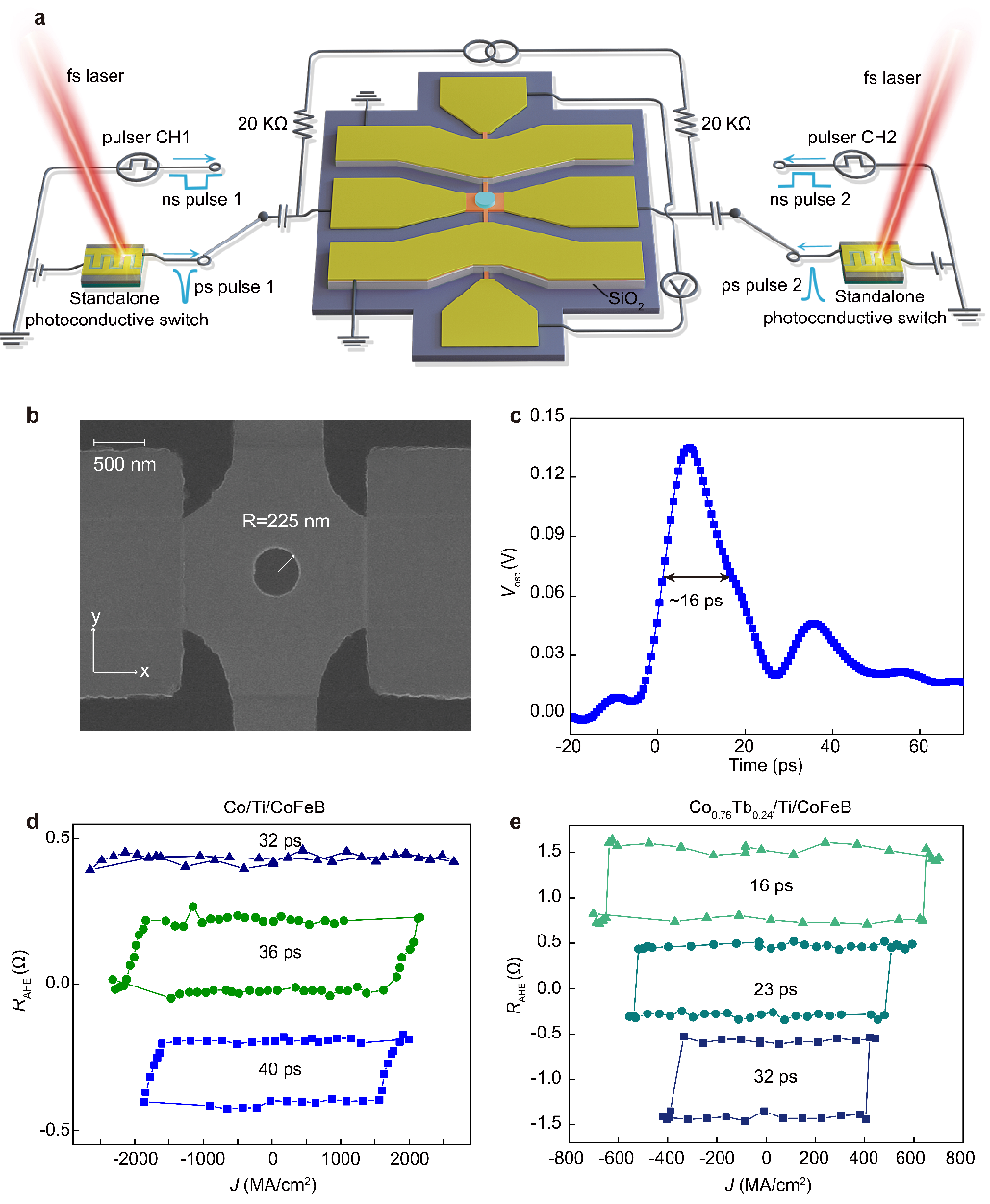
Fig.2 Picosecond SOT-driven external-field-free perpendicular magnetization switching
The team further developed a picosecond electrical pulse measurement platform based on photoconductive switches (Fig.2). The platform features two independent picosecond pulse generators fabricated on low-temperature GaAs substrates, allowing precise adjustment of picosecond pulse width by modulating laser power and control of pulse amplitude via bias voltage. Using this platform, the team successfully achieved external-field-free perpendicular magnetization switching driven by ultrashort pulses as short as 16 ps in ferrimagnetic CoTb-based devices. In comparison, devices using ferromagnetic Co as the spin source exhibited a minimum switching pulse width of only 36 ps. Across the entire pulse width range, CoTb-based devices consistently showed lower critical switching current, with optimal switching energy consumption as low as 41 fJ/bit — an order of magnitude lower than conventional ferromagnetic devices. Compared to previously reported international results, this work simultaneously achieves breakthroughs in both the shortest write pulse width and the lowest power consumption (Fig.3).
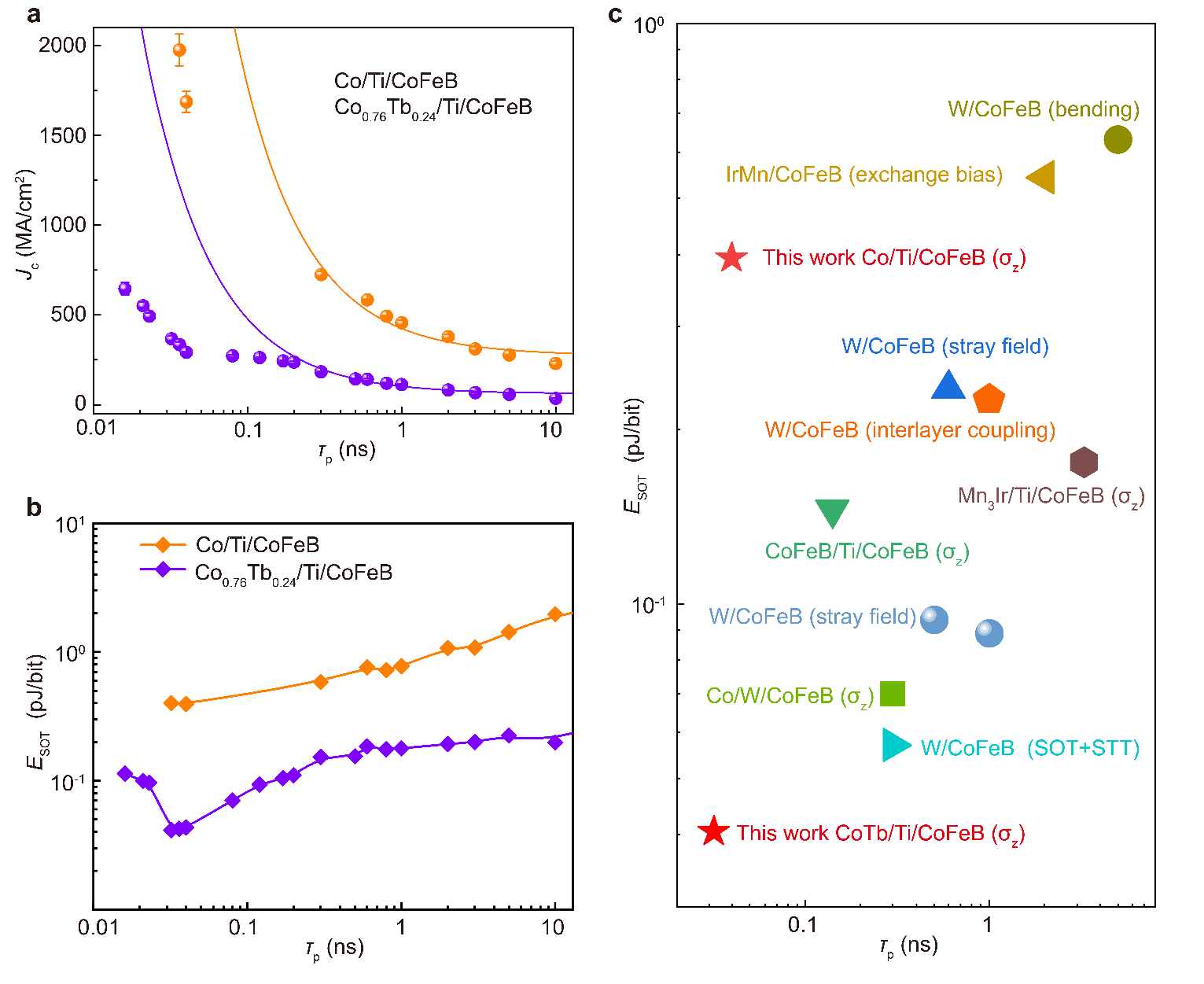
Fig.3 Energy efficiency analysis of picosecond SOT-driven external-field-free magnetization switching
To further elucidate the underlying mechanism of picosecond-scale SOT-driven external-field-free magnetization switching, the team conducted in-depth investigations using micromagnetic simulations and theoretical modeling (Fig.4). The results show that the spin polarization angle η = 55° achieved in this work enables stable and efficient coherent magnetization switching on the picosecond scale. By comparing magnetization dynamics under different spin polarization angles, the team identified the key roles of in-plane and out-of-plane spin currents in the switching process and confirmed that increasing the spin Hall angle effectively reduces switching energy consumption across the entire pulse width range, in excellent agreement with experimental results. Theoretical modeling indicates that the optimal spin polarization angle for picosecond-scale switching is 45°, which simultaneously enables ultrafast and ultra-low-power magnetization switching, providing important theoretical guidance for the design of high-performance SOT spintronic devices.
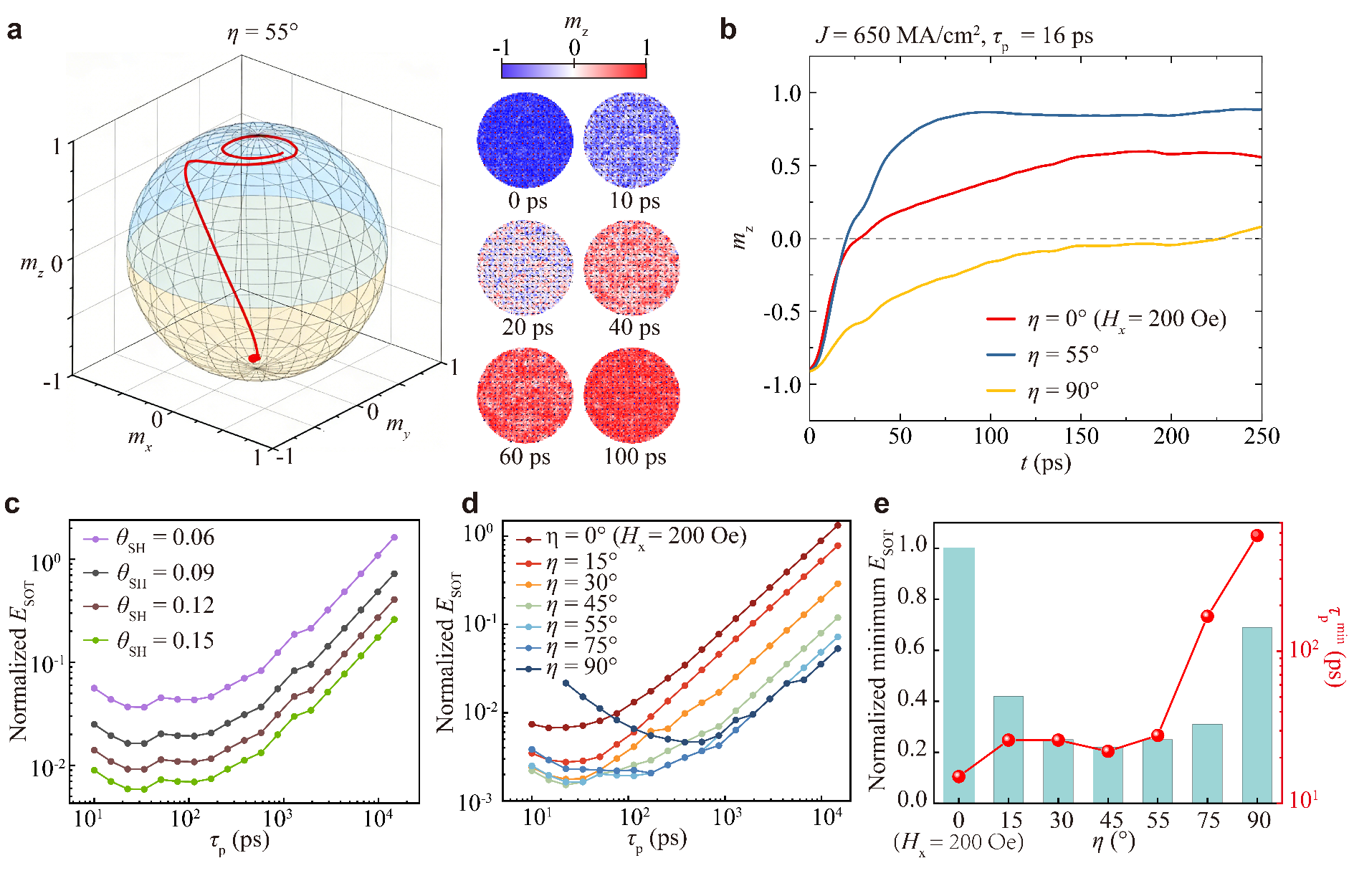
Fig.4 Micromagnetic simulation of picosecond SOT-driven external-field-free magnetization switching
This research leverages the unique properties of ferrimagnetic CoTb to achieve picosecond-scale, all-electrical, ultra-low-power perpendicular magnetization switching for the first time, overcoming three major bottlenecks of conventional SOT devices: external field dependence, high power consumption, and limited speed. This achievement not only effectively enhances the operating frequency of spintronic devices, pushing their performance toward the THz range, but also offers advantages such as high density, wafer-scale fabricability, and compatibility with CMOS processes, providing critical technical support for the development of next-generation ultra-low-power, ultrafast spintronic devices.
He Yu (2022 Ph.D. candidate), Xiao Chen (2021 Ph.D. candidate), Lin Kelian (Ph.D. graduating in 2026), Associate Professor Zhang Kun, Associate Professor Zhang Boyu, and Associate Professor Zheng Zhenyi from the School of Integrated Circuit Science and Engineering are the co-first authors. Professors Zhang Yue and Zhao Weisheng are the co-corresponding authors. Beihang University is the primary affiliation. This work was supported by the National Key Research and Development Program of China, the National Natural Science Foundation of China, and the Beijing Natural Science Foundation.
Link to the article: https://doi.org/10.1038/s41467-026-72582-7
Editor: Liu Tingting


 Beihang News2026 Symposium on Excellent Engineer Training held in BeijingMore
 Beihang NewsProfessor Liu Mingjie's team publishes article in Science, revealing high-modulus toughening mechanism in nacreMore
 Beihang NewsWang Yunpeng appointed Secretary of the CPC Beihang University CommitteeMore
 Beihang NewsElsevier Senior Vice President Said Taha visits Beihang UniversityMore
 Beihang NewsPresident Wang Yunpeng visits Hangzhou to advance university-city integration and attends opening ceremony of H3IMore
 Beihang NewsBeihang team wins 2026 Best Paper Award from Proceedings of the IEEEMore