A research team led by Professor Bai Xiangzhi from the School of Astronautics at Beihang University has made a significant breakthrough in 3D atmospheric turbulence detection and evolutionary prediction. The findings are published as the cover paper in Volume 2, Issue 5 of the international journal Newton, under the title "Revealing real-world hidden 3D atmospheric turbulence from imaging."

From 2D to 3D: overcoming a long-standing challenge
Atmospheric turbulence, characterized by randomness, complex dynamics and spatiotemporal coupling, has long posed a major challenge for both detection and understanding. Most existing techniques—such as very-high-frequency radar, radiosondes and laser detection—can only provide sparse, one-dimensional data along a single point or path. These methods are often expensive and difficult to deploy. More importantly, they fail to capture the anisotropic nature and the full 3D spatial structure of turbulence.
In earlier work (Nature Computational Science, Issue 8, 2023), Professor Bai's team demonstrated that optical imaging could capture the photothermal effects induced by atmospheric turbulence, enabling the detection and quantification of 2D intensity fields. However, a single viewing angle cannot resolve depth information along the optical path, leading to the loss of critical anisotropic characteristics and 3D spatial information. Bridging the gap from 2D to 3D turbulence detection has become an urgent scientific problem.
A deep-learning framework that sees the invisible
To address this challenge, the team proposed a turbulence effects-induced probing and evolutionary framework (TEPEF) that leverages optical degradation in multi-view images to learn real-world 3D turbulence. Building on the mechanism of non-uniform phase perturbation accumulation during wave propagation through random media, the framework integrates spatiotemporal degradation features from multiple viewing angles to achieve an inverse reconstruction from 2D observations to a 3D anisotropic turbulence field.
The detection module incorporates a spatial attention mechanism to effectively extract and fuse differential degradation features from different viewing angles, thereby disentangling the mixing of spatial information caused by path integration. This allows the framework to accurately reconstruct the 3D anisotropic turbulence field. The evolution module adopts a spatiotemporal decoupling strategy that separates the 3D spatial structure from temporal evolution features, enabling high-precision spatiotemporal prediction of the 3D turbulence field.
To support model training and validate generalization performance, the team constructed the multi-view atmospheric turbulence imaging dataset (MATID), a large-scale dataset comprising 131,240 sequences (2,327,540 frames). With the help of a semi-supervised learning strategy, TEPEF estimates the refractive index structure constant (Cn²), a key measure of turbulence strength.
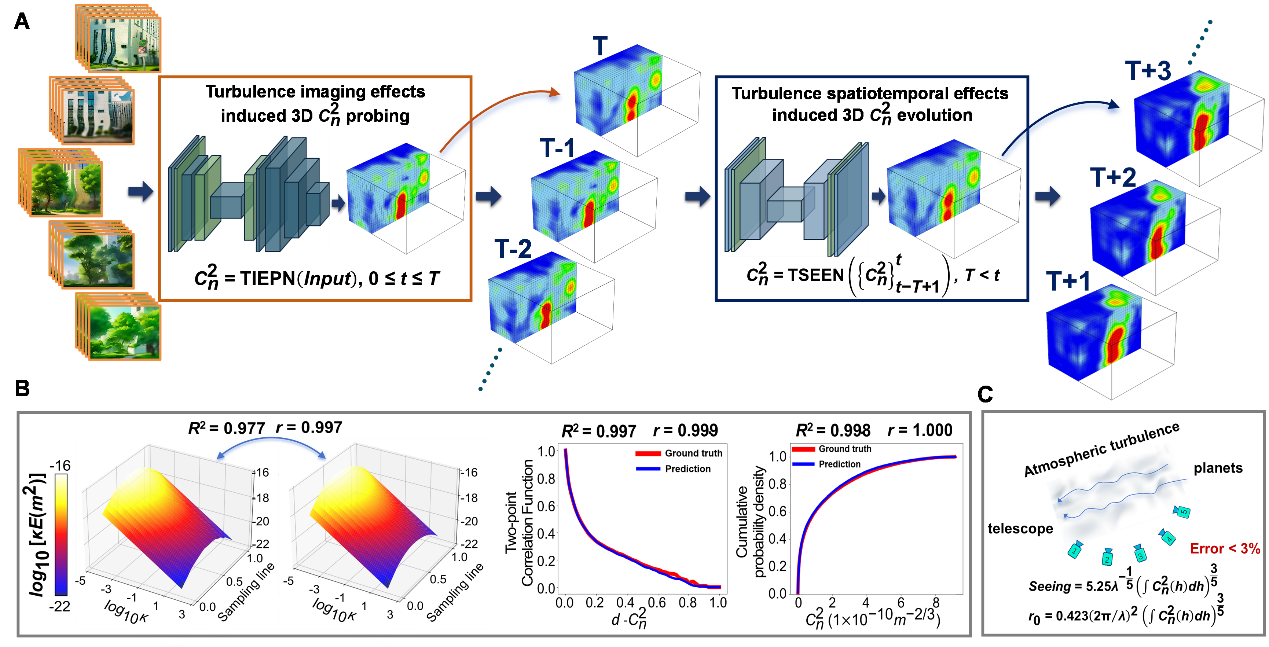
Figure 1. (A) Learning 3D atmospheric turbulence detection and evolution based on the TEPEF framework. (B) Turbulence statistical characteristics, including power spectral density, two-point correlation function, and cumulative distribution function. (C) Application of TEPEF to astronomical site selection.
Excellent performance and practical applications
Experimental results show that TEPEF achieves high accuracy in quantifying atmospheric turbulence, substantially outperforming existing methods in both probing and evolution tasks. When applied to the prediction of atmospheric coherence length and "seeing"—two critical optical parameters for astronomical observation—TEPEF delivers predictions with errors below 3 %, offering a precise and cost-effective approach to astronomical site selection.
Further statistical analysis reveals that the 3D turbulence fields reconstructed by TEPEF are in excellent agreement with ground truth in terms of power spectral density, two-point correlation function and cumulative distribution function—metrics that are essential for characterizing anisotropic spatial structure and that cannot be obtained from 1D or 2D measurements.
The paper's first author is An Yitong, a master's student enrolled in 2024. Professor Bai Xiangzhi serves as the corresponding author. Beihang University is the sole affiliated institution. Graduate students Jiang Xingbo and Li Tongkai also contributed to the research. The study was supported by the National Natural Science Foundation of China and the Beijing Natural Science Foundation.
Editor: Lyu Xingyun


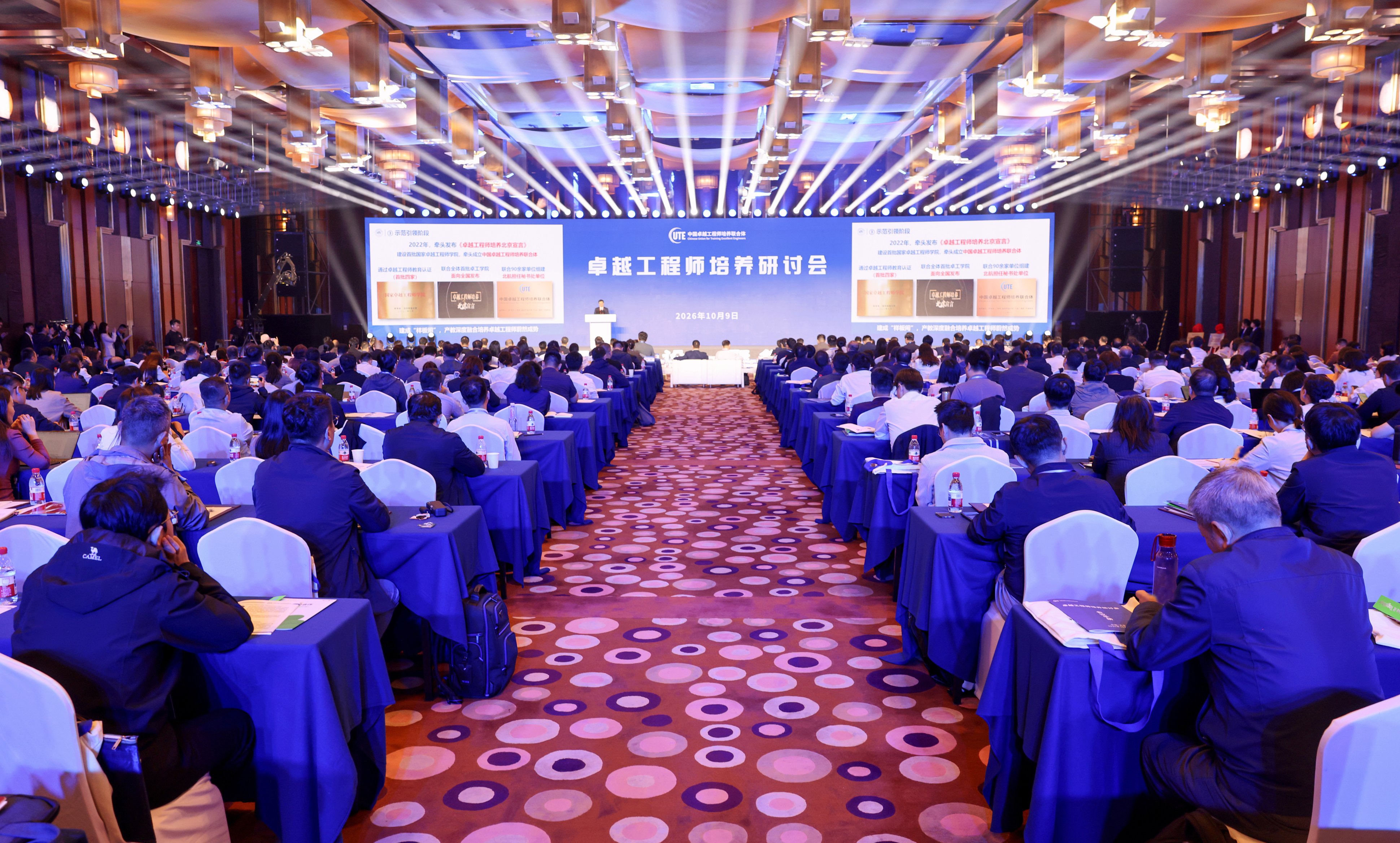 Beihang News2026 Symposium on Excellent Engineer Training held in BeijingMore
 Beihang NewsProfessor Liu Mingjie's team publishes article in Science, revealing high-modulus toughening mechanism in nacreMore
 Beihang NewsWang Yunpeng appointed Secretary of the CPC Beihang University CommitteeMore
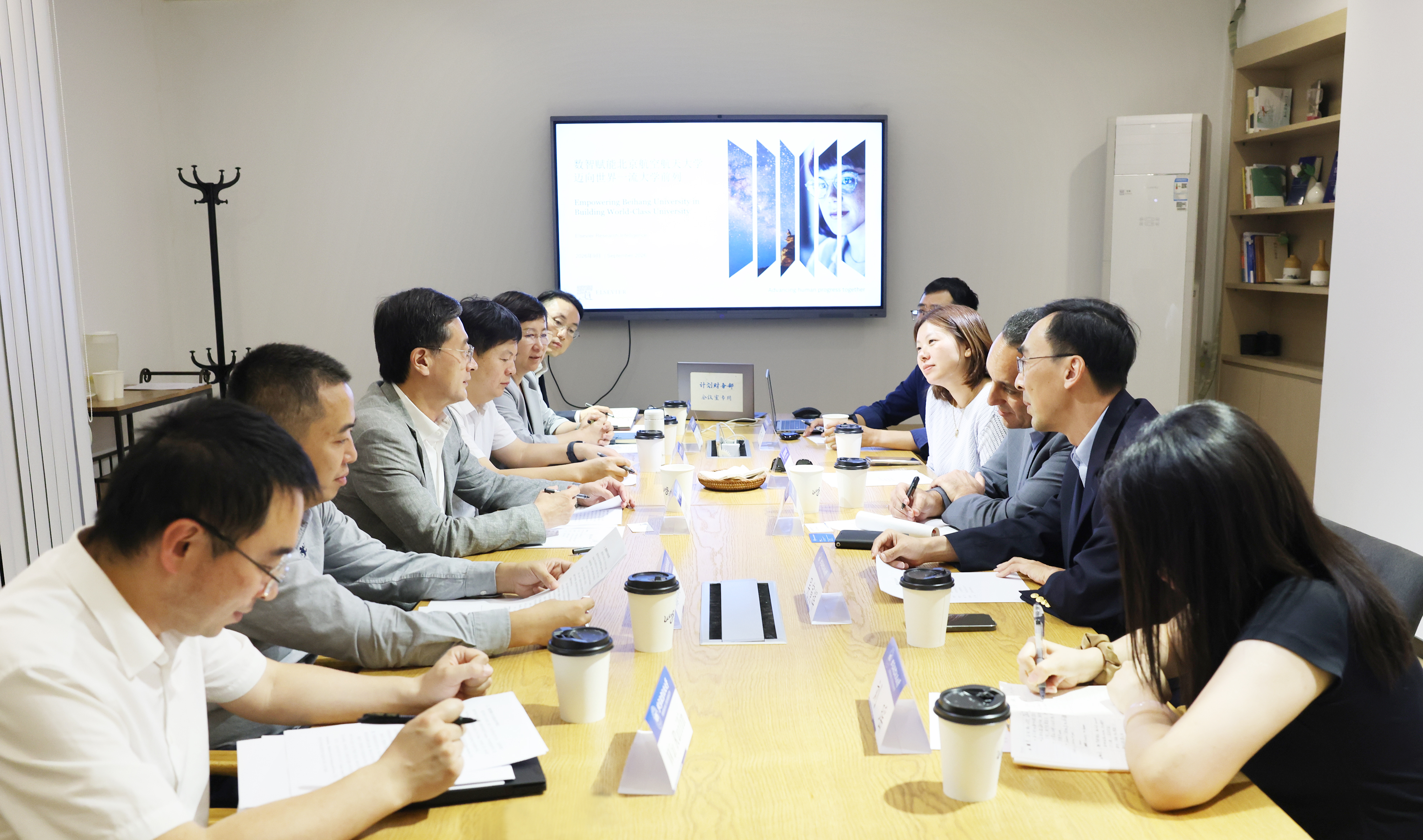 Beihang NewsElsevier Senior Vice President Said Taha visits Beihang UniversityMore
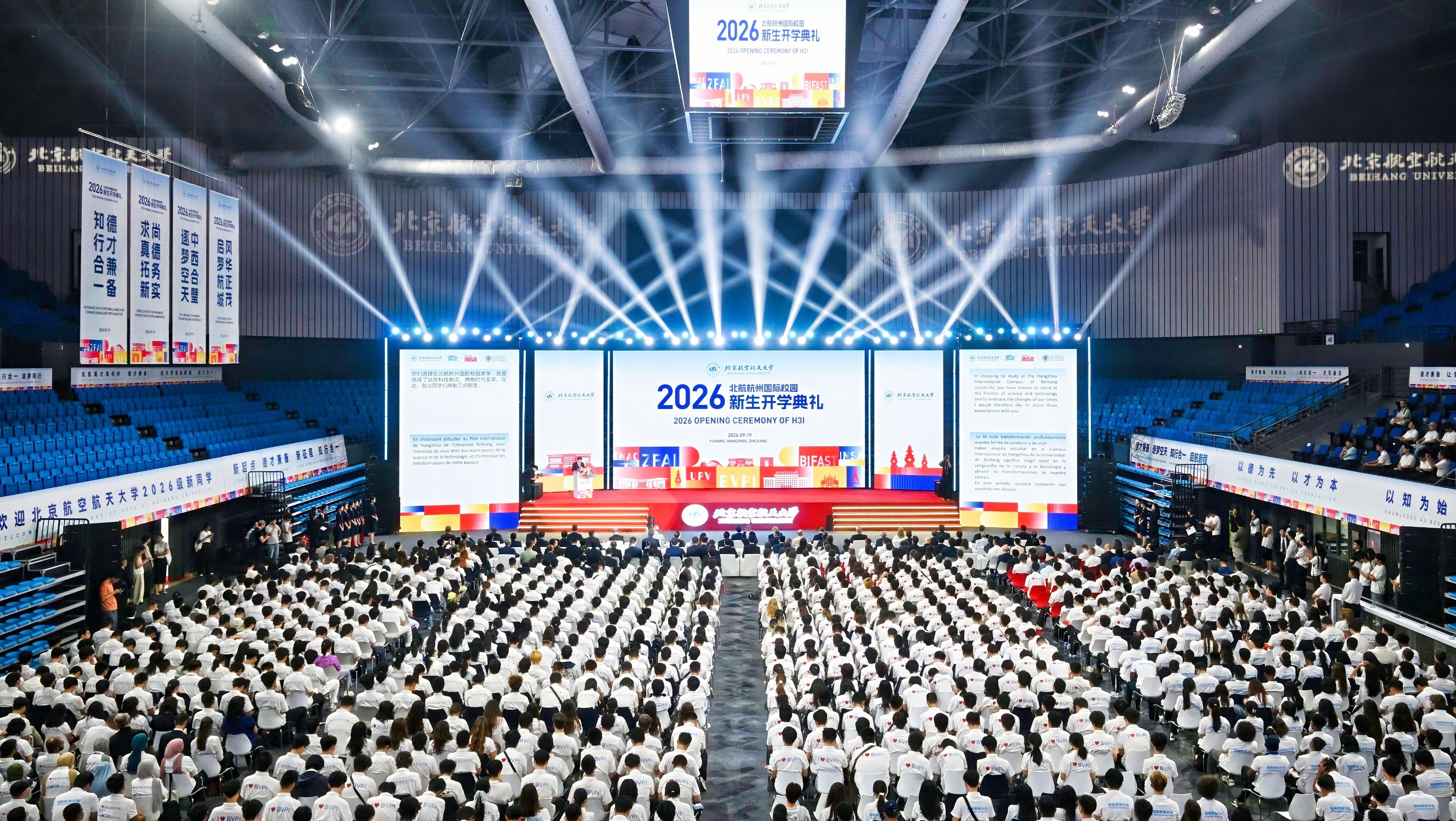 Beihang NewsPresident Wang Yunpeng visits Hangzhou to advance university-city integration and attends opening ceremony of H3IMore
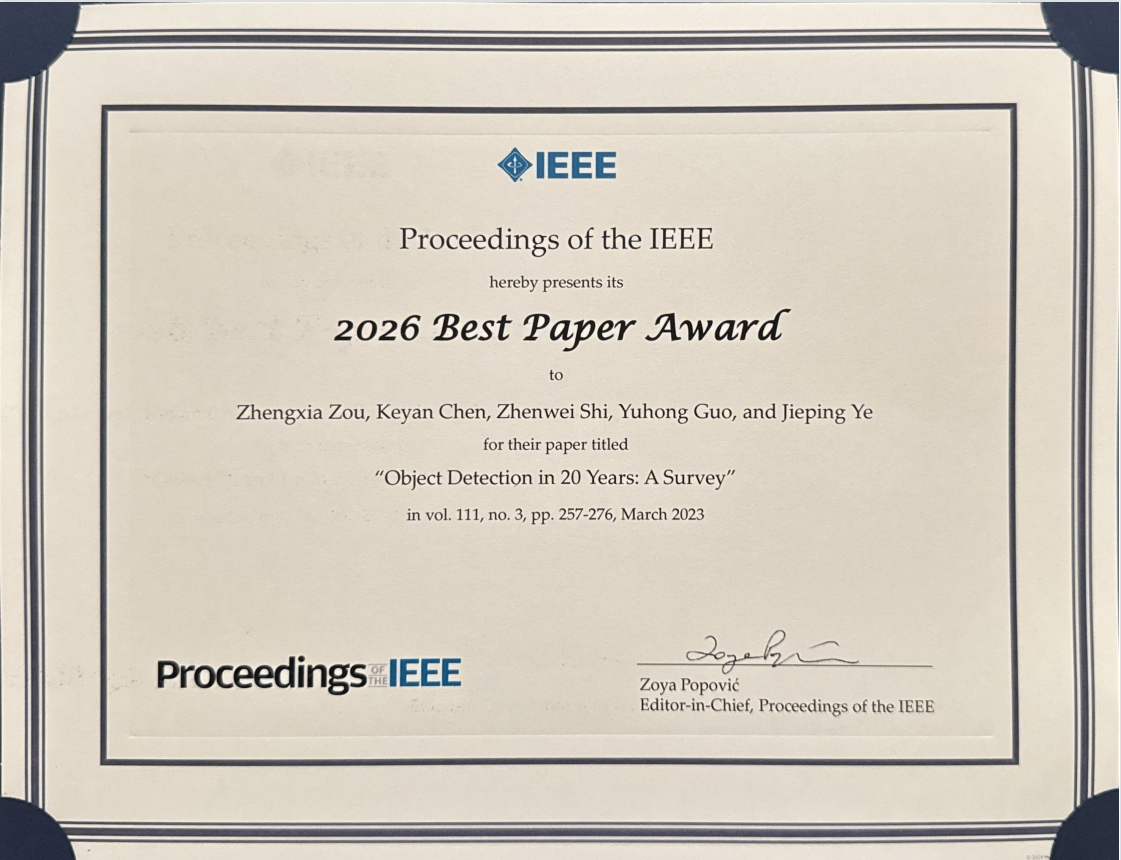 Beihang NewsBeihang team wins 2026 Best Paper Award from Proceedings of the IEEEMore