School of Integrated Circuit Science and Engineering

Beihang University boasts a long-standing tradition in IC-related disciplines, with its roots tracing back to semiconductor courses first offered in 1960. Since 1977, the University has successively introduced core courses such as Integrated Circuits and System Analysis & Design Methods, Principles of VLSI Technology, and Application-Specific Integrated Circuit (ASIC) Design. In 1988, Beihang took the national lead in launching EDA (Electronic Design Automation) education and practice at both undergraduate and graduate levels, followed by the establishment of an EDA laboratory in 1992. In 2003, Beihang was granted the doctoral degree conferral right in the first-level discipline of "Electronic Science and Technology," and during the same period, established two national engineering research centers and four provincial/ministerial-level key laboratories and centers, laying a solid foundation for academic development.

In 2005, leveraging the discipline of "Microelectronics and Solid-State Electronics," Beihang established a national-level talent training base for integrated circuits. In 2015, based on this foundation, it was selected as one of the inaugural National Exemplary Schools of Microelectronics. The School was officially established as an independent entity in April 2018 and took the lead nationwide in renaming to its current title in October 2020. Anchored by the first-level discipline of "Integrated Circuit Science and Engineering," it focuses on three key directions: Materials and Devices, Design and Tools, and Technology and Equipment. Comprising three departments aligned with these directions, the School has established a disciplinary system covering the entire IC industry chain. In December 2020, the Academic Degrees Committee of the State Council officially approved the establishment of the first-level discipline "Integrated Circuit Science and Engineering." On October 26, 2021, Beihang was officially authorized as one of the first 18 institutions nationwide to confer doctoral degrees in this discipline, marking a significant milestone in the development of IC-related academic programs.


Study

Guided by the "Beihang IC Spirit," namely Unswerving Commitment, Pioneering Innovation, Pursuit of Truth and Practicality, and Serving the Nation through Chip, the School has developed a distinctive talent cultivation system characterized by solid theoretical foundations, broad knowledge, exceptional engineering skills, and a global vision. For undergraduate students, the School has established the "Three Ones" training goal: Fabricate one micro-nano device; Verify one digital chip; Tape out one analog chip. It also runs a "4+4" Integrated Undergraduate-PhD Experimental Program aimed at nurturing top-tier talents in the IC field. In 2022, the "Microelectronics Science and Engineering" program was selected as a National First-Class Undergraduate Major. As one of the first institutions approved for the first-level discipline of "Integrated Circuit Science and Engineering," the School has built a comprehensive training architecture spanning the full IC industry chain, covering process, equipment, materials, devices, design, and tools and formed a synergistic education mechanism featuring: Dual-supervisor system, University-industry co-developed courses, and Collaborative R&D projects. The graduates cultivated are in strong demand, demonstrating exceptional alignment with industry needs. The employment rate has reached 100%, with 90% joining leading IC companies, showcasing outstanding career development potential and industry competitiveness.

Faculty

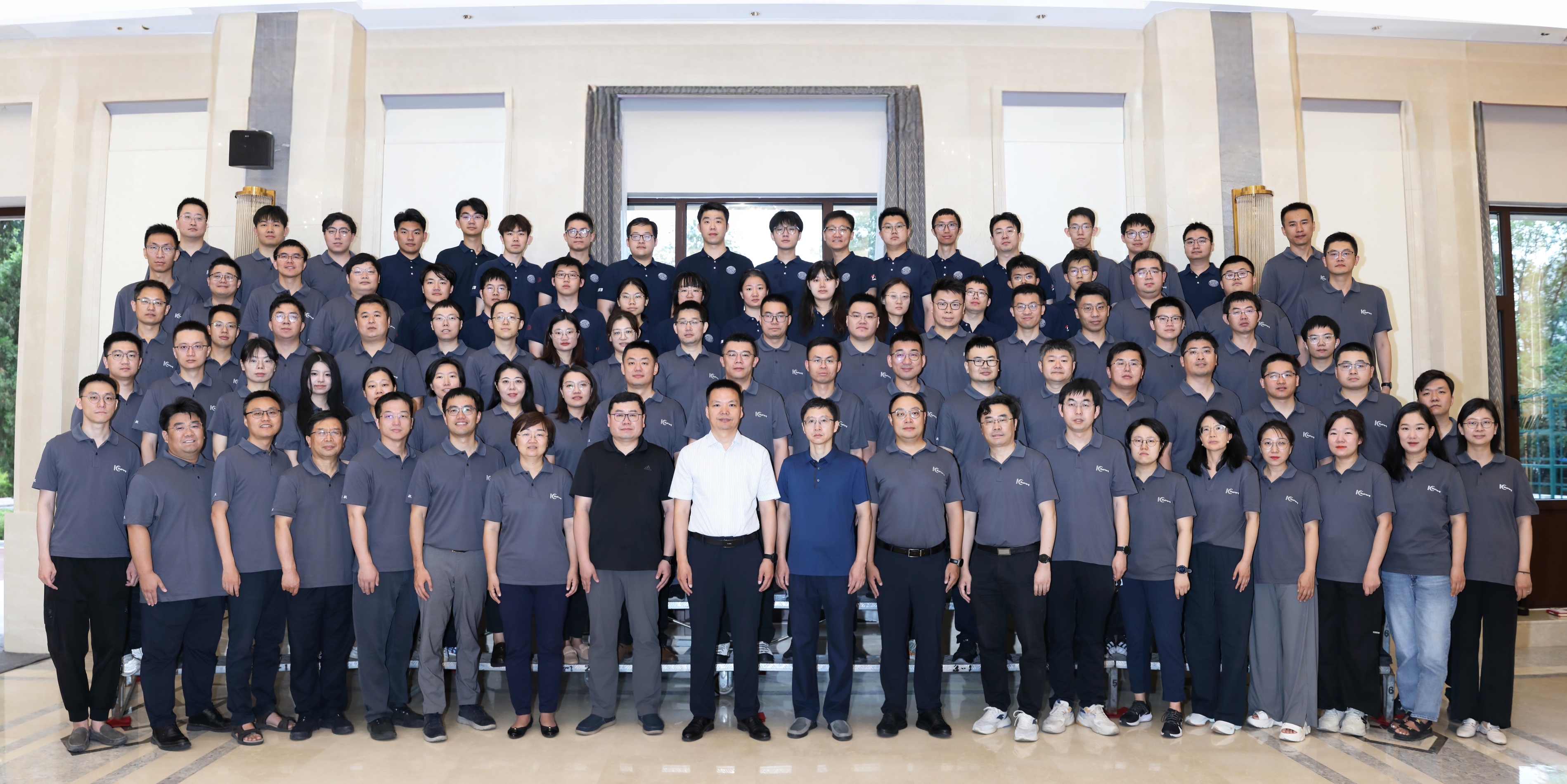
The School is committed to building a dynamic and innovative faculty team. With an average age of 37, over 80% of the faculty studied at top universities both in China and abroad, ensuring a solid academic foundation. More than 30% of the faculty members have R&D and management experience at leading technology enterprises such as Huawei and Broadcom. Their deep integration of cutting-edge industrial knowledge and technologies into teaching contents strongly supports the School's mission to cultivate innovative and practice-oriented talent in the IC field, providing a sustainable foundation for industry-academia integration. This unique combination of academic excellence and industry expertise positions the School at the forefront of integrated circuit education and innovation. Notable faculty members include:

Prof. Albert Fert, Nobel Laureate in Physics and Member of the French Academy of Sciences;

Prof. Yue Hao, Academician of the Chinese Academy of Sciences;

Prof. Lei Chen, Vice President of the Ninth Academy of China Aerospace Science and Technology Corporation;

Prof. Chao Zhao, Executive Vice President of Beijing Superstring Academy of Memory Technology;

Prof. Yier Jin , Chief Scientist for Trusted Computing Service at Huawei.

Research

The School's research focuses on emerging interdisciplinary directions, including advanced memory chips, aerospace chips, terahertz and radio-frequency chips, artificial intelligence chips, and advanced IC equipment.

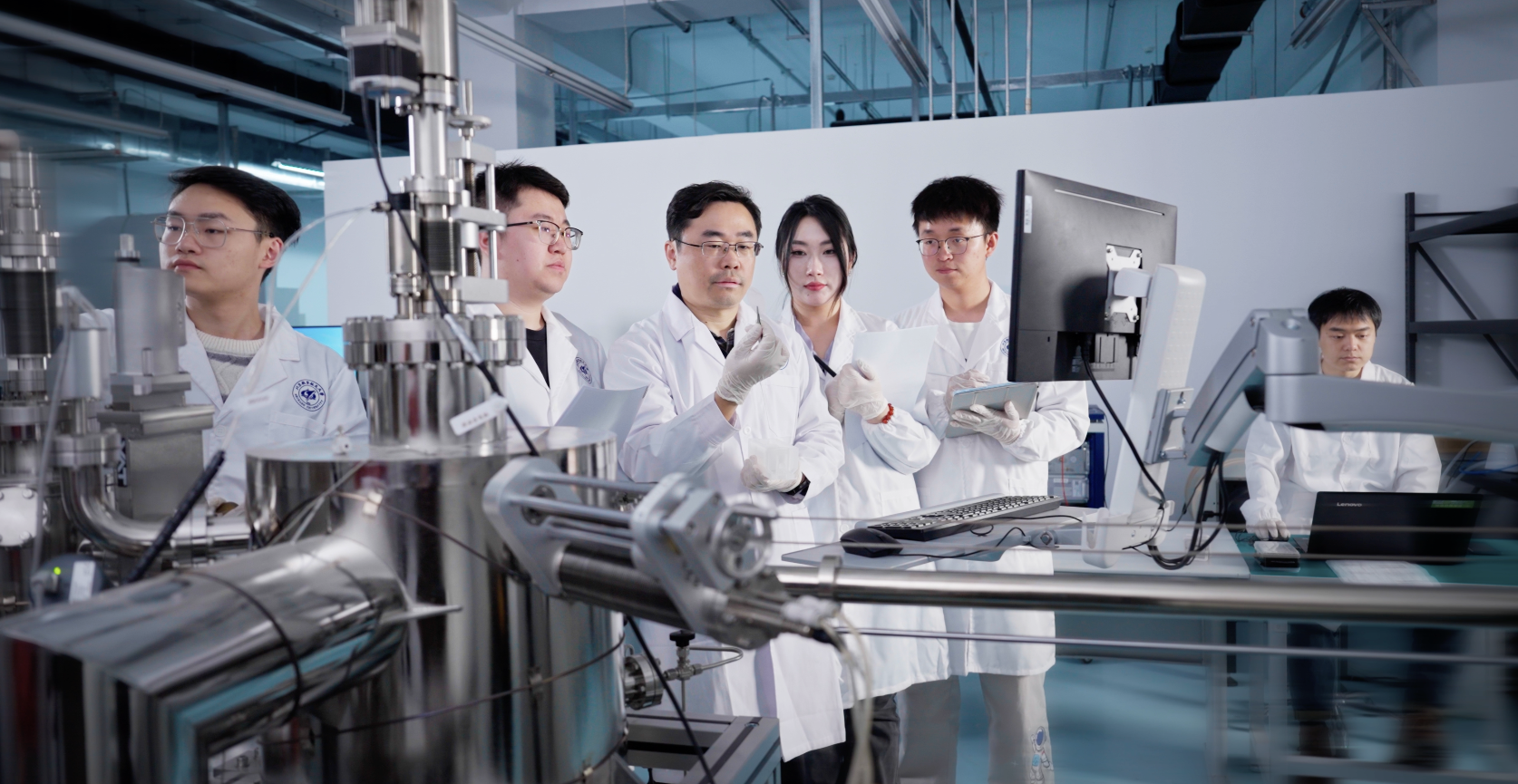
The School has established an innovative ecosystem integrating fundamental research, technological,and industrial transformation. It boasts over 3,000 square meters of intelligent research facilities and high-end equipment worth over 300 million yuan, including one MIIT Key Laboratory, two MOE Engineering Research Centers, one Anhui Provincial Engineering Laboratory, and three jointly approved National Key Laboratories and one Beijing Municipal Engineering Research Center. In collaboration with the Beijing Municipal Science & Technology Commission, it co-founded the Fert Beijing Institute, led by Nobel Laureate Prof. Albert Fert as Chief Scientist.

The School has pioneered China's first 8-inch spin sensor wafer pilot line, developed the world's largest-capacity third-generation magnetic storage chip, and cracked core technologies for high-end equipment such as magneto-optical Kerr microscopes and single-atomic-layer magnetron sputtering systems. In recent years, it has undertaken more than 200 projects. Over the past five years, it has published over 20 papers in Nature and Science sub-journals and received six provincial/ministerial scientific awards, including the First Prize of Natural Science from the China Institute of Electronics.

International Cooperation

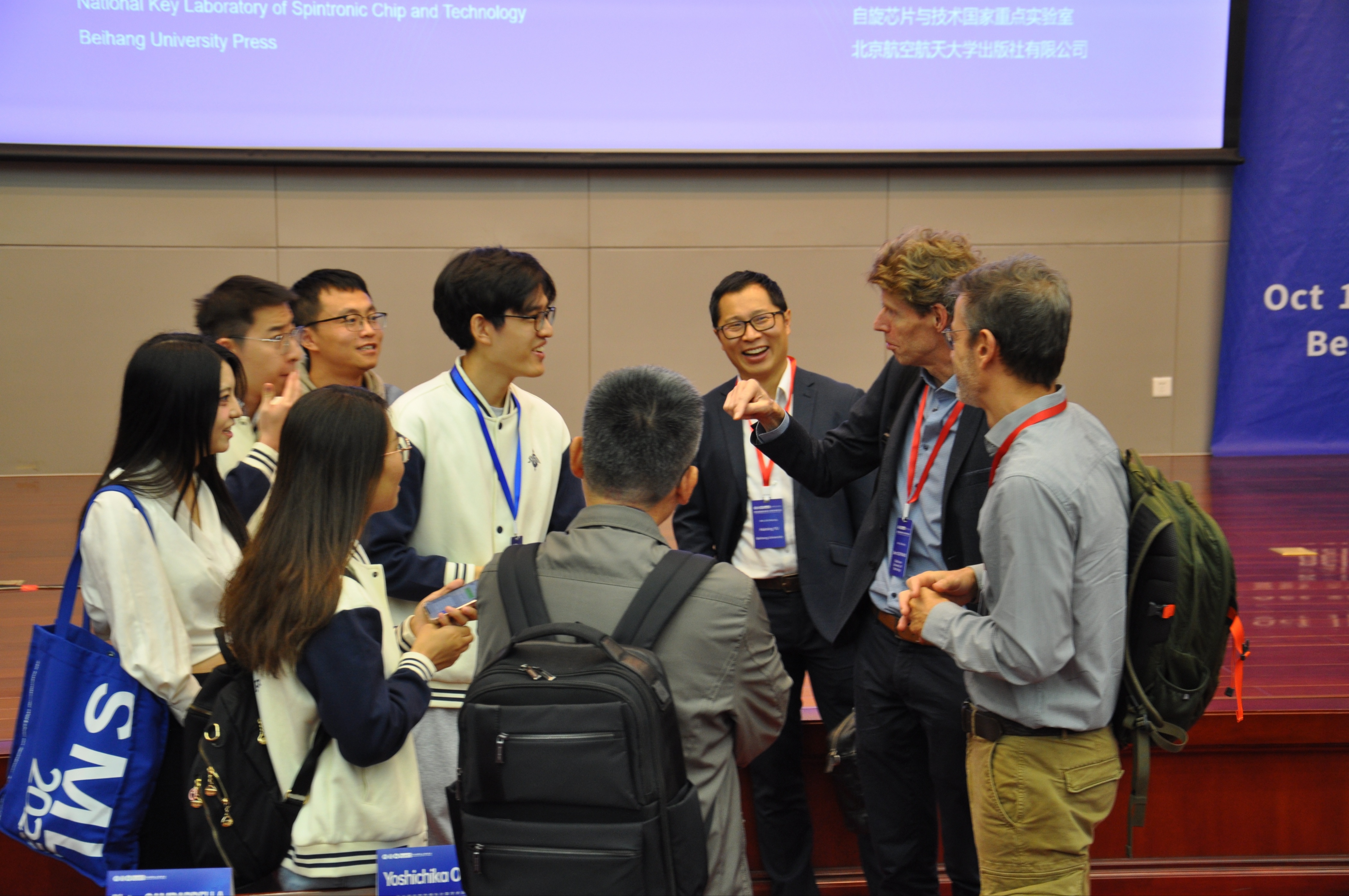
In 2016, the School has signed PhD dual-degree agreements with institutions like Paris-Saclay University (France), Lorraine University (France), Eindhoven University of Technology (Netherlands), and the University of Seville (Spain), and cooperation agreements with NUS, NTU, and City University of Hong Kong. The School hosted the IEEE/ACM International Symposium on Nanoscale Architectures (NANOARCH) in Beijing (2016) and Qingdao (2019), organized the 30th ACM Great Lakes Symposium on VLSI (GLSVLSI) online in 2020, and has held the Beihang International Symposium on Spin Memory and Logic for six consecutive years, attracting nearly 1,000 experts and scholars from home and abroad.

  • Tel: +86-10-82313693

  • Email:bhsme@buaa.edu.cn

  • Address:School of Integrated Circuit Science and Engineering, Beihang University, Haidian District, Beijing 100191, P.R. China

Giving

Beihang University Education Foundation works to support the construction and development of the university, promoting and facilitating Beihang's mission to become a world-class university with Chinese characteristics.

Contact Us

International Affairs

The International Relations Department is the administrative department of  Beihang University officially responsible for implementing the university's international policies and coordinating its international exchanges and cooperation.

Contact Us

Copyright © 2025 Beihang University. All rights reserved.