The research group led by Zhang Bei from the School of Automation Science and Electrical Engineering at Beihang University, for the first time, systematically elucidated the physical essence of vortex polarimetry from the perspective of photonic orbital angular momentum (OAM). The study reveals two underlying physical mechanisms: first, the vortex retarder enables the mutual conversion between photonic spin angular momentum (SAM) and OAM; second, the self-coupled common-path interference of photonic OAM. Based on these mechanisms, the group has defined "vortex polarimetry" and established a universal physical framework for this technique. The related work has been published in Optics Letters, a renowned journal in the field of optics.
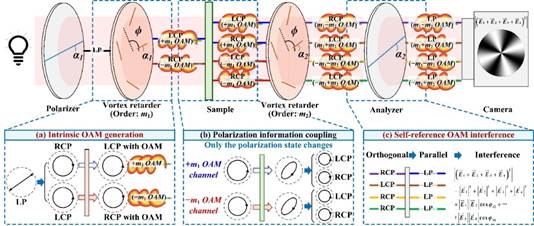
Fig.1 Universal physical mechanism of vortex polarimetry: SAM–OAM conversion and OAM self-coupled common-path interference
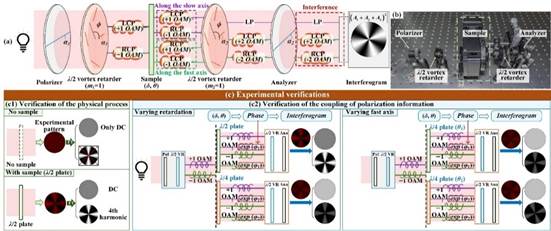
Fig.2 Mechanism verification of vortex polarimetry based on vortex birefringence measurement
In recent years, vortex polarimetry has become a mainstream direction, owing to its advantages of no mechanical rotation, transient measurement, and ease of miniaturization and integration. However, the underlying physical mechanism of this technique has remained unclear. The fundamental physics has long been interpreted using the traditional concept of rotation, and various vortex polarimetry schemes remain disjointed from one another. To address this issue, the group has clarified the following pointsfor the first time:
Universal physical mechanism: The core process of this technique is the self-coupled common-path interference of OAM channels. By leveraging the inherent SAM–OAM conversion property of the vortex waveplate, multiple mutually orthogonal OAM channels are generated within a single beam. The polarization information to be measured is coupled into these channels. After passing through an analyzer, the channels undergo common-path interference, forming characteristic patterns. The polarization information can then be extracted from these patterns via Fourier harmonic demodulation.
Universal measurement framework: Based on the above mechanism, the group has proposed a universal physical framework for vortex polarimetry. The key parameter of this framework is the number of OAM channels, which is determined by the order of the vortex retarder. By simply changing the order of the vortex retarder—without the need for optical path redesign—the framework can cover the measurement of various types of polarization information, ranging from linear polarization, elliptical polarization, and birefringence effects, to full Stokes parameters, and even the complete Mueller matrix.
Interferometers requiring no reference arm: Previously, due to the unclear physical mechanism, this technique often required an external reference optical path, leading to cumbersome system configurations and difficult alignment. In fact, vortex polarimetry inherently possesses interferometric capability. It is essentially a "self-coupled common-path interferometer" that does not require an external reference arm, enabling interferometric measurement without any additional interferometric setup.
In addition to the present general elucidation of the vortex polarimetry mechanism, the group has already implemented a series of vortex-based measurement techniques, including polarization orientation measurement, elliptical polarimetry, full-Stokes polarimetry, birefringence measurement, multispectral polarimetry, and device characterization. Related papers have been published in journals such as IEEE Transactions on Instrumentation and Measurement, Optics Letters, Optics and Lasers in Engineering, and Measurement. The experimental data mentioned above are publicly available online, and the executable (EXE)/SDK demo versions of the software can be obtained by contacting the group.
The group is currently developing a shared instrumentation platform for "Emerging Optoelectronic Detection Technologies," focusing on the development and data testing of technologies and instruments in the areas of confocal microscopy, plasmonic sensing, lens testing, polarization sensing and navigation, and polarimetry (ellipsometry/birefringence/Stokes/Mueller/multispectral).
Meanwhile, the group is also developing a simulation platform for "Emerging Optoelectronic Detection Technologies," available in both offline and online modes. The platform integrates all simulation and processing codes for the above-mentioned technologies and instruments, allowing users to directly perform simulations, computations, and information processing for the relevant technologies. In addition, the platform incorporates image metric calculation and evaluation functions, making it suitable for applications in biomedicine, autonomous driving, imaging, and other fields.
Editor: Liu Tingting


 Beihang NewsBeihang celebrates 42nd Teachers' DayMore
 Beihang NewsBeihang's first student-designed human-powered aircraft completes test flightMore
 Beihang NewsBeihang leaders engage in dialogue with new undergraduate and graduate student representativesMore
 Beihang NewsBeihang University holds 2026 opening convocation to welcome new studentsMore
 Beihang NewsBeihang University welcomes 9,022 new graduate studentsMore
 Beihang NewsProfessor Yu Shui wins Best Screenplay Award at 21st Changchun Film FestivalMore