A research team led by Professors Lu Guanghong and Zhou Hongbo from the School of Physics at Beihang University has elucidated a fundamental mechanism by which hydrogen impurity alters the evolution of irradiation damage inmaterials. The study, titled "Hydrogen reduced interstitial-vacancy cluster recombination in metals," was published in the journal Nature Communications.
The interplay between displacement defects governs the evolution of irradiation damage in materials and is of great fundamental interest with important practical implications, from the microelectronics industry to advanced nuclear system. Hydrogen, a ubiquitous impurity, is known to segregate to vacancies, but its role in altering vacancy-interstitial recombination—the key process underlying defect annihilation—has not been established.
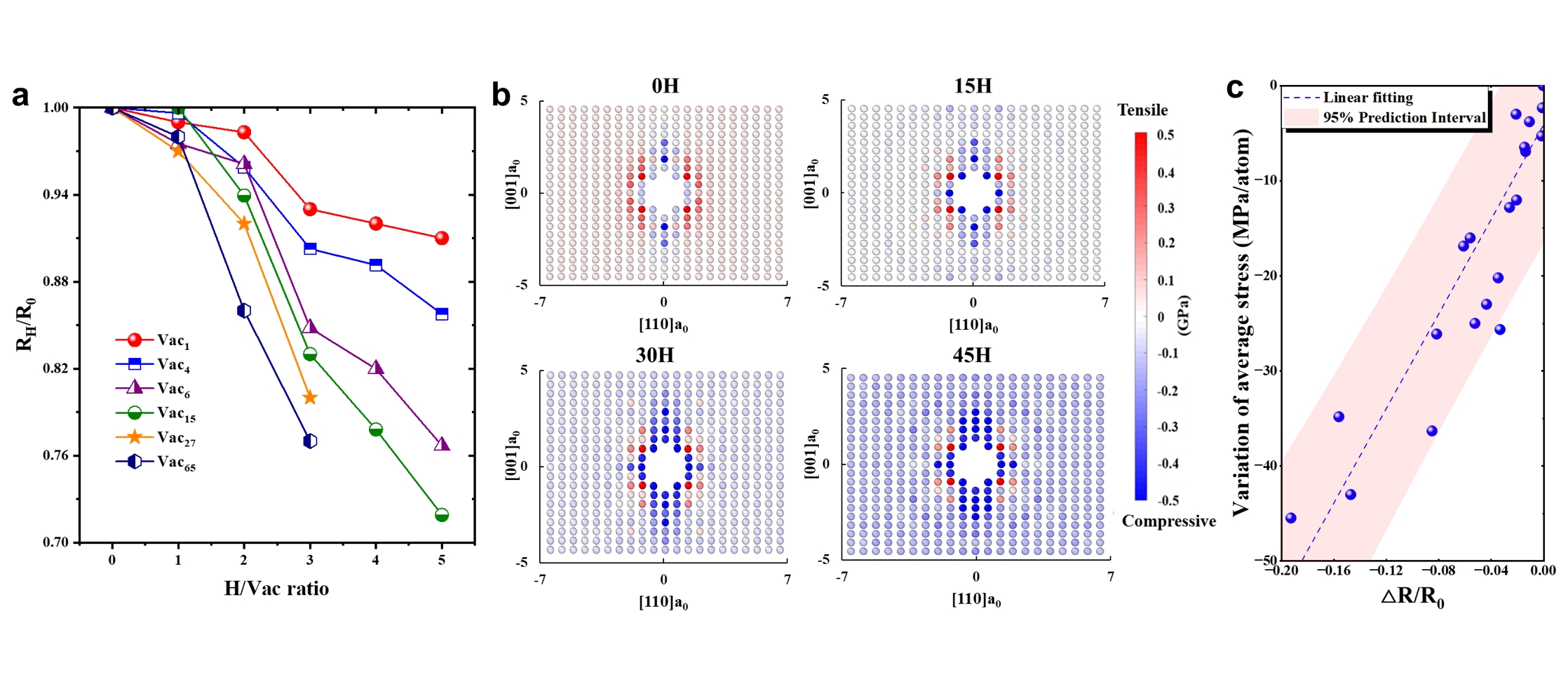
Fig. 1. Influence of hydrogen segregation in the recombination radius and atomic stress of vacancy clusters
Using tungsten as a model system, the research team demonstrated that hydrogen adsorption on the inner surfaces of vacancy clusters significantly suppresses recombination with self-interstitial atoms, thereby inhibiting defect annihilation. They identified a stress-mediated mechanism in which hydrogen adsorption transforms the local stress field of vacancy clusters, weakening their long-range attraction to self-interstitial atoms.
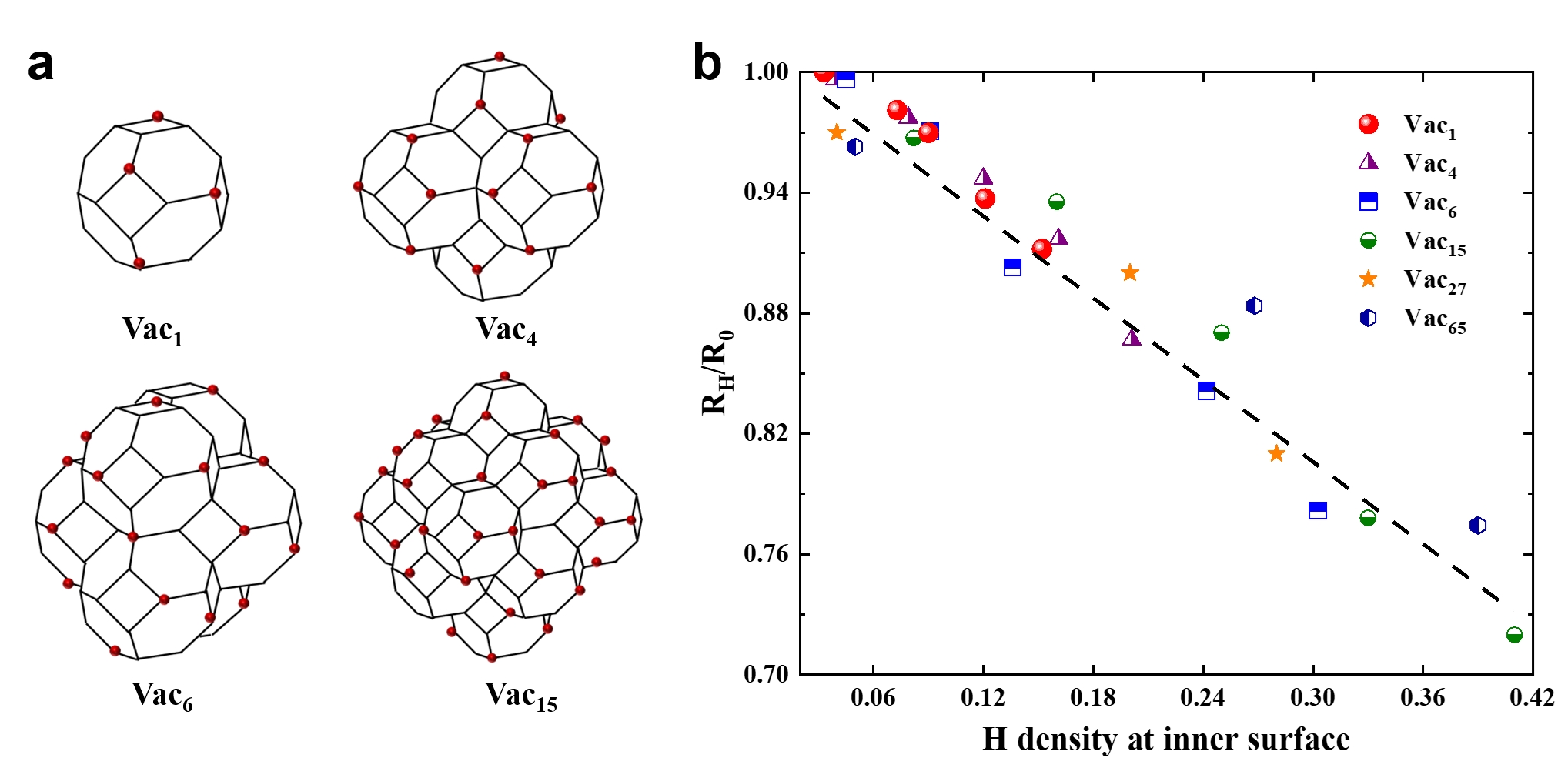
Fig. 2. Correlation between recombination radius reduction and hydrogen surface density
Based on this mechanism, the team developed a predictive model that quantitatively relates the relative reduction of recombination radius to the hydrogen inner surface density, independent of cluster size. By integrating atomistic parametrization with multiscale simulations, they investigated the co-evolution of hydrogen and displacement defects, which showed quantitative agreement with recent experiments, including the hydrogen isotope retention, distribution and desorption.
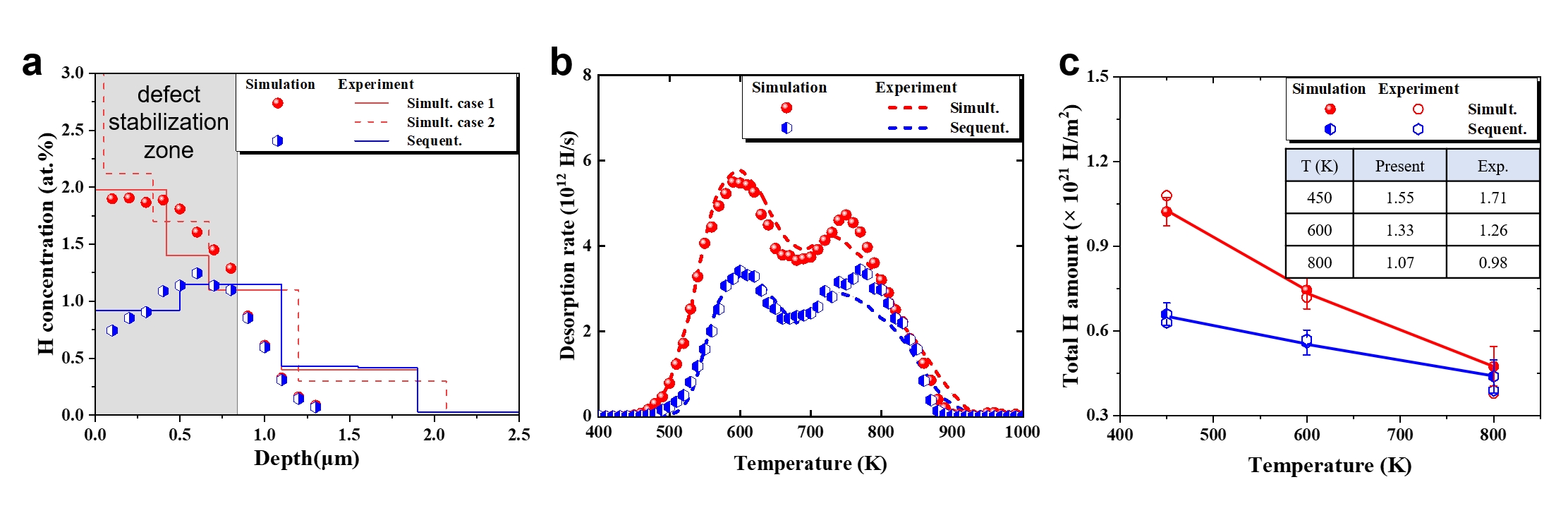
Fig. 3. Multiscale simulations of hydrogen depth distribution, thermal desorption spectra, and retention ratio in tungsten under simultaneous and sequential irradiation conditions
This study resolves a long-standing debate on the microscopic origin of hydrogen-induced irradiation damage, and more broadly, establishes a direct link between impurity-defect interactions and defect-defect recombination, providing a physically grounded framework for understanding and controlling irradiation damage in structural materials.
Associate Professor Li Yuhao of Beihang's School of Physics is the first author. Professors Zhou Hongbo and Lu Guanghong are co-corresponding authors. Beihang University is the sole affiliated institution for this research. This work was supported by the National Natural Science Foundation of China and the Fundamental and Interdisciplinary Disciplines Breakthrough Plan of the Ministry of Education of China.
Link to the article: https://doi.org/10.1038/s41467-026-75035-3
Editor: Lyu Xingyun


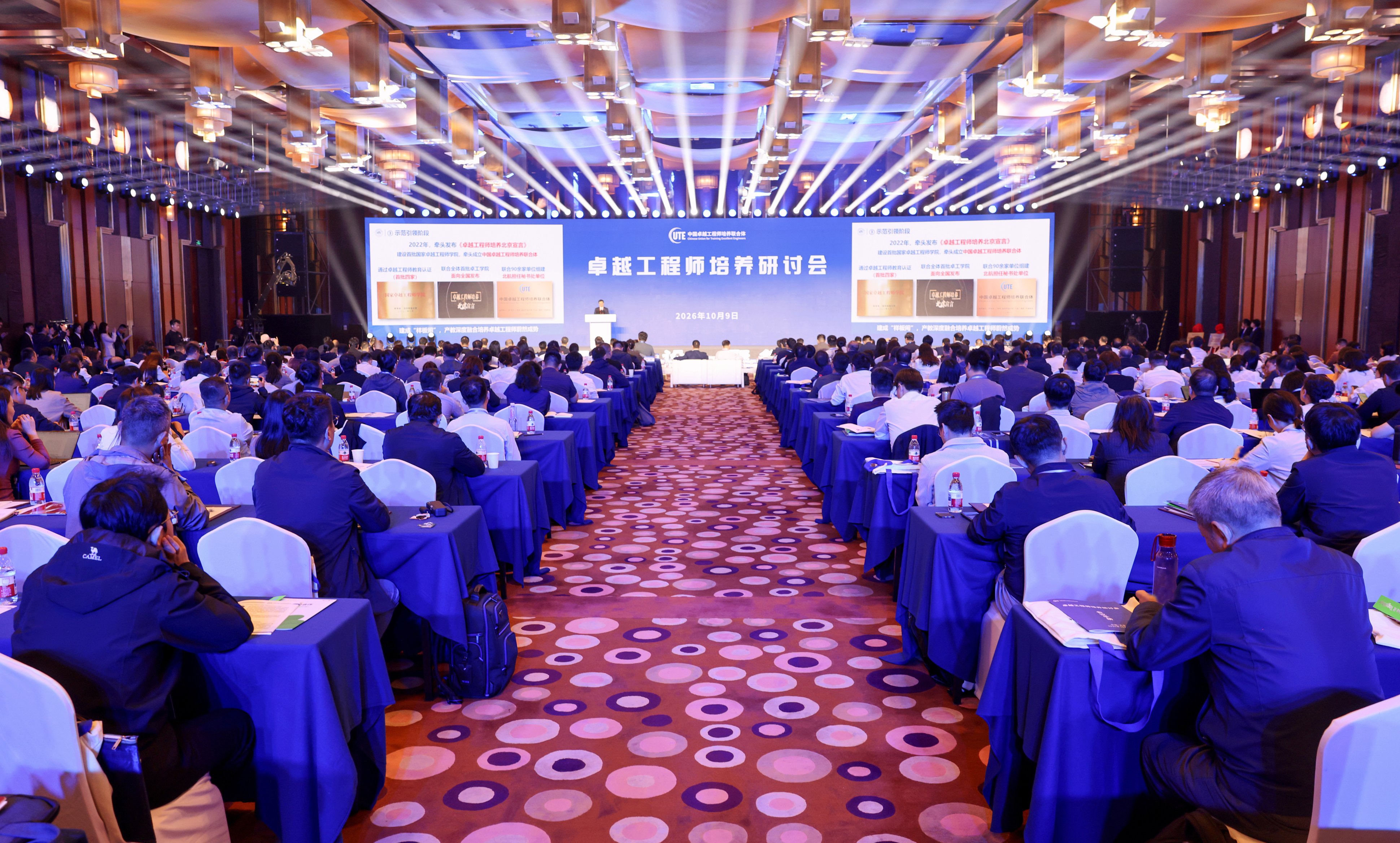 Beihang News2026 Symposium on Excellent Engineer Training held in BeijingMore
 Beihang NewsProfessor Liu Mingjie's team publishes article in Science, revealing high-modulus toughening mechanism in nacreMore
 Beihang NewsWang Yunpeng appointed Secretary of the CPC Beihang University CommitteeMore
 Beihang NewsElsevier Senior Vice President Said Taha visits Beihang UniversityMore
 Beihang NewsPresident Wang Yunpeng visits Hangzhou to advance university-city integration and attends opening ceremony of H3IMore
 Beihang NewsBeihang team wins 2026 Best Paper Award from Proceedings of the IEEEMore