A research team led by Professor Zhao Weisheng from the School of Integrated Circuit Science and Engineering at Beihang University has achieved a significant breakthrough in the electrical control of exchange bias at the sub-10 nmregime. The work, published in Nature Communications under the title "Electrical control of exchange bias in sub-10 nm regime enabled by single-nanotube patterning," introduces a carbon nanotube-based masking technique that circumvents fundamental resolution limits of conventional lithography.
Achieving stable magnetization in sub-10 nm ferromagnetic layers represents a fundamental bottleneck in spin-orbit torque magnetic random-access memory development. While exchange bias potentially offers stabilization at such scales through antiferromagnetic coupling, conventional lithography fundamentally limits nanoscale verification.
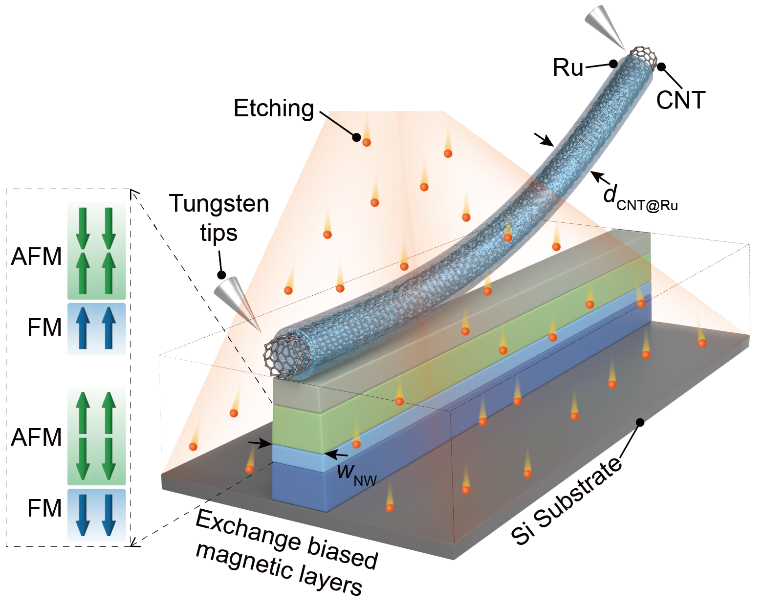
Figure 1. Schematic diagram of nanofabrication via single-nanotube patterning
In the research, the team reports a lithography-free nanopatterning strategy exploiting individual carbon nanotubes as etching templates, enabling precise fabrication of exchange-biased heterostructures from tens of nanometers down to single-digit dimensions. In perpendicularly magnetized Pt/Co/IrMn stacks, they demonstrate robust exchange bias persistence even at sub-10 nm regimes and confirm effective spin-orbit torque switching through anomalous Hall effect measurements. Crucially, scaling reveals divergent switching mechanisms: Cobalt layers transition from multi-domain to abrupt single-domain reversal, while exchange bias switching maintains gradual characteristics consistent across sizes—indicating collective antiferromagnetic moment reorientation via exchange-spring dynamics.
This work enables the physical patterning of sub-10 nm features for exchange bias stabilization, provides mechanistic insights into nanoscale magnetic switching, and establishes a viable pathway toward high-density spintronic memories.
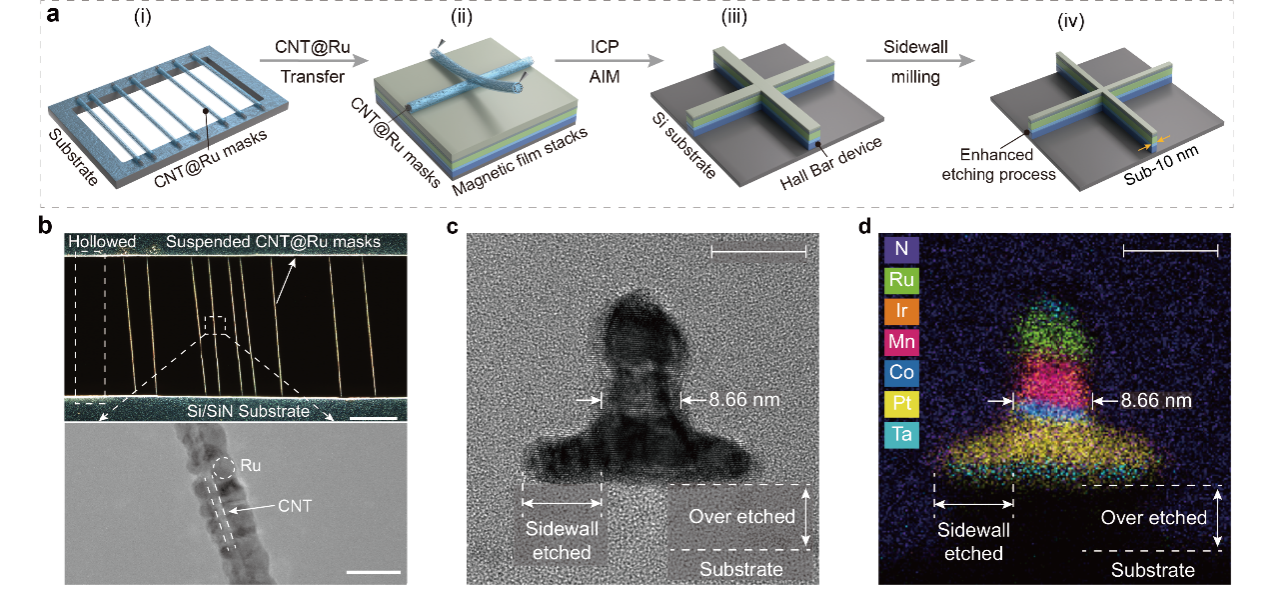
Figure 2. Scaling exchange biased devices to sub-10 nm regime
The study was conducted through a collaboration involving Beihang University's School of Integrated Circuit Science and Engineering, the Hangzhou International Innovation Institute of Beihang University, the State Key Laboratory of Spintronics, Université Paris-Saclay, and Tsinghua University's Department of Physics and State Key Laboratory of Low Dimensional Quantum Physics.
Beihang doctoral student Li Hexin and postdoctoral researcher Zhang Ke are co-first authors of the paper, with Professor Zhao Weisheng and Dr. Zhang Ke serving as co-corresponding authors. The research was supported by the National Natural Science Foundation of China, the National Key Research and Development Program of China, and the Fundamental Research Funds for the Central Universities, among others.
Editor: Lyu Xingyun


 Beihang NewsBeihang celebrates 42nd Teachers' DayMore
 Beihang NewsBeihang's first student-designed human-powered aircraft completes test flightMore
 Beihang NewsBeihang leaders engage in dialogue with new undergraduate and graduate student representativesMore
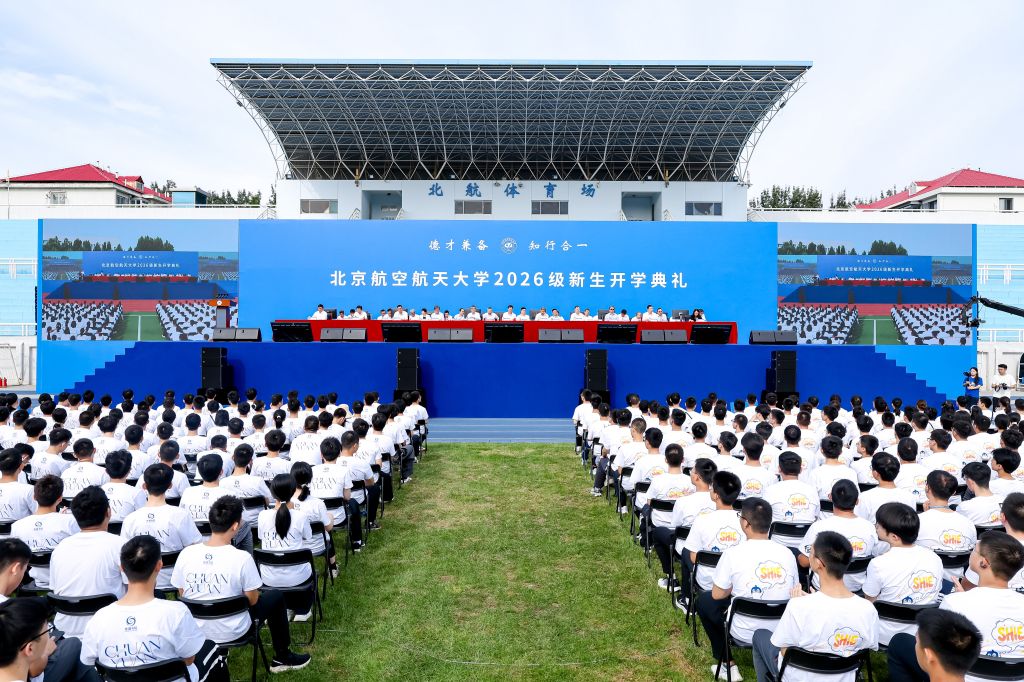 Beihang NewsBeihang University holds 2026 opening convocation to welcome new studentsMore
 Beihang NewsBeihang University welcomes 9,022 new graduate studentsMore
 Beihang NewsProfessor Yu Shui wins Best Screenplay Award at 21st Changchun Film FestivalMore