A research team led by Luan Zhongzhi from the School of Computer Science and Engineering at Beihang University has been honored with the ACM SIGSOFT Distinguished Paper Award at the 40th IEEE/ACM International Conference on Automated Software Engineering (ASE 2025). As a CCF-A ranked international academic conference, ASE stands as one of the three most prestigious conferences in the field of software engineering.
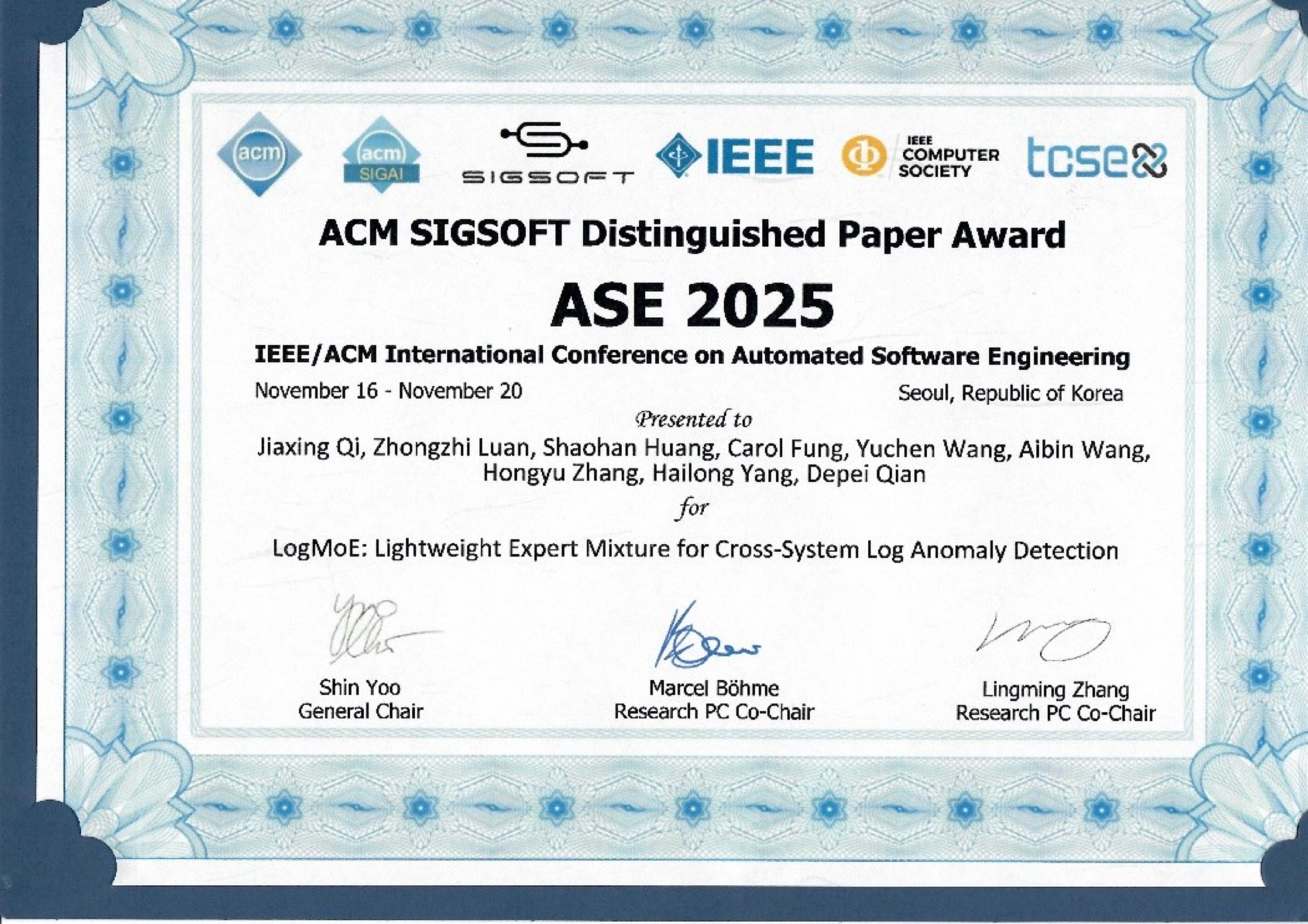
The award was presented for the paper titled "LogMoE: Lightweight Expert Mixture for Cross-System Log Anomaly Detection." This marks the second consecutive year that faculty and students from the School of Computer Science and Engineering have received this distinguished accolade.
The award-winning paper addresses a critical challenge in maintaining large-scale software systems: automated log anomaly detection across diverse and evolving system environments. Traditional methods often require extensive manual labeling and log parsing, leading to unstable performance and poor accuracy when applied to new systems.
To overcome this, the Beihang team proposed LogMoE, a novel lightweight expert mixture framework. This innovative approach trains multiple expert models on labeled log data from mature systems. A semantic gating network then automatically selects the most suitable expert during inference, enabling effective anomaly detection without log parsing and with minimal to no labeled data from the target system.
Experimental results demonstrate that LogMoE significantly outperforms existing methods in overall detection accuracy across various real-world systems and generalization scenarios. The framework also achieves up to 2.4 times faster inference speed, offering a superior balance of precision, cross-system adaptability, and deployment efficiency.
The authors of the paper are: Qi Jiaxing (first author), Luan Zhongzhi (corresponding author), Huang Shaohan, Carol Fung (Concordia Institute for Information Systems Engineering, Concordia University), Wang Yuchen, Wang Aibin, Zhang Hongyu (School of Big Data and Software Engineering, Chongqing University), Yang Hailong, and Qian Depei.
Editor: Lyu Xingyun


 Beihang News8th China Microelectronics Intelligent Conference convenes in BeijingMore
 Beihang NewsBeihang AI Knowledge Center debuts in MexicoMore
 Beihang News18th Enterprise Open Day successfully heldMore
 Beihang NewsProfessor Niu Jianwei elected as IEEE FellowMore
 Beihang NewsTen Beihang professors and alumni elected as CAS and CAE academiciansMore
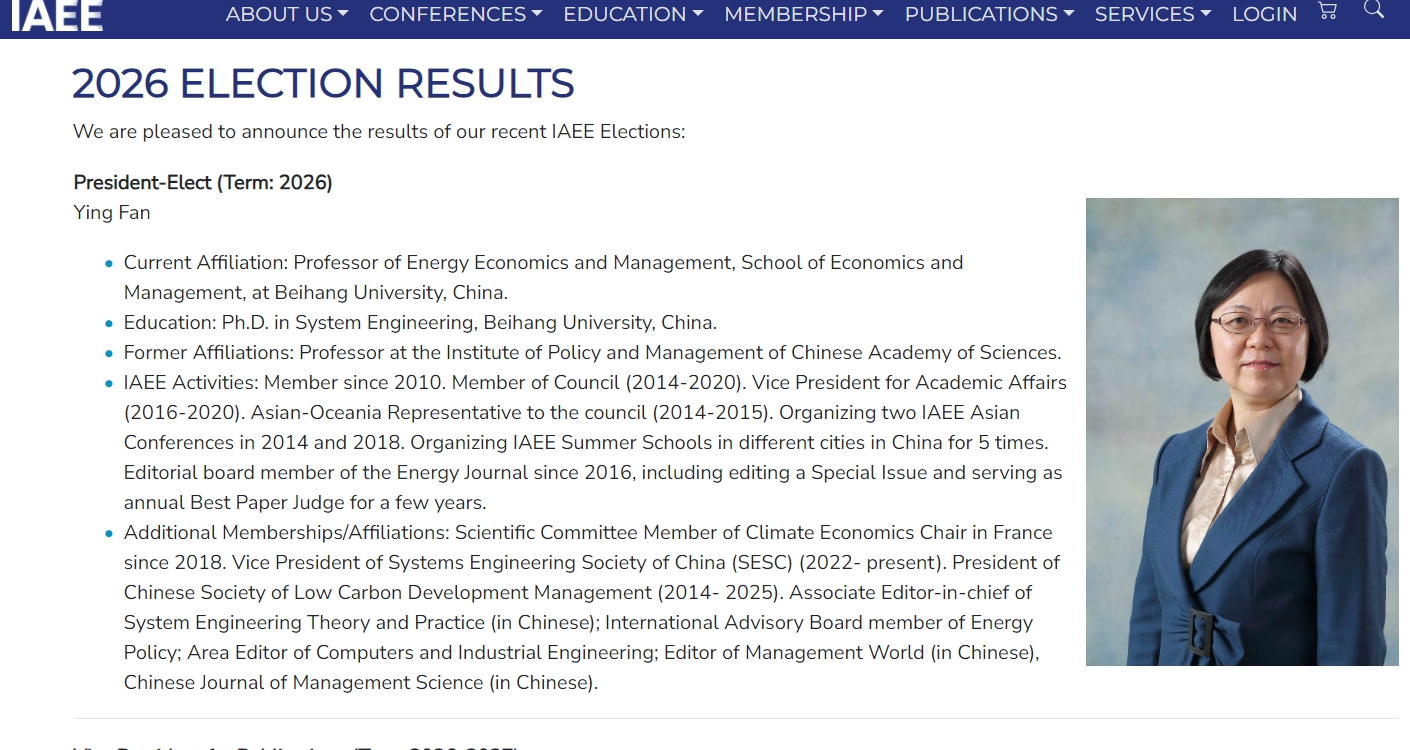 Beihang NewsProfessor Fan Ying named IAEE President-ElectMore