Recently, Professor Zhang Gaolong from the School of Physics at Beihang University and collaborators from Italy have made important progress in the study of the astrophysical reaction rate of 19F(p,αγ)16O. The related findings were published online in the physics journal Physical Review Letters on October 29 under the title "Measurement of 19F(p,αγ)16O Reaction Reopens the Fluorine Conundrums in Stars."

Fluorine abundance in stars is a sensitive indicator of the physical conditions and processes occurring within their interiors. Recent extrapolated results on the 19F(p,α)16O fluorine destruction cross section suggested an increase of the astrophysical factor by several orders of magnitude at astrophysical energies, with profound implications for our understanding of stellar evolution and nucleosynthesis. The research has indirectly measured the 19F(p,α)16O cross section using the Trojan horse method, fully covering astrophysical energies with no need of extrapolations. The strength of the 11 keV resonance was extracted and a significant reduction of the reaction rate was determined, compared to previous studies. The analysis of the astrophysical impact suggests that our measurement challenges existing predictions about fluorine and heavier elements' abundances, reigniting unresolved questions in the field.
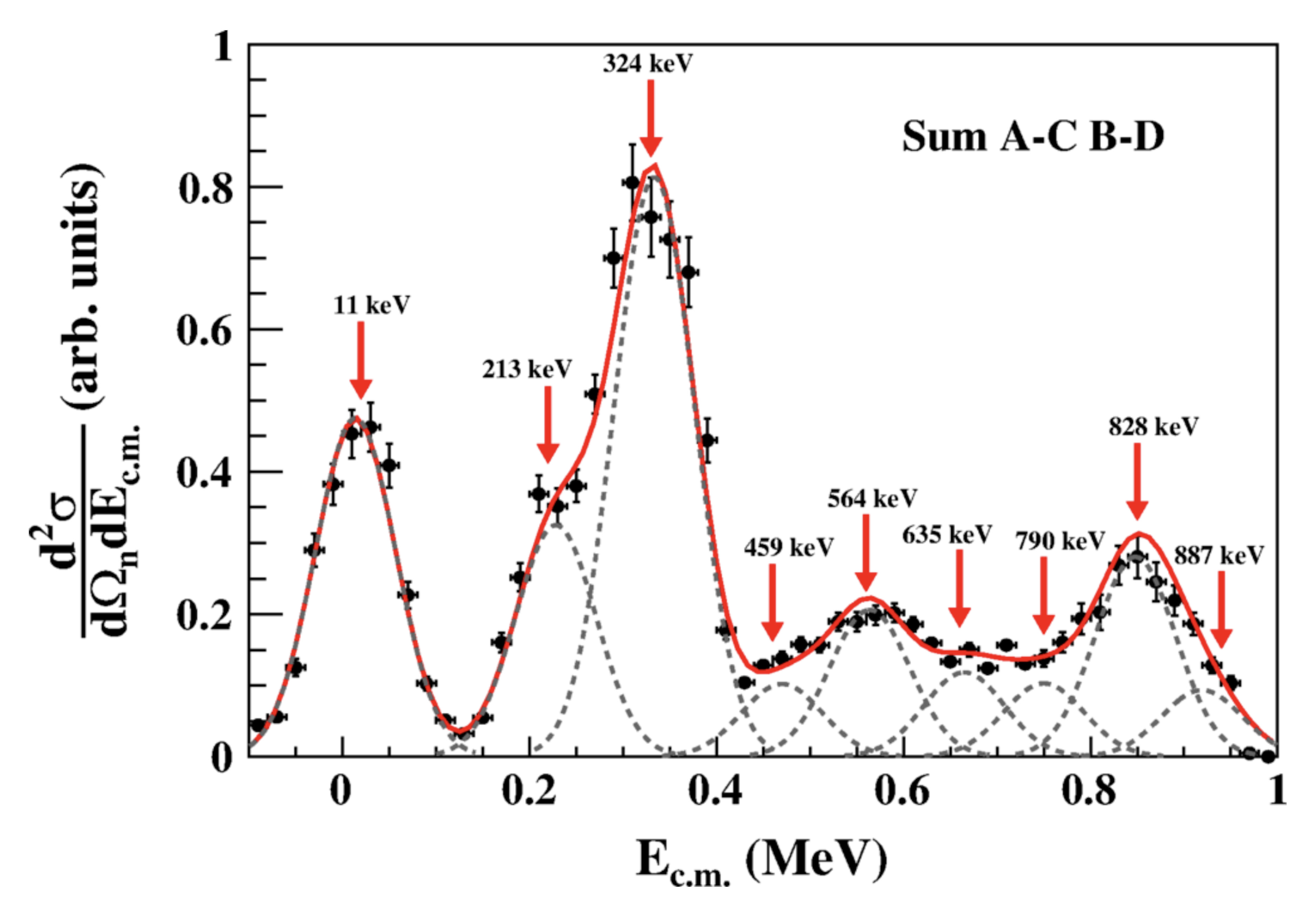
The first author is Su Xuedou, a 2025 PhD graduate of Beihang University (now employed at the Shanghai Institute of Applied Physics, Chinese Academy of Sciences). The corresponding authors are Professor Zhang Gaolong from Beihang University, Professor Marco La Cognata from the National Laboratories of the South, National Institute for Nuclear Physics, Italy (INFN-LNS), and Professor Marco Mazzocco from the Università degli Studi di Padova, Italy.
The main experiments of this study were conducted at the facilities of INFN-LNS. The work was supported by the INFN, the China Scholarship Council, and the "111 Center".
Link to the article: https://journals.aps.org/prl/abstract/10.1103/cq71-jy7s.
Editor: Liu Tingting


 Beihang News8th China Microelectronics Intelligent Conference convenes in BeijingMore
 Beihang NewsBeihang AI Knowledge Center debuts in MexicoMore
 Beihang News18th Enterprise Open Day successfully heldMore
 Beihang NewsProfessor Niu Jianwei elected as IEEE FellowMore
 Beihang NewsTen Beihang professors and alumni elected as CAS and CAE academiciansMore
 Beihang NewsProfessor Fan Ying named IAEE President-ElectMore