A research team led by Professor Geng Lisheng and Associate Professor Lu Junxu from the School of Physics at Beihang University has proposed a novel approach to decipher the fundamental nature of the two exotic states, Zc(3900) and Zcs(3985). The study, titled "Femtoscopy can tell whether Zc(3900) and Zcs(3985) are resonances, virtual states, or bound states," was published in the prestigious journal Science Bulletin.
Liu Zhiwei, a Postdoctoral Fellow at Beihang University, is the first author. The corresponding authors are Associate Professor Lu Junxu, Dr. Liu Mingzhou (Lanzhou University), and Professor Geng Lisheng.
In 2013, the BESIII Collaboration and Belle Collaboration observed a hidden-charm tetraquark candidate Zc(3900)± in the J/ψπ±invariant mass distribution of the e+e−→J/ψπ+π− process. In 2020, the BESIII Collaboration reported the first signal of a hidden-charm state with strangeness, Zcs(3985)−, in the K+ recoil-mass spectrum of the e+e−→K+(D∗0Ds−+ D0Ds∗−) reaction. Since the quark contents of the charged Zc(3900)− /Zc(3900)+ and Zcs(3985)− states are cc−du−/cc−ud− and cc−su− respectively, the latter is often interpreted as the strangeness partner of the former in terms of the SU(3)-flavor symmetry. Despite extensive theoretical work, a significant debate persists regarding their precise nature—specifically, whether they are resonances, virtual states, or bound states located near the D0D∗−and D0Ds∗− mass thresholds, respectively.
In this work, the authors demonstrate for the first time that the femtoscopic technique can be used to unambiguously distinguish between these three scenarios. More concretely, they show that the low-momentum D0D∗−/D0Ds∗− correlation functions significantly differ in the three scenarios. The high-momentum results exhibit distinct characteristics in the resonant and virtual state scenarios, especially in small collision systems of 1 fm, as produced in pp collisions at the LHC. This work provides a new strategy for future studies of exotic hadrons and is expected to stimulate further experimental efforts to clarify the nature of these states.
The research was supported by the National Key R&D Program of China, the National Natural Science Foundation of China, China Postdoctoral Science Foundation, among other grants.
Science Bulletin, co-sponsored by the Chinese Academy of Sciences and the National Natural Science Foundation of China, is a comprehensive English-language journal. It boasts a 2025 Impact Factor of 21.1, with rankings in the JCR Q1 category, CAS Q1 Top Journal, and 6th place globally among multidisciplinary science journals.
Editor: Lyu Xingyun


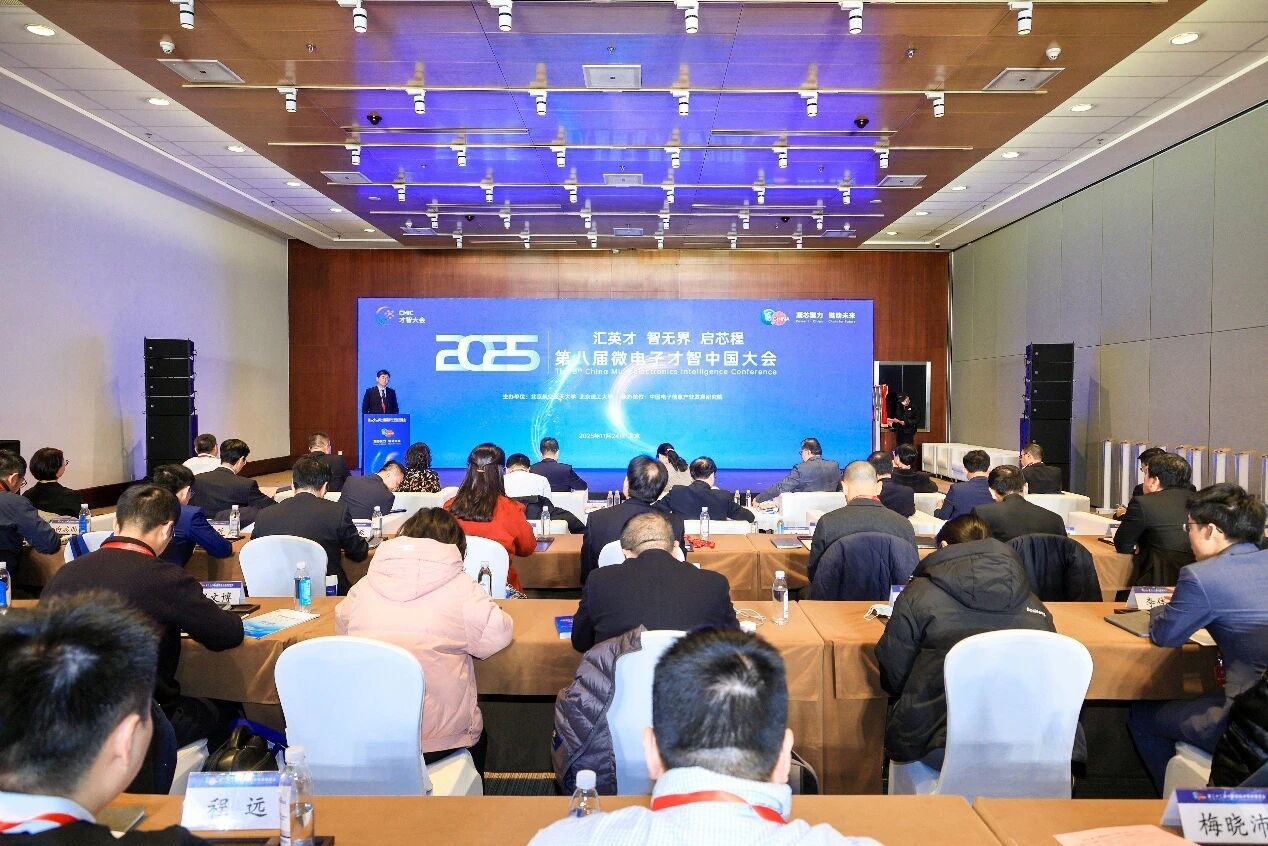 Beihang News8th China Microelectronics Intelligent Conference convenes in BeijingMore
 Beihang NewsBeihang AI Knowledge Center debuts in MexicoMore
 Beihang News18th Enterprise Open Day successfully heldMore
 Beihang NewsProfessor Niu Jianwei elected as IEEE FellowMore
 Beihang NewsTen Beihang professors and alumni elected as CAS and CAE academiciansMore
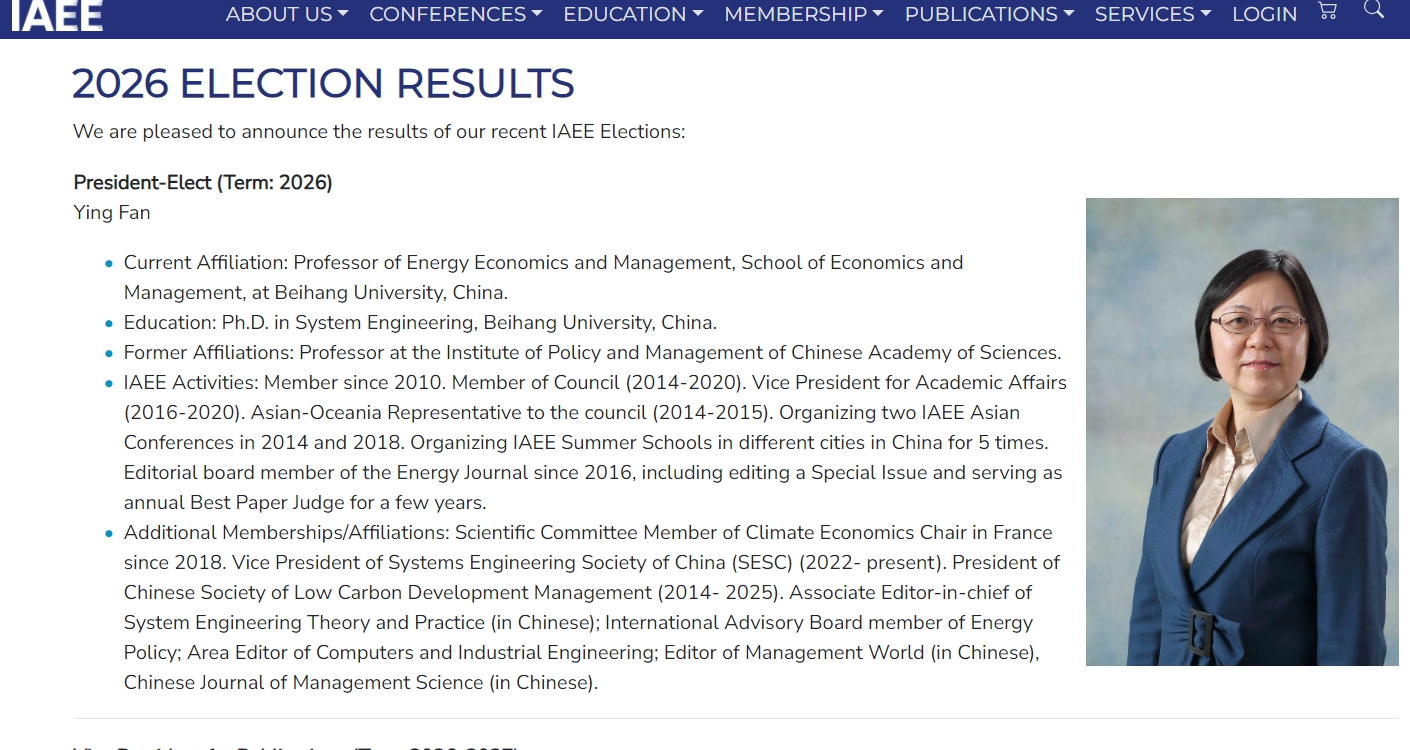 Beihang NewsProfessor Fan Ying named IAEE President-ElectMore